

How to Evaluate a Torch Manufacturer in China for Compact Handheld Flashlights
Choosing a torch manufacturer China can be a practical route for companies sourcing compact handheld flashlights for vehicle repair, maintenance, emergency kits, or outdoor equipment. The difficult part is not finding a product that produces a bright beam in a photograph. It is determining whether the supplier can consistently deliver the required housing, optics, electrical assembly, packaging, and inspection standard at the quantities your business needs.
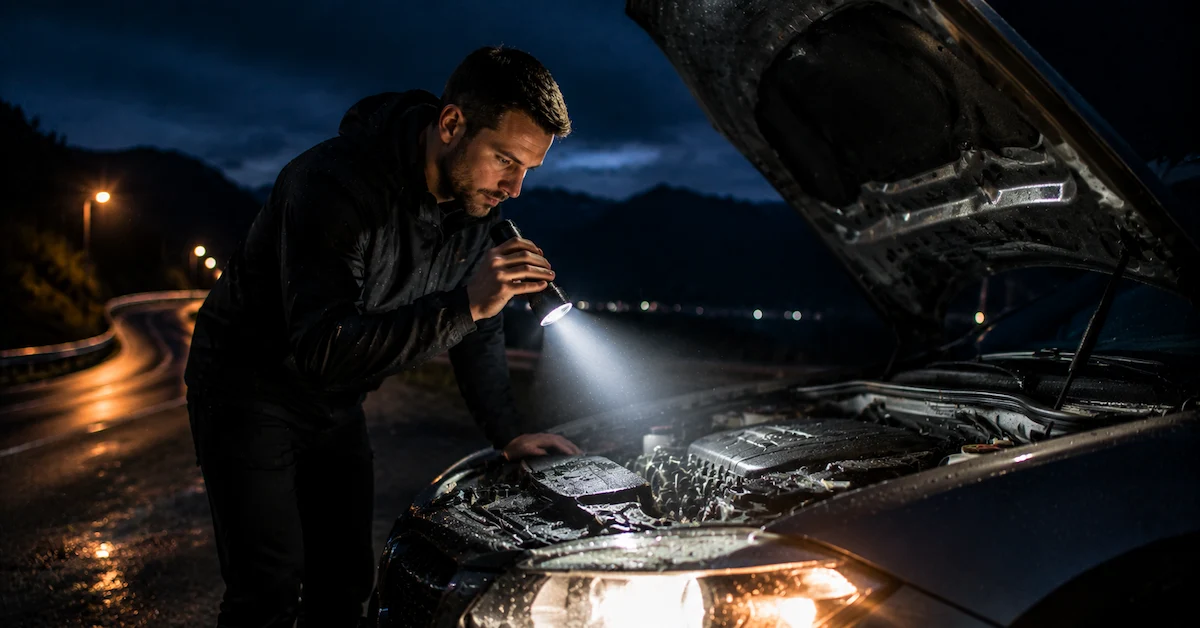
This article focuses on a narrow handheld flashlight intended for short-range work. The visible product format is a cylindrical black or dark-finished body with a wider front bezel and a concentrated white beam. It appears suitable for engine-bay inspection, roadside repair, workshops, and general maintenance. Because the available product information does not establish its lumen output, battery, charging method, durability rating, or compliance status, those points must be verified with the manufacturer rather than assumed.
What the buyer is actually deciding
A sourcing team is usually making three decisions at once:
- Whether the flashlight design fits the intended work environment.
- Whether the supplier has adequate control over components and assembly.
- Whether the product can be supplied with reliable specifications and repeatable quality.
For a driver carrying an emergency light, compact size and simple operation may matter most. A roadside-assistance technician may need a more durable body, dependable switching, and a beam that exposes belts, hoses, terminals, or leaks without excessive glare. A fleet operator may care more about battery logistics, replacement policy, packaging, and consistency across a larger order.
These are different requirements even when the outside appearance is similar. A useful supplier discussion therefore begins with application conditions, not with a catalogue photograph.
Quick reference: visible features and verification needs
| Area | What can be reasonably identified | What the buyer should confirm |
|---|---|---|
| Form factor | Compact cylindrical handheld body with a wider front head | Overall dimensions, weight, grip, balance, and pocket or kit fit |
| Beam | Directional white beam with a concentrated hotspot and spill | Measured output, beam distance, color characteristics, and consistency |
| Housing | Dark, matte or low-reflectivity exterior | Exact material, surface treatment, impact resistance, and finish durability |
| Controls | A small switch or control area appears to be near the rear or top | Switch type, operating modes, accidental activation protection, and cycle life |
| Power | No battery or charging arrangement is identifiable | Battery chemistry, capacity, replaceability, charging interface, and runtime |
| Accessories | No bracket, strap, or charging accessory is clearly visible | Included items, optional accessories, and packaging configuration |
Understanding the product construction
Housing and exterior finish
The tube-shaped body is a common format because it is easy to hold, package, and orient toward a work area. The wider front section can accommodate the lens, reflector, LED assembly, and any surrounding heat-management features. However, the appearance alone does not show whether the housing is coated metal, molded polymer, or a combination of parts.
That distinction affects cost, weight, heat transfer, and resistance to handling damage. Metal may offer a solid feel and help move heat away from the light source, while polymer can reduce weight and provide design flexibility. Neither option is automatically better. The correct choice depends on operating time, drop exposure, temperature, and the buyer’s target market.
Ask the supplier for the housing material and the relevant surface or molding details. If a dark finish is important for a private-label product, request confirmation of color control, abrasion resistance, and whether the finish is applied consistently from batch to batch.
Optical and LED assembly
The visible beam has a concentrated central hotspot with surrounding spill. That pattern is potentially useful for inspecting a component while still providing some awareness of the nearby work area. It should not, however, be treated as a measured optical specification. A photograph cannot establish lumens, candela, beam distance, color temperature, or runtime.
The supplier should identify the LED source or at least provide a controlled performance specification. The lens and reflector also deserve attention. Small changes in reflector geometry, lens position, or assembly alignment can alter the beam noticeably. For a flashlight used in engine bays, excessive hotspot intensity may create glare on reflective parts, while an overly broad beam may not illuminate a specific connector or fastener effectively.
Switches, power, and electrical assembly
A switch that looks simple can still become a field complaint if it is difficult to operate with gloves, activates accidentally inside a tool bag, or changes modes unexpectedly. Confirm whether the product has one output level or multiple modes, how the sequence operates, and whether the light returns to a default setting after being switched off.
Power details are especially important. The available information does not identify the battery chemistry, capacity, charging method, or operating time. A supplier should provide these as separate, testable specifications rather than offering a general statement such as “long lasting.” Confirm whether the battery is replaceable, whether charging is integrated, and what protection is included against overcharging, deep discharge, or reverse connection where relevant.
How to assess a torch manufacturer China during sourcing
Start by sending a written product brief. Include the intended use, target dimensions, preferred body material, beam preference, control layout, power system, packaging, logo requirements, and expected order pattern. If the product is for roadside repair, state whether it will be stored in vehicles, exposed to vibration, or used with gloves. If it is intended for general consumers, packaging clarity and simple charging may carry more weight.
Then ask the manufacturer to separate standard product information from proposed options. A supplier may show a catalogue body but offer several different LEDs, batteries, switches, or charging boards. Those substitutions can change performance and field reliability even if the external shell remains unchanged.
Request samples that represent the intended production configuration. A sample with one battery or LED does not prove that a later batch using a different component will behave the same way. The purchase specification should identify critical components, approved alternatives, labeling, and the inspection points used before shipment.
Manufacturing and quality checkpoints
A compact handheld flashlight may involve housing production, reflector or lens preparation, LED installation, circuit-board assembly, switch installation, battery integration, final assembly, and functional testing. The exact process cannot be identified from the product image, so the buyer should ask the supplier to explain its actual production flow.
Useful checkpoints include:
- Incoming inspection for LED, battery, switch, lens, and housing components.
- Verification that the reflector and LED are correctly aligned.
- Polarity and electrical function checks during assembly.
- Inspection of lens cleanliness, bezel fit, and visible surface defects.
- Power-on testing for every finished unit or according to an agreed sampling plan.
- Confirmation that labels, manuals, packaging, and accessories match the approved sample.
Do not request test results that the product has never been evaluated for. Instead, define the tests that matter to the application and agree how they will be recorded. If water resistance or impact performance is important, obtain the relevant test method and rating documentation before using those claims in sales material.
Common sourcing mistakes
The first mistake is treating brightness in a product image as a performance specification. Exposure, background darkness, and camera settings can make two different lights appear equivalent.
The second is approving the exterior design without confirming the internal configuration. A flashlight can retain the same black cylindrical housing while its LED, battery, driver, and switch change between orders.
The third is leaving the word “durable” undefined. For one buyer, that may mean surviving a vehicle tool bag. For another, it may mean resistance to rain, oil exposure, repeated drops, or daily professional use. Write measurable requirements where possible and identify which conditions are merely preferences.
A final warning concerns compliance language. The available product information does not establish any certification, ingress rating, impact rating, or regulatory approval. Do not print such claims on packaging or listings until the manufacturer supplies appropriate evidence for the exact configuration being sold.
Practical buyer checklist
Before approving a supplier, confirm the following in writing:
- Housing material and finish.
- Dimensions, weight, and switch location.
- LED and optical specifications.
- Output modes and control sequence.
- Battery type, capacity, replaceability, and charging method.
- Expected runtime under defined test conditions.
- Any requested water, dust, temperature, or impact performance.
- Included accessories and packaging contents.
- Logo, color, labeling, and manual requirements.
- Inspection procedure and approval sample.
For buyers comparing a tactical flashlight supplier with a general portable-lighting factory, the same principle applies: evaluate production control and specification discipline, not just the product name. “Tactical” can describe a market position, but it does not by itself confirm a particular material, output, or durability level.
Frequently asked questions
Is this flashlight suitable for automotive repair?
The compact handheld format and focused white beam appear suitable for roadside inspection, engine-bay work, and other short-range maintenance tasks. Suitability for regular professional use depends on verified runtime, switch durability, housing material, and environmental performance.
Can the image confirm the flashlight’s brightness?
No. The image shows a directional beam, but it cannot establish lumens, beam distance, color temperature, or runtime. Those values should come from controlled supplier information or independent testing.
Should the buyer choose metal or polymer housing?
Choose according to heat, weight, impact, finish, and cost requirements. The visible exterior does not establish which material is used, so request confirmation before finalizing the specification.
What should be included in a sample approval?
The approved sample should represent the intended housing, optics, LED, battery, switch, labels, accessories, and packaging. Record the important specifications so production substitutions can be reviewed rather than accepted silently.
Next step for sourcing teams
Prepare a one-page product brief and send it to shortlisted manufacturers. Include the work environment, beam preference, power requirements, housing expectations, packaging needs, and required evidence for any performance claim. Ask each supplier to identify what is standard, what is configurable, and what must be developed or tested.
That process turns a generic compact flashlight into a controlled sourcing project. It also gives engineers, product managers, and purchasing teams a clearer basis for comparing samples before committing to production.