

How to Evaluate a High Lumen Flashlight Supplier for Outdoor Lighting Programs
Choosing a high lumen flashlight supplier is not simply a matter of comparing the brightest number on a product page. For sourcing managers, product teams, and outdoor-equipment brands, the more useful question is whether a supplier can deliver a dependable handheld lighting product with the right beam pattern, housing design, battery arrangement, controls, and documentation for the intended application. A flashlight used for hiking, campsite setup, trail navigation, emergency lighting, or outdoor inspection must be evaluated as a complete product rather than as an LED and a quoted lumen figure.
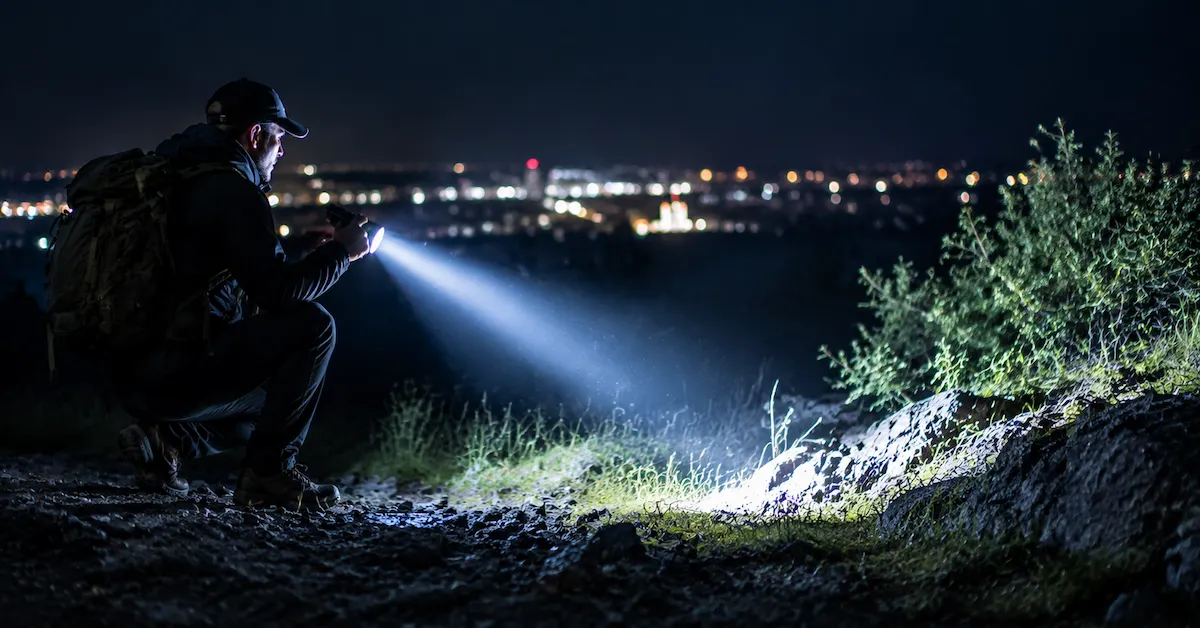
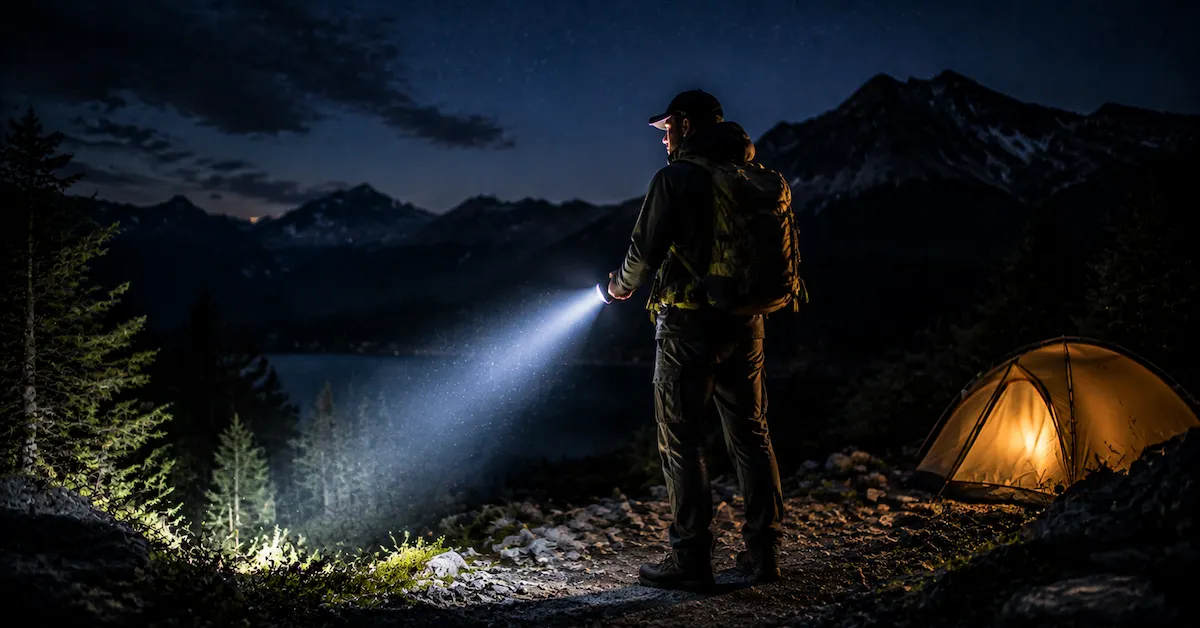
The product shown in the available reference material is a compact cylindrical handheld flashlight or torch. It produces a concentrated white, directional beam toward a rocky trail and surrounding vegetation. That makes it broadly relevant to outdoor and utility lighting, but the image does not establish the model's brightness, runtime, battery type, water resistance, impact rating, or construction materials. Those details should be confirmed before a sourcing decision is made.
What the buyer is really deciding
A purchasing team is usually making three decisions at once. First, does the flashlight provide suitable illumination for the task? Second, can the supplier manufacture the required configuration consistently? Third, can the supplier support the product with usable specifications, samples, packaging, and future revisions?
These questions matter because “high lumen” is an incomplete description. A very bright beam may be useful for searching across open ground, while a broader and less concentrated beam may be more practical for campsite work. Beam shape, reflector or lens design, operating modes, thermal management, battery capacity, and control placement all affect field performance. A product that appears powerful in a short demonstration may still be inconvenient if it has poor grip ergonomics, excessive heat, difficult charging, or a short useful runtime.
Quick reference: what to verify before approval
| Evaluation area | Questions for the supplier | Why it matters |
|---|---|---|
| Light output | What lumen rating is specified, and under what test conditions? | Prevents comparison of figures that were measured differently. |
| Beam design | Is the beam concentrated, wide, or configurable? | Determines suitability for trails, campsites, inspection, or emergency use. |
| Power system | Which battery type and charging method are supported? | Affects runtime, field replacement, logistics, and user convenience. |
| Mechanical design | What housing, lens, reflector, grip, and switch options are available? | Influences durability, handling, heat dissipation, and product identity. |
| Documentation | Can the supplier provide drawings, specifications, samples, and test information? | Allows engineering and compliance teams to review the product responsibly. |
Understand the product architecture
A handheld outdoor flashlight commonly combines a cylindrical housing, front light-emitting assembly, optical element, battery compartment, switch or control system, and electronic driver. The available image shows a compact body and a front end that projects a focused beam. It does not reveal the internal construction, so a buyer should avoid assuming whether the housing is machined metal, molded polymer, or another material.
Housing and grip
The housing protects the internal electronics and gives the user something to hold. For a product intended for hiking or mountain trekking, diameter, surface texture, balance, and switch position can be more important than they first appear. A flashlight may be carried for extended periods, used with gloves, or placed on uneven ground during campsite setup. Ask for dimensional drawings and physical samples rather than relying only on product photographs.
Material and finish also affect the commercial position of the product. However, the supplied information does not identify the material, surface treatment, dimensions, or color. These should be treated as open specification items. If the product will be sold under a private label, the sourcing brief should define the required finish, logo treatment, packaging, and control layout instead of leaving them to assumption.
Optics and beam behavior
The visible beam is white and directional, with enough concentration to illuminate a section of rocky trail and nearby vegetation. This suggests a focused outdoor-use configuration, although the light source and optical design cannot be confirmed from the image alone. The buyer should ask whether the product uses a reflector, lens, or combined optical assembly, and whether the beam is intended for distance, close-area visibility, or a compromise between the two.
Beam distance should not be considered separately from beam intensity and spill. A narrow beam may help users identify distant terrain, while some surrounding light is useful for footing and navigation. Product teams should test the flashlight in realistic conditions, including uneven ground, vegetation, darkness, and gloved operation. A studio wall test is not enough.
Driver, battery, and heat
The electronic driver regulates the light source and influences operating modes, brightness stability, and power use. Battery selection affects the entire product: runtime, weight, charging architecture, shipping considerations, and replacement strategy. Since no battery type, capacity, charging method, runtime, or temperature range is supplied for this product, these specifications must be requested directly.
High-output handheld lights can generate substantial heat. A supplier should explain how the housing and internal design manage heat during extended operation, while the buyer should check whether brightness changes after several minutes. Do not accept a headline output figure as a substitute for a complete operating profile. Ask for brightness levels, approximate runtime by mode, and the conditions used for measurement.
When a custom configuration makes sense
Working with a custom flashlight manufacturer may be appropriate when the standard product does not match the brand's use case or packaging requirements. Customization can involve the housing shape, color, finish, switch arrangement, beam configuration, battery compartment, charging interface, branding, and accessories. It may also involve adapting the product for an outdoor equipment range rather than selling a generic torch.
Customization should begin with a functional brief, not a logo. Define the expected users, environment, carrying method, preferred beam behavior, control sequence, battery policy, and target packaging. Then separate essential requirements from optional features. This helps prevent a common mistake: adding multiple modes, charging features, or decorative elements before proving that the basic product is comfortable, reliable, and easy to operate.
Questions that separate a capable supplier from a reseller
Supplier evaluation should cover more than a catalog and a sample. Ask who controls the housing, optical, electronic, and assembly processes. If the supplier uses outside partners, clarify which parts are standardized and which can actually be changed. Request product drawings, a bill of materials or component overview where appropriate, sample identification, packaging details, and a clear revision process.
It is also worth asking how the supplier handles specification changes. A change to the battery, LED assembly, driver, lens, or switch can alter brightness, runtime, heat, or user experience even when the exterior looks identical. The purchase specification should therefore identify critical components and require approval before substitutions are made.
For a sourcing team, documentation quality is a practical signal. A supplier that can clearly state what is known, what is measured, and what still needs validation is easier to manage than one that makes broad performance claims without test conditions. This is particularly important because the available product information does not establish certifications, ingress protection, impact resistance, or any formal test results. Those should never be inferred from outdoor imagery.
Common purchasing mistakes
- Comparing lumen figures without asking how they were measured.
- Assuming a focused beam automatically provides the best trail visibility.
- Approving a housing material or battery type that was never confirmed in writing.
- Ignoring switch operation and grip comfort during sample review.
- Evaluating only the first five minutes of operation instead of checking heat and runtime.
- Allowing component substitutions without a documented approval process.
- Using outdoor photographs as evidence of water resistance, impact protection, or certification.
One practical caution: if the flashlight will be marketed for emergency or demanding outdoor use, the product claim should match the evidence available. “Suitable for general outdoor illumination” is a different claim from guaranteed performance in severe weather or hazardous conditions. Product copy, packaging, and technical documents should be based on verified specifications.
Buyer checklist for sampling and approval
During sample review, inspect the beam at close and longer distances, operate every control with and without gloves, and check whether the flashlight can be carried comfortably for the intended activity. Confirm the charging or battery procedure, indicator behavior, grip, balance, and ease of access to the power compartment. Ask the supplier to identify the exact sample configuration so that the approved version can be reproduced.
For engineering review, request the available dimensions, material information, optical description, battery details, operating modes, runtime data, and environmental specifications. Where a requirement is important, have it written into the product specification rather than left in email conversation or marketing language. This is especially relevant for private-label programs, where a small component change can create a noticeably different product.
FAQ
Is the flashlight in the reference image confirmed to be high lumen?
No. The image shows a concentrated white beam, but it does not provide a lumen rating or test method. Brightness must be confirmed through supplier specifications and, ideally, sample evaluation.
Can the product be used for hiking and camping?
Its visible form and beam suggest possible use for hiking, mountain trekking, camping, trail navigation, emergency lighting, and general utility work. Suitability for a specific environment still depends on verified runtime, durability, environmental protection, and handling characteristics.
What should be requested from the supplier first?
Start with the exact model or sample identification, key dimensions, housing and optical details, battery and charging information, lumen and runtime data, operating modes, and any available environmental or safety documentation. Confirm which details are measured and which are estimates.
Next step for product and sourcing teams
Build a short technical brief before requesting quotations. Include the intended use, beam preference, battery policy, control requirements, branding needs, packaging expectations, and information that must be validated. Then ask shortlisted suppliers to provide a clearly identified sample and a written specification for that configuration.
The right high lumen flashlight supplier is not necessarily the one offering the largest headline output. It is the supplier that can connect optical performance with usable mechanical design, controlled component selection, consistent assembly, and transparent documentation. For the compact outdoor flashlight represented here, the next decision should be based on verified product data and field testing—not on the image alone.