

Rechargeable Headlamp Supplier for Outdoor Use: What Buyers Should Check
When outdoor teams, retailers, or private-label brands source a rechargeable headlamp supplier for outdoor use, the real question is not whether the light turns on. It is whether the product is comfortable, practical, and consistent enough to support real outdoor use and repeat orders. A wearable light can look acceptable in a catalog and still fail in motion, on uneven ground, or over outdoor clothing. Buyers need to look beyond appearance and verify how the lamp performs as a usable product, not just as a sample.
Why this supplier choice matters
Outdoor buyers usually want a headlamp that helps people move safely after dark without keeping one hand occupied. That sounds simple, but the sourcing decision is broader than brightness alone. A good product should stay in place, feel natural to wear, and deliver a beam that suits the intended activity. If the product shifts, feels awkward, or varies too much from unit to unit, returns and complaints can follow quickly.
For sourcing managers, the supplier matters because repeatability matters. For product teams, the supplier matters because one headlamp does not fit every outdoor scenario. A supplier that understands the intended use case can help match the lamp to hiking, trekking, camping, emergency movement, or other outdoor tasks without forcing a generic answer.
Start by defining the outdoor use case
Before comparing suppliers, define where the product will be used. A lamp for trekking retail shelves is not always the same as a lamp for camping kits, emergency preparedness bundles, or broader outdoor utility. The intended use changes how buyers should think about comfort, beam style, packaging, and product presentation.
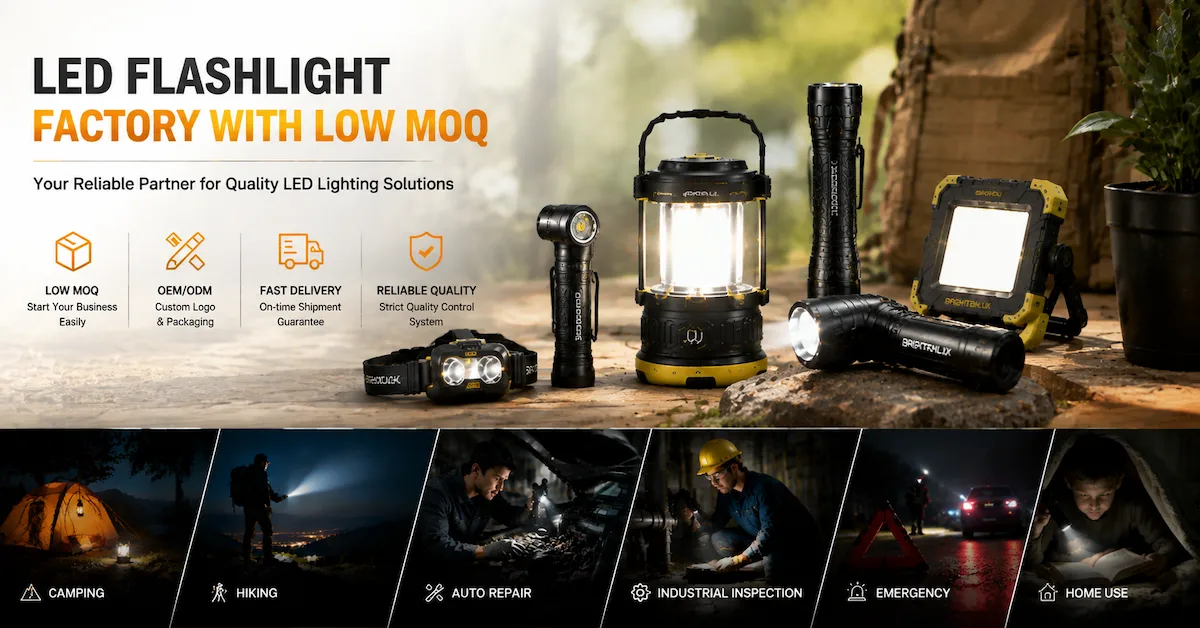
Some buyers need a head-mounted light that supports movement across trails or uneven ground. Others need a wearable lamp that works alongside hats, hoods, or outdoor clothing. The better you define the use case, the easier it becomes to judge whether a supplier’s product is genuinely suitable or simply broadly marketable. If you are still mapping options, review current product categories at Brightenlux products before requesting samples.
What to verify in the product itself
The visible form factor already tells you some things. A compact front lamp module, an elastic strap, and a wearable layout suggest a product meant for hands-free outdoor use. But buyers should not assume performance from appearance. The important details include battery type, charging arrangement, lighting modes, beam behavior, and any available documentation on performance or protection.
Comfort is equally important. If the strap is too loose, the beam can dip with movement. If it is too tight or poorly finished, users may stop wearing it. The same is true of housing fit and lamp angle. A product that works in a photo but feels unstable in motion is not a strong sourcing choice.
| Buyer check | What to confirm | Why it matters |
|---|---|---|
| Fit and comfort | Strap stability, wear feel, compatibility with outdoor clothing | A poor fit reduces real-world use |
| Power system | Battery type and charging arrangement | Supports buyer planning and user convenience |
| Lighting behavior | Modes, beam direction, and practical visibility | Affects usefulness in outdoor conditions |
| Documentation | Test information, product sheet clarity, packaging details | Helps with catalogs, bids, and support |
How to compare suppliers without overvaluing one feature
Many buyers focus first on brightness claims, but that is only one part of the decision. Outdoors, beam usability, comfort, and stability often matter more than a single headline feature. A very strong beam is not automatically better if it feels harsh, drains too fast, or creates less practical visibility for the user. The question is whether the lamp supports the task at hand.
A more reliable comparison looks at four areas together: product design, assembly quality, documented performance, and order support. The first two affect end-user satisfaction. The second two affect whether the supplier can support stock replenishment, private-label work, and repeated orders without unnecessary variation.
Check assembly quality and batch consistency
Wearable lighting is handled, moved, and worn in changing conditions. That means connector fit, housing closure, strap finishing, and overall build consistency deserve close review. A sample that looks acceptable on a desk may behave differently after transport, repeated handling, or regular charging.
For B2B buyers, consistency across units can matter as much as product appearance. Can the supplier keep strap color stable? Can it repeat packaging? Can it maintain visual and functional consistency from one replenishment order to the next? These questions are especially important for retail channels and branded outdoor lines, where the customer expects the product to look and behave the same each time.
If you need to discuss product fit, documentation, or sourcing support, use the contact page or send an inquiry for direct follow-up.
Understand when a rechargeable searchlight headlamp is the right fit
A rechargeable searchlight headlamp makes sense when the user needs a stronger forward beam than a basic camp light would provide. That can be useful for night navigation, route checking, temporary outdoor work, or movement in areas where the path is uncertain. The head-mounted form also keeps the light aligned with the user’s direction of view, which helps when scanning terrain or following a trail.
Still, there is a tradeoff. A narrower beam may help with distance but feel less convenient for close-up tasks. A broader beam may work well around camp but feel less precise for reading a path ahead. Buyers should decide which side of that tradeoff best matches the target user rather than assuming one configuration fits every outdoor buyer.
Common mistakes in headlamp procurement
One common mistake is treating all outdoor use as if it were the same. A lightweight hiking lamp and a more demanding field-use lamp can look similar while serving different expectations. Another mistake is overvaluing brightness while ignoring fit and beam control. If the lamp bounces, shifts, or feels awkward, performance on paper will not save the product in practice.
Buyers also sometimes overlook packaging and instructions. For consumer channels, the package should explain charging and operation clearly enough that the user does not treat the product as disposable. For B2B use, simple and accurate documentation can prevent confusion later. Finally, real-condition sample testing matters. A trail at dusk or a campsite after sunset reveals issues that a desktop review may miss.
Practical sourcing checks before you place an order
Use a simple sequence: define the use case, request samples, compare the samples in motion, and review supplier support. Wear the lamp over the kinds of clothing your users are likely to wear. Check whether it remains comfortable when the head moves. See whether the beam placement still works during walking, handling gear, or pausing to read something outdoors.
Then look at how the supplier responds. Does the supplier explain the product clearly? Does it support sample testing? Can it address private-label or packaging needs if your channel requires that? A supplier that is clear and consistent is usually a better long-term partner than one that only looks good in an initial sample.
FAQ
Is a rechargeable headlamp better than a disposable-battery model?
It depends on how the product will be used. Rechargeable models are often more convenient for frequent outdoor use, but only if charging is simple and clearly explained. Buyers should weigh convenience, user expectations, and channel requirements before deciding which format fits best.
What matters more than brightness for outdoor buyers?
Brightness is only one factor. For many buyers, the better question is whether the lamp offers practical beam use, comfort, and stable performance in real outdoor conditions. A usable beam and a secure fit often matter more than a single large number on a product sheet.
Should buyers ask about custom branding?
Yes, if the product will be sold in retail, gift, or branded outdoor channels. But branding should come after confirming the supplier can support consistent packaging and product quality. A label is useful only when the underlying product and supply are steady.
Why is sample testing in real conditions important?
Because outdoor use changes everything. Movement, clothing layers, uneven ground, and low-light conditions can reveal fit or beam issues that are easy to miss indoors. A short field check often gives buyers better insight than product photos or static inspection alone.