

LED Flashlight Factory with Low MOQ: What Buyers Should Know
When buyers search for an LED flashlight factory with low MOQ, they are rarely looking for a simple catalog item. They may be testing a new market, building a private-label range, supporting a seasonal promotion, or adding portable lighting to an existing channel. A low opening order can reduce risk, but it should not weaken the basics: product fit, branding control, packaging accuracy, and clear specifications. For B2B sourcing teams, the real question is not only whether a supplier accepts small orders. It is whether the factory can make a small order look professional and remain consistent.
What Buyers Mean by Low MOQ Flashlight Sourcing
A low MOQ flashlight program is usually a risk-management tool. It lets buyers test demand before committing budget, warehouse space, and sales resources to a larger run. This matters for sourcing managers, private-label brands, promotional buyers, and product teams building starter ranges of portable lighting. However, low MOQ should not be treated as a shortcut. The supplier still needs to understand order details, product positioning, and the expected sales channel.
The best discussions begin with the intended use case. A flashlight for emergency kits is different from a work light for maintenance teams or a headlamp for hands-free tasks. Buyers should explain the channel, packaging needs, logo expectations, and target users early. That helps the factory decide whether a small first run can be handled without compromising consistency.
Why Low MOQ Changes the Sourcing Conversation
For portable lighting, the first order is often the most difficult. Buyers may be testing retail response, building a service-kit accessory line, preparing a promotion, or checking whether a specific flashlight style suits their customers. Low MOQ reduces the pressure to overbuy, but it also changes how materials, printing, packaging, and mixed models are planned.
A low MOQ offer is not just a number on a quotation. It affects how flexible the factory can be with model selection, color presentation, labeling, and packing requirements. Small orders still need careful confirmation because mistakes are harder to absorb when the batch is limited. Buyers should ask how the supplier manages small-batch production, especially if the program includes more than one lighting type or customized packaging.
What the Product Range Reveals About Factory Capability
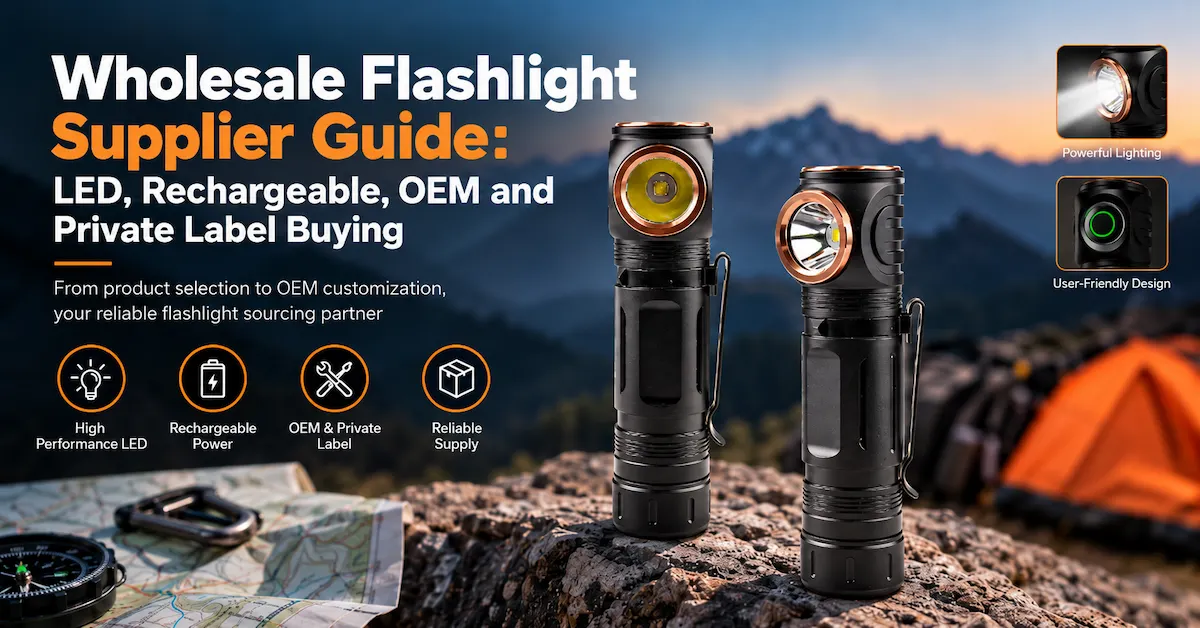
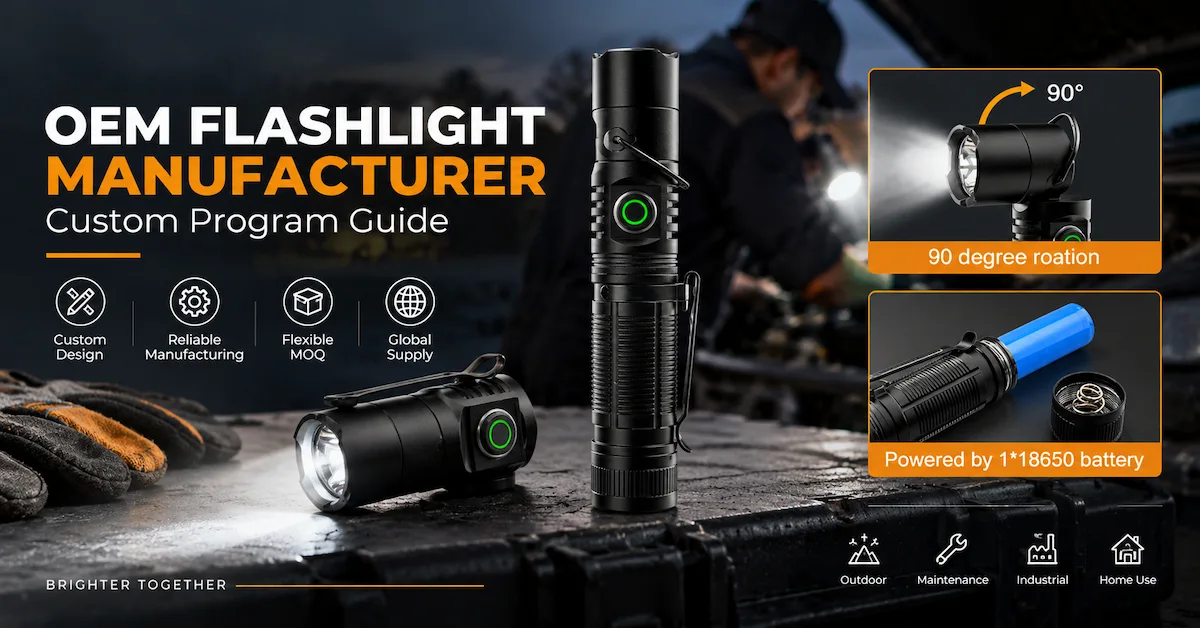
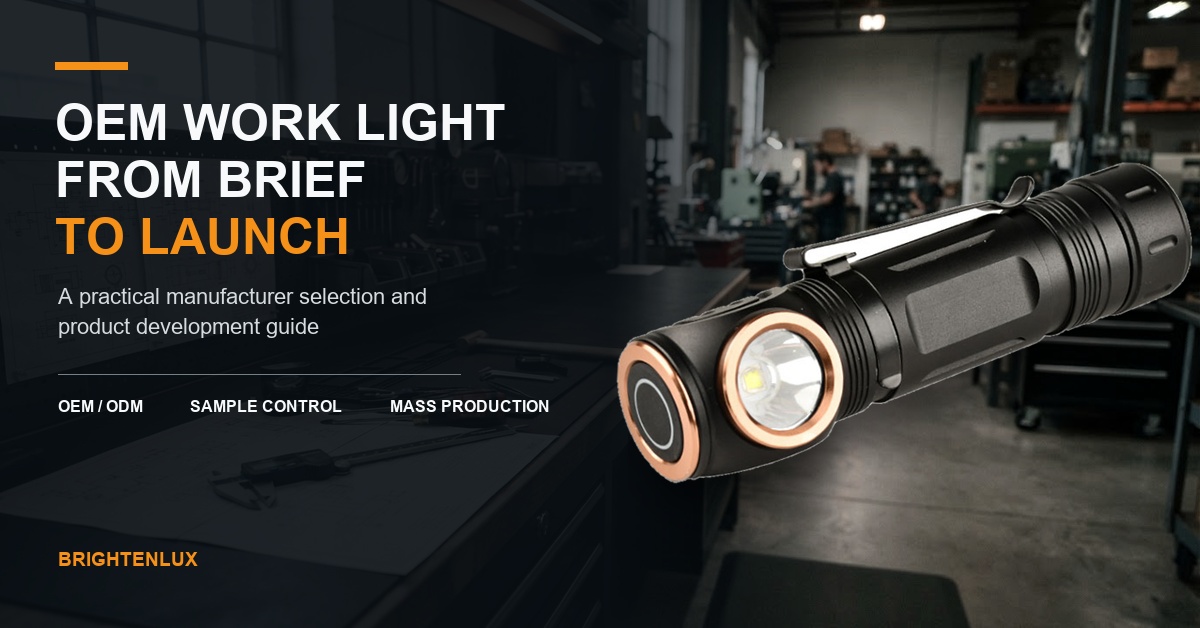
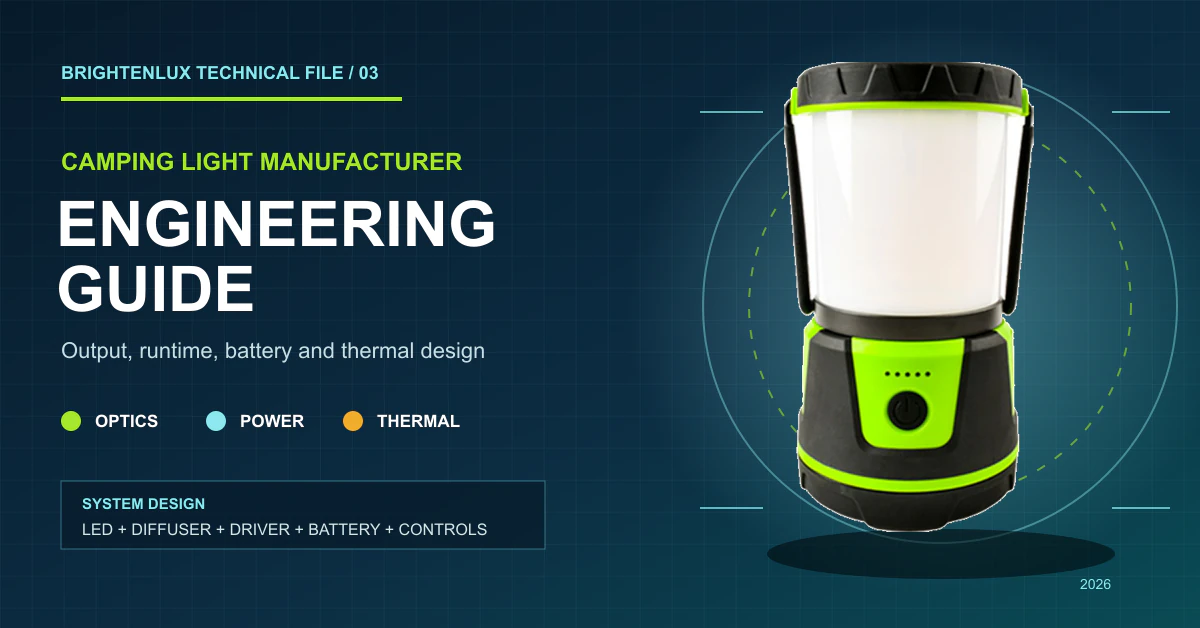
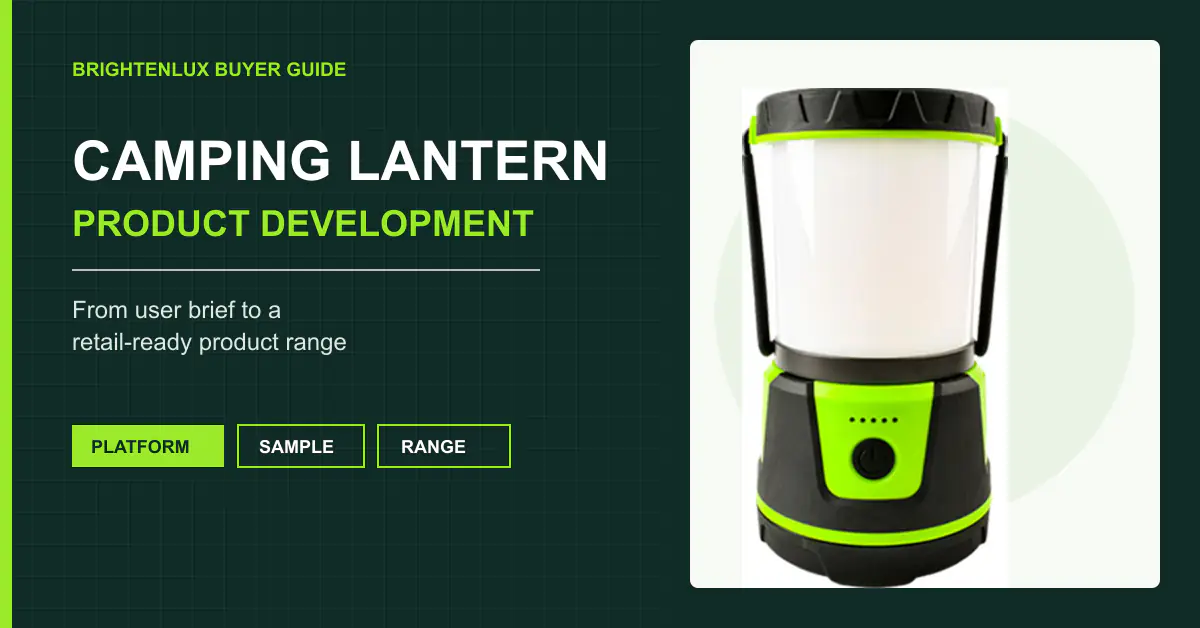
A factory’s visible product range can tell buyers a lot about its focus. The source range includes black-dominant housings with some yellow accents, cylindrical handheld flashlights, a compact headlamp with an elastic strap, a lantern-style light with a handle and transparent light chamber, and a square or rectangular flood-style work light with a stand. These forms support different user scenarios rather than one universal need.
Handheld flashlights suit inspection, emergency carry, and general portable use. Headlamps support hands-free repair, outdoor activity, or task work. Lanterns are better suited to area lighting during outages or campsite use. Work lights help in auto repair, under-hood inspection, and maintenance situations where localized illumination is more useful than a narrow beam. Buyers comparing categories can review related portable lighting options at Brightenlux products.
OEM/ODM, Branding, and Packaging for Small Orders
Many buyers sourcing a custom LED flashlight need more than a product. They need an item that can arrive ready for shelf display, kit assembly, industrial distribution, or promotional use. That is where OEM/ODM support, logo placement, and packaging discussion become important. Even with a low MOQ, buyers should expect clear communication about what can be customized and what should remain standard.
For brand owners, portable lighting is a crowded category. A plain torch may be easy to source, but a consistent product line with disciplined packaging and a clear use-case story is easier to sell. For distributors, presentation also matters when products are placed into service kits, field bags, or customer support packs. Buyers should remember that low MOQ does not mean unlimited customization. It means the supplier has a practical route to small-batch branding.
Selection Criteria That Matter More Than Brochure Claims
Marketing phrases can sound attractive, but sourcing decisions should rely on details the factory can confirm. Buyers should compare product form, handling, technical clarity, and consistency across models. Appearance is useful, but it is not proof of performance. A flashlight, headlamp, lantern, and work light may all belong to portable lighting, yet each one solves a different problem.
| Criteria | What Buyers Should Check |
|---|---|
| Use case | Match handheld, headlamp, lantern, or work light format to the actual task. |
| Handling | Review housing shape, grip texture, and suitability for glove, outdoor, or work use. |
| Confirmed specs | Ask for brightness, runtime, battery type, charging method, dimensions, IP rating, and impact details when relevant. |
| Brand consistency | Check logo, label, packaging, and color discipline across mixed models. |
If your team needs model confirmation before ordering, send the project details through the Brightenlux inquiry page.
Common Mistakes in Low MOQ Lighting Projects
The first mistake is assuming low MOQ means low complexity. A small order still needs confirmed artwork, final packaging details, carton information, and agreed product specifications. If those points remain loose, the order can drift. Low volume may reduce inventory exposure, but it does not remove the need for disciplined purchasing communication.
The second mistake is treating unverified features as facts. If a product is not clearly confirmed as rechargeable, waterproof, magnetic, or built with a specific battery type, buyers should not include those features in purchasing assumptions. The third mistake is focusing only on unit price. Weak packaging, unclear branding, or inconsistent finish can make a cheap flashlight harder to sell. For low MOQ sourcing, the stronger measure is whether the product supports a credible first impression.
How to Decide Whether the Factory Fits Your Program
Start by asking how the supplier handles small-order customization. Can it discuss OEM/ODM requests, logo placement, and packaging options clearly? Can the range be mixed across handheld flashlights, headlamps, lanterns, and work lights, or does each category have separate requirements? These questions help buyers understand whether the low MOQ offer is practical for a real program.
Next, evaluate the quality of the supplier’s answers. A practical LED flashlight factory should be able to explain what is fixed, what can be adjusted, and which specifications still require confirmation. For private-label launches, sample confirmation and packaging review are important before scaling. For industrial or service use, the product form must fit the task. A work light with a stand, for example, addresses a different need than a compact handheld torch.
Next Step for B2B Sourcing Teams
A low MOQ LED flashlight factory is most valuable when it helps buyers test demand, control branding, and avoid overcommitting inventory. The strongest sourcing conversations start with use case, then move to customization, then commercial terms. This order keeps the project grounded in what the customer actually needs instead of chasing a broad feature list.
Buyers should look beyond the headline MOQ and review the supplier’s product forms, technical clarity, and approach to custom logo and packaging work. If these elements align, a small-order flashlight program can support market entry or category expansion with less risk. To discuss a project directly, sourcing teams can contact Brightenlux through the contact page.
FAQ
Is a low MOQ flashlight suitable for a new brand?
Yes, if the supplier can support clear branding, packaging, and product communication. A small opening order can help a new brand test demand without overcommitting inventory. Buyers should still confirm specifications, artwork, and packaging details before production, because low MOQ does not remove the need for disciplined order control.
Can one factory supply different flashlight types?
Often, yes. A factory showing handheld flashlights, headlamps, lanterns, and work lights may be positioned for multiple portable lighting use cases. Buyers should confirm whether models can be combined in one program, whether each line has separate requirements, and which customization options apply to each product type.
What should buyers verify before placing an order?
Buyers should verify the specifications that matter to their market, including brightness, runtime, battery type, charging method, IP rating, impact resistance, and dimensions where relevant. These details should come from supplier confirmation, not assumptions based on photos, catalog presentation, or similarity between product housings.
Does low MOQ mean unlimited customization?
No. Low MOQ usually means the supplier has a practical way to support small-batch orders, not that every packaging, printing, or product detail can be changed freely. Buyers should separate essential branding needs from optional changes and confirm what is realistic before approving artwork or order terms.