

LED Flashlight Factory with Low MOQ: What Buyers Should Know
If you are sourcing an LED flashlight factory with low MOQ, you are likely balancing two priorities: testing a product that can sell and avoiding a first order that ties up too much cash. This is common for distributors, online sellers, industrial buyers, and brand owners. Flashlights look simple, but sourcing becomes more complex when branding, packaging, quality consistency, and small-batch support enter the discussion. A low-MOQ factory can be useful, but only when it can deliver practical customization and stable production.
Why Low MOQ Matters in Flashlight Sourcing
Low MOQ is more than a purchasing convenience. For many buyers, it changes the risk profile of a new product launch. If you are testing a private-label SKU, entering a new sales channel, or preparing a seasonal promotion, a smaller first order helps you validate demand before scaling. That is especially valuable in the flashlight category, where one buyer may need a camping product, another may need a tool-channel item, and another may need a unit for emergency kits.
Inventory flexibility also matters. A flashlight is not a fashion item, but packaging styles, body finishes, and customer expectations can still shift. A low-MOQ supplier gives you room to test logo placement, retail presentation, and channel fit without filling storage space with an unproven version.
Read the Product Format Before You Specify
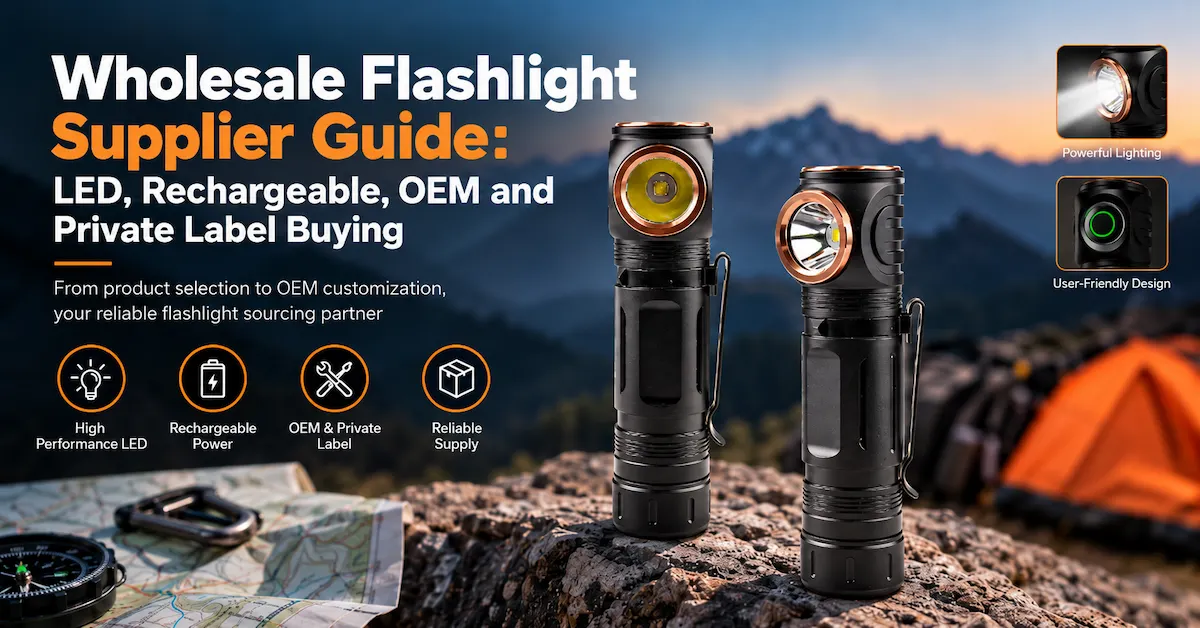
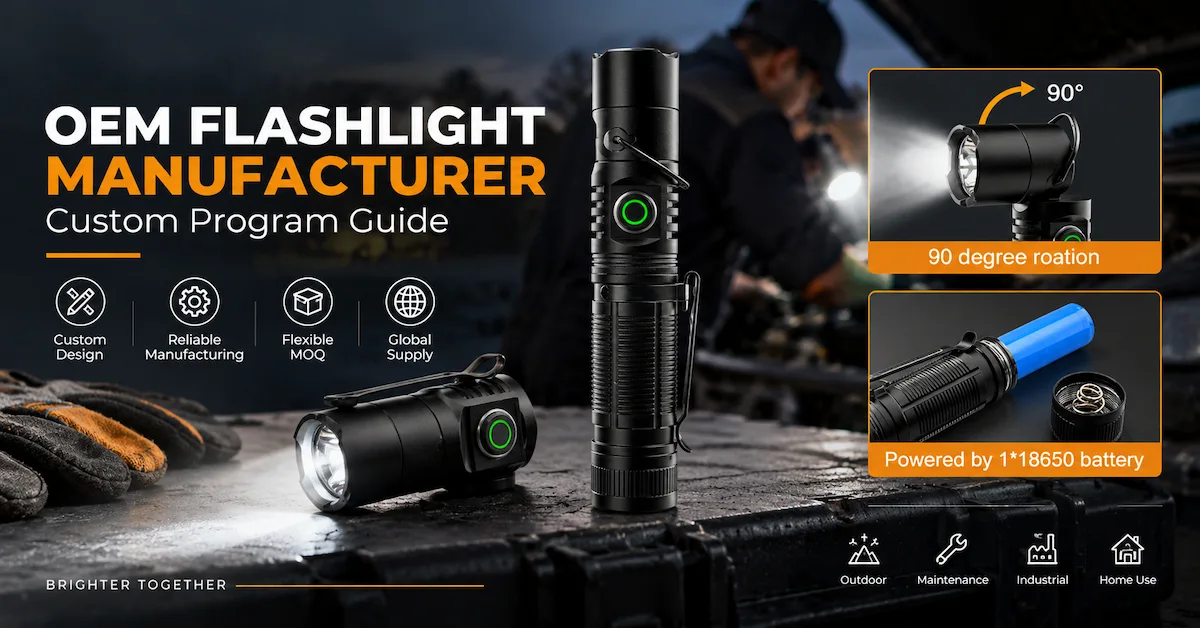
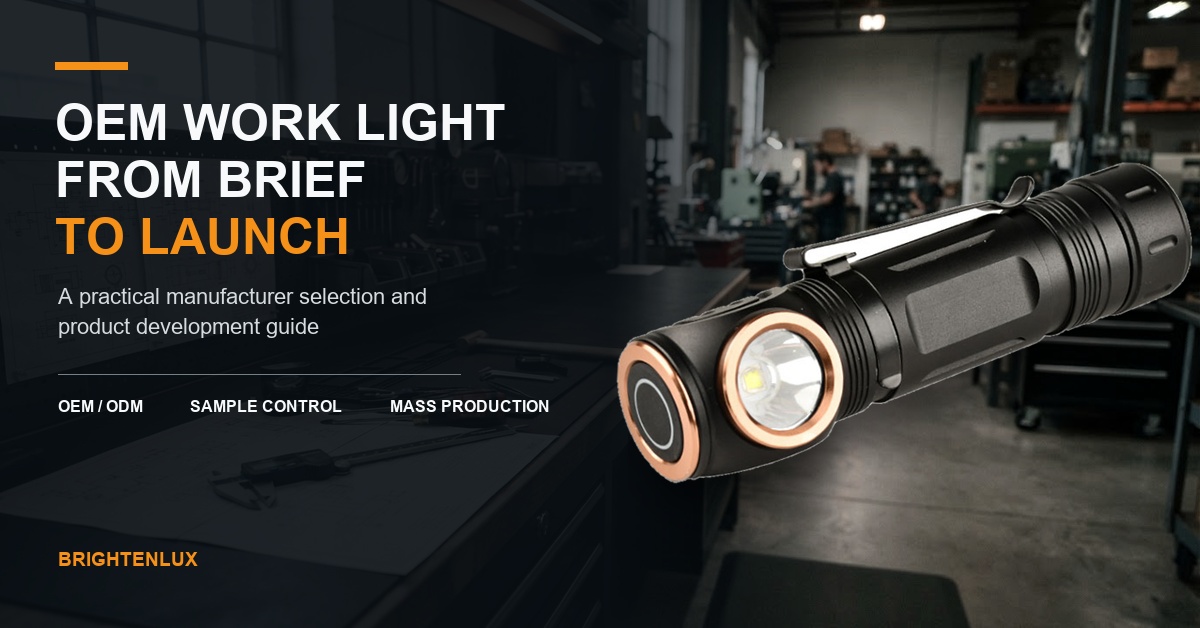
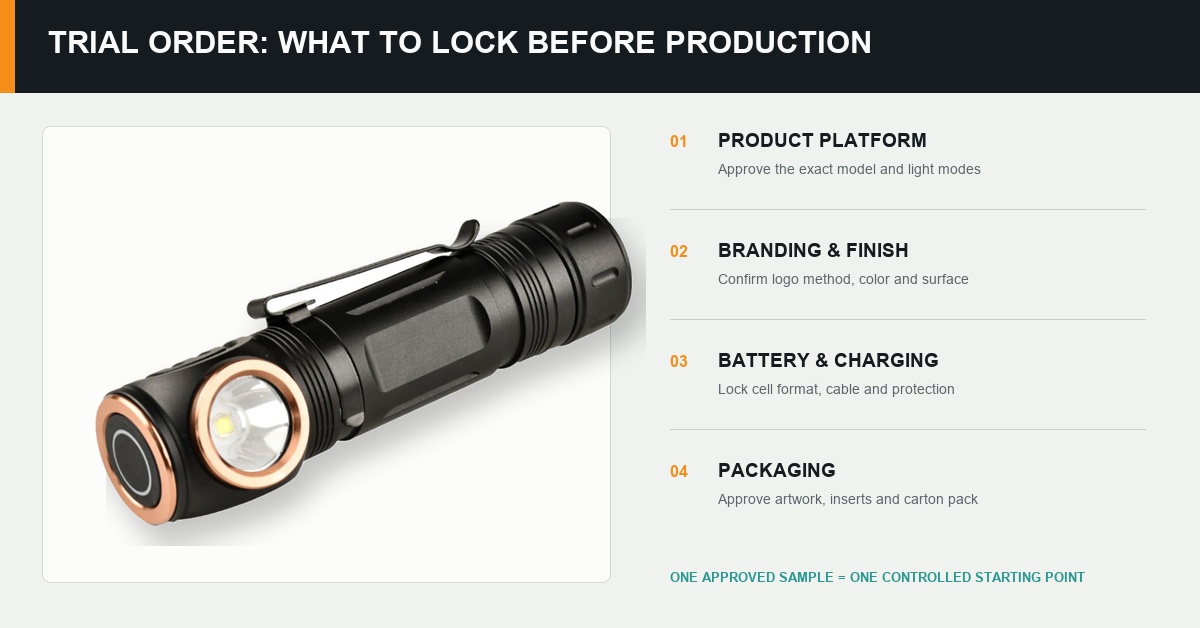
The flashlight shown is a compact handheld LED torch with a cylindrical body, a larger front head, a textured grip, and a matte black finish. The one-hand hold suggests everyday portability, which suits common applications such as camping, outdoor work, auto repair, inspection, and emergency kits. This general format is popular because it is practical, easy to stock, and suitable for different buyer groups.
However, the body shape alone should not drive the purchasing decision. Buyers should confirm whether the factory can maintain the same finish, grip appearance, and branding position from sample to bulk order. Matte black surfaces can look professional, but they can also make scratches, uneven coating, or poor logo application more visible if production control is weak.
What Factory Support Should Include
When buyers search for a portable LED torch factory, they usually need more than a standard product page. A commercial flashlight program often requires OEM or ODM support, custom logo placement, packaging options, carton labeling, instruction sheets, and protective inserts. These details may seem ordinary, but they affect whether the product is ready for retail, distribution, or project supply.
Customization should begin with realistic questions. Where can the logo be applied? What marking methods are available? How will the matte or textured surface affect visibility? Can the same presentation be repeated in future orders? Buyers can browse related product categories at Brightenlux products to prepare a clearer brief before discussing customization. A good factory should explain options clearly without overstating what has not been confirmed.
How to Compare Suppliers Without Chasing One Number
Many flashlight buyers focus first on brightness. A high lumen flashlight can be useful for inspection, outdoor activity, or emergency use, but a headline brightness claim does not prove the product is right for your market. A bright flashlight can still create complaints if the body feels awkward, the switch action is inconsistent, the finish varies between batches, or the packaging does not match the sales channel.
Compare suppliers on the complete picture. Ask how assembly is controlled, whether samples are representative of production, and what checks are made before shipment. If a supplier offers low MOQ, that should not mean looser quality expectations. In small orders, process discipline is often easier to see because the factory still has to deliver a professional result without relying on high-volume production momentum.
Common Mistakes in Small-Quantity Flashlight Orders
The first mistake is treating low MOQ as proof of low risk. It is not. A factory may accept a small order but still deliver weak packaging, inconsistent assembly, or rushed branding. The second mistake is assuming that every flashlight promoted for outdoor use is also suitable for industrial, maintenance, or emergency applications. The use case matters because a camping customer may judge comfort and appearance differently from a repair team or tools distributor.
Another mistake is over-specifying the first order. Some buyers combine custom color, special packaging, advanced brightness claims, and new logo requirements too early. That can slow sampling and make issues harder to isolate. A better approach is to confirm the core design, review visual quality, test branding presentation, and then expand variations after the first version proves itself.
Quality Control Points Buyers Should Confirm
Every supplier claims reliable quality, so buyers need practical checkpoints. For a flashlight factory, quality control should cover appearance, assembly fit, function, switch consistency, lens and bezel assembly, and branding accuracy. The finished item should feel stable in the hand, and the visual finish should match the approved sample as closely as possible.
Repeatability is the key. If the sample has a clean matte surface and clear logo placement, the bulk order should not arrive with uneven marking or visible surface defects. Cosmetic consistency matters because compact lighting products are judged quickly by end users. Before placing an order, ask which product details are confirmed and which remain open. Do not assume battery type, charging method, waterproofing, runtime, exact material composition, or certified test results unless the supplier provides them clearly.
A Practical Buying Path for B2B Teams
Start with the intended use case: camping retail, emergency kits, auto repair, inspection, or general outdoor work. Then define the minimum acceptable features, such as handheld size, body finish, grip feel, branding method, and packaging style. A concise brief helps the factory respond accurately and reduces unnecessary back-and-forth.
Next, request samples and evaluate them as a buyer, not only as a spec checker. Hold the flashlight, review the surface finish, check logo placement under normal light, and consider whether the presentation fits your channel. If the sample is promising, ask about production steps and quality checkpoints. To discuss a trial order or project brief, buyers can contact Brightenlux or send details through the inquiry page.
| Buying Step | What to Confirm |
|---|---|
| Use case | Camping, inspection, auto repair, emergency kit, or retail channel |
| Sample review | Finish, grip, switch feel, logo position, and packaging fit |
| Customization | Logo method, carton labeling, inserts, and instruction sheets |
| Order planning | Desired quantity, repeat-order needs, and open technical questions |
FAQ
Can a low MOQ order still support custom branding?
Usually yes, if the factory provides OEM or ODM support. Buyers should confirm the logo method, placement area, and appearance during sampling. This is especially important on matte or textured surfaces, where visibility and durability can vary depending on the marking method and body finish.
Should buyers choose brightness or build quality first?
Build quality should usually come first. Brightness can be important, but it does not replace stable assembly, comfortable handling, consistent switch operation, and clean finishing. A flashlight that looks and feels dependable is more likely to satisfy distributors, retailers, and end users across repeat orders.
What product details should not be assumed?
Do not assume battery type, charging method, waterproof rating, runtime, exact material composition, certifications, or test results unless the supplier provides them directly. These details affect marketing claims, compliance review, and customer satisfaction, so they should be treated as open questions during sourcing.
What should be included in a first inquiry?
A first inquiry should include the target use, preferred body style, branding needs, packaging expectations, and desired order size. Keeping the brief simple helps the factory respond accurately and allows both sides to focus on practical sampling, visual quality, and production repeatability.