

LED Flashlight Factory with Low MOQ: What Buyers Should Check
If you are comparing an LED flashlight factory with low MOQ, you are likely balancing three priorities: keeping the first order manageable, getting a product that looks ready for your market, and avoiding problems with branding, packaging, or delivery details. For sourcing managers, engineers, and product teams, the real issue is not whether a supplier can make a flashlight. It is whether the supplier can support a small pilot run with clear specifications, practical customization, and steady communication.
Why Low MOQ Changes the Buying Decision
Minimum order quantity can decide whether a flashlight project moves forward or stays in review. A low MOQ helps when you are testing a new sales channel, collecting user feedback, or building a private-label accessory line without holding too much inventory. It also gives your team space to adjust details after sample review.
This matters because a flashlight program often looks simple until body finish, switch feel, logo position, grip texture, strap style, and packaging all need approval. A small first order can reduce exposure, but it should not reduce discipline. Buyers still need written specifications, sample confirmation, and a clear record of what the factory will supply.
Start with the Intended Use Case
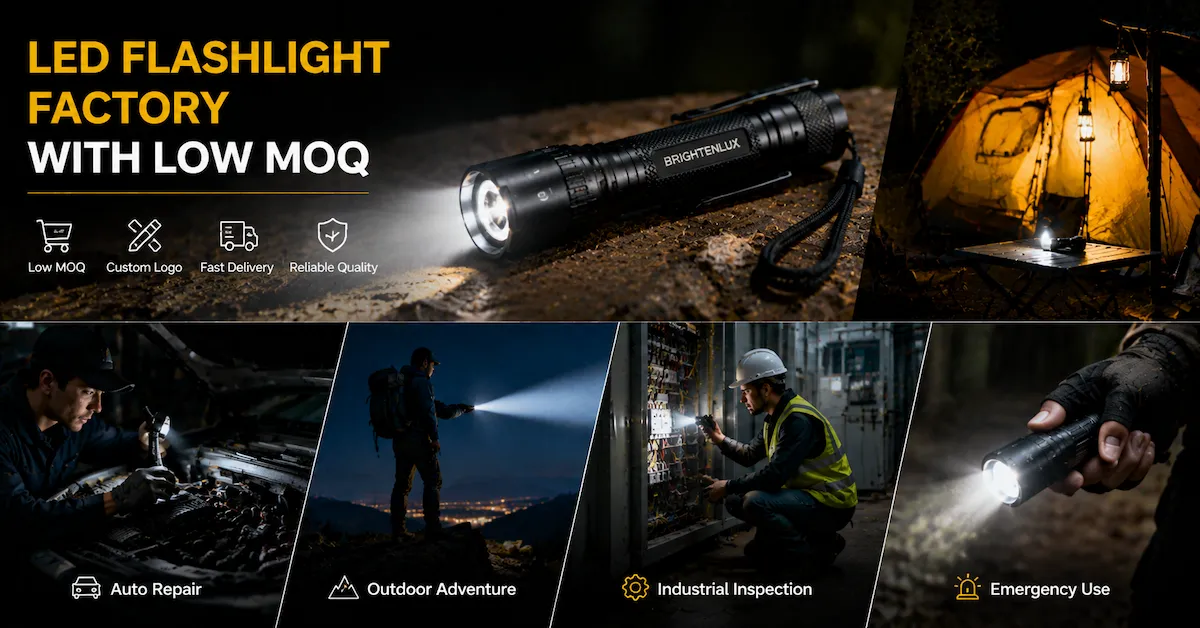
Most buyers looking for a low-MOQ flashlight are not chasing novelty. They need a practical tool for markets such as auto repair, industrial inspection, camping, emergency kits, or general work use. In those settings, users judge the product by grip, beam usability, switch comfort, portability, and whether it feels credible enough to carry a brand logo.
Before discussing decoration, define the role of the product. A light for a technician’s pocket may need a secure clip and comfortable grip. A retail or promotional item may depend more on visual consistency and packaging. A field-use product may need a more durable feel. This early decision helps the factory recommend a suitable existing body or customization path.
Check the Core Product Details Before You Quote
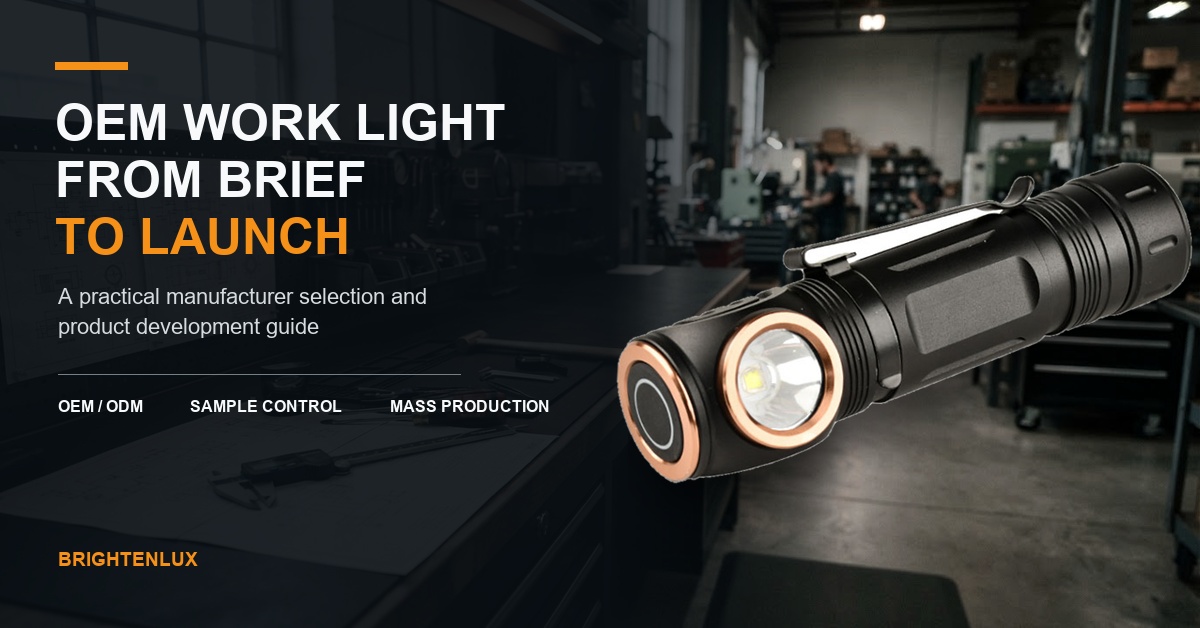
The flashlight shown represents a common controlled-launch style: a compact handheld LED torch with a cylindrical body, knurled grip, pocket clip, strap, and black finish. The visible structure suggests a metal-bodied design, but the exact material should be confirmed with the supplier instead of assumed. Material choice affects weight, durability feel, surface finish, and daily carry comfort.
Use a short checklist before requesting a final quotation. This keeps the discussion focused and helps prevent later disputes about what was included.
| Buyer check | Why it matters |
|---|---|
| Body material | Confirm aluminum alloy, stainless steel, or another material before approval. |
| Logo method | Ask whether branding is laser-engraved, printed, or applied another way. |
| Battery format | Clarify rechargeable or replaceable-cell design early. |
| Performance data | Request written details for output, runtime, beam distance, and modes if needed. |
| Packaging | Confirm box, label, insert, and carton requirements before production. |
Evaluate Branding and Packaging Carefully
Custom logo support is often a key reason to work with an OEM torch supplier. However, branding only adds value when it is clear, durable, and placed where it does not interfere with handling. Ask where the logo will sit on the body, how it will be applied, and whether the curved or textured surface affects readability.
Packaging should be discussed at the same time, not after the flashlight is approved. A product may be technically acceptable but still feel unfinished if the box, label, insert, or carton information is delayed. If you are comparing models, review available options on the Brightenlux products page and prepare logo files, packaging expectations, and target use cases before asking for a sample.
Confirm Material, Finish, and Handling Details
Compact flashlights depend heavily on tactile impression. A knurled grip is not just decorative; it helps the tool remain usable with gloves, damp hands, or quick maintenance tasks. A pocket clip also changes how the flashlight is carried between job sites, tool bags, service vehicles, or uniform pockets.
The black finish commonly seen on this type of handheld torch suits industrial and outdoor buyers because it looks practical and gives a clean surface for branding. Still, finish quality should be verified through samples. If a stainless steel flashlight version is being considered, confirm that the added weight and feel match your market. A heavier product may feel more premium to some users, while others may prefer lighter daily carry.
Ask the Right Questions About Battery and Performance
The source information does not confirm whether the flashlight is USB rechargeable or powered by replaceable cells, so buyers should clarify this point early. Battery format affects packaging, shipping preparation, user expectations, and after-sales support. Rechargeable products may be easier to market in some channels, while replaceable batteries may remain familiar for emergency kits.
Performance details should also be written down rather than guessed. Lumen output, beam distance, runtime, and switch modes are not provided here, so request a specification sheet if these points are important to your project. For inspection and repair work, beam quality can matter as much as raw brightness. A stable, directed beam may be more useful than a harsh beam that makes close work uncomfortable.
Judge the Supplier, Not Just the MOQ
A low minimum order is helpful, but it is not a complete sourcing strategy. When evaluating a supplier, ask for sample photos, specification sheets, packaging options, and the exact MOQ for your chosen configuration. Then watch how clearly the team handles files, branding questions, label requirements, and delivery-related communication.
It is also useful to ask what can be customized beyond the logo. Some suppliers may support color, packaging, strap style, or clip-related options, while others may prefer to work from an existing body. Neither approach is automatically wrong. If your goal is a fast pilot, a proven body with light customization may be practical. If you need a more distinctive product, expect more decisions before approval. For project-specific questions, contact Brightenlux through contact us.
Plan a Practical First Order
For a first order, treat the flashlight as a working tool first and a branded item second. Define whether it will be used for inspection, emergency preparation, outdoor carry, or general illumination. Then select the material, finish, clip, strap, logo location, and packaging to match that use case.
A common mistake is asking for too many changes at once. A new color, new logo, new packaging insert, and new accessory set may all be possible, but each added layer increases review work when the order quantity is still small. A focused pilot is often safer: launch one well-executed configuration, gather feedback, and expand later if the market responds. When your brief is ready, you can submit details through the Brightenlux inquiry page.
FAQ: Low-MOQ LED Flashlight Sourcing
Can a low MOQ order still include a custom logo?
Yes, many low-MOQ flashlight programs can support custom logo work, especially for OEM-style orders. Buyers should confirm the marking method, logo position, file requirements, and any setup details before approval. A sample is the safest way to check readability on a curved or textured flashlight body.
Is a metal flashlight always better than a plastic one?
Not always. A metal-bodied flashlight often feels more durable and suitable for industrial or outdoor use, but the best choice depends on application, preferred weight, and market positioning. If a stainless steel flashlight is considered, confirm that the heavier feel is intentional and comfortable for the intended users.
What should buyers request before bulk production?
Request a sample, written specification sheet, packaging details, logo confirmation, and a clear description of the quoted configuration. If runtime, beam distance, waterproofing, or switch modes matter to your project, ask for documented information. Do not rely on assumptions or verbal descriptions for key selling points.
How can buyers reduce risk in the first order?
Keep the first order focused on one clear use case and avoid unnecessary customization layers. Confirm material, finish, battery format, branding, packaging, and performance claims before production. A manageable pilot run should help your team test the market, not create confusion about unresolved product details.