

LED Flashlight Factory with Low MOQ: What Buyers Should Know
Choosing a LED flashlight factory with low MOQ is not only about getting a lower starting quantity. For sourcing managers, product teams, and brand owners, it is often a way to test a product idea before committing to larger inventory. A smaller first order can help confirm whether the model, finish, logo position, packaging, and supplier communication are suitable for the target market. In a crowded portable lighting category, the practical question is simple: can the factory support your first order clearly enough to become a repeat supplier later?
Why Buyers Start with a Low-MOQ Flashlight Factory
Low MOQ is useful because flashlight sourcing often begins with uncertainty. A buyer may want to test one handheld torch, one lantern-style light, or one work and emergency light before expanding the range. The first order can reveal whether the product feels right in real use, whether the housing design suits the audience, and whether packaging or logo requirements are easy to manage. It also reduces the risk of holding excess stock if the model does not match customer expectations. For new product launches, seasonal promotions, or niche applications, a small order flashlight supplier can help a company move from concept to market while keeping inventory exposure controlled.
Define the Use Case Before Comparing Models
Before reviewing catalogs, buyers should define the job the flashlight needs to perform. A camping light, a roadside repair lamp, an inspection torch, and a home emergency light may all belong to portable lighting, but users judge them differently. Grip, handle design, beam direction, switch placement, stability, and portability can matter more than exterior appearance. The supplied product information indicates a range that includes handheld torches, lantern-style lights, and work or emergency lights. Buyers can review available options on the Brightenlux products page, but the selection process should begin with the intended user, not only with the shape of the product.
What Product Variety Suggests About Factory Capability
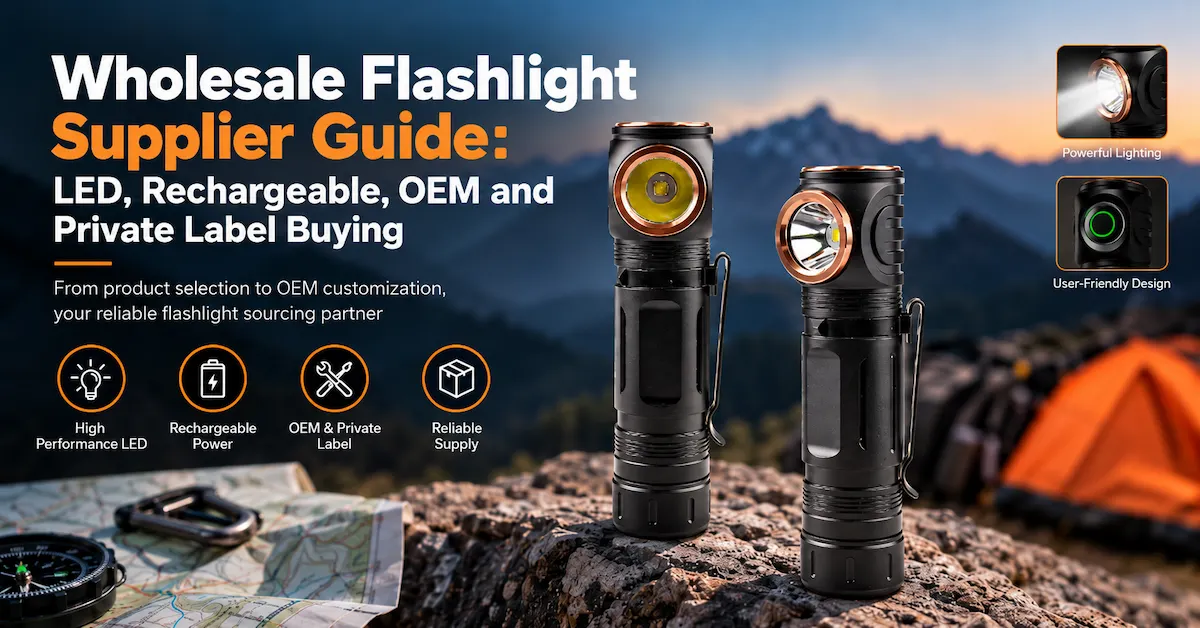
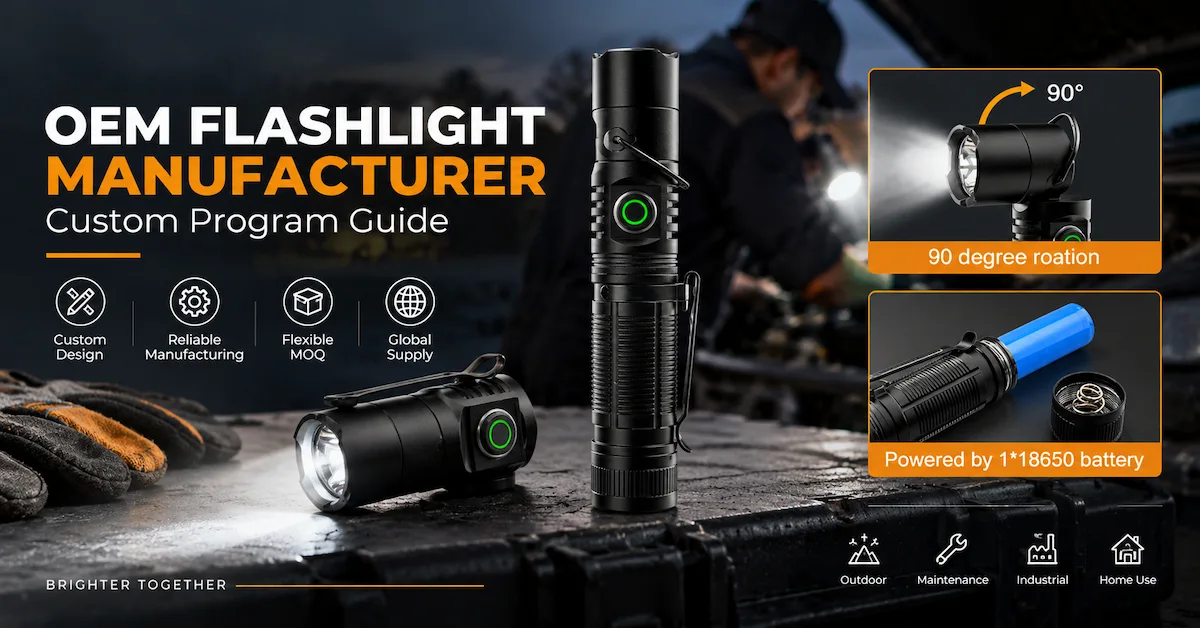
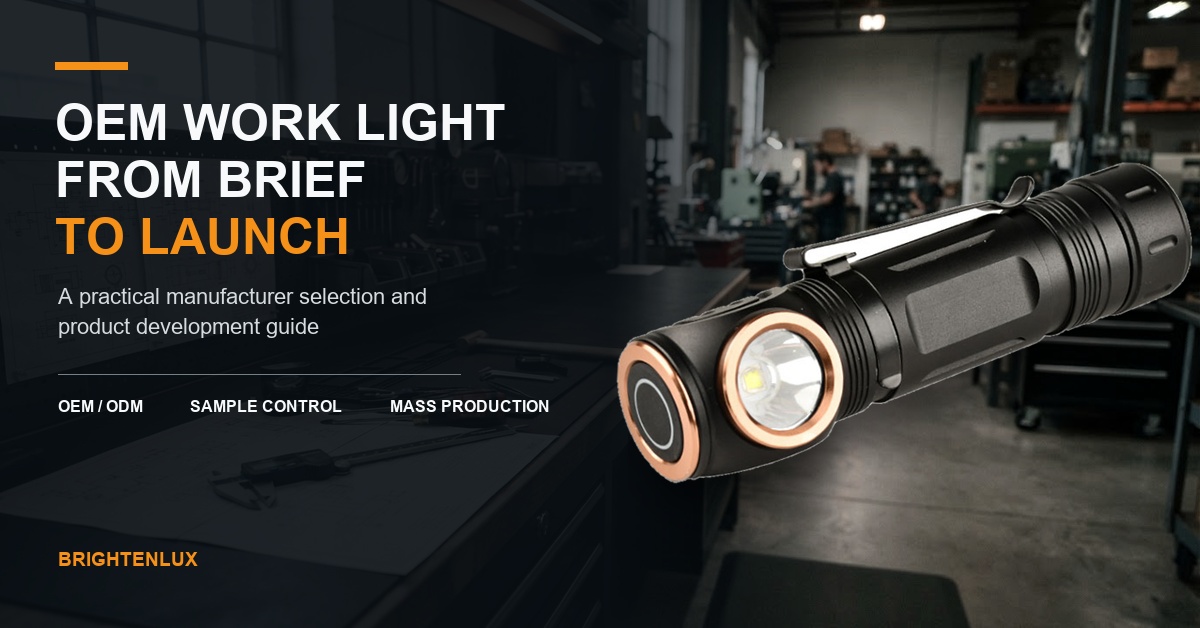
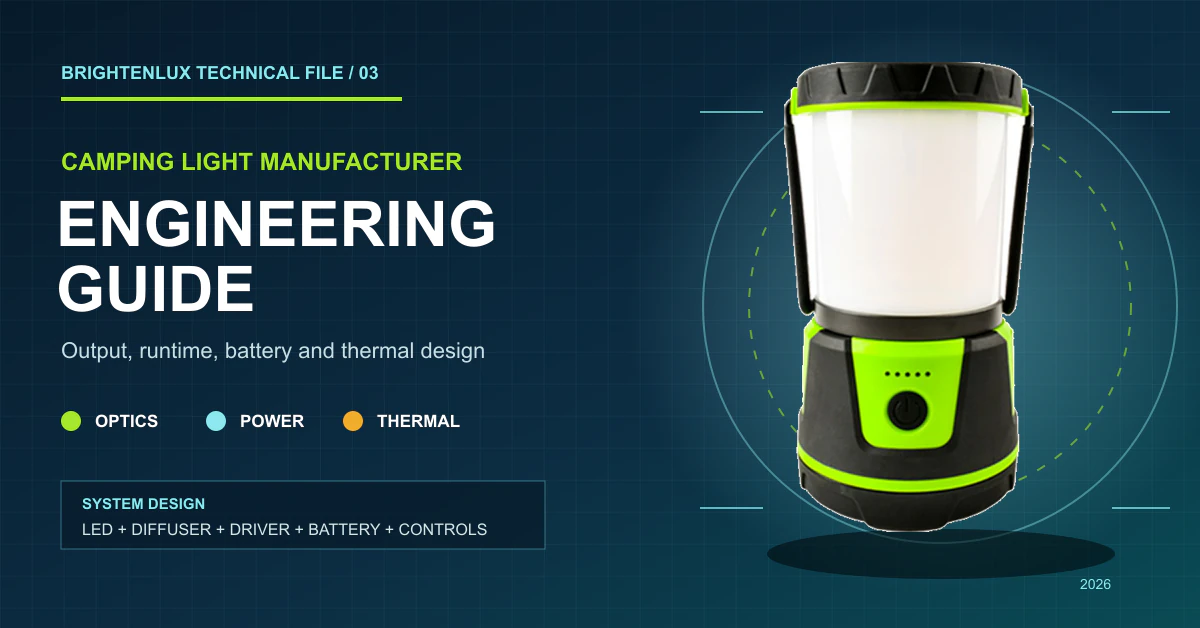
A factory that works with several portable lighting formats may be able to support different B2B programs, from compact handheld products to practical lights with carrying handles or sturdier frames. The supplied visuals show mostly black housings, some yellow accents, cylindrical handheld forms, and a rectangular framed unit with a handle. These details suggest products aimed at practical consumer and industrial-style use, but they do not confirm material, battery type, charging method, runtime, water resistance, or performance data. Buyers should avoid assuming technical specifications from photos. A good sourcing discussion separates visual impressions from verified product details, including construction, packaging, customization, and documentation.
Customization, OEM/ODM Support, and Low MOQ
For many B2B buyers, the value of low MOQ depends on whether customization is still practical at a smaller quantity. The supplied information highlights custom logo support and OEM/ODM service, which are important starting points. However, buyers should confirm what is standard and what changes the order requirements. Logo placement, artwork method, body color, packaging format, and accessories may each affect feasibility. If the project is intended for retail, promotional sales, or a private label launch, request a written sample summary before approval. That summary should identify the model, agreed customization points, package style, and any assumptions that still need confirmation.
Quality Control and Compliance Need Product-Specific Proof
Low MOQ should not mean loose control. A smaller order can be even more sensitive because one weak batch may damage the launch before the buyer has meaningful sales feedback. The supplied material refers to reliable quality and quality control claims, which are helpful signals but should be tested through questions. Ask how the factory checks incoming materials, assembly, logo application, final packing, and sample approval. The artwork also shows compliance icons such as CE, RoHS, FCC, UKCA, and ISO. Buyers should confirm whether any mark applies to the exact quoted model and destination market. Promotional graphics are not a substitute for product-specific documents.
Compact Buyer Checklist for First Discussions
A focused checklist keeps the sourcing process efficient and prevents teams from getting distracted by too many similar models. It also helps compare one supplier against another using the same criteria. When evaluating a bulk LED flashlight program, the first conversation should cover both the launch order and the possibility of repeat replenishment. If the supplier is responsive at sample stage but cannot explain how repeat orders are controlled, the buyer may face inconsistency later. Use the table below as a simple structure before requesting a quote or sending artwork.
| Check | What to Confirm |
|---|---|
| Product fit | Handheld, lantern-style, work, or emergency lighting use |
| Customization | Logo, color, packaging, and accessory possibilities |
| Samples | Model details, finish, artwork position, and package format |
| Documentation | Any compliance documents required for the target market |
| Reorders | Ability to keep the same appearance and basic build quality |
Common Mistakes When Sourcing LED Flashlights
One mistake is treating all LED flashlights as interchangeable. A work light, emergency light, and camping torch may look related, but they solve different problems. Another mistake is judging quality mainly by exterior style. A black housing with yellow accents may appear rugged, yet buyers still need to verify switch feel, assembly consistency, reflector design, and internal construction details. Some teams also overread compliance marks in product graphics. If documentation matters for retail or regulated markets, ask for supporting files early. Finally, avoid placing a large first order only because the unit cost appears attractive. Practical field feedback often matters more at launch.
A Sensible Path from Trial Order to Supply Chain
A low-MOQ flashlight factory is most valuable when it helps the buyer learn quickly and safely. Start with a defined use case, choose the model format that fits that use case, and confirm customization before sample approval. If fast delivery is mentioned, define it in writing rather than relying on general claims. If the first order is small, ask whether logo or packaging changes affect the minimum. For teams ready to discuss a project, Brightenlux provides inquiry options through the inquiry page and direct contact through contact us. The goal is not just to buy a flashlight, but to build a repeatable sourcing process.
FAQ
What does low MOQ help buyers achieve?
Low MOQ helps buyers test demand, product fit, and customization before committing to larger inventory. It is useful for new launches, promotional orders, or niche applications where the buyer needs real feedback on design, packaging, and supplier service before planning repeat production.
Can I assume a flashlight is rechargeable or water-resistant?
No. The supplied product information does not confirm battery type, charging method, runtime, water resistance, or similar performance details. Buyers should request a product specification sheet and confirm every required feature before sample approval or purchase order confirmation.
Is custom logo support always available on small orders?
Not always. The supplied information highlights custom logo support, but the decoration method, placement, packaging changes, and minimum quantity may vary by model. Buyers should confirm logo requirements in writing and approve a sample that reflects the final artwork.
What should I request before placing the first order?
Request the exact model details, sample confirmation, customization summary, packaging information, quality control points, and any compliance documents required for your market. Clear written confirmation reduces misunderstandings and helps determine whether the supplier can support repeat orders.