

Flashlight Manufacturer China: What Buyers Should Check First
When buyers search for a flashlight manufacturer China, they are usually trying to solve more than a purchasing task. They need a handheld torch that fits a use case, a brand position, and a production plan without creating problems after delivery. A flashlight may look simple, but beam behavior, housing, switch feel, battery structure, lens quality, and assembly consistency all shape the user experience. For sourcing teams, the first step is not asking for a logo or package. It is understanding what the product must do and what the supplier can reliably make.
Why Buyers Search for a Flashlight Manufacturer in China
B2B flashlight sourcing often begins with a practical application: outdoor retail, emergency kits, travel accessories, utility products, or promotional programs that should remain useful after the first impression. In each case, the buyer needs a product that feels dependable in the hand and performs consistently in real use.
A handheld flashlight is a layered product. A clean beam, balanced body, secure head, smooth switch, and consistent finish can all influence whether an end user trusts it. Small differences are easy to notice, especially when buyers compare samples side by side. One unit may feel stable and focused, while another may feel loose, uneven, or unfinished.
That is why supplier selection should focus on production capability as much as catalog appearance. A real manufacturing partner should help define the structure, confirm what is known, and avoid assumptions about specifications not yet verified.
Read the Product Before Reading the Claims
The source product is a compact handheld torch for outdoor hiking and night navigation. Visually, it produces a focused white beam with a long cone of light, making it suitable for trail scanning, campsite walking, checking routes on uneven ground, and improving visibility in dark outdoor conditions. Its compact shape also supports one-handed use, which matters when users are carrying a pack, map, tool, or phone.
The body appears cylindrical with a dark finish, possibly black or a similar dark metallic tone. However, appearance does not confirm the housing material. Buyers should not assume aluminum, polymer, or any mixed structure without direct supplier confirmation. If your project specifically requires an aluminum flashlight manufacturer, make that requirement clear during sample discussion.
What is visible is portability and beam direction. What remains unknown includes lumens, runtime, beam distance, battery chemistry, charging method, waterproof rating, impact resistance, and weight. Those details must come from verified documentation or samples.
Match Flashlight Type to the Real Use Case
Different flashlight programs solve different problems. Mixing them up can add cost, create unsuitable features, or disappoint users. A hiking product may need a focused beam for forward visibility, while a campsite product may need easier close-range handling. Emergency or utility programs often prioritize simple operation and predictable performance when stored for later use.
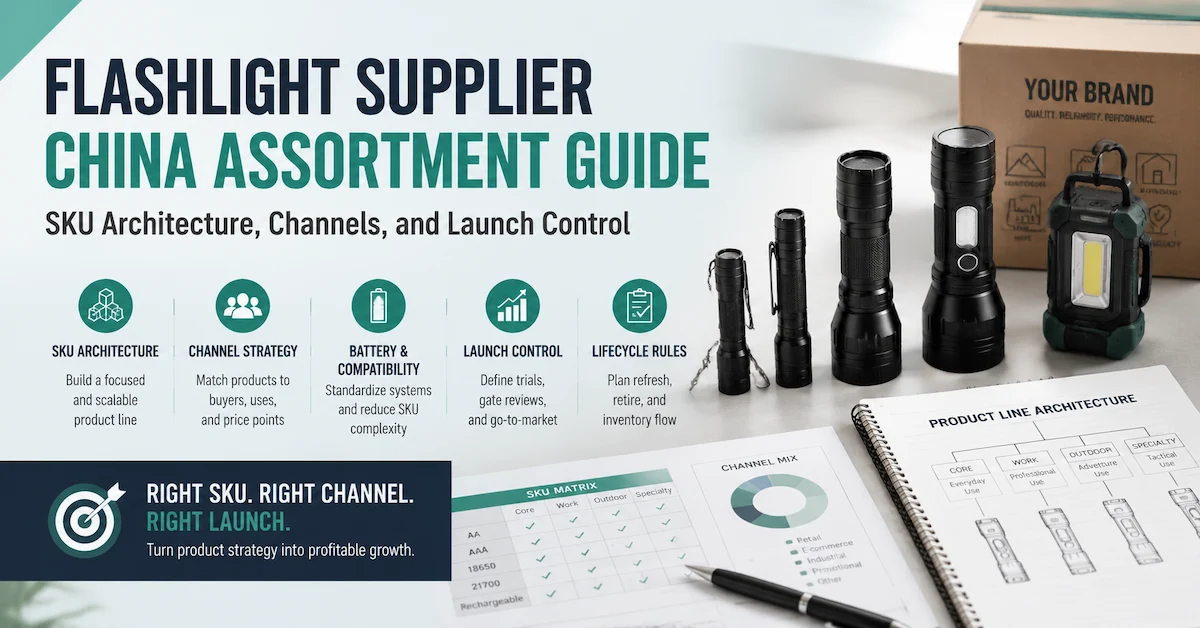
Before comparing quotations, define the actual job of the flashlight. This makes supplier conversations clearer and prevents vague claims such as “high brightness” or “durable” from replacing real product requirements. Buyers can also review related handheld lighting options through Brightenlux products when preparing a shortlist.
| Use case | Buyer focus | Key sourcing question |
|---|---|---|
| Trail and hiking | Focused beam, stable handling | Is the beam practical on uneven ground? |
| Campsite and travel | Portability, easy storage | Is it convenient enough to carry often? |
| Emergency or utility | Simple controls, dependable feel | Will it work when needed after storage? |
Verify the Build, Not Just the Appearance
Even without knowing the exact internal design of the described model, most handheld flashlights share a basic structure: a body or tube for the power source, a head that shapes and directs the beam, a lens or front cover, and a switch or control interface. Modern consumer outdoor lighting commonly uses an LED assembly, but the exact LED type and battery system should never be assumed.
Two flashlights can look nearly identical while using different internal platforms. Those differences may affect heat handling, beam stability, switch consistency, threading, and long-term reliability. For buyers, the important question is whether the supplier can explain the product structure clearly and separate confirmed facts from options still under development.
Housing material is also a major sourcing decision. Metal housings may support a premium feel, while polymer housings can reduce weight or cost in some programs. Neither is automatically better. The correct choice depends on end use, channel expectations, and handling environment.
Ask Better Questions in Custom Flashlight OEM Discussions
Custom flashlight OEM projects should not begin with packaging, logo size, or color matching. Those are important later, but the first conversation should focus on the product architecture. Ask which parts are fixed, which parts can be changed, and which options already fit the supplier’s regular production flow.
Useful questions include whether the beam pattern can be adjusted toward wider spill or more focused throw, what housing materials are available, what switch styles are standard, and what battery or charging configurations are supported. Buyers should also ask about branding limits, color options, and packaging format only after the core structure is close to the target use case.
Assembly and inspection questions are equally important. A small product can still reveal quality issues quickly. Loose heads, rough threading, uneven switch travel, or inconsistent finish can make a flashlight feel cheap even when the light output seems acceptable. To discuss a project directly, buyers can use the Brightenlux contact page.
Check Samples and Supplier Readiness Before Volume Orders
Before placing a volume order, request samples that reflect the intended production path rather than a hand-picked showcase unit. The purpose is to check repeatability across units. Compare beam shape, body finish, switch action, assembly fit, and general handling. A single good sample is useful, but consistency across multiple samples tells buyers more about the supplier’s process.
Clear documentation is also necessary. Even a simple flashlight should have a clean specification sheet stating what is confirmed and what still requires validation. This helps purchasing, sales, compliance, and support teams use the same product language. If battery details, ratings, or internal configuration are vague, treat them as unresolved items rather than minor omissions.
For an outdoor hiking light, evaluation should include real use where possible. A bench review can show some information, but a short walk on uneven ground may reveal whether the beam is practical. When ready to send requirements, buyers can submit details through Brightenlux inquiry.
FAQ for Flashlight Sourcing Teams
Can buyers identify the housing material from the visible finish?
No. A dark metallic appearance does not prove that the housing is aluminum or any other specific material. Buyers should confirm the body material directly with the supplier and, when needed, request sample validation before making decisions based on appearance.
Is a focused beam always the best choice for outdoor flashlights?
Not always. A focused beam is useful for trail scanning, route checking, and distance visibility, especially during night navigation. However, some users may need more spill light for close-range campsite tasks, equipment handling, or walking in tighter spaces.
Should a custom flashlight OEM project start with branding?
No. Branding and packaging should come after the base product is defined. Buyers should first confirm the beam style, housing material, power structure, controls, and production feasibility. Once the core flashlight is suitable, logo placement and packaging are easier to refine.
What is the most important first step when choosing a supplier?
Start with the intended use case, then verify beam profile, housing material, power configuration, and sample consistency. A good supplier should explain what is standard, what is customizable, and what remains unconfirmed instead of promising every feature without clear details.