

Rechargeable Headlamp Factory: What Buyers Should Check Before Sourcing
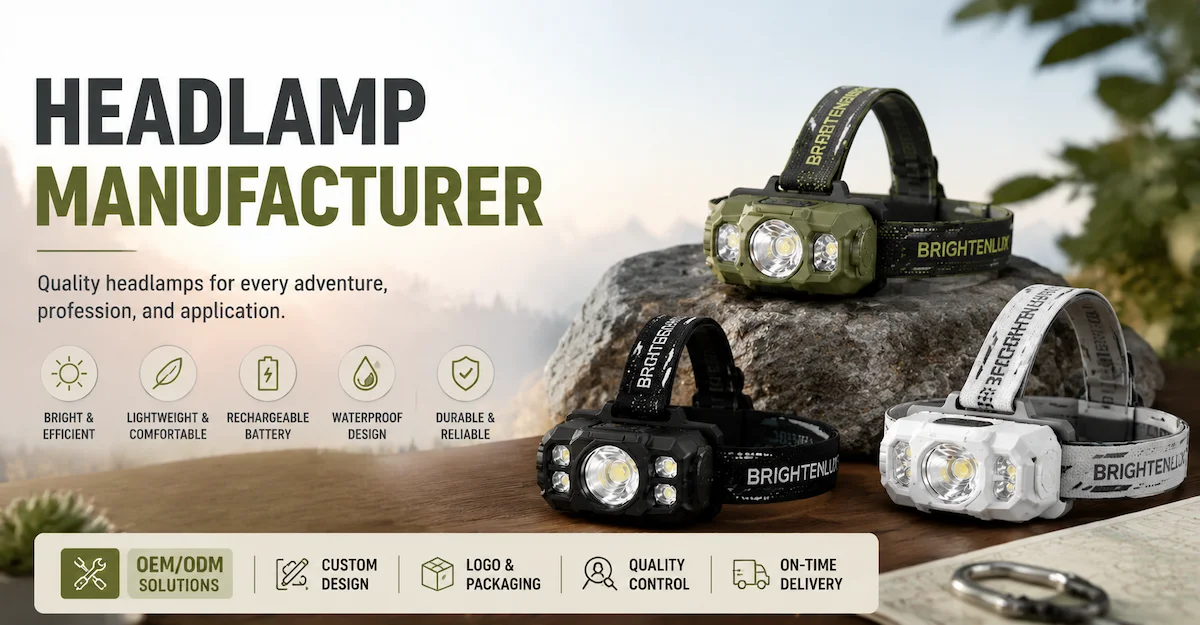
If you are sourcing a rechargeable headlamp factory, the real question is not who can attach a strap and a light. It is who can build a wearable product that feels comfortable, throws a focused beam when the path disappears, and keeps working after repeated charging. For outdoor gear, emergency lighting, and industrial supply, that difference decides whether a sample becomes a reliable product line.
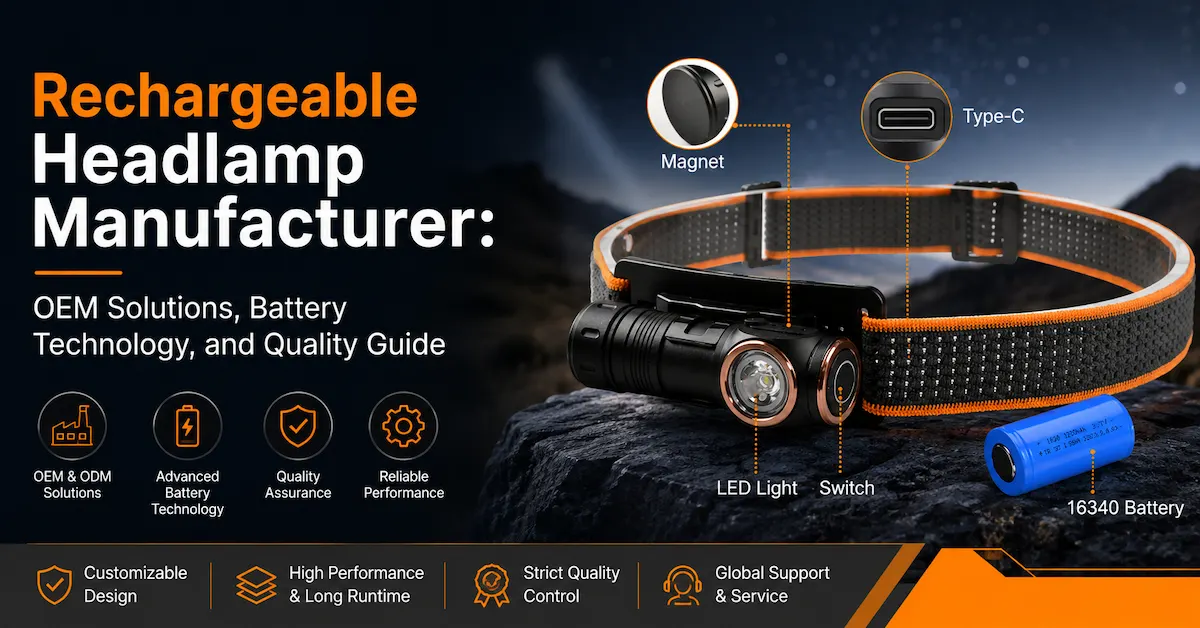
A rechargeable headlamp is a compact system made of a lamp housing, LED optics, elastic webbing, an internal battery, charging hardware, and the design choices that affect balance. If you are evaluating an LED headlamp manufacturer, you are judging both lighting performance and wearability. That is where sourcing decisions often succeed or fail.
Why a headlamp can fail even when the sample looks good
Many first samples pass a visual check. The beam appears bright enough, the strap fits, and the charging function works on the bench. Trouble often appears later, when buyers see uneven battery behavior, weak strap retention, glare that is too diffuse for hiking, or a housing that feels cheap in hand. A small front module worn on the head may be suitable for hiking, climbing, camping, and emergency use, but the format alone does not guarantee a saleable product.
For sourcing teams, the main issue is risk. Can the factory keep dimensions consistent across batches? Can it assemble electronics without disturbing lens alignment? Can it offer a stable rechargeable platform instead of a one-off demo unit? These are the practical questions that matter when a product moves from prototype to repeat order.
What the product structure should tell you
The basic construction is familiar: a front light module sits on an elastic head strap, with a molded housing and a clear lens area at the front. The beam is described as focused, which suggests the optical design is doing real work rather than spreading light everywhere. That matters on a trail, where a tighter beam helps users see ahead without wasting light where it is not needed.
A good factory also pays attention to the details that make a wearable lamp comfortable. The unit should sit securely without bouncing. The strap should hold tension without cutting into the head. The front housing should not feel top-heavy. None of these points sounds dramatic in a product sheet, yet they often decide whether users keep the lamp in their pack or replace it with something better.
Buyers should also check how the rechargeable system is integrated into the body. Battery placement affects balance, and balance affects comfort. That is one reason a factory that understands wearable lighting usually performs better than a general plastics shop that simply assembles electronics.
Where a rechargeable headlamp factory adds value
A capable rechargeable headlamp factory does more than assemble parts. It should coordinate plastic molding, LED installation, lens fitment, internal wiring, battery integration, strap assembly, and final testing. The product may look modest, but the process touches several disciplines at once. One weak link can undermine the whole unit.
That is why buyers should look beyond appearance and ask about production discipline. Are the housings molded consistently? Is the lens seated cleanly? Are the straps attached in a repeatable way? Is there a simple but reliable final check for illumination and charging? These are not glamorous questions, but they prevent shipment surprises.
This is also where an LED headlamp manufacturer can stand out. Lighting output alone is not enough. Beam shape, switch behavior, battery efficiency, and comfort all need to work together. In outdoor products, users notice flaws quickly because the environment is unforgiving. Rain, cold, vibration, and long wear times expose weak design faster than a catalog description ever will.
For a closer look at product categories, you can also review the products page before building a shortlist.
Selection criteria that matter more than a polished brochure
If you are comparing suppliers, begin with end use. A factory should understand night hiking, mountaineering, camping, climbing, and emergency tasks where hands-free lighting is essential. A supplier that can speak clearly about those contexts usually makes better product decisions than one that only repeats generic lighting claims.
Then check whether the factory can support the features your market actually wants. Some buyers prioritize a compact body and focused beam. Others care more about simpler charging access or easy strap adjustment. Since the visible product details do not confirm exact lumen ratings, battery capacity, or other final specifications, those points should remain open questions during sourcing rather than assumptions.
Practical buyers also pay attention to service details. Can the factory adjust strap length or color? Can it revise the housing finish? Can it produce packaging that explains use clearly without overpromising? These are the kinds of changes that matter when the product is sold through outdoor retailers or bundled into emergency kits.
| Area | What to check | Why it matters |
|---|---|---|
| Fit | Strap tension and balance | Comfort during wear |
| Beam | Focused, practical light pattern | Useful visibility outdoors |
| Battery | Rechargeable system integration | Repeat-use reliability |
| Assembly | Lens, wiring, and housing fit | Consistency across batches |
| Service | Customization and packaging support | Better market fit |
Common mistakes buyers make when sourcing headlamps
The first mistake is treating brightness as the only sign of quality. It is not. A harsh beam can be less useful than a well-shaped one, especially when the lamp is worn for hiking or climbing. The second mistake is ignoring ergonomics. A headlamp that feels fine in hand may become annoying on the forehead after a short climb. Comfort is part of performance, not an extra feature.
Another common issue is underestimating the battery system. Rechargeable products build trust only when charging behavior is consistent and intuitive. If the charging port is inconvenient, if the battery is poorly integrated, or if the unit behaves differently between samples, the buyer ends up managing complaints instead of growing a category.
There is also a tendency to accept vague supplier language. Terms like rugged, ultra-bright, or long-lasting sound useful, but they do not replace details about materials, assembly, and testing. A serious factory should be able to discuss the lamp housing, the elastic strap, and the optical path without hiding behind slogans.
What to ask before you place a trial order
Ask how the lamp body is made and whether the housing uses injection-molded parts. Ask how the strap is sourced and whether it can be customized. Ask what charging approach is used, even if the exact port or battery type is still being finalized. Ask how the factory checks beam consistency and switch function before packing.
If you are comparing multiple factories, do not skip the plain-language questions. How do they prevent lens misalignment? How do they handle battery assembly? What kind of inspection happens before shipment? A factory that answers directly is usually easier to work with later, especially if you need revisions after field testing.
It also helps to ask for a sample intended for real use, not just a display piece. A headlamp worn during an evening hike tells you more than a product sitting on a desk. If you are ready to discuss a sourcing brief, use the contact page or send an inquiry with the product context you need.
FAQ for sourcing teams
What makes a rechargeable headlamp factory different from a general assembly shop?
A factory focused on rechargeable headlamps should understand how lighting, battery integration, strap comfort, and housing design work together. A general assembly shop may build parts successfully, but it may not manage the balance, optics, and wearable experience needed for outdoor and emergency use.
Should buyers judge the product by brightness alone?
No. Brightness is only one part of the decision. Buyers should also look at beam shape, comfort, charging behavior, and how the lamp sits on the head. A product that is bright but awkward or uneven in use can still perform poorly in the market.
Why is the rechargeable system such an important sourcing concern?
Because charging changes the product’s reliability profile. Once a battery is involved, buyers need steadier component quality, cleaner assembly, and more consistent operation. A rechargeable headlamp must behave predictably from sample to repeat order if it is going to earn trust.
Can one sample confirm that a supplier is ready for volume?
Not fully. A sample can show whether the beam works, the strap fits, and the charging function operates. It cannot prove batch consistency, repeatable assembly, or long-term production discipline. Buyers should treat the sample as a starting point, then verify process control before scaling.