

Rechargeable Headlamp Manufacturer: OEM Solutions, Battery Technology, and Quality Guide
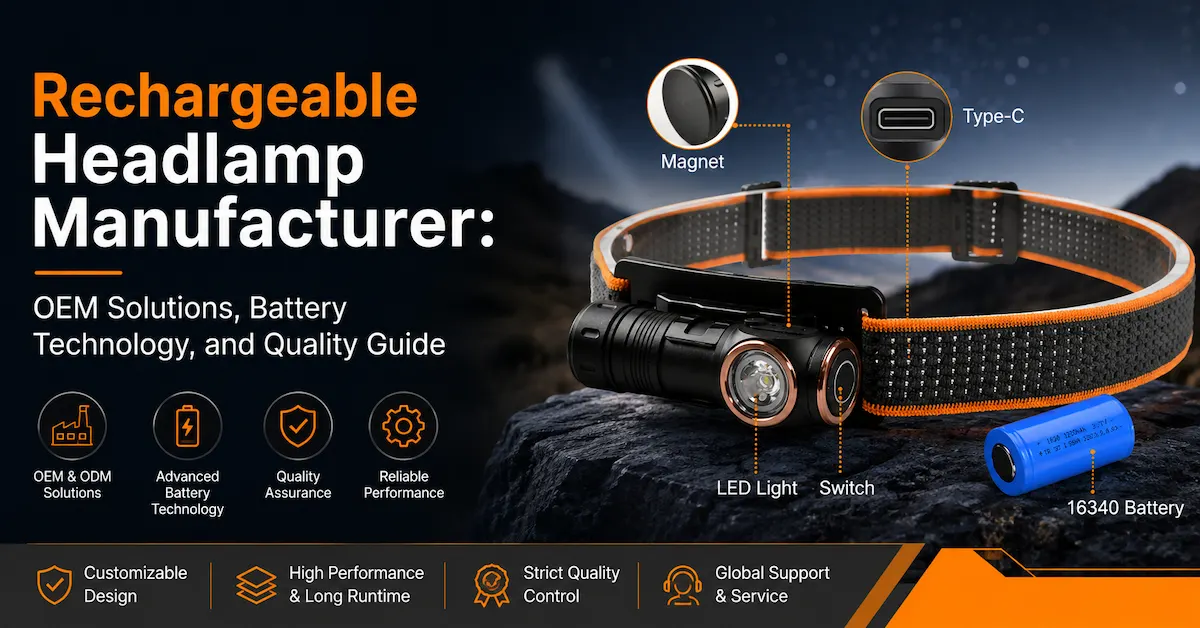
A rechargeable headlamp manufacturer specializes in designing and producing hands-free lighting products powered by rechargeable battery systems. For B2B buyers, this category is more than a simple lighting accessory. Rechargeable headlamps are used across outdoor activities, industrial maintenance, emergency response, construction, and professional equipment markets, where charging convenience, wearing comfort, and stable lighting performance affect the user experience.
Compared with traditional battery-powered headlamps, rechargeable headlamps can provide convenient charging, lower replacement costs, a longer product lifecycle, and better user experience. These benefits make them attractive for brands, distributors, and professional buyers that want practical lighting products for modern markets.
Choosing the right manufacturing partner requires more than checking product specifications. A reliable rechargeable headlamp manufacturer should provide product development support, battery system solutions, LED performance optimization, quality control processes, OEM customization capability, and stable production capacity. Brightenlux provides portable lighting solutions including rechargeable headlamps, LED flashlights, and customized lighting solutions for global brands, distributors, and professional users.
1. Understand the Market Role of a Rechargeable Headlamp Manufacturer
A professional rechargeable headlamp manufacturer helps buyers turn product requirements into market-ready lighting solutions. This role may include design evaluation, function planning, battery solution selection, production control, and inspection before shipment. For brands and distributors, the manufacturer is not only a source of products but also a technical partner that supports product positioning.
The rechargeable headlamp market is shaped by practical user needs. Outdoor users may look for long-distance illumination, multiple lighting modes, and lightweight design. Industrial users may require stable brightness, wide-area lighting, and reliable operation. Emergency professionals and daily consumers may value easy charging and dependable function. Because these requirements vary, the manufacturer must balance brightness, efficiency, durability, and comfort according to the application.
2. Define Buyer Requirements Before OEM Development
Many global brands work with a rechargeable headlamp manufacturer to develop products that match their own market positioning. Compared with purchasing standard products, OEM and private label solutions allow companies to customize product appearance, functional features, packaging design, brand identity, and product specifications.
Before beginning an OEM project, buyers should define the target users, product application, expected wearing experience, charging preference, and packaging direction. This does not require inventing technical values at the planning stage. Instead, it helps the manufacturer recommend suitable structures, battery systems, LED performance options, and product design paths that fit the intended market.
Brightenlux supports brands with OEM/ODM lighting solutions, including customized designs, packaging development, and product optimization for different applications. Buyers can review available lighting categories through the Brightenlux products page to understand the broader portable lighting range before discussing custom headlamp needs.
3. Evaluate Rechargeable Battery Technology
The battery system is one of the most important components of a rechargeable headlamp. It influences charging convenience, runtime planning, product structure, and user confidence. Buyers should evaluate battery capacity, runtime, charging efficiency, and battery protection according to the application and market requirements.
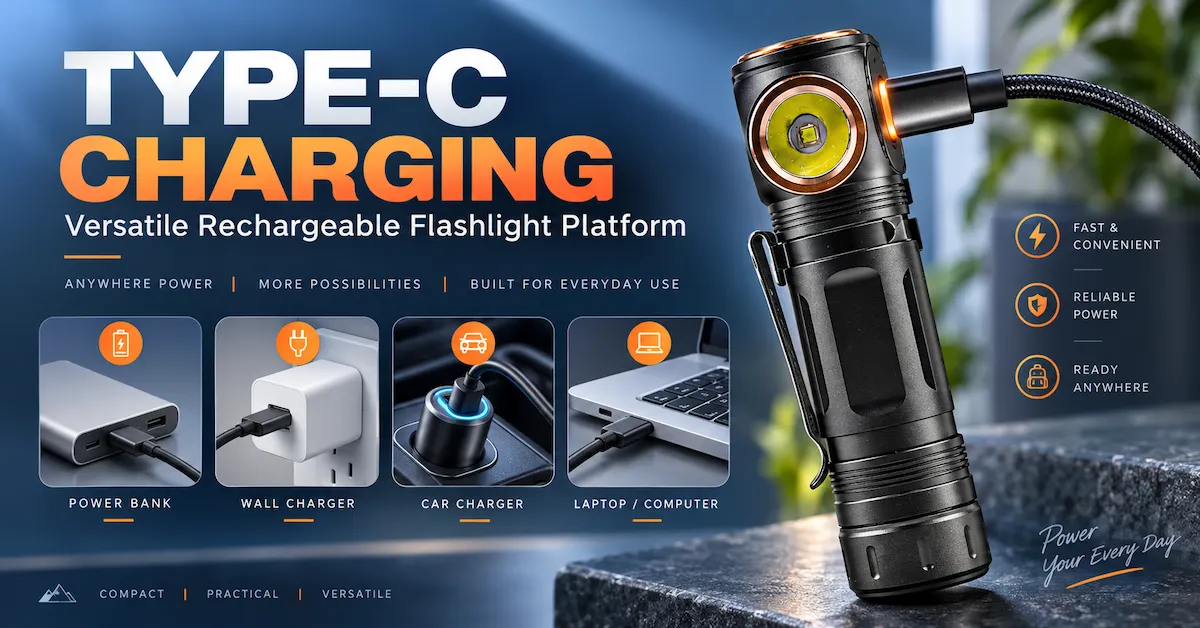
Common rechargeable solutions include lithium battery systems, built-in rechargeable batteries, and USB charging designs. Modern rechargeable headlamps are often designed around flexible charging solutions such as USB charging, USB-C charging, portable power charging, and rechargeable lithium battery systems. These options make rechargeable headlamps suitable for outdoor users, industrial workers, emergency professionals, and daily consumers.
Battery safety protection should also be considered during supplier evaluation. Professional rechargeable headlamps should include protection functions such as overcharge protection, over-discharge protection, temperature protection, and short-circuit protection. These functions improve product reliability and help reduce potential quality issues during use.
4. Balance LED Lighting Performance and Efficiency
LED performance directly affects how users experience a rechargeable headlamp. Important specifications include lumens, beam distance, beam angle, and lighting modes. However, B2B buyers should avoid looking at one specification in isolation. A professional manufacturer focuses on balancing brightness and efficiency so that the product matches the application rather than simply appearing strong on paper.
Different user groups require different lighting solutions. Outdoor users may need long-distance illumination, multiple lighting modes, and lightweight design. Industrial users may require stable brightness, wide-area lighting, and reliable operation. These differences affect LED selection, beam design, power management, and product structure.
The same principles apply to LED flashlight products, where brightness output, beam control, and energy efficiency influence overall performance. For buyers building a broader portable lighting line, working with one supplier that understands both headlamps and LED flashlights can support more consistent product planning.
5. Review Ergonomic Design and Wearing Comfort
Comfort is critical because many users wear headlamps for extended periods. A rechargeable headlamp is not only a lighting device; it is also wearable equipment. If the product is uncomfortable, unbalanced, or difficult to adjust, the user experience may suffer even when the lighting performance is acceptable.
Manufacturers should consider product weight, headband structure, balance design, and wearing comfort. A well-designed rechargeable headlamp should provide stable wearing, reduced pressure, easy adjustment, and long-term comfort. These factors are especially important for outdoor activities, industrial maintenance, construction, and emergency response, where users may need both hands free while working or moving.
6. Compare OEM Customization Options
OEM and private label rechargeable headlamp solutions help brands build products around their own market positioning. Customization can involve appearance, functional features, packaging design, brand identity, and product specifications. The goal is not only to make the product look different, but also to align the final item with the needs of the target users.
| Customization Area | What Buyers May Define | Why It Matters |
|---|---|---|
| Product appearance | Shape, visual style, and market fit | Supports brand differentiation and product positioning |
| Functional features | Lighting modes, charging design, and usability details | Helps match different outdoor, industrial, or daily-use applications |
| Packaging design | Retail or distribution presentation | Improves brand identity and customer communication |
| Product specifications | Performance direction based on application needs | Allows the product to serve defined user requirements |
| Brand identity | Private label direction and visual consistency | Helps buyers build a recognizable lighting product line |
Outdoor brands usually focus on lightweight structures, long runtime, comfortable wearing, and weather resistance. Typical applications include camping equipment, hiking products, adventure gear, and travel accessories. Industrial equipment companies often require products that can operate reliably in demanding environments. These application differences should guide the customization process from the beginning.
7. Check Quality Control Across the Production Process
For global buyers, quality consistency is one of the most important supplier evaluation factors. A professional manufacturer should establish quality control throughout the production process, from materials to final inspection. This helps ensure that each batch meets customer requirements and reduces risks for international buyers.
Before production, manufacturers should verify LED components, batteries, electronic parts, and housing materials. Material quality directly affects product lifespan, lighting performance, and safety reliability. During production, manufacturers monitor component installation, electrical connections, charging functions, and product appearance. Strict assembly control helps ensure that the product is built according to the agreed requirements.
Performance testing is another key step. Important product tests include brightness testing, runtime testing, charging testing, and function testing. These tests help verify that products perform according to specifications. Before shipment, manufacturers should check product appearance, function performance, packaging accuracy, and order quantity.
8. Assess Supplier Support for B2B Cooperation
A strong rechargeable headlamp manufacturer should support B2B buyers through product development, battery system selection, LED performance optimization, quality control, OEM customization, and stable production capacity. These capabilities help brands and distributors reduce uncertainty when developing products for different markets.
Buyers should also consider communication quality. Clear discussions about application, product structure, charging method, comfort, packaging, and inspection requirements can make the project smoother. If a buyer needs support for a custom lighting project, the Brightenlux contact page provides a direct way to discuss requirements with the team.
9. Build a Practical Supplier Evaluation Checklist
A nine-step SEO and procurement approach for this topic should help buyers move from search intent to supplier qualification. First, identify the target application. Second, define the user group. Third, evaluate rechargeable battery options. Fourth, review LED performance needs. Fifth, check ergonomic design. Sixth, confirm OEM customization scope. Seventh, examine quality control processes. Eighth, review production support. Ninth, request product discussion based on real requirements.
This process keeps the focus on practical facts rather than unsupported claims. Buyers should ask for specifications, customization possibilities, and inspection processes that relate to the actual project. They should avoid relying only on promotional descriptions and should confirm whether the manufacturer can support product development, battery solutions, LED optimization, OEM customization, and consistent quality control.
For B2B buyers planning a rechargeable headlamp project, Brightenlux can provide portable lighting solutions and OEM/ODM support for different applications. To start a project discussion, buyers can submit details through the Brightenlux inquiry page.
FAQ: Rechargeable Headlamp Manufacturer Selection
What is a rechargeable headlamp manufacturer?
A rechargeable headlamp manufacturer designs and produces hands-free lighting products powered by rechargeable battery systems. The manufacturer may also support product development, battery system solutions, LED performance optimization, quality control, and OEM customization.
Why do businesses choose rechargeable headlamps?
Businesses choose rechargeable headlamps because they offer convenient charging, reduced dependence on disposable batteries, lower replacement costs, longer product lifecycle, easier maintenance, and better user convenience.
What battery factors should buyers evaluate?
Buyers should evaluate battery capacity, runtime, charging efficiency, and battery protection. Common rechargeable solutions include lithium battery systems, built-in rechargeable batteries, USB charging designs, and USB-C charging options.
What quality control steps are important?
Important quality control steps include material inspection, assembly quality control, performance testing, and final product inspection. Manufacturers should check LED components, batteries, electronic parts, housing materials, charging functions, product appearance, packaging accuracy, and order quantity.
Can rechargeable headlamps be customized for private label brands?
Yes. OEM and private label solutions can support customization of product appearance, functional features, packaging design, brand identity, and product specifications according to the buyer’s market positioning.