

Rechargeable Flashlight Supplier Guide for Better Wholesale Buying
Choosing a rechargeable flashlight supplier is not only about finding a handheld light that looks attractive in a catalog. For B2B buyers, the real decision is whether the product can be supplied with consistent appearance, practical usability, suitable packaging, and clear specifications. Outdoor retailers, emergency-kit assemblers, promotional buyers, and private-label teams all need dependable sourcing decisions before committing to volume. This guide explains what to compare, what to ask, and how to review samples without relying on unverified claims.
What Wholesale Buyers Really Need from a Supplier
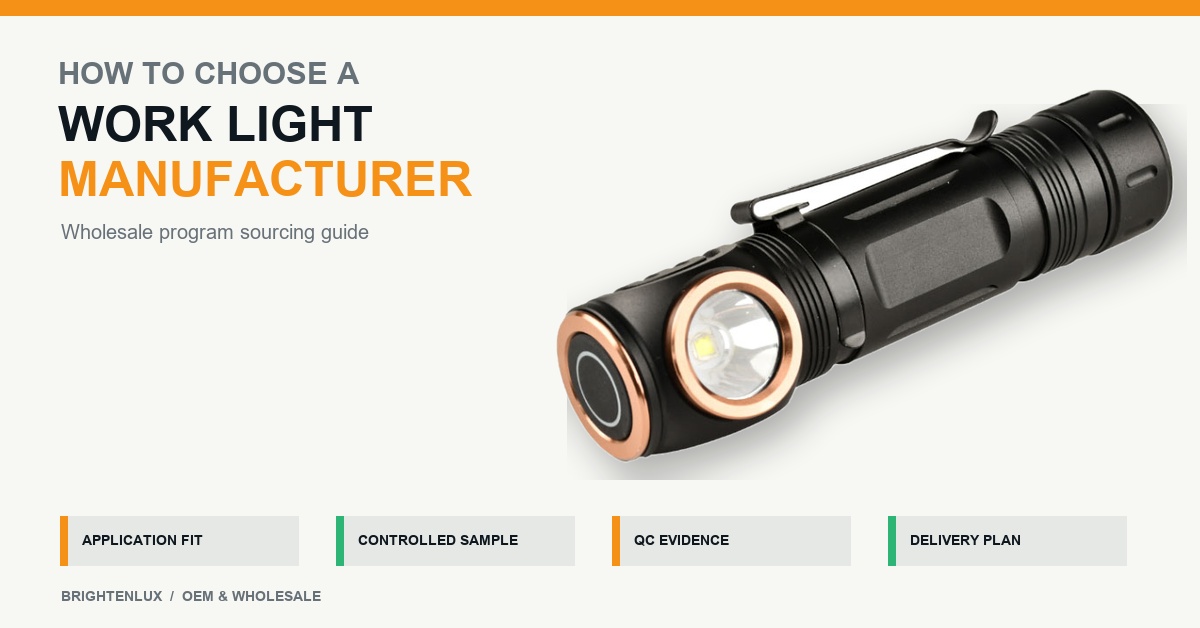
A rechargeable flashlight looks simple, but wholesale buying depends on repeatability. Buyers need the same body finish, switch feel, beam behavior, and packaging quality from one order to the next. A compact cylindrical torch with a front lens and rear tail section may be easy to understand visually, yet small differences in assembly can affect user confidence. For retail or emergency-use channels, consistency matters more than a dramatic product photo. A supplier should be able to explain how the flashlight is positioned, what specifications are confirmed, and which details still need sample verification. If you are comparing several sources, start by asking whether they can support your business model, not just whether they can quote a unit price.
Why Rechargeable Flashlights Deserve Careful Review
Handheld flashlights are familiar products, but their use cases are demanding. Hiking, camping, night walking, searching nearby terrain, and emergency preparation all require a light that feels reliable when conditions are dark or inconvenient. A focused beam can help with distance and scanning, while a compact body supports one-handed carrying in a pack, glove box, or emergency kit. However, the same directed beam may not be ideal for broad campsite illumination. Buyers should avoid assuming that every rechargeable flashlight fits every market. The better approach is to match the product’s beam style, body size, and charging details to the end user’s real environment. You can also compare related portable lighting categories through Brightenlux products when building a broader sourcing plan.

Core Factors to Compare Before Shortlisting
Supplier comparison should separate product questions from commercial questions. On the product side, confirm the flashlight body material, finish, switch design, beam pattern, charging method, battery type, and packaging format through documentation or samples. Do not guess runtime, waterproofing, or battery details from appearance. On the commercial side, ask whether the supplier can support retail packing, bulk shipment, labeling, and customization without weakening the product’s clean look or grip. A compact table can help procurement teams keep early comparisons objective:
| Review Point | Buyer Question |
|---|---|
| Beam use | Is it for scanning, trail use, or nearby area lighting? |
| Body finish | Does the surface feel durable and consistent? |
| Charging | Are the charging method and battery details documented? |
| Packaging | Is it suitable for retail display or bulk delivery? |
What Changes When Buying at Wholesale Scale
At sample stage, a flashlight may be judged by appearance, weight in hand, and first impression. At wholesale scale, the issue becomes repeatable supply. LED rechargeable flashlight wholesale programs must account for labeling, carton arrangement, retail presentation, and after-sales questions. A product that works for a small trial order may still create problems if packaging is inconsistent or if specifications are not clearly controlled. Buyers should also think about the sales story. The same compact rechargeable torch may be positioned as a trail companion, utility light, household backup item, or promotional product. Each channel emphasizes different benefits, so the supplier should support accurate product descriptions rather than forcing the flashlight into a generic category.
Questions to Ask a Rechargeable Flashlight Manufacturer
Direct questions usually reveal whether a rechargeable flashlight manufacturer is ready for serious cooperation. Ask which specifications are confirmed in writing and which require sample testing. Ask whether the body is metal, polymer, or another material if this affects your channel requirements. Ask how the supplier defines the beam pattern and whether the product is intended for directed visibility or nearby area lighting. Packaging questions are equally important: retail box, bulk shipment, labeling, and branding position all influence sell-through and damage risk. It is also useful to ask about common failure points. A supplier that discusses switch wear, lens alignment, charging concerns, or cosmetic variation honestly is often easier to develop than one that only repeats feature claims.
How to Review Samples Without Guesswork
When samples arrive, do more than switch the flashlight on at a desk. Hold it naturally and check whether the head, body, and tail feel balanced. Test the beam in a dim hallway, outside at dusk, or during a short walk if possible. A light that appears strong under indoor conditions may feel different when used for navigation or scanning. Inspect the finish after normal handling, because fingerprints, scuffs, sharp edges, or uneven color can reveal manufacturing discipline. Review packaging as part of the product, not as an afterthought. A compact flashlight that arrives loose, scratched, or poorly presented can create returns before it has a chance to become a repeat wholesale item.
Common Buying Mistakes and How to Avoid Them
One common mistake is overvaluing one visible feature, usually the beam. A focused beam is useful for distance and scanning, but comfort, charging clarity, packaging, and reliability are also central to customer satisfaction. Another mistake is treating every supplier as interchangeable. The lowest quoted price may lose its advantage if documentation is weak, appearance varies, or after-sales questions are difficult to resolve. Buyers also need to align the product with the end user. Campers, night walkers, emergency-kit buyers, security users, and promotional recipients may not want the same beam behavior or size profile. Before moving forward, connect each product decision to a real channel requirement, and use a structured inquiry to keep specifications clear.
Building a Better Supplier Relationship
The best rechargeable flashlight supplier is not always the one with the largest catalog. For wholesale programs, a stronger partner is usually the one that communicates clearly, confirms details in writing, and understands what the product is designed to do. A compact handheld flashlight with a directed beam should be presented honestly as a practical outdoor lighting accessory, not as a universal lighting solution. Buyers should compare suppliers on responsiveness, sample discipline, and willingness to clarify unknowns. If customization or channel planning is part of your project, discuss branding location, packaging direction, and product positioning early. To begin that conversation, buyers can contact Brightenlux with sample, documentation, or sourcing questions.
FAQ
Is a rechargeable flashlight better for wholesale than a disposable-battery model?
It can be a strong choice for outdoor, household backup, and emergency-use channels because rechargeable products are easy to position as convenient and modern. However, the right answer depends on confirmed battery details, charging method, target users, packaging needs, and how your customers expect to use the flashlight.
Should wholesale buyers choose a narrow beam or a wider beam?
A narrow beam is useful for distance, trail navigation, and scanning dark paths, while a wider beam is better for nearby area illumination. Buyers should match beam behavior to the channel instead of assuming one beam style works for every customer or every retail story.
Can product images confirm supplier quality?
No. Images can show the general form, compact body, finish tone, lens position, and possible beam style, but they cannot confirm runtime, waterproofing, battery type, charging reliability, or build quality. Those details require written specifications, supplier answers, and hands-on sample review before volume buying.
What is the safest next step before placing a wholesale order?
Start with samples and request missing specifications in writing. Review the flashlight’s handling, beam behavior, finish, packaging, and supplier communication at the same time. If the product and supplier response both match your channel needs, you can make a more confident wholesale decision.