

Camping Light Manufacturer for Emergency and Off-Grid Programs: Procurement and Deployment Guide
A camping light manufacturer serving emergency and off-grid programs must help buyers control readiness, not only brightness. The product may remain in storage for months, pass through demanding distribution channels and reach users who have limited charging access or little time to study instructions. For that reason, power strategy, packaging, training and replenishment matter as much as the lantern itself.
This guide is written for emergency-supply distributors, preparedness brands, humanitarian procurement teams, government contractors, utility partners and retailers building power-outage ranges. It provides a nine-step procurement method for defining field scenarios, choosing rechargeable or dry-battery platforms, preparing deployment kits and checking whether approved products can be stored, transported, issued and supported reliably.
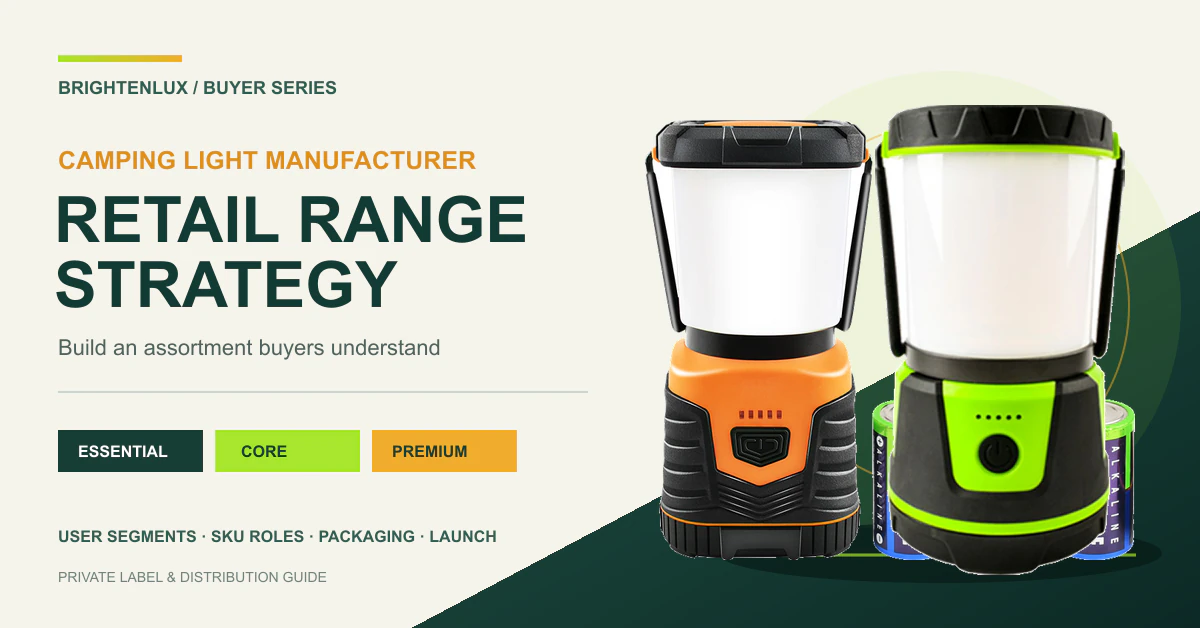
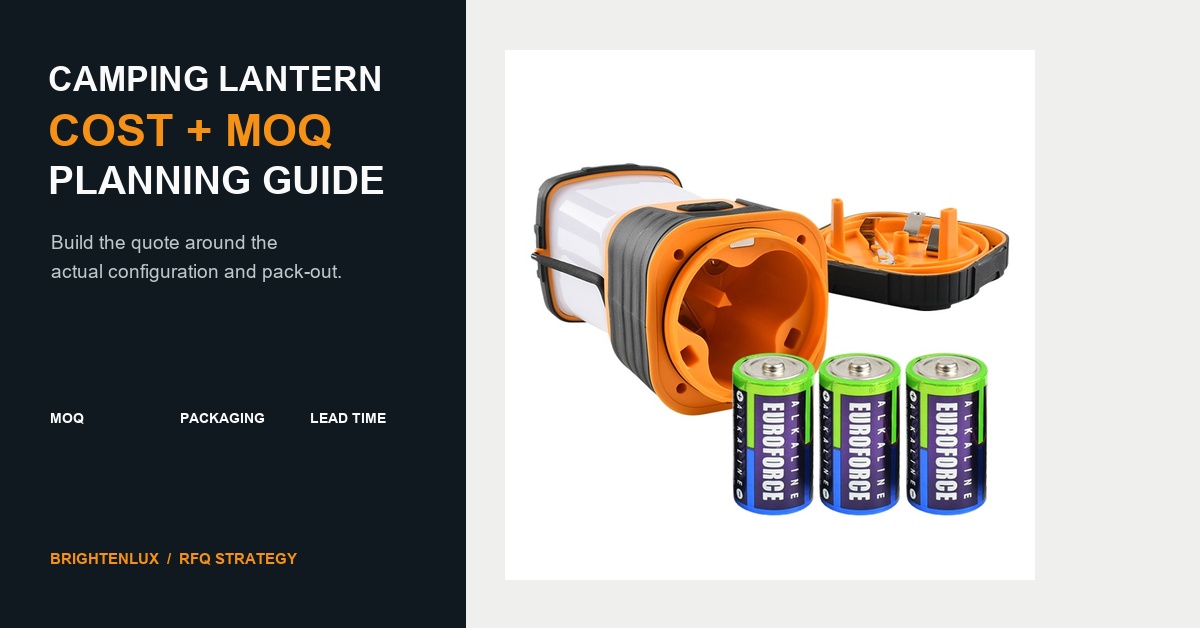
Brightenlux states that it has manufactured portable lighting since 2014 and supplies customers in more than 50 countries. Its portfolio includes a rechargeable camping lantern with Type-C charging and power-bank output, as well as a dry-battery lantern using three D-size cells. These platforms illustrate two different field-power strategies. Buyers can review current categories at Brightenlux products, but the final selection should always depend on destination, deployment model and user group.
Step 1: Define the Emergency Scenario Before Selecting a Lantern
Emergency procurement improves when the team first describes what has failed and what still works. A short urban outage, a storm-damaged distribution network, a temporary shelter, a remote work camp and a household preparedness kit create different constraints. If the scenario is unclear, the buyer may overvalue peak output and undervalue storage, handling or energy access.
Write the scenario before specifying brightness. Include expected users per unit, hours of nightly use, required deployment period, available battery types, charging sources, storage duration, transport route and environmental exposure. This information allows the camping light manufacturer to recommend a more relevant power and housing platform and to challenge assumptions that do not fit the field plan.
| Scenario | Likely Power Access | Lighting Job | Procurement Priority |
|---|---|---|---|
| Short household outage | USB power may return within hours | Room, stair and task lighting | Simple controls, stable base and stored charge visibility |
| Severe-weather preparedness | Uncertain for one or more days | Household area light and limited device support | Runtime planning, replaceable energy options and clear instructions |
| Temporary shelter | Shared or scheduled charging | Family space, orientation and low-level night light | Low glare, hanging points, identification and safe charging |
| Remote field team | Vehicle or generator may be available | Camp, equipment and task-area illumination | Mechanical durability, repeat charging and traceable issue control |
| Relief distribution kit | Varies by location | Immediate household lighting | Language-light instructions, kit compatibility and storage inspection |
Step 2: Define the User Unit and Distribution Unit
A “unit” can mean one lantern, one household kit or one carton issued to a field location. Confusion at this level causes missing batteries, incompatible cables and poor inventory records. The camping light manufacturer should quote, pack and label products according to the same unit definitions used by the procurement team.
Define the user unit first. A household package might include one lantern, instructions and a charging cable. A dry-battery package might include the lantern but exclude cells because batteries are sourced locally. A field-team kit may include multiple lights, spare cables, identification labels and a storage case, if those items are part of the approved requirement.
Then define how many user units fit inside the inner carton and master carton. Packaging should show the model, batch or lot reference, contents, battery status, issue quantity and storage precautions. Field teams need to count and identify products without opening every box. Carton design should support the actual distribution process, not only retail presentation.
Step 3: Choose the Energy Strategy Before Choosing the Product
The energy source determines whether the light remains useful after distribution. Procurement documents often describe the lantern in detail but treat energy as an accessory. In an off-grid program, energy is part of the product system.
A rechargeable strategy works when the program can define how, where and how often the lantern will be charged. Type-C input can simplify cable availability, but connector shape alone does not guarantee compatibility with every source. Confirm input voltage and current, cable quality, indicator behavior and charging time for the final configuration. If the product provides USB output, decide whether that function is essential, optional or restricted, because device charging consumes energy also needed for lighting.
A replaceable-battery strategy can support long storage and local energy replacement when the specified cells are widely available. The buyer should confirm local cell size, price, distribution and disposal practices. A dry-battery lantern using three D-size cells may be suitable for some programs, but only if those cells match local supply realities.
Some programs use both formats. Rechargeable lights may support teams and locations with managed charging. Dry-battery models may support rapid household distribution or contingency stock. Using two platforms increases inventory complexity, so recipients and issue rules must be clearly separated.
Step 4: Translate Useful Light Into Field Requirements
Peak output is only one part of useful light. An emergency lantern must illuminate the intended space with manageable glare and enough operating time for the planned use. A broad diffuser may serve a household better than a narrow, intense source. A genuine low mode can extend energy and allow nighttime orientation without disturbing everyone nearby.
Define practical operating conditions, such as setup or task light, normal household area light and low-level night use. The product does not need extra modes unless they support a program objective. Every mode adds training and user-interface considerations.
When comparing samples, place them in a representative room, shelter area or camp setting. Observe faces, floor obstacles, cooking or task areas and shadows. Record whether users can operate the switch without reading the manual. Formal performance evidence may be required, but the human experience should not be ignored.
Step 5: Review Glare, Placement, Handles, Hooks and Bases
Emergency environments can be crowded, unfamiliar and stressful. Harsh light at eye level can reduce comfort and make it difficult for nearby people to rest. A light that is acceptable on a campsite may need different placement or diffusion in a shelter.
Review the product while seated and lying down, not only while standing. Test table placement and hanging positions. Check whether the base remains stable when people move nearby. Confirm that a hanging lantern does not swing into faces or create an exposed bright source.
The handle, hook and base are small parts with large consequences. A broken hanging point can damage the product or injure a user. Test the final product with its installed battery weight. Carry it, hang it in intended directions and inspect for sharp edges, pinching points, loose fasteners and visible stress. After mechanical checks, repeat lighting and charging functions.
Step 6: Treat IP and Battery Transport Claims Carefully
Rain and splashes are realistic field exposures, but broad “waterproof” language can mislead users. The Brightenlux lantern platforms in the source are presented with IP44 protection. IP44 does not mean the product can be submerged. Port covers, battery doors, seals and assembly condition are part of the tested configuration.
Buyers should confirm the exact model, test configuration and report when ingress protection is important. Field instructions should state how covers and doors must be closed and what exposure is outside the product claim. Routine inspection should look for missing gaskets, damaged covers, poor seating and loose fasteners.
Rechargeable products also require battery transport planning. Confirm the cell supplier, model, capacity, cell count, configuration and protection method during sample approval. The information should match across the product specification, battery documents and production bill of materials. Transport requirements depend on product configuration, quantity, packaging, route and mode, so review the shipment with the freight forwarder or dangerous-goods specialist.
Step 7: Build Storage Readiness Into the Order
Emergency inventory may spend more time in storage than in use. Storage control should therefore be designed with the camping light manufacturer before the order arrives.
For rechargeable units, define the incoming charge condition, storage temperature range, periodic inspection interval and recharge policy. Check sample units for indicator function, physical condition and ability to accept charge. Record dates and quantities. Long storage without a maintenance plan can leave a nominally rechargeable stockpile unready.
For dry-battery units, decide whether cells are stored inside the lantern, packed separately or sourced at deployment. Consider leakage risk, expiry dates, chemistry and local handling. If cells are separate, the kit list and distribution process must ensure they reach the same user.
For all units, inspect cartons for moisture, crushing, pest damage and label readability. Use lot or batch identifiers that connect stock to the supplier record. A clear storage log makes later investigation and replenishment easier.
Step 8: Create Instructions, Training and Issue Controls
Emergency instructions should reduce dependence on long text. Use clear diagrams for battery installation, charging, switching, dimming, hanging and cover closure. Keep the model-specific mode order accurate. If the program serves several languages, validate icons and translated warnings with local reviewers.
Test the instruction sheet with people who have not seen the product. Ask them to install power, select the normal mode, reach the low mode and pack the unit again. Observe hesitation rather than explaining. This simple exercise can reveal missing diagrams, unclear warnings or confusing mode sequences.
Training and issue control should also be planned. Field teams need to know how to count cartons, identify lots, issue user units and report damage or malfunction. Include a simple fault path: check battery direction or charge, inspect contacts and cable, close covers and remove the product from use if damaged or unusually hot.
Step 9: Inspect for Field Readiness and Plan Replenishment
Final inspection should confirm identity, quantity, workmanship, function, accessories, instructions, labels and packaging. Field-focused checks should include normal and low modes, battery installation or charging, indicator logic, handle and hook condition, base stability, door or cover closure and carton protection where agreed.
The buyer and manufacturer should classify defects before production. A missing gasket, incorrect battery configuration, exposed sharp edge or charging abnormality should not be treated like a minor color variation. Define the response to critical findings, including containment, reinspection and root-cause evidence.
Replenishment should be addressed before stock is exhausted. Record the approved model, revision, battery configuration, packaging structure, artwork and inspection criteria. If the next order must match the first, change approval is essential. For project discussion, buyers may use the Brightenlux inquiry page or contact the team through Brightenlux contact.
FAQ: Camping Light Manufacturer Procurement
What makes a camping light suitable for emergency programs?
An emergency light is suitable when users can obtain energy, understand the controls, carry or hang the product safely, achieve useful illumination for the required period and identify when batteries need replacement or charging. The procurement package should also define storage, inspection, labeling, accessories, shipment documents and replenishment.
Is the brightest lantern always the best option?
No. A moderate, well-diffused light with an intuitive low mode may serve a household longer and create less glare. The best choice depends on the scenario, energy access and user group.
When should buyers choose rechargeable lighting?
Rechargeable lighting is appropriate when the program can define charging sources, charging frequency, cable requirements and storage maintenance. Type-C charging may simplify cable planning, but the full charging configuration still needs confirmation.
When can dry-battery lighting be useful?
Dry-battery lighting can be useful where charging is uncertain and replacement cells are locally available. Buyers should verify cell availability, handling, disposal practices and whether batteries will be included, packed separately or sourced at deployment.
What should be included in a deployment kit?
A deployment kit may include the lantern, cable, batteries when specified, instructions, identification labels and protective packaging. The exact kit should be countable, carryable and aligned with the distribution plan.