

How to Choose an Industrial Headlamp Manufacturer for Rechargeable Outdoor Lights
Choosing an industrial headlamp manufacturer is not only a product comparison. For B2B buyers, it is a decision about comfort, assembly quality, battery integration, beam usefulness, and consistency across production. A rechargeable headlamp may look simple, but small weaknesses in the strap, housing, charging path, or lens alignment can quickly become end-user complaints. This guide explains how to evaluate a compact rechargeable outdoor headlamp for private-label programs, job-site accessories, emergency kits, and active outdoor markets without relying on appearance alone.

Why Manufacturer Choice Matters for Rechargeable Headlamps
A headlamp is a small hands-free lighting product, but the manufacturer behind it determines whether the final item feels stable, practical, and reliable in daily use. The model described in the source has a compact front module, an elastic head strap, and a forward-facing beam intended for night use. That design can fit trail running, hiking, jogging, camping, dog walking, and backup lighting. For industrial or maintenance buyers, however, the same design must be reviewed through a stricter lens. A lamp that works for light outdoor activity may not automatically satisfy expectations for rugged handling, predictable use, or easy maintenance. The right supplier should understand this difference and help match product architecture to the intended application.
Match the Basic Design to the Real Use Case
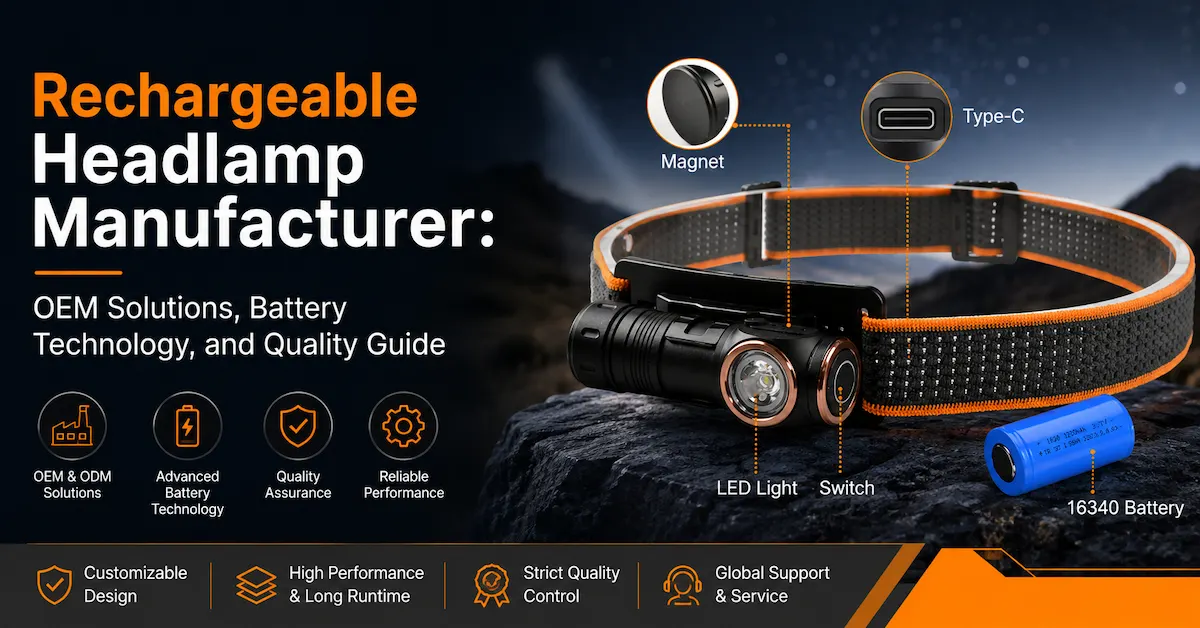
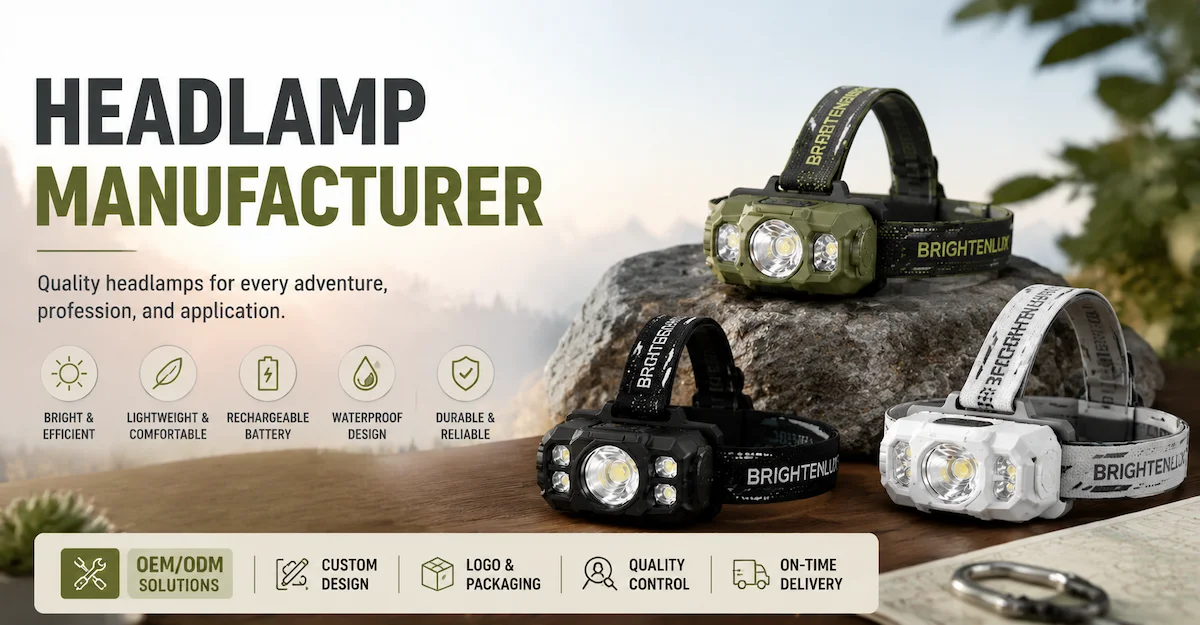
The visible structure of this type of headlamp is straightforward: a small light housing centered on the forehead, a low-profile body, and an adjustable elastic strap. This is a sensible starting point for hands-free lighting because it can reduce bounce and pressure during movement. A compact front module is especially useful when users run, walk over uneven ground, or wear the lamp for longer periods. Still, sourcing teams should not assume that compact always means comfortable. The balance of the housing, the grip of the strap, and the adjustment method all affect wearability. Before reviewing detailed specifications, define whether the lamp is for active outdoor use, emergency storage, campsite tasks, warehouse checks, or general personal lighting.
Evaluate Materials, Strap Quality, and Assembly Details
The housing appears to be molded plastic with a matte finish, while the strap appears to be textile webbing. These are common choices because they help keep weight low and support scalable manufacturing. The challenge is that exterior appearance reveals little about internal build quality. A headlamp may look clean in photos but still suffer from weak strain relief, inconsistent switch feel, loose internal placement, or poor sealing. Strap quality also deserves close attention. Elastic webbing may look interchangeable, but stretch behavior, stitching, edge finish, and batch consistency influence comfort and perceived value. When comparing suppliers, ask how the housing is produced, how the strap is sourced, and how the factory checks consistency between batches.
Compare the Criteria That Affect User Satisfaction
Buyers often begin with brightness, but a headlamp can be bright enough and still disappoint if the beam is unsuitable, the body bounces, or charging is inconvenient. For trail running, stability and low weight may matter before output. For campsite or emergency use, charging simplicity and practical runtime expectations may become more important. For industrial accessories, the preferred solution is often a balanced product that supports task lighting, secure fit, and reasonable environmental resistance for the intended setting. If a supplier describes a product as a waterproof rechargeable headlamp, ask what that word means and whether the claim is documented. Do not treat casual wording as a verified performance rating.
| Criterion | What to Check | Why It Matters |
|---|---|---|
| Beam | Pattern and direction | Determines usefulness for movement or close work |
| Fit | Strap grip and adjustment | Reduces slipping, bounce, and discomfort |
| Charging | Port, protection, and ease of use | Supports repeat daily handling |
| Build | Housing, lens, button, and joints | Affects durability and return risk |
Ask the Right Production Questions Before Sampling
Because this is a rechargeable model, buyers are not only purchasing a lamp shell; they are buying a small electromechanical assembly with a battery, charging circuit, LED electronics, housing, lens, switch, and strap. Each part can introduce defects if production control is weak. Ask what materials are used in the housing, how the battery is integrated, what charging method is used, and whether the battery is sealed or serviceable. Also ask how the factory controls LED board placement, lens fit, button feel, and strap elasticity. For a small product, minor deviations can change the beam, reduce comfort, or make batches feel inconsistent. Review related lighting categories at Brightenlux products when building a comparison list.
Avoid Common B2B Sourcing Mistakes
One frequent mistake is buying on appearance alone. A neat matte housing and tidy strap do not prove that the electronics, charging path, or assembly methods are robust. Another mistake is overemphasizing brightness while underestimating fit. If the lamp slips down during movement, the user experience fails even if the beam is strong. Buyers also sometimes apply one use case to every market. Trail running, emergency backup, warehouse inspection, and security patrols can have different priorities. Do not over-spec the LED while under-specifying the strap, switch, or housing. The best sourcing decisions come from testing the lamp in the conditions your customers actually face, not from choosing the most impressive-looking sample.
Plan the Next Step With a Supplier
Once the target use case is clear, shortlist manufacturers that can answer questions in practical, concrete terms. Ask for samples, check head fit, inspect strap adjustment, review beam shape, and confirm how environmental claims are supported. If your program requires a compact rechargeable headlamp for outdoor activity or light-duty backup use, this design language may be suitable. If your market expects heavier industrial abuse, stronger construction details and clearer documentation may be necessary. The key is not forcing one headlamp to do every job. To discuss fit for a specific project, use the Brightenlux contact page or send details through the inquiry form.
FAQ
What should I check first when choosing an industrial headlamp manufacturer?
Start with the real use case, then check whether the manufacturer can explain housing materials, strap construction, battery integration, charging design, and assembly control. A supplier that only discusses appearance or broad claims may not provide enough detail for a dependable B2B purchasing decision.
Is brightness the most important specification for a rechargeable headlamp?
Brightness matters, but it should not be the only decision point. Beam pattern, stability, comfort, charging convenience, and assembly consistency strongly affect user satisfaction. A lamp with suitable brightness can still fail commercially if it bounces, slips, or feels awkward in regular use.
How should buyers treat waterproof claims for outdoor headlamps?
Treat waterproof wording as a claim that needs verification. Outdoor headlamps may face sweat, damp weather, light rain, dust, and rough storage, but casual language does not prove protection. Ask the supplier what level of resistance is documented before using waterproof claims in your own product materials.
When is a compact rechargeable headlamp the right product choice?
A compact rechargeable headlamp is a good fit when buyers need hands-free lighting for movement, outdoor activity, camping, dog walking, personal backup, or light-duty work use. If the market requires heavy industrial abuse, the buyer should request stronger construction details and more specific documentation.