

Bulk Headlamp Supplier Guide for Rechargeable Headlamps
Choosing a bulk headlamp supplier is not only a price comparison. For B2B buyers, the decision affects product quality, charging convenience, wearer comfort, packaging, and after-sales risk. A rechargeable headlamp may look simple in a catalog, but real use quickly reveals whether it is stable, practical, and suitable for the intended channel. This guide helps sourcing managers, product teams, and engineers evaluate rechargeable headlamps before placing volume orders, especially for outdoor retail, promotional programs, sports channels, and workwear distribution.
Why Bulk Sourcing Headlamps Is More Complex Than It Looks
A headlamp is a small product, but a bulk order can create large consequences if details are missed. Buyers need consistency from carton to carton, not just an attractive sample or low quotation. A lamp that works in a photo may still feel uncomfortable after prolonged wear, shift during movement, or fail to match the customer’s expected use case.
Rechargeable headlamps add another layer of review because the battery, charging method, and runtime behavior must be understood before approval. These points are not visible from the housing alone. For a retailer, distributor, or promotional buyer, the right supplier is one who helps reduce uncertainty. The goal is not to buy the cheapest product, but to avoid returns, complaints, and mismatched specifications after the order arrives.
Start With the Real Use Case
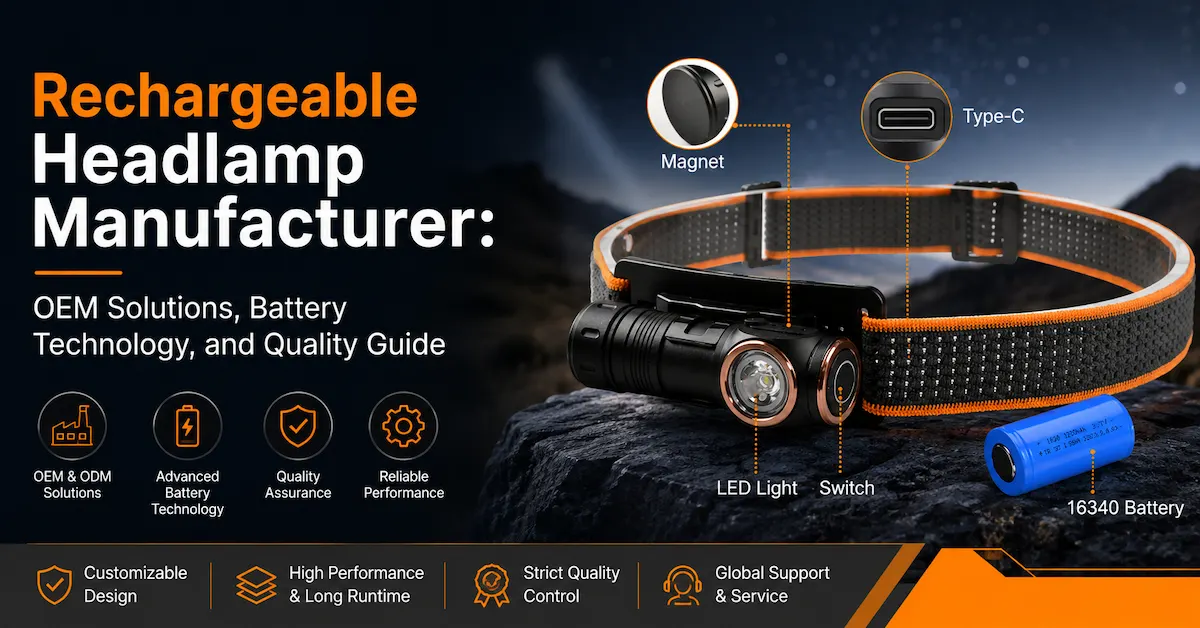
Before comparing suppliers, define what the rechargeable headlamp is really for. The common structure is familiar: a compact front light module positioned at the forehead and an elastic strap that keeps the unit in place. This format supports hands-free lighting for night running, hiking, caving, camping, trekking, and certain work tasks in dark spaces.
However, one headlamp does not automatically fit every activity. The source image suggests a narrow forward beam, which can help users see a path ahead during movement. That same beam may be less suitable for close-range campsite tasks that need broader illumination. Buyers should not assume beam spread, light modes, runtime, or charging details from appearance. Instead, match the product to the sales channel and ask the supplier to explain where the design performs best.
Key Factors to Compare Before a Bulk Order
For headlamp wholesale programs, the best comparison is broader than unit price. A practical scorecard should cover how the lamp is worn, how it performs for the intended task, how it charges, and how it will be packaged. This prevents a common sourcing mistake: approving a product that looks acceptable but does not fit the end user.
| Factor | What to Confirm |
|---|---|
| Beam pattern | Whether it is suited to forward movement, close-range work, or mixed use |
| Strap comfort | Adjustment range, stability during activity, and wearer comfort |
| Housing and lens | Materials, finish, and general durability expectations |
| Battery and charging | Charging method, battery configuration, and runtime information from the supplier |
| Packaging | Retail, promotional, industrial, or carton-efficient presentation |
If your team is still comparing product styles, review available lighting categories through Brightenlux products before narrowing the specification.
Evaluate Comfort, Stability, and Wearability
Comfort is often underestimated in bulk headlamp sourcing. The elastic strap may seem like a minor part, but it directly affects user satisfaction. If the lamp slips while running, hiking, or working, the end user notices immediately. In movement-heavy use, fit and stability can be as important as brightness.
Ask the supplier how the strap is built, how it adjusts, and whether the front module is balanced for wearable use. A compact front module is usually helpful because it can reduce bulk at the forehead, but weight distribution still needs to be checked with a physical sample. The switch action also matters. If users may wear gloves, the switch should be easy to locate and operate. These details are difficult to judge from a catalog photo, so sample testing is essential.
Check Rechargeable Design and Supplier Transparency
Because the product is rechargeable, battery and charging details should be part of every supplier discussion. Ask about the charging method, available runtime information, and whether the battery is built in or removable. These answers affect user convenience, logistics, labeling considerations, and customer expectations.
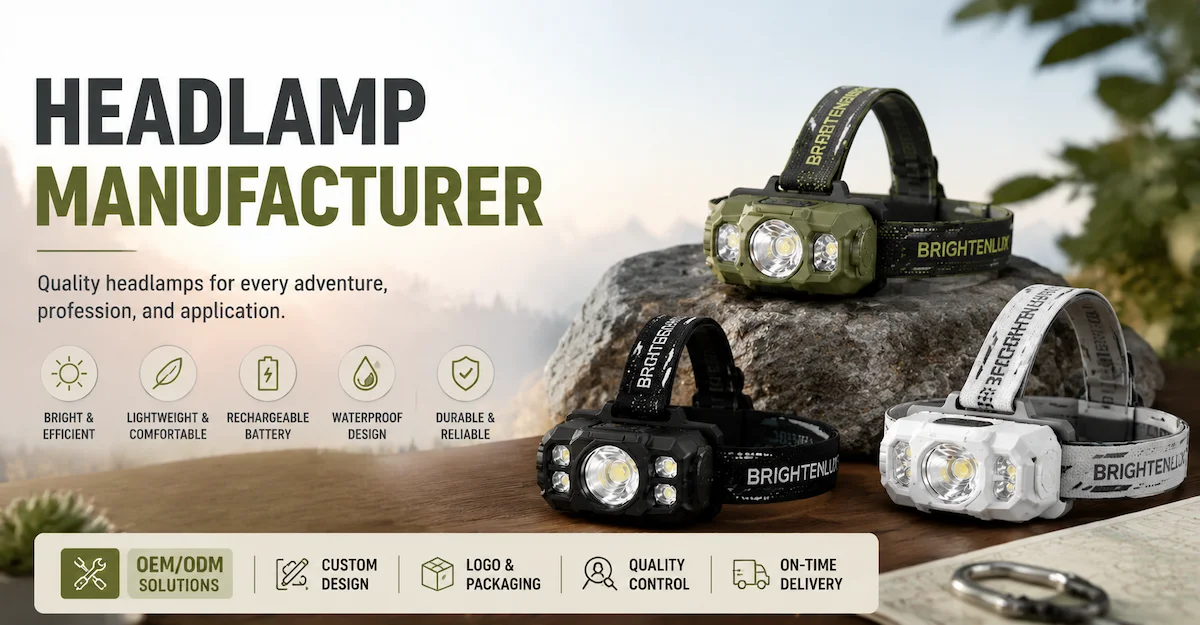
A reliable supplier should be able to explain the product’s main structure in clear language: front light module, strap style, charging arrangement, and any available options for finish or branding. They should also understand the difference between a recreational running lamp and a general utility lamp. If the supplier cannot explain the intended use or key construction details, treat that as a warning sign. For sourcing support, buyers can contact Brightenlux through contact us with application and channel requirements.
Use Samples to Reduce Bulk Purchase Risk
Samples are the fastest way to check whether a rechargeable headlamp matches the quotation and the channel. With a sample in hand, your team can evaluate beam feel, strap comfort, switch action, housing finish, and charging convenience. These practical checks often reveal problems that are invisible in product photos.
For larger programs, repeat-order consistency is also important. Buyers need confidence that future shipments will not change in appearance or core function without notice. Even a small change in battery pack, reflector, strap length, or packaging format can create customer confusion. Before approving mass purchasing, ask whether the supplier can support stable repeat orders and whether packaging can be adapted for retail, promotional, or industrial distribution. If your specification is ready, you can send details through Brightenlux inquiry for review.
When Bulk Ordering Makes Sense
Bulk purchasing is a strong choice when your use case, audience, and quality expectations are already clear. If your customers repeatedly need the same compact rechargeable headlamp, ordering in volume can support consistency and simplify replenishment. It may also make it easier to standardize packaging, branding, and accessory choices for a specific channel.
However, bulk ordering is risky if the specification is still unsettled. If your market may prefer a narrow beam for running, a broader beam for campsite tasks, or a simpler general-purpose lamp, test first. A smaller pilot order or sample comparison can prevent a large commitment to the wrong design. The right buying sequence is simple: define the use case, compare practical specifications, test samples, then approve the bulk order.
FAQ
What should I ask a bulk headlamp supplier first?
Start with the intended use, beam pattern, strap construction, charging method, and battery configuration. Then ask for a sample and a clear specification sheet. These basics help your team decide whether the rechargeable headlamp fits outdoor retail, promotional distribution, workwear channels, or another B2B application.
Why is a sample important before placing a bulk order?
A sample lets you test details that a photo cannot prove, including comfort, balance, switch action, beam feel, and overall finish. It also helps confirm whether the supplier’s description matches the physical product before your team commits to carton quantities or customized packaging.
Can one rechargeable headlamp fit running, camping, caving, and work use?
Not always. A narrow forward beam may suit running or trekking, while close-range campsite or work tasks may need a broader lighting style. Buyers should match the beam, comfort, and charging setup to the primary user instead of assuming one model is ideal for every situation.
How can I reduce after-sales risk in headlamp wholesale programs?
Focus on usability, repeat-order consistency, and packaging fit. Confirm strap stability, charging details, material information, and whether the supplier can maintain the same appearance and function across future orders. Clear sample approval and practical supplier communication reduce surprises after delivery.