

For automotive equipment distributors, professional tool brands, and fleet-maintenance suppliers, lighting performance is not determined solely by how bright a product looks in a catalogue.
An inspection light can deliver impressive illumination on an open workbench but perform poorly inside a crowded engine compartment.
Another product may fit easily around hoses and electrical connectors yet lack a suitable beam for underbody inspection.
A third may provide sufficient brightness but become inconvenient when a technician needs both hands to remove fasteners or inspect a component.
These differences create an important challenge for overseas B2B purchasers.
How can buyers verify that an inspection light will support the actual tasks performed by their customers before committing to a wholesale order?
A practical answer is to evaluate samples through a three-zone automotive service-bay trial.
This method separates the operating requirements of engine compartments, underbody service areas, and vehicle interiors.
It helps importers compare relevant product formats, define acceptance criteria, and request suitable configurations from an automotive inspection light supplier.
The following guide explains how to establish this evaluation using documented Brightenlux portable LED lighting products as reference platforms.

1. Why Should Automotive Buyers Use a Three-Zone Inspection Light Trial?
An automotive workshop contains several distinct lighting environments.
The geometry, surface materials, inspection distance, and operator position change significantly between tasks.
A product that works well in one area may be unsuitable in another.
Zone A: Engine-bay inspection
Technicians need lighting around engine components, hoses, reservoirs, wiring, fasteners, and other parts.
The working space may contain reflective metal and dark plastic surfaces that respond differently to a concentrated beam.
Zone B: Underbody inspection
Inspection beneath a vehicle involves restricted viewing angles, structural components, and potential obstructions.
The light should be compact enough to position appropriately without interfering with authorized maintenance work.
Zone C: Vehicle interior inspection
Interior tasks can involve dashboards, footwells, seat mechanisms, wiring access points, and other confined spaces.
A compact light or wearable solution may be more practical than a large floodlight.
Three-Zone Automotive Lighting Comparison
| Inspection Zone | Main Challenge | Suitable Lighting Direction | Priority Test |
|---|---|---|---|
| Engine bay | Reflections, shadows, restricted access | Adjustable directional light | Beam placement and glare |
| Underbody | Obstructions and changing work positions | Compact hands-free inspection light | Access and secure positioning |
| Cabin and footwell | Narrow spaces and close viewing distances | Lightweight handheld or wearable light | Comfort and controlled illumination |
The objective is not to identify one universally superior product.
It is to determine which lighting format best supports the buyer's target applications.
Which B2B buyers benefit from this approach?
The method is particularly relevant to automotive tool distributors, vehicle-maintenance equipment importers, private-label lighting brands, industrial MRO suppliers, and businesses assembling professional service kits.
It is less suitable as a substitute for specialized inspection instruments, calibrated color-assessment systems, or equipment requiring hazardous-location certification.
Portable white-light inspection lamps support visibility; they do not independently establish mechanical or electrical safety, diagnose hidden defects, or certify vehicle condition.
2. What Should Buyers Define Before Requesting Automotive Inspection Light Samples?
A successful evaluation starts with a written application brief.
Without one, the supplier may recommend a product based on price or advertised brightness instead of practical suitability.
Define the inspection task
Describe what technicians need to see.
Examples include reading identification markings, observing an accessible connector, checking a component's visible condition, or illuminating a fastener during maintenance.
Avoid vague requirements such as "bright enough for all repairs."
Record the working conditions
A useful request should include:
- Target vehicle or equipment category.
- Inspection area and operator position.
- Typical working distance.
- Available mounting surfaces.
- Relevant ambient lighting.
- Expected operating duration.
- Portable or hands-free preference.
- Battery and charging requirements.
- Intended sales market and purchasing quantity.
Define the decision criteria
Buyers should decide what constitutes acceptable performance before examining samples.
A lamp may pass one requirement but fail another.
For example, excellent brightness cannot compensate for a product that is too large to enter the inspection space.
Example Automotive Inspection Light Specification
| Specification | Buyer Requirement | Verification |
|---|---|---|
| Product format | Handheld, right-angle, magnetic, or wearable | Physical sample |
| Inspection distance | Defined by actual task | Vehicle trial |
| Beam pattern | Suitable spot or flood distribution | Task observation |
| Operating modes | Accessible useful modes | Functional test |
| Power configuration | Approved rechargeable battery | Technical documentation |
| Mounting | Stable in permitted positions | Application test |
| Runtime | Meets defined working period | Mode-specific test |
| Charging | Compatible approved power source | Charging test |
| Product construction | Appropriate for intended handling | Physical inspection |
| OEM packaging | Correct approved configuration | Pack-out verification |
A supplier should distinguish confirmed model specifications from proposed requirements requiring further engineering.
3. How Should Automotive Inspection Lights Be Tested Inside an Engine Bay?
Engine-bay inspection requires controlled light placement.
A concentrated beam can illuminate a small component effectively, but it may also produce harsh reflections or leave surrounding areas in shadow.
Test actual viewing positions
Position the light where a technician would naturally use it.
Evaluate whether the beam reaches the intended component without repeatedly changing the operator's posture.
Record the approximate working distance and beam direction.
Examine reflective surfaces
Engine compartments can contain polished metal, reflective labels, plastic covers, and dark components.
Reflections may create glare that makes small details harder to distinguish.
The sample trial should examine whether the operator can recognize the required features without uncomfortable or distracting reflections.
Test adjustable lighting formats
An adjustable-head light can help direct illumination into different parts of an engine compartment.
However, the adjustment mechanism must remain functional and maintain the intended position.
Where a magnetic mounting system is used, evaluate the actual attachment surface and orientation.
Engine-Bay Sample Checklist
| Test Item | Buyer Observation |
|---|---|
| Beam reach | Does light reach the target component? |
| Shadow behavior | Are important details obscured? |
| Glare | Are reflections interfering with inspection? |
| Mounting | Can the unit be positioned safely and securely? |
| Adjustment | Does the head maintain its intended angle? |
| Controls | Can the technician change modes conveniently? |
| Working clearance | Does the light interfere with tool access? |
The most suitable product is the one that improves visibility during the actual task, not simply the model with the highest advertised lumen rating.
4. What Lighting Features Matter for Vehicle Underbody Inspection?
Underbody inspection introduces different practical constraints.
A technician may need lighting around accessible suspension components, shields, fasteners, brackets, or other service areas.
The inspection method must respect the vehicle manufacturer's procedures and applicable workshop safety requirements.
Compact construction
A compact right-angle inspection light may fit where a larger handheld lamp or freestanding work light is inconvenient.
Product dimensions, clip arrangement, and head position should be evaluated with representative access conditions.
Hands-free positioning
Magnetic mounting can be useful on compatible ferromagnetic surfaces.
However, not every vehicle component is suitable for magnetic attachment.
Aluminum, some stainless-steel materials, coated surfaces, and irregular contact geometry can limit or prevent effective mounting.
A magnet should never be considered a substitute for an approved safety support.
Beam direction
The operator may need to illuminate an area from the side rather than directly in front.
Adjustable or wearable lighting can help, but the resulting beam must not interfere with the technician's vision or create excessive reflections.
Environmental suitability
Underbody service areas may contain water, dust, grease, and other contaminants.
Buyers should request product-specific evidence for any advertised ingress-protection claim.
A water-resistance rating does not automatically establish resistance to oil, solvents, impact, or chemical cleaning.
Safety consideration: Inspection lights must not interfere with vehicle supports, moving equipment, lifting systems, or safe access procedures. Work beneath a vehicle should only be performed with appropriate equipment and safeguards.
5. How Should Buyers Evaluate Lights for Vehicle Interiors and Footwells?
Interior inspection generally requires a smaller illuminated area.
Technicians may work around lower dashboards, seat mechanisms, interior panels, and accessible wiring components.
A large work light can become inconvenient when space is limited.
Prioritize maneuverability
The product should be easy to position and remove without obstructing the work.
A compact handheld or wearable light may be preferable when the operator changes viewing direction frequently.
Evaluate beam comfort
At close distances, an intense hotspot can be distracting.
Buyers should compare low and medium modes rather than relying only on maximum brightness.
Check control accessibility
A suitable light should allow users to change operating modes without complicated button sequences.
The required controls should be evaluated in the intended working position.
Assess wearable alternatives
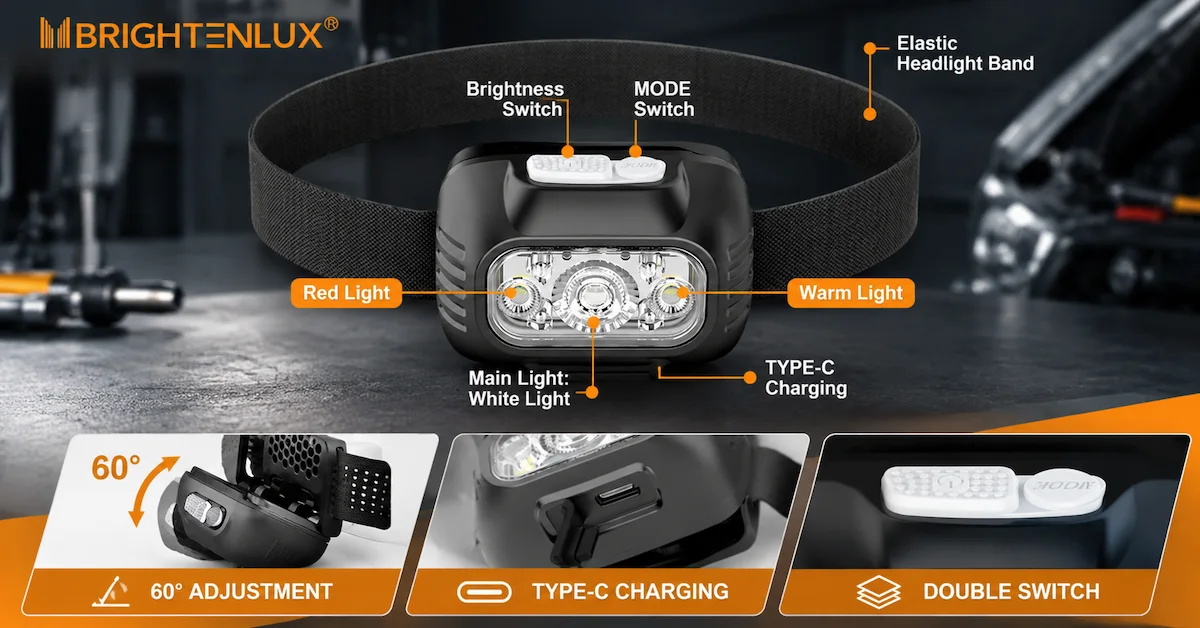
A rechargeable headlamp can direct light toward the area being viewed while keeping the hands available.
However, head-worn illumination may also create shadows or reflections as the user moves.
The appropriate format depends on the specific task.
Interior Inspection Evaluation
| Requirement | Practical Test |
|---|---|
| Compact size | Fits within the intended access area |
| Beam comfort | Supports close viewing without excessive glare |
| Control operation | Modes are convenient during inspection |
| Portability | Easy to carry and reposition |
| Hands-free use | Suitable attachment or wearable configuration |
| Battery operation | Supports the required task duration |
Buyers should also ensure that equipment and charging cables do not obstruct pedals, safety devices, or other vehicle controls.
6. Which Automotive Inspection Light Format Should Buyers Choose?
Several product architectures can support vehicle inspection.
The best format depends on where the light must be positioned and how the technician performs the task.
Automotive Inspection Light Selection Matrix
| Lighting Format | Strongest Application | Main Advantage | Main Limitation |
|---|---|---|---|
| Compact right-angle flashlight | Tight engine and equipment spaces | Directional beam in compact housing | Limited broad-area coverage |
| Adjustable-head flashlight | Multiple inspection angles | Flexible beam positioning | Adjustment stability requires verification |
| Magnetic-tail flashlight | Compatible steel mounting surfaces | Temporary hands-free use | Attachment depends on surface |
| Rechargeable headlamp | Mobile and two-handed tasks | Beam follows head movement | May create glare or shadows |
| Dedicated COB work light | Broader nearby work areas | Potential wide illumination | Positioning and size must suit task |
A professional automotive inspection light supplier should explain the practical trade-offs between these formats.
The decision should include lighting performance, ergonomics, mounting method, battery configuration, product size, and the intended customer application.
For a broad engine-bay task, a dedicated work-light format may be more appropriate than a small directional flashlight.
For a narrow inspection space, the opposite may be true.
Compare Real Brightenlux Lighting Platforms
Compare magnetic, adjustable-head and wearable product architectures before selecting OEM samples.
7. Which Brightenlux Products Can Be Evaluated for Automotive Inspection?
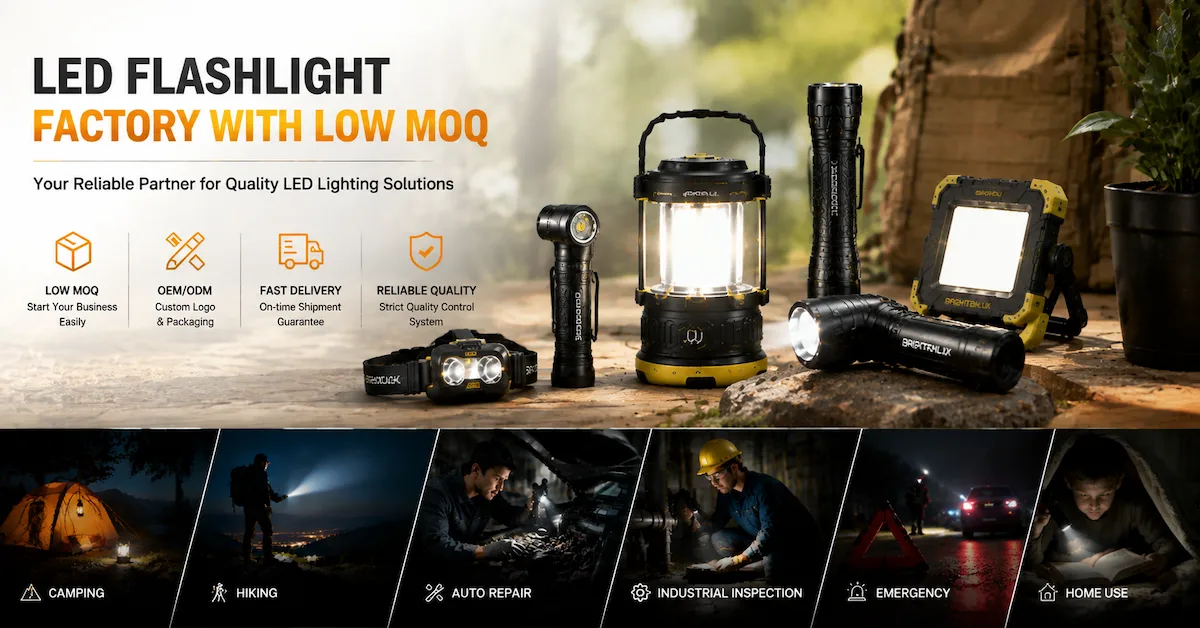
Ningbo Brightenlux Electric Appliance Co., Ltd. manufactures portable LED lighting products and offers OEM/ODM outdoor lighting services.
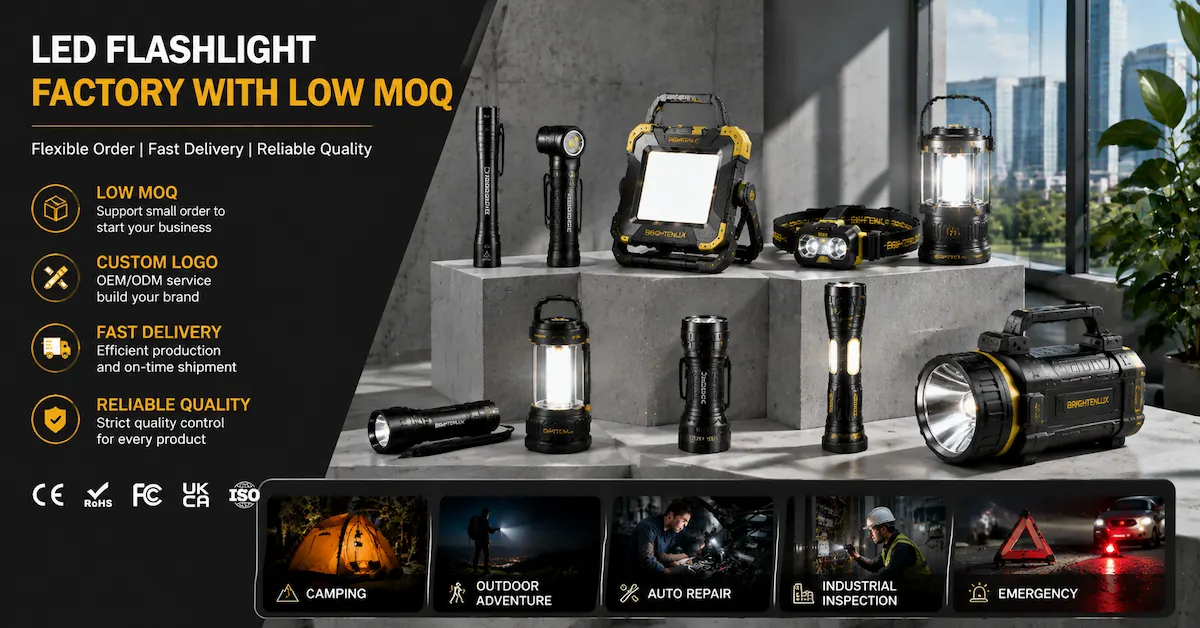
The company publishes several rechargeable products with different lighting structures, battery formats, and mounting features.
These products can serve as references when developing an automotive inspection-light assortment.
Brightenlux Product Comparison
| Product | Manufacturer-Published Features | Potential Inspection Application |
|---|---|---|
| BT-FL8078 Right-Angle Flashlight | 1000lm, SST25, 16340 800mAh, Type-C, magnetic tail | Compact inspection and hands-free positioning |
| 1000lm SST40 Adjustable-Head Flashlight | Adjustable head, magnetic tail, 18650 2200mAh, Type-C | Engine-bay and equipment inspection |
| BT-FL8088 Rechargeable Flashlight | 1500lm, SST40, 21700 4000mAh, Type-C, magnetic tail | General portable repair illumination |
| 650lm SST20 Rechargeable Headlamp | SST20, 1800mAh rechargeable battery, Type-C, warm-white and red side LEDs | Mobile hands-free inspection |
All specifications above are manufacturer-published values. They are not independently verified performance results or confirmation of suitability for every automotive task.
BT-FL8078: Compact right-angle inspection platform
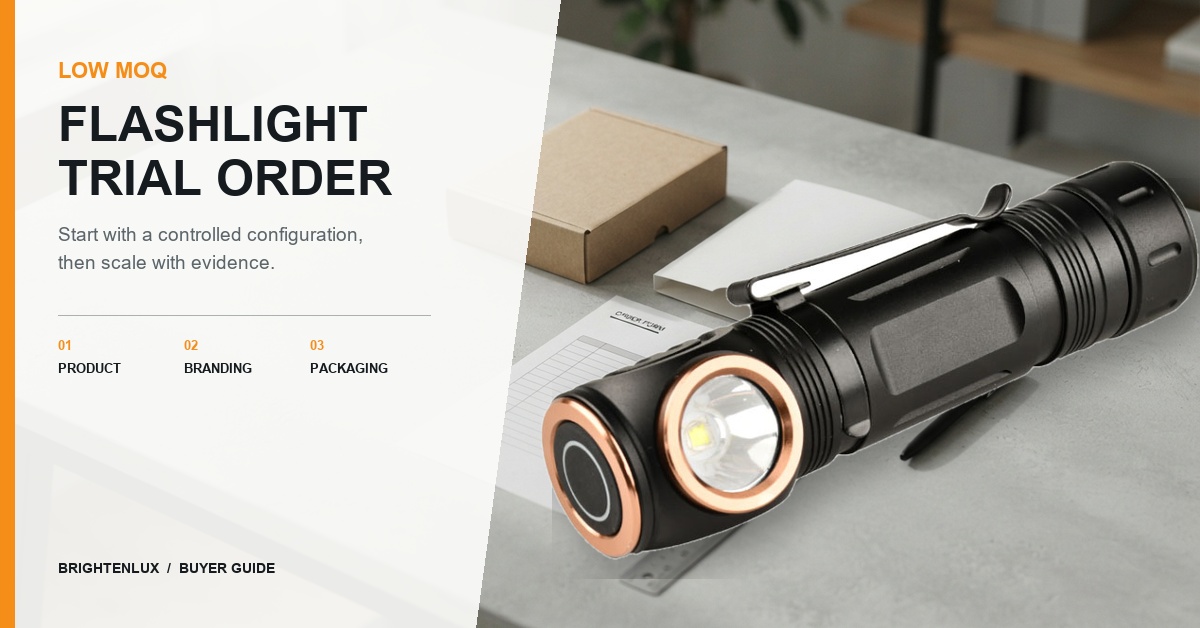
The Brightenlux BT-FL8078 Right-Angle Flashlight combines a 90-degree head structure, magnetic tail, Type-C charging, and a rechargeable 16340 battery.
Its compact design makes it a relevant starting sample for restricted-access tasks.
For automotive sourcing, buyers should verify beam placement, magnetic attachment, runtime at the chosen mode, and the included mounting accessories.
SST40 adjustable-head rechargeable flashlight
The Brightenlux 1000-Lumen Adjustable-Head Flashlight offers an adjustable lighting head and magnetic tail.
This structure may help technicians direct illumination into different engine-bay positions.
The buyer should evaluate head retention, beam direction, switch access, and handling in representative tasks.
BT-FL8088: Rechargeable magnetic-tail flashlight
The Brightenlux BT-FL8088 Rechargeable Flashlight uses a published 21700 lithium battery configuration and Type-C charging.
It provides a different battery and output platform for buyer comparison.
However, a larger battery or higher nominal output does not automatically guarantee better inspection performance.
SST20 rechargeable headlamp
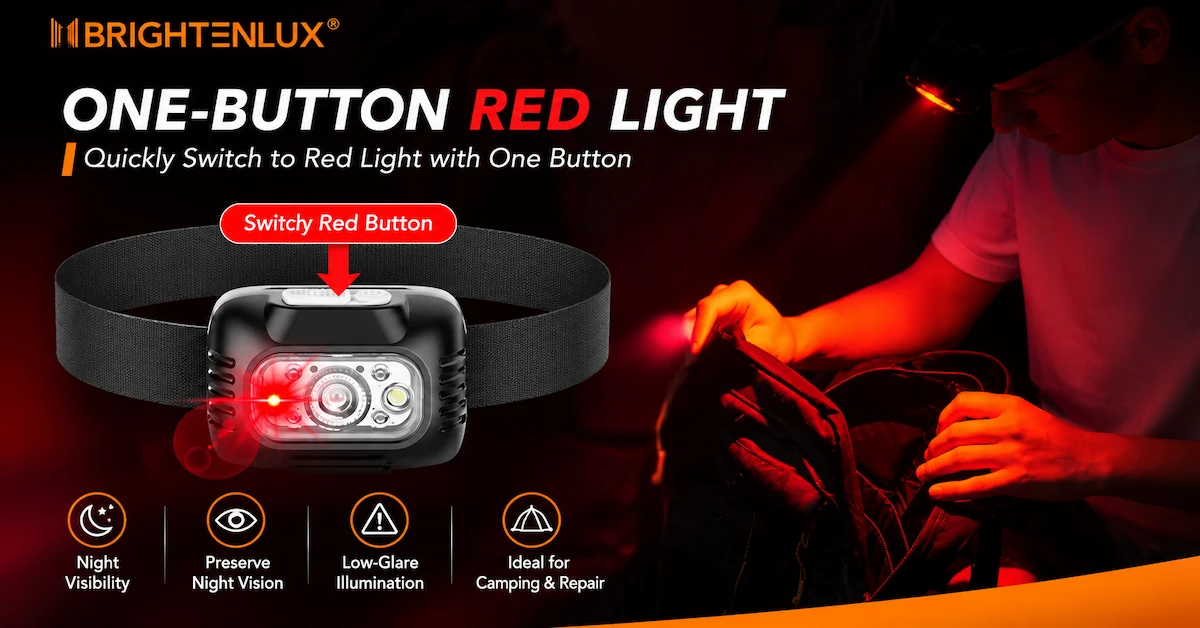
The Brightenlux 650-Lumen SST20 Headlamp offers a wearable configuration with rechargeable power and additional lighting modes.
This format may be useful for technicians performing tasks that require both hands.
Buyers should assess weight, beam comfort, headstrap fit, and mode accessibility.
What if a buyer needs a dedicated automotive COB inspection lamp?
Request the current work-light catalogue and confirm the exact model, battery, mechanical arrangement, accessories, and available performance evidence.
The documented products above are portable flashlights and a headlamp; they should not be presented as a verified range of dedicated automotive COB workshop lamps.
Explore Brightenlux Lighting Products
View Brightenlux Work & Repair Lighting Solutions
Request Automotive Inspection Light Samples
Discuss Your Automotive Inspection Requirements
Need a specific mounting format, battery configuration or private-label product set? Ask for model-specific confirmation.
8. How Should Buyers Run a Three-Zone Automotive Inspection Light Pilot?
A structured field trial helps turn subjective impressions into documented purchasing decisions.
The method should be practical enough for a distributor or tool brand to use without requiring a dedicated laboratory for every observation.
Step 1: Select the candidate products
Choose product formats that address the actual inspection tasks.
For example, a buyer may compare a compact right-angle light, an adjustable-head flashlight, and a rechargeable headlamp.
Step 2: Define representative tasks
Prepare a short list of inspection activities for each zone.
Possible tasks include illuminating accessible connectors, reading component labels, observing fasteners, or examining visible surface conditions.
All trials should follow applicable workplace safety requirements.
Step 3: Standardize the conditions
Record the vehicle or test fixture, ambient illumination, operating mode, battery condition, and relevant working distance.
Different conditions can make otherwise similar products appear better or worse.
Step 4: Observe actual user interaction
Have representative technicians perform the defined tasks.
Record whether the product:
- Illuminates the required area.
- Creates distracting glare.
- Requires frequent repositioning.
- Interferes with tool access.
- Can be controlled conveniently.
- Remains stable when mounted.
- Provides adequate operating time.
Step 5: Document the results
A simple evaluation sheet can capture both measurable and observational results.
Three-Zone Pilot Scorecard
| Evaluation Criterion | Engine Bay | Underbody | Interior |
|---|---|---|---|
| Task visibility | Pass / Fail | Pass / Fail | Pass / Fail |
| Beam direction | Pass / Fail | Pass / Fail | Pass / Fail |
| Glare control | Pass / Fail | Pass / Fail | Pass / Fail |
| Physical access | Pass / Fail | Pass / Fail | Pass / Fail |
| Hands-free suitability | Pass / Fail | Pass / Fail | Pass / Fail |
| Control accessibility | Pass / Fail | Pass / Fail | Pass / Fail |
| Required runtime | Pass / Fail | Pass / Fail | Pass / Fail |
| Overall application fit | Pass / Fail | Pass / Fail | Pass / Fail |
The buyer should define what constitutes passing each item before conducting the trial.
For more detailed comparison, record setup time, number of repositioning events, task completion observations, and operating duration under the agreed test conditions.
These measurements can support product selection without inventing a universal industry score.
Step 6: Approve the production-intent configuration
Once a suitable format is selected, confirm the actual model, battery, lighting modes, accessories, packaging, and applicable test requirements.
A product shown during a field demonstration should not be assumed identical to the configuration proposed for mass production.
Turn the Three-Zone Trial Into a Supplier RFQ
Share your engine-bay, underbody and cabin trial criteria with the Brightenlux team.
9. What Lighting Performance Evidence Should Buyers Request?
An automotive inspection light supplier should provide appropriate evidence for the performance claims relevant to the proposed product.
Luminous output and beam behavior
A lumen rating describes total luminous flux.
It does not directly establish illumination at a particular vehicle component or demonstrate that the beam has an appropriate distribution.
For applicable portable lighting products, the ANSI/PLATO FL 1-2025 Flashlight Basic Performance Standard establishes standardized performance testing and reporting approaches.
The standard covers characteristics such as light output, beam distance, peak intensity, runtime, impact resistance, and defined environmental protection claims.
For B2B procurement, standardized measurements can support comparison between products.
However, the supplier should identify whether the reported results apply to the exact proposed model and configuration.
Optical and electrical measurements
The ANSI/IES LM-79-24 method for optical and electrical measurements describes procedures for evaluating relevant solid-state lighting characteristics under standardized conditions.
It addresses measurements such as luminous flux, electrical power, luminous-intensity distribution, and color quantities.
For appropriate lighting products, these methods provide a useful technical reference.
They do not replace the need to evaluate how a lamp works at actual vehicle inspection distances.
Runtime verification
A manufacturer's stated battery capacity does not automatically establish useful operating time.
Actual runtime depends on the battery, driver, selected lighting mode, temperature, and test endpoint.
Buyers should request mode-specific information and verify that the chosen lighting level remains useful for the required task duration.
Environmental claims
Ingress-protection ratings should be supported by appropriate evidence applying to the exact model.
Do not assume that a product described as splash-resistant is suitable for immersion, aggressive chemical cleaning, or other untested conditions.
Important: Mentioning ANSI or IES standards does not establish that Brightenlux products have been independently certified or tested under those standards.
10. How Should Suppliers Control Product Consistency Before Bulk Orders?
A successful service-bay pilot establishes which product configuration the buyer wants to purchase.
Production quality control should then ensure that the delivered goods correspond to that approved configuration.
Control critical components
Relevant components can include:
- LED emitter and optical elements.
- Driver and electronic controls.
- Rechargeable battery.
- Charging connector.
- Switches.
- Magnetic mounting components.
- Housing and clips.
- Headstrap or mounting accessories.
Changes to these components may influence the approved product's performance.
Use a controlled reference sample
The buyer and supplier should agree on a production-intent sample with identifiable specifications.
This sample should be supported by a bill of materials or appropriate component information, photographs, operating instructions, and relevant inspection requirements.
Establish finished-goods inspection
The official ISO 2859-1:2026 acceptance sampling standard provides a framework for lot-by-lot inspection by attributes.
An appropriately selected sampling plan can support inspection of relevant product characteristics.
However, sampling does not replace design validation or guarantee that every delivered unit is defect-free.
OEM Production Acceptance Checklist
| Inspection Area | Buyer Requirement |
|---|---|
| Model identity | Correct product and revision |
| Lighting modes | Match approved control behavior |
| Battery | Approved model and configuration |
| Charging | Correct input and functional behavior |
| Optical components | Match approved construction |
| Housing | Meets defined appearance and fit requirements |
| Mounting | Matches approved accessory and mechanism |
| Documentation | Appropriate model-specific evidence |
| Packaging | Correct labeling and accessories |
| Repeat orders | Controlled component substitutions |
For additional manufacturing considerations, buyers can review the Brightenlux LED Work Light Quality Guide.
11. What OEM and Private-Label Customization Should Buyers Discuss?
Brightenlux publicly describes OEM/ODM support for its portable lighting business.
For an automotive inspection-light project, customization discussions should start with the requirements established during the service-bay pilot.
Branding customization
Potential requests may include logo marking, housing appearance, product identification labels, retail packaging, and multilingual manuals.
Availability must be confirmed for the selected model.
Functional customization
Changes to lighting modes, beam behavior, battery systems, mounting accessories, or charging interfaces may require additional engineering and validation.
A change that appears minor can affect the complete product configuration.
Application-specific accessories
Some buyers may require a headstrap, clip, holder, charging cable, or specific carrying arrangement.
The quotation should identify which accessories are standard and which are optional.
Recommended OEM Development Process
Application brief → Product selection → Three-zone service-bay trial → Engineering assessment → Sample approval → Production specification → Quality inspection → Shipment approval
This is a recommended procurement workflow, not a claim that every Brightenlux order follows the same fixed production process.
12. How Should Buyers Compare Wholesale Costs and Prepare an RFQ?
Unit price is only one part of the purchasing decision.
For professional automotive inspection lights, the complete delivered configuration matters.
A lower-priced product may be less suitable if it requires additional accessories, frequent replacement, or repeated repositioning during use.
Compare equivalent configurations
Confirm whether quotations include:
- The selected lighting product.
- Approved rechargeable battery.
- Charging cable or adapter.
- Mounting accessories.
- OEM branding.
- Retail packaging.
- Testing and inspection.
- Freight and applicable import costs.
Total Purchasing Cost
A simple commercial framework is:
Total purchasing cost = Product cost + Accessories + Customization + Testing and inspection + Freight and handling + Applicable duties and taxes
For institutional procurement, buyers may also consider replacement units, charging equipment, and expected service costs.
Automotive Inspection Light RFQ Checklist
| RFQ Field | Information to Provide |
|---|---|
| Buyer profile | Company, destination country, sales channel |
| Inspection applications | Engine bay, underbody, cabin |
| Product format | Right-angle, magnetic, adjustable-head, wearable |
| Lighting performance | Beam, operating modes, useful illumination |
| Power system | Battery, charging input, runtime |
| Mounting | Magnetic, clip, headstrap, or other |
| Environmental conditions | Dust, moisture, handling and exposure |
| OEM customization | Logo, color, packaging, accessories |
| Sample evaluation | Three-zone pilot and acceptance criteria |
| Quality control | Product revision, tests, inspection |
| Purchasing quantity | Initial order and forecast |
| Commercial terms | MOQ, price, sample cost, lead time |
Questions to send with your inquiry
Before committing to bulk purchasing, ask the supplier to confirm the exact proposed model, product dimensions, published performance evidence, included accessories, available customization, sample conditions, quality-control approach, MOQ, and production milestones.
The buyer should also request clarification whenever the proposed product differs from the approved service-bay sample.
Explore Brightenlux OEM/ODM Lighting Solutions
Request an Automotive Inspection Light Wholesale Quote
Ready to Source Inspection Lighting?
Send the required applications, sample conditions, order quantity and customization plan for a model-specific proposal.
13. Frequently Asked Questions About Automotive Inspection Light Suppliers
1. What should I look for in an automotive inspection light supplier?
Look for a supplier that can identify the actual product configuration, explain suitable inspection applications, provide relevant performance information, and support representative sample evaluation. For wholesale purchasing, confirm battery systems, mounting options, OEM customization, production consistency, and commercial terms.
2. What type of LED inspection light is best for engine-bay work?
The most suitable format depends on the available working space, beam direction, reflections, and mounting surfaces. An adjustable-head or magnetic inspection light may be useful for selected tasks, while broader work areas may require a dedicated floodlight. Evaluate actual samples inside representative engine compartments.
3. Is a magnetic inspection light suitable for vehicle underbody work?
It may be useful where compatible ferromagnetic attachment surfaces are available. However, the buyer should verify mounting stability, available clearance, and the intended working orientation. Magnetic attachment must not replace approved vehicle support or safety equipment.
4. How many lumens should an automotive inspection light have?
There is no universal lumen requirement for all automotive inspection tasks. Suitability depends on working distance, beam pattern, glare, the size of the inspection area, and the user's visual task. A controlled lower mode may sometimes be more useful than maximum output.
5. What is the difference between a work light and an inspection flashlight?
A work light often emphasizes illumination of a broader working area, while an inspection flashlight typically provides portable directional lighting. Some designs can support both uses, but buyers should compare actual beam distribution, mounting, size, and battery performance before treating them as interchangeable.
6. Are rechargeable automotive inspection lights suitable for professional workshops?
They can be suitable when the product meets the intended performance, charging, mechanical, and environmental requirements. Buyers should verify operating time at the useful lighting level, charging compatibility, product construction, and available maintenance information.
7. Can Brightenlux supply private-label automotive inspection lights?
Brightenlux publicly describes OEM/ODM portable lighting support and offers rechargeable flashlights and headlamps relevant to selected inspection applications. The exact products, customization options, MOQ, testing requirements, and lead times must be confirmed for the proposed order.
8. How should buyers test automotive inspection-light samples?
Use a repeatable trial across representative engine-bay, underbody, and interior tasks. Record visibility, glare, physical access, mounting, controls, battery performance, and operator feedback. Establish acceptance criteria before testing and document the result for each model.
9. What quality checks should be completed before wholesale shipment?
Relevant checks include approved product identity, lighting modes, battery configuration, charging operation, housing condition, mounting accessories, packaging accuracy, and applicable performance evidence. Buyers should agree on appropriate testing and sampling procedures before production.
10. How can I request an automotive inspection light quotation from Brightenlux?
Provide the target market, inspection applications, desired lighting format, battery and charging requirements, mounting preferences, branding needs, expected order quantity, and sample-evaluation criteria. Contact Brightenlux to request current product options, technical details, and quotation conditions.
Conclusion
Choosing an automotive inspection light supplier requires more than comparing product photographs, advertised lumens, battery capacities, and wholesale prices.
For automotive tool distributors, fleet-maintenance suppliers, and private-label brands, the most valuable question is whether the light performs effectively in the actual vehicle areas where customers need it.
A three-zone service-bay trial provides a practical way to evaluate this requirement.
By comparing engine-bay, underbody, and interior inspection tasks, buyers can identify the lighting format, beam characteristics, mounting method, and power configuration most appropriate for their target market.
The results should then be translated into a controlled product specification, sample approval record, quality inspection plan, and model-specific commercial quotation.
This approach helps purchasing teams avoid unsuitable product selections and provides a clearer basis for repeat orders.
Brightenlux offers several documented rechargeable flashlight and headlamp platforms that may support selected automotive inspection applications.
Buyers requiring dedicated COB workshop lights or specialized configurations should confirm the current available products and development feasibility.
The next step is to define the intended inspection tasks, request representative samples, and establish clear acceptance criteria before committing to bulk purchasing.
Explore portable lighting products: Brightenlux LED Lighting Catalogue
Review automotive work-light applications: Brightenlux Work and Repair Lighting Solutions
Start a sourcing project: Request an Automotive Inspection Light OEM/Wholesale Quotation