

Rechargeable Flashlight Manufacturer Guide for B2B Buyers
Choosing a rechargeable flashlight manufacturer is not just a price comparison. Buyers need a handheld light that feels dependable when power fails, weather turns damp, or a task takes longer than expected. The product may look simple, but sourcing it well requires attention to housing design, grip, beam direction, controls, charging practicality, and real user behavior. This guide helps procurement teams compare suppliers with a clearer view of product function, channel fit, and RFQ priorities.
What Buyers Should Define Before Comparing Suppliers
The most useful starting point is the application. A camping light, inspection torch, blackout backup light, and compact work light can all sit in the same product category, but they do not share the same priorities. One may need a hanging hook and wider task beam. Another may need a stronger grip texture, more focused direction, and a control button that is easy to locate with wet fingers.
Before requesting quotes, define where the light will be used, how it will be held or mounted, and what kind of user will operate it. A capable rechargeable flashlight manufacturer should understand these trade-offs before the design reaches tooling. If you are reviewing possible product platforms, Brightenlux buyers can start from the lighting products page and compare options by intended use rather than appearance alone.
Why Rechargeable Flashlights Are More Complex Than They Look
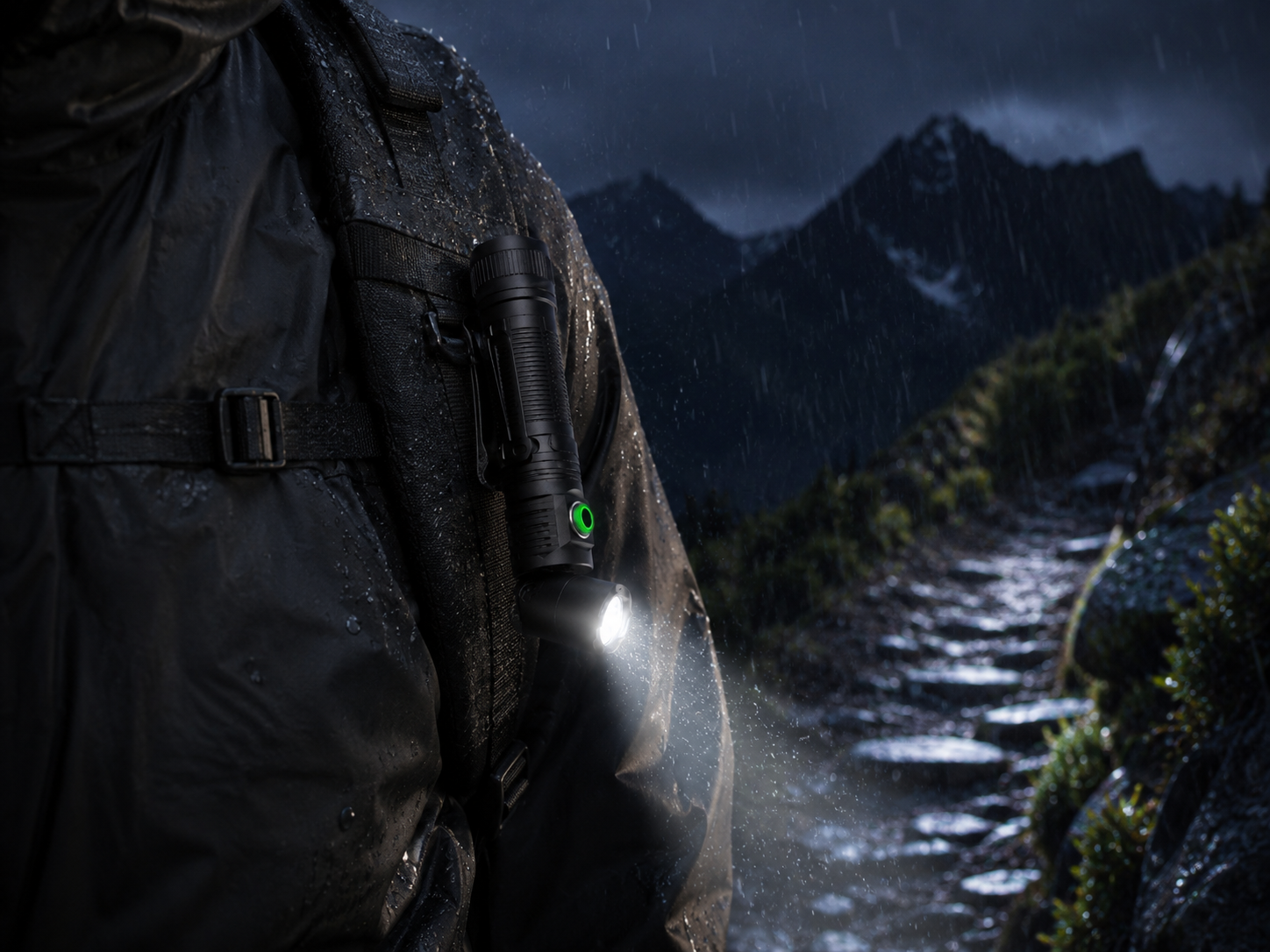
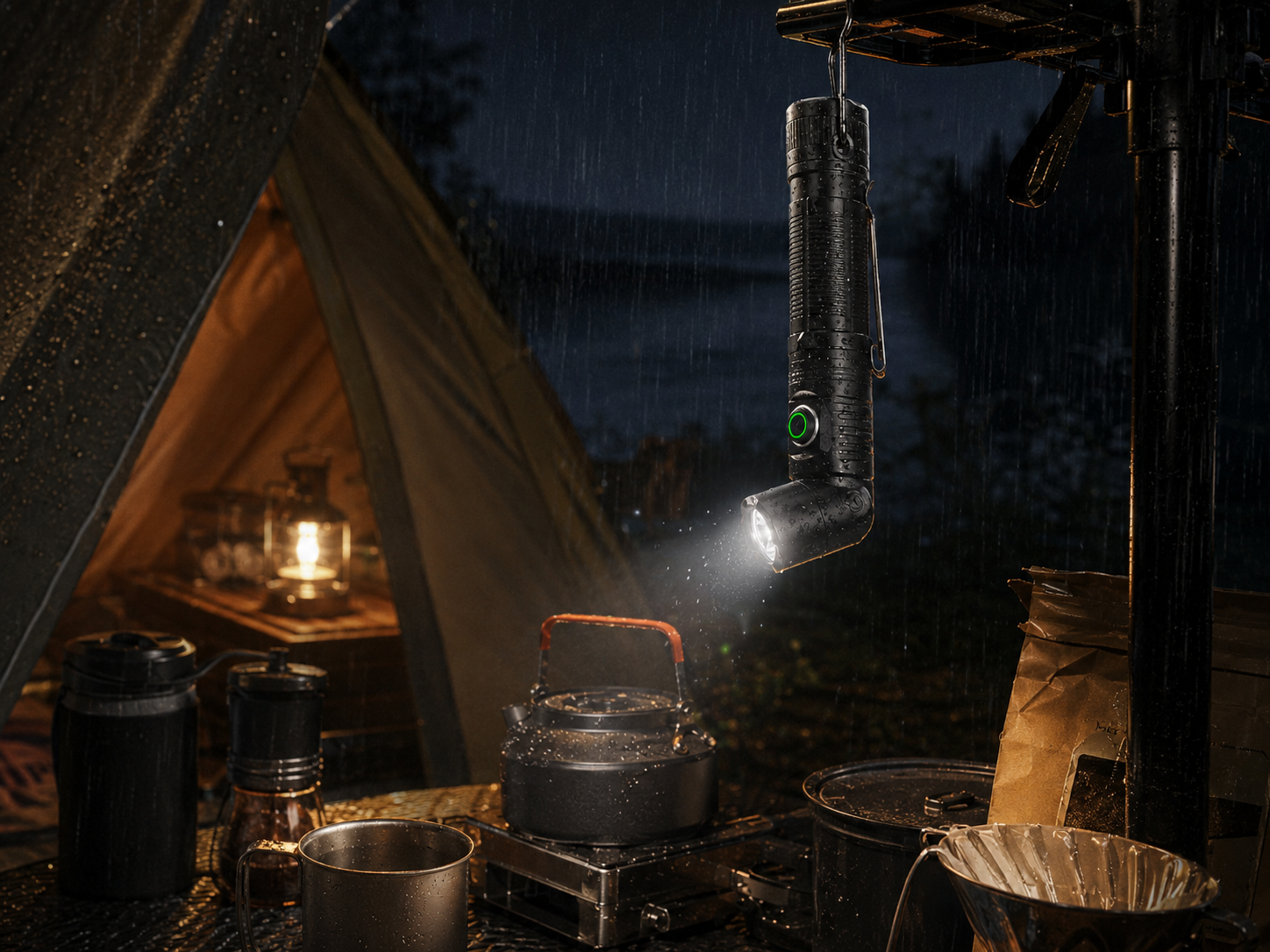
Outdoor lighting is often treated as a commodity, but that approach can create problems. In actual use, a handheld rechargeable torch may face drops, damp conditions, repeated charging, and users who do not read instructions. A hanging rechargeable LED flashlight with a matte body, side power button, and angled head is doing several jobs at once: it can be carried, hung, aimed, or used as an emergency light.
Each function affects design. A textured grip improves handling, but poor molding control can make it inconsistent. A hook adds versatility, but also creates a stress point. An angled head improves aiming, but the joint or fixed geometry must feel stable. These details are not dramatic in a catalog photo, yet they are often where weak manufacturing becomes visible.
Key Construction Details to Review in Samples
Begin with the housing and grip. Many handheld rechargeable LED flashlight designs of this type appear to use injection-molded polymer housings, a practical approach for repeatability, handling comfort, and impact resistance. The matte black finish shown in the source image suggests a product intended to hide wear while offering a secure hand feel. Textured sections are functional, especially when users wear gloves or handle the light in cold or damp conditions.
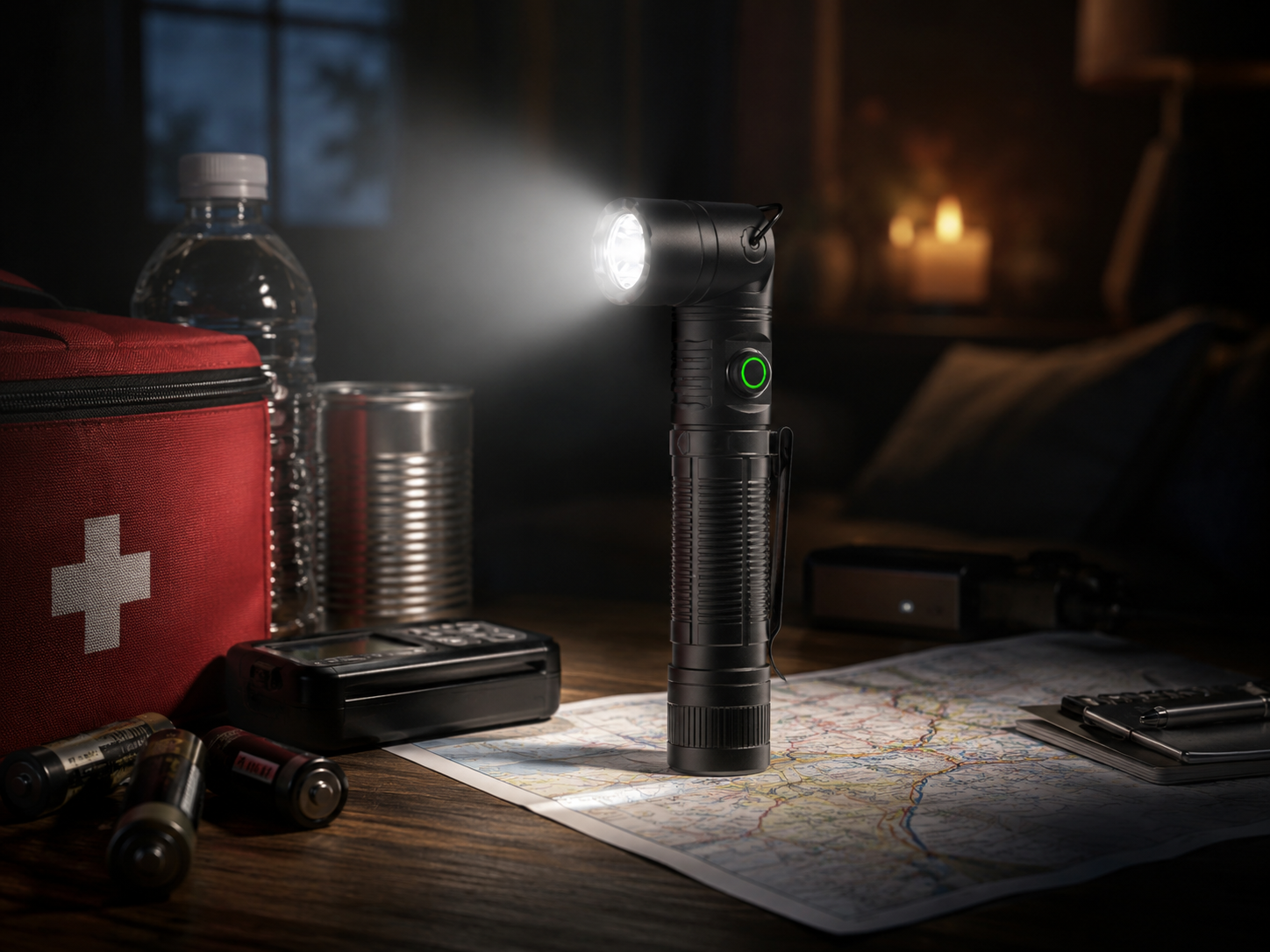
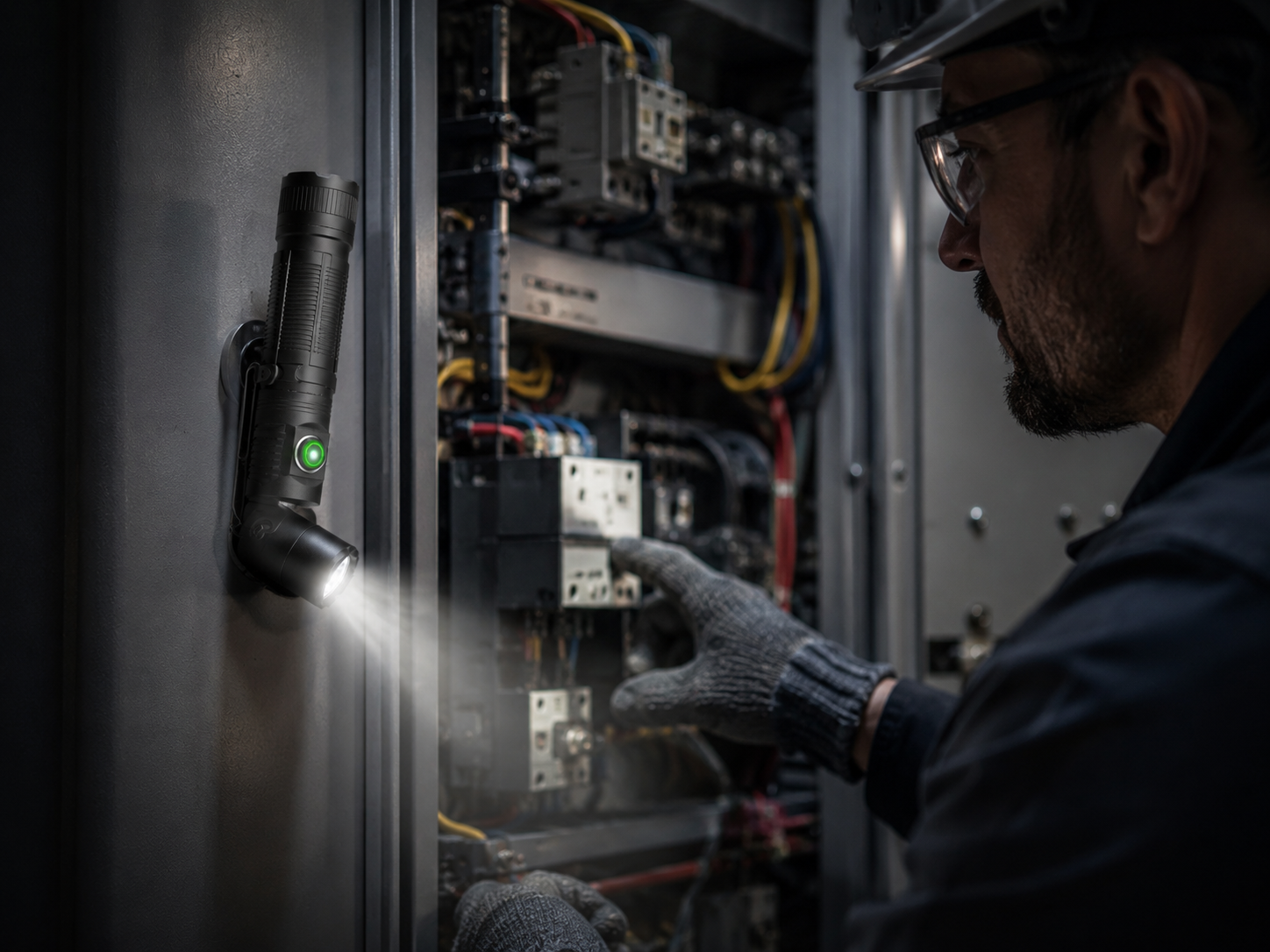
Next, review the head and beam direction. The image shows a head that appears angled relative to the main body, which can help direct light downward when the unit is hung from a tent frame, shelf, hook, or overhead support. This turns the flashlight into a compact task light. If the head pivots, it should hold position without creeping. If it is fixed, the angle should clearly support the intended use.
The control button also deserves attention. A side-mounted button with a visible ring gives the user a tactile target and may support easier use in low light. For emergency lighting, simple operation matters. Buyers should still review mode logic carefully, because overly complicated controls can frustrate casual users and increase returns.
Rechargeable System Questions Buyers Should Ask
Even when final battery type or charging interface has not been fixed, buyers should ask practical questions early. How is charging handled? Is the battery accessed by the user, or is it enclosed? How is the charging area protected during repeated use? What happens if the flashlight is stored for long periods before being needed?
A supplier should explain the design philosophy without relying on unverified performance claims. For outdoor or emergency use, the charging area should not appear to be an obvious weak point. If the light may be hung in damp settings, exterior sealing strategy matters. Rain in a photo can suggest an intended environment, but it is not proof of an ingress rating. Treat visible design cues as prompts for discussion, not as verified specifications.
Procurement teams should also consider how the rechargeable system affects end-user convenience. If charging is awkward, hidden, or easy to damage, customers may not maintain the product properly. For B2B programs, the best rechargeable design is usually the one that aligns with the user’s routine and the sales channel’s expectations.
RFQ and Sample Review Checklist
When samples arrive, evaluate them like an end user first and a buyer second. Does the grip feel secure? Can the button be found quickly? Is the hanging feature easy to use? Does the head angle support the intended task position? Does the finish look suitable for storage in a toolbox, vehicle compartment, garage, or emergency kit?
After that, move into production questions. Ask how the body is built, whether the hook or clip is structural or added later, how the trim is applied, and what the supplier does to keep button feel consistent across production runs. A polished sample is useful, but a dependable program requires repeatability.
| Review Area | Buyer Question | Why It Matters |
|---|---|---|
| Grip | Is the texture consistent across samples? | Handling affects outdoor and work use. |
| Head angle | Does it support the intended beam direction? | Aiming determines task-light value. |
| Button | Can users find and operate it quickly? | Simple control improves emergency usability. |
| Hook or clip | How is it attached to the body? | Mounting features can become failure points. |
| Charging area | How is it protected during use? | Rechargeable convenience depends on durability. |
Matching the Flashlight to Your Sales Channel
Different channels need different versions of the same core idea. A camping buyer may value hanging capability, broad illumination, and suitability for damp outdoor situations. A hardware or industrial buyer may focus more on grip, impact resistance, and inspection use. Emergency preparedness customers often want straightforward operation and reliable rechargeable performance.
Define the channel before discussing cosmetic changes. A campsite light may benefit from a hook and wider beam direction. A general inspection light may need a body shape that sits securely in the hand and a more concentrated beam. The same platform can sometimes serve more than one channel, but only if the manufacturer understands modular design and practical trade-offs.
Common sourcing mistakes include buying on appearance, underestimating ergonomics, and treating the hook or clip as a minor accessory. Another mistake is over-specifying too early. It is better to start with the use case, then refine beam style, control logic, housing finish, and mechanical features. Buyers preparing a project brief can contact Brightenlux through the contact page to discuss application requirements.
Choosing the Right Manufacturer Fit
The best supplier is not always the one with the longest feature list. It is the one that understands how the product will be used, what the channel expects, and where likely failure points may appear. For a rechargeable flashlight manufacturer, this means thinking beyond LEDs and a shell. It includes control logic, mechanical durability, portability, grip feel, and the small details that help users trust the light.
When preparing an RFQ, start with a short list of non-negotiables. Identify the expected environment, preferred handling style, mounting needs, and user scenario. Then ask the supplier to explain how the product architecture supports that environment. This approach usually saves time compared with multiple rounds of sample revisions driven by unclear expectations.
If your team is ready to source a rechargeable flashlight or handheld rechargeable torch, share the application first: campsite use, emergency backup, handheld inspection, or a hybrid role. You can submit project details through the Brightenlux inquiry page so the discussion begins with the job the product must perform.
FAQ
Is a hanging rechargeable flashlight only useful for camping?
No. Hanging capability is useful in tents, but it also helps in garages, vehicle compartments, blackouts, job-site tasks, and emergency kits. Any situation that benefits from hands-free light can use a hook or hanging attachment, provided the mounting feature is strong enough for the intended use.
Should buyers focus on beam output first?
Beam output matters, but it should not be the only starting point. Buyers should first confirm the use case, beam direction, grip comfort, mounting style, and charging practicality. A light with impressive output may still disappoint if it is awkward to hold, hard to operate, or unsuitable for the channel.
What makes a good handheld rechargeable torch for outdoor use?
A good outdoor-oriented torch usually combines simple controls, secure grip texture, a housing that feels durable, and a lighting pattern that matches the task. If the product is meant for damp conditions, the exterior design should support that expectation, while any formal protection claims should be verified separately.
What should be included in an RFQ for a rechargeable flashlight?
An RFQ should describe the application, expected environment, handling preference, mounting requirement, control expectations, and sales channel. Instead of asking only for a low price, buyers should request sample details, construction explanations, and information about how the supplier keeps key features consistent during production.