

OEM Flashlight Manufacturer: How to Choose the Right Supplier
Choosing an OEM flashlight manufacturer is not only about finding a factory that can assemble handheld lights. For B2B buyers, the real goal is to match the flashlight to a market, a brand position, and a real use environment. A camping light, an emergency-kit light, and a field-service light may share the same category name, but they can require very different design decisions. The right supplier helps turn those decisions into a reliable product that feels useful in the customer’s hand, not just attractive in a catalog.

Why Buyers Search for an OEM Flashlight Manufacturer
When sourcing a flashlight for camping, emergency kits, outdoor retail, or field service, buyers usually want more than a standard catalog item. They may need a product built around a defined price point, brand identity, packaging style, or use case. Those requirements influence the housing, beam behavior, switch feel, battery choice, finish, and accessory set.
This is why supplier selection matters. A flashlight is often used when conditions are not ideal: low light, cold hands, wet ground, or a backpack that must be searched after dark. Small compromises that seem minor during sample review can become obvious in the field. A capable flashlight OEM supplier should understand how product details affect actual user experience.
What OEM Means in Flashlight Sourcing
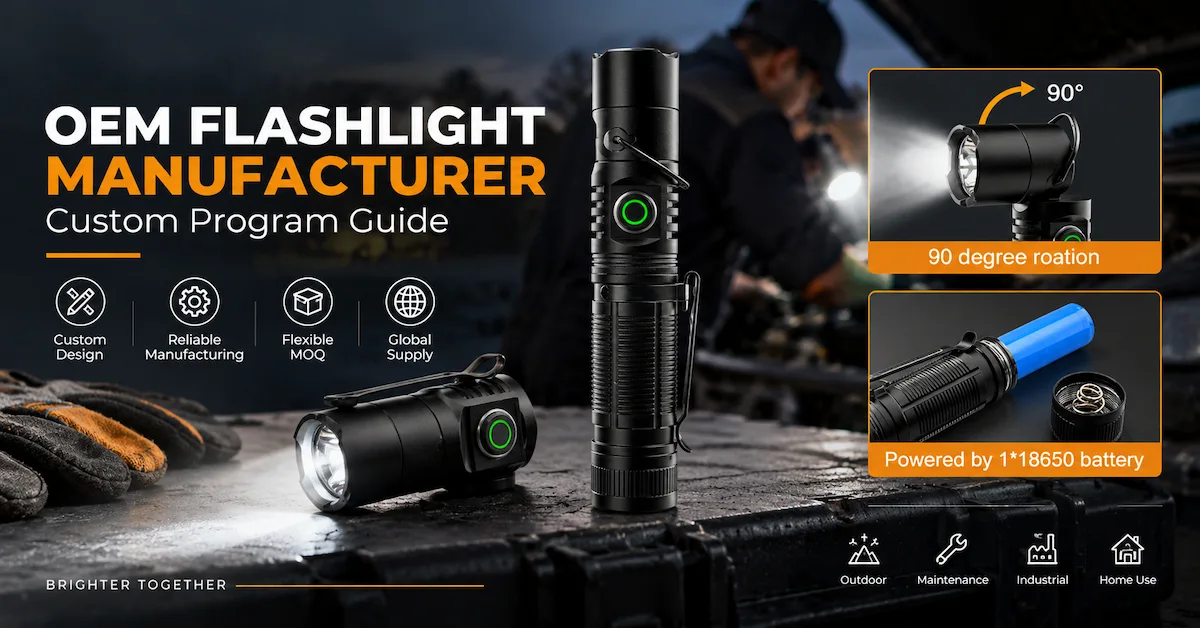
In practical B2B sourcing, OEM flashlight manufacturing means a supplier produces lights for another company’s brand, specification, or sales channel. The buyer may define logo placement, packaging, accessories, body style, electronics, or beam behavior. Some projects only need a near-standard flashlight with branded cosmetics. Others require a deeper custom flashlight manufacturer relationship, where the supplier adapts an existing platform for a specific market.
The distinction is important because not every factory is equally strong at customization. A supplier that performs basic assembly well may not be suitable for beam tuning, switch redesign, or outdoor-use packaging. At the same time, a highly customized platform may be unnecessary if the buyer only needs a simple, durable light for camping retail. The best sourcing model should follow the product goal.
Start with the Outdoor Use Case, Not the Spec Sheet
The outdoor environment reveals what the flashlight must actually do. A customer beside a tent, backpack, stove, cookware, and fire ring is not looking for a decorative torch. They need a portable light source that is easy to grab, aim, and operate when the campsite gets dark quickly. In this setting, the flashlight functions as part of a larger gear system.
Brightness alone is rarely enough to define the right product. Outdoor buyers often care about size, grip, beam spread, battery flexibility, and how the light feels in damp or gloved hands. A matte finish can reduce visual glare and may fit outdoor gear lines better than glossy surfaces. A compact body may also be preferred for backpack pockets, vehicle kits, or emergency bags.
Key Product Decisions to Review with a Flashlight OEM Supplier
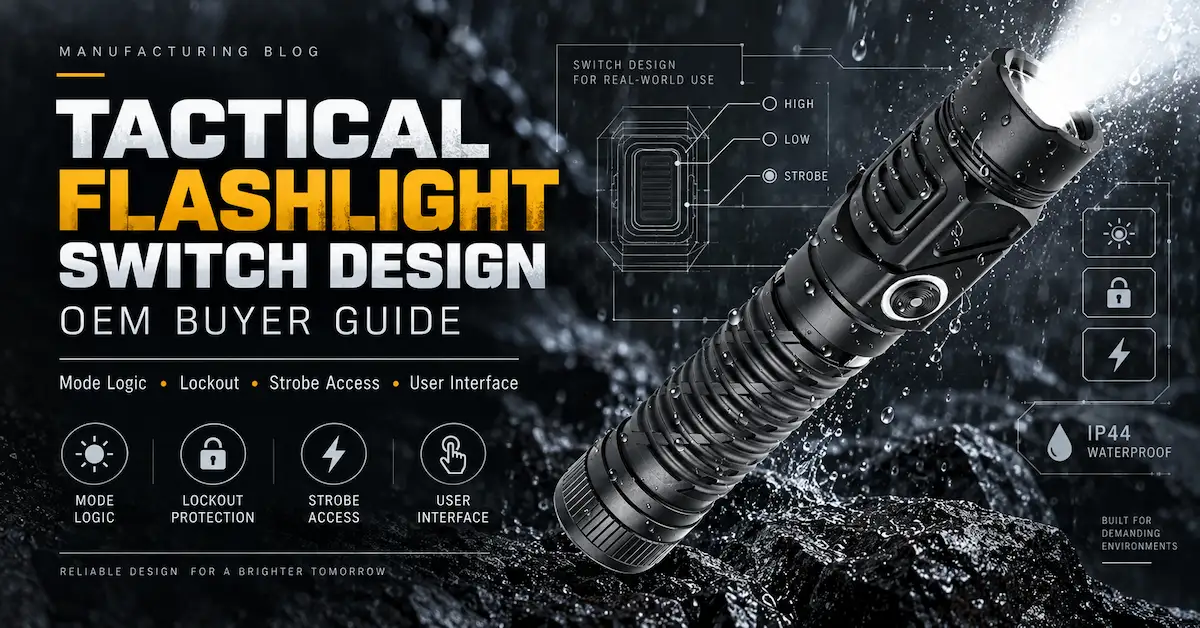
Before discussing branding, buyers should align on the core product choices that shape usability. These decisions affect how the flashlight feels, how it fits the channel, and whether it supports the intended application. A reliable supplier should be able to explain available options clearly without pushing unnecessary customization.
| Decision Area | What to Consider |
|---|---|
| Form factor | Compact, slim, short emergency style, or larger grip-oriented body depending on use. |
| Materials and finish | Metal or plastic housing, weight expectations, surface feel, and low-reflective appearance. |
| Beam behavior | Path lighting, nearby work area illumination, wider beam, spot beam, or adjustable focus. |
| Power system | Rechargeable convenience or replaceable batteries for storage and emergency situations. |
These points should be evaluated against real customer behavior. Will users charge the light before a trip, carry spare batteries, or leave it in a kit for months? A good OEM flashlight manufacturer helps buyers connect those questions to practical product choices rather than following trends blindly.
Where Customization Adds Real Commercial Value
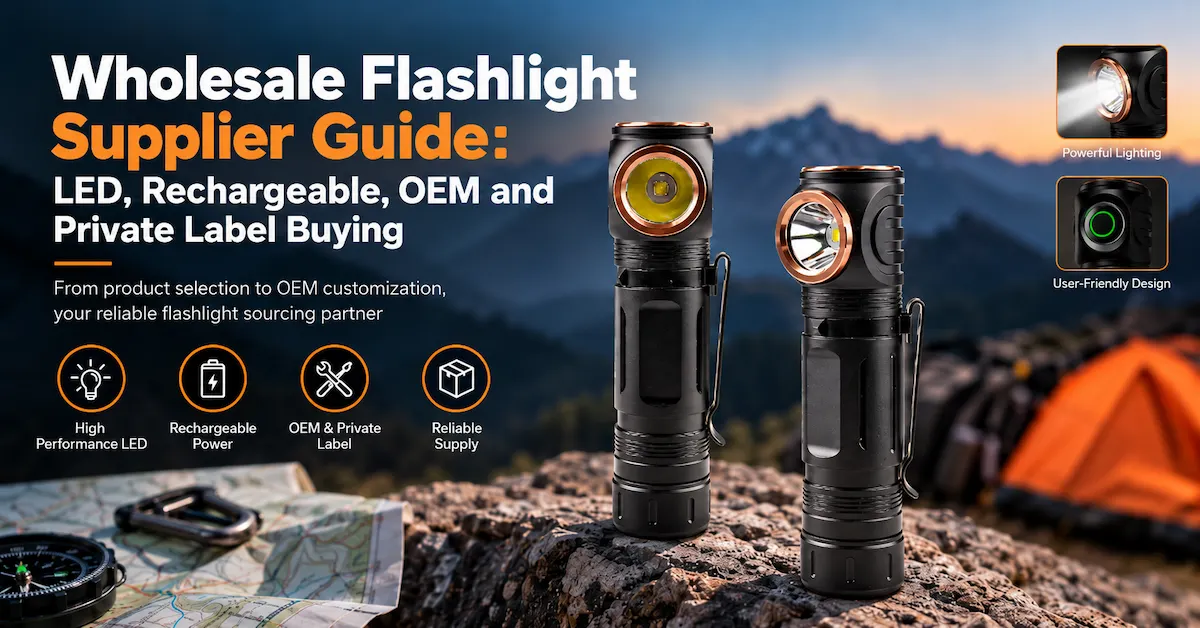
Customization pays off when the flashlight must support a clear brand promise. An outdoor retailer may want a rugged-looking light that sits naturally beside tents, backpacks, and stoves. A distributor serving preparedness channels may prefer simple controls and packaging that communicates utility. A private-label brand may need a recognizable silhouette to stand out on a crowded shelf.
A custom flashlight manufacturer can add value through switch operation, body length, clip design, color, packaging inserts, and retail presentation. However, not every feature deserves customization. The goal is to invest in details customers can see, feel, and understand. Over-customizing may slow sourcing and complicate quality control. A logo or unusual finish cannot compensate for poor operation, awkward grip, or a switch that is difficult to use at night.
Buyers reviewing flashlight options can start with current product directions at Brightenlux products and then decide which areas require OEM adaptation.
Common Supplier Selection Mistakes to Avoid
One common mistake is treating a flashlight as a commodity with only one meaningful specification. That can lead to poor field feedback because the product may be bright but uncomfortable, heavy, or hard to operate. Another mistake is giving too much weight to appearance. A flashlight can photograph well and still perform poorly in real use if the switch is awkward or the body is difficult to grip.
Buyers also often fail to define the use environment early. A campsite light, mechanic’s light, and home-emergency light are different products even if all are handheld torches. Packaging is another frequent oversight. In retail channels, unboxing and shelf presentation influence perceived value. A flashlight sold as outdoor gear should communicate rugged utility, not office-gift novelty. For project discussions, buyers can use Brightenlux contact to clarify intended applications before narrowing specifications.
Questions to Ask Before Placing an OEM Order
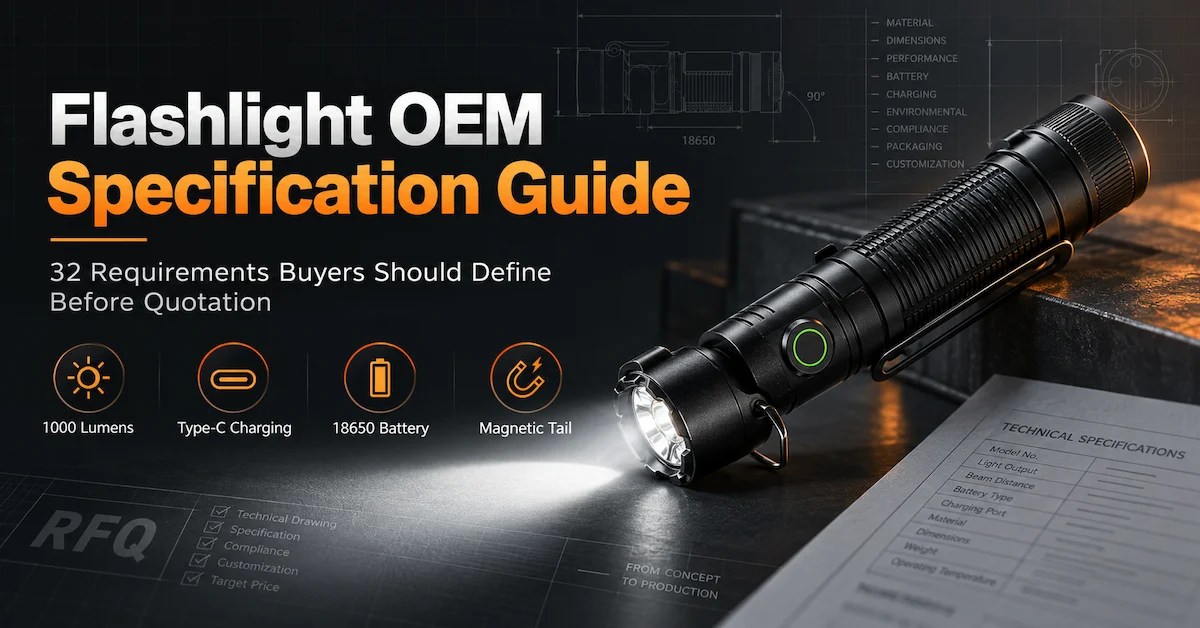
Before moving toward production, sourcing teams should ask how the flashlight OEM supplier handles sample approval, component sourcing, and revision control. It is also important to understand what can be customized without changing the platform and what changes would require a new tool or build path. This helps buyers separate practical modifications from changes that may add complexity.
Ask how the supplier manages consistency across batches, especially if the product will be sold through multiple channels or regions. Clear product configuration documentation is also useful. Buyers do not need unsupported performance claims, but they do need enough information to understand the intended use, materials, assembly approach, and customization boundaries. A supplier that explains these points clearly is often easier to manage through development and repeat orders.
If the project is already defined, buyers may submit details through Brightenlux inquiry for a more focused OEM discussion.
FAQ: OEM Flashlight Manufacturer Selection
Is OEM the same as private label?
Not exactly. OEM describes the manufacturing relationship, while private label usually describes how the finished product is branded and sold under the buyer’s name. In flashlight sourcing, they often overlap because a buyer may use an OEM supplier to produce a branded or channel-specific flashlight line.
Do I need a custom flashlight manufacturer for a simple camping light?
Not always. If the product requirement is straightforward, a standard OEM platform with suitable branding and packaging may be enough. Custom work becomes more useful when the market needs a distinct appearance, a specific control layout, or closer alignment with an outdoor brand story.
What matters most for outdoor flashlight use?
For many outdoor buyers, portability, useful beam behavior, grip, and simple operation matter more than decorative features. A campsite flashlight should be easy to find, hold, aim, and use in low-light conditions. Field usability usually has more commercial value than a long feature list.
How should buyers compare OEM flashlight suppliers?
Start with the intended use case, then compare suppliers on how well they support that reality. Review sample approval, customization limits, packaging support, component sourcing, and consistency controls. The right OEM flashlight manufacturer should help balance design, durability, and commercial fit without overselling unnecessary changes.