

A rechargeable magnetic work light can make automotive repairs, machine inspections, and maintenance activities more convenient by providing portable illumination without requiring continuous handheld operation.
However, magnetic attachment alone does not guarantee practical hands-free lighting.
Consider a technician working beside an engine compartment. The light attaches securely to a steel surface, but its power button faces the mounting panel. Changing brightness requires removing and repositioning the lamp.
Another light offers several modes, but the operator must cycle through unwanted flashing functions before returning to normal illumination.
A third product uses a rechargeable battery and USB-C connector, yet the charging indicator is difficult to see or interpret.
These are not necessarily problems with maximum brightness or magnetic force. They are usability and control-design issues that can affect customer satisfaction.
For importers, automotive equipment distributors, and private-label brands, the purchasing question is:
Can the proposed rechargeable magnetic work light be operated conveniently and predictably in the actual positions where technicians will use it?
This guide introduces a practical mounted-operation evaluation method focused on switches, charging-state indicators, operating modes, and OEM production consistency.
It complements Brightenlux's existing Magnetic Work Light Manufacturer Guide, which discusses overall product architecture and supplier selection.
1. Why Does One-Handed Operation Matter for Rechargeable Magnetic Work Lights?
Magnetic work lights are often purchased because they allow a user to direct illumination while keeping both hands available for maintenance tasks.
However, the benefit depends on more than magnetic attachment.
A technician must also be able to switch the light on, adjust its output, and reposition it conveniently.
Automotive maintenance
During vehicle inspection, technicians may work around hoses, brackets, accessible electrical connectors, and mechanical components.
A magnetic light can provide localized illumination when a suitable mounting surface is available.
However, inconvenient controls may require the technician to stop work and reposition the product.
Industrial maintenance
Maintenance workers may use lighting around safely isolated machinery, service benches, and equipment housings.
In these environments, gloves and restricted access can make small or recessed buttons difficult to operate.
Field-service applications
Technicians working from service vehicles may need a portable light that can be quickly attached, operated, removed, and stored.
A complicated control sequence can make an otherwise useful product inconvenient.
Which Buyers Should Prioritize Mounted-Operation Testing?
| Buyer Type | Typical Application | Main Evaluation Priority |
|---|---|---|
| Automotive tool distributor | Engine-bay and vehicle repair | One-handed switching and positioning |
| Industrial MRO supplier | Equipment inspection | Glove operation and control accessibility |
| Field-service equipment supplier | Mobile maintenance | Simple mode switching and portability |
| Private-label lighting brand | Retail and professional tool channels | Repeatable control behavior |
| Workshop equipment importer | Professional repair environments | Charging visibility and mounting practicality |
| OEM product developer | Customized rechargeable lighting | Approved user interface and component consistency |
The objective is to select a product that supports the customer's actual work process rather than simply offering the longest possible feature list.
2. Which Mounting Positions Should Buyers Test?
A rechargeable magnetic work light may be positioned horizontally, vertically, or inside a restricted working area.
Each position creates different control-access requirements.
A product that is convenient on a desk may become awkward when attached to a vehicle service panel.
Position A: Horizontal steel fixture
Start with a suitable, stationary horizontal steel test surface.
This provides a useful baseline for checking:
- Switch accessibility.
- Lighting-mode selection.
- Charging-port location.
- Product handling.
- Indicator visibility.
The test should use the intended battery and accessories.
Position B: Vertical steel panel
Mount the light on a compatible vertical surface.
Check whether the user can operate the switch without unintentionally sliding or rotating the lamp.
Record whether the beam remains properly directed after the controls are used.
Position C: Recessed equipment-access area
Use a representative, safely prepared inspection fixture with limited access.
Evaluate whether the product can be controlled and repositioned without unnecessary interference.
This may expose problems that are not apparent in an open workbench demonstration.
Three-Position Usability Comparison
| Test Position | Main Question | Possible Problem |
|---|---|---|
| Horizontal steel fixture | Can the user reach the controls naturally? | Button position conflicts with placement |
| Vertical steel panel | Does pressing the switch disturb the light? | Sliding, rotation, or loss of aim |
| Restricted-access fixture | Can the user operate the light in limited space? | Insufficient finger clearance |
| Handheld reference position | Is the control sequence intuitive? | Difficult mode switching or accidental activation |
Procurement takeaway: A supplier's product demonstration should include the positions customers are expected to use, rather than only a clean steel plate.
For products intended to be mounted above personnel or sensitive equipment, testing must use appropriate secondary retention and controlled conditions. A magnet is not automatically a certified safety support.
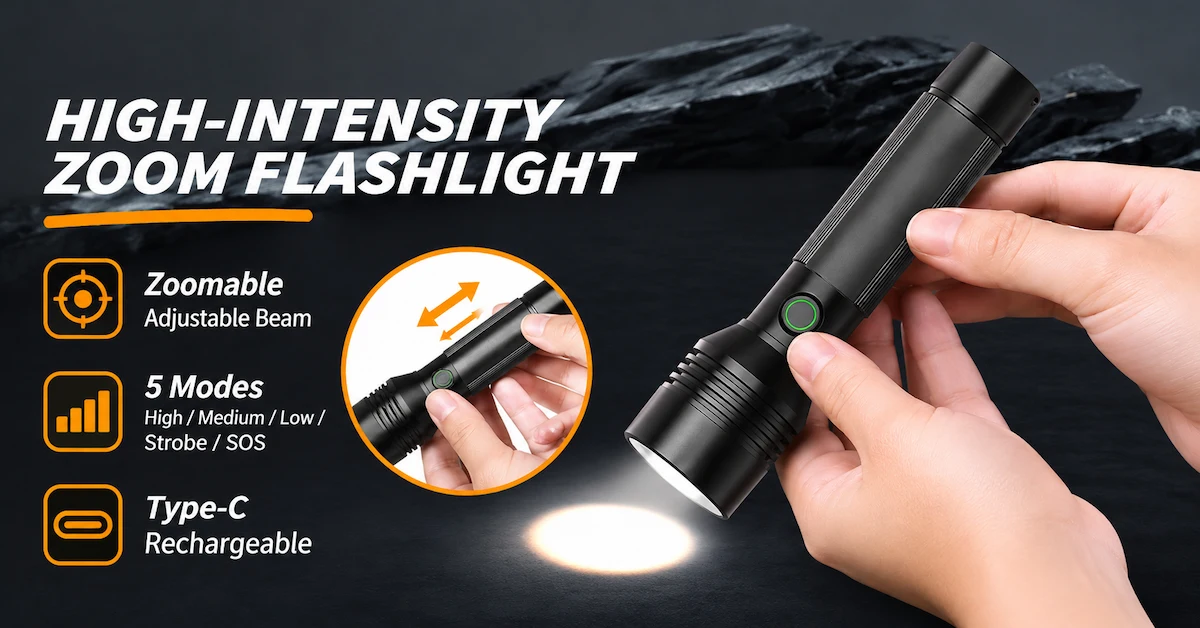
3. How Should Buyers Evaluate Work Light Switch Design?
The switch is one of the most frequently used mechanical and electrical interfaces on a rechargeable work light.
Its design influences both convenience and accidental operation.
Button placement
A button on the side of a flashlight may be easy to reach when handheld.
However, after magnetic attachment, the same button may face a wall or be obstructed by surrounding equipment.
Buyers should test the button in every approved mounting orientation.
Button size and tactile feedback
Professional users may wear work gloves.
A small button may be more difficult to identify or press through gloves, particularly when the product is mounted in a confined area.
The test should evaluate:
- Whether the user can locate the button.
- Whether the button can be pressed reliably.
- Whether the action provides recognizable feedback.
- Whether the product moves while being operated.
- Whether accidental activation occurs during normal handling.
Short-press and long-press functions
Some rechargeable lights use different button actions to control operating modes.
The buyer should document the actual behavior.
For example, a proposed product might use a short press to cycle brightness and a long press to switch off.
However, this example must not be treated as a confirmed feature of every Brightenlux model.
Accidental activation
Unintended switching may occur when the light is clipped to clothing, stored with tools, or repositioned.
Where available, electronic lockout or other anti-activation features should be evaluated.
If no such feature exists, the supplier should explain the product's intended storage and handling instructions.
Switch Evaluation Matrix
| Inspection Item | Recommended Test | Buyer Requirement |
|---|---|---|
| Button location | Operate in each mounted position | Accessible without unnecessary repositioning |
| Glove compatibility | Use representative work gloves | Reliable operation |
| Press feedback | Repeat normal operation | Consistent response |
| Mode selection | Follow the approved control sequence | Correct lighting mode |
| Accidental activation | Controlled handling and storage test | Meets agreed behavior |
| Mounted stability | Operate without supporting the lamp | No unacceptable movement |
| Repeated operation | Conduct agreed switch cycles | Remains functional |
The number of test cycles and specific acceptance limits should be agreed for the proposed product.
4. How Can Buyers Test Lighting Modes Without Confusing Technicians?
Multiple lighting modes can provide flexibility, but the user interface must remain understandable.
A product with five or six modes is not necessarily better than a simpler model.
Main illumination modes
High, medium, and low brightness settings can support different working distances and illumination requirements.
For close-range inspection, an appropriately controlled medium or low mode may reduce distracting glare.
Flashing and signaling modes
Strobe or SOS functions may be useful for selected signaling applications.
However, they may be unnecessary during routine maintenance.
Buyers should evaluate whether users can reach normal working modes without repeatedly entering unwanted flashing modes.
Mode memory
Some products may support returning to the previously selected lighting mode.
Other products may restart in a default mode.
Neither behavior should be assumed without model-specific confirmation.
The buyer should choose the control behavior that best suits the target application.
Mode Control Acceptance Table
| User Action | Expected Result to Define | Test Record |
|---|---|---|
| First activation | Approved initial lighting mode | Functional checklist |
| Short press | Correct next mode | Mode-sequence record |
| Long press | Approved response | Control test |
| Double press, if supported | Correct secondary function | Control test |
| Power off/on | Defined memory or default behavior | Restart test |
| Low-battery condition | Defined response, if supported | Discharge-state test |
| Charging connection | Approved charging behavior | Electrical test |
This table is a specification template, not a claim that all listed features exist on every rechargeable magnetic work light.
B2B recommendation: Ask the supplier to provide a mode-flow diagram before approving OEM artwork and user instructions.
5. What Is the Difference Between a Charging Indicator and a Battery-Level Indicator?
This distinction is particularly important for rechargeable portable lighting.
A charging-status indicator and a remaining-battery indicator serve different functions.
Charging-status indicator
Some lights use red and green LEDs to display charging progress.
For example, a product may display red while charging and green when charging is complete.
This provides information about the charging process.
It does not automatically provide a numerical measurement of the remaining battery capacity during use.
Battery-level indicator
A separate battery-level display may indicate an approximate remaining charge.
Depending on the design, this might involve multiple LEDs, a percentage display, or another visual indicator.
Such a display requires an appropriate measurement or estimation approach.
Low-battery warning
Some products may provide a warning before the battery reaches its operating limit.
The warning behavior should be defined for the exact product.
Possible design decisions include a flashing indicator, color change, automatic brightness reduction, or another supported control response.
These should be treated as proposed options unless the manufacturer confirms their availability.
Indicator Function Comparison
| Indicator Type | Primary Purpose | What Buyers Must Confirm |
|---|---|---|
| Charging indicator | Shows charging process | Color meanings and transition behavior |
| Charge-complete indicator | Signals completion | Approved completion criteria |
| Battery-level display | Estimates remaining charge | Accuracy and display conditions |
| Low-battery warning | Alerts users before an operating limit | Trigger and warning behavior |
| Mode indicator | Identifies selected operating mode | Visibility and interpretation |
A red/green charging light should not be advertised as a four-level battery display unless that capability has been verified.
For private-label brands, unclear indicator descriptions can create customer complaints and inaccurate retail packaging.
6. How Should Buyers Verify Charging-Port Access?
A magnetic work light may have a conveniently positioned USB-C connector when handheld, but that connector can become inaccessible in certain mounting orientations.
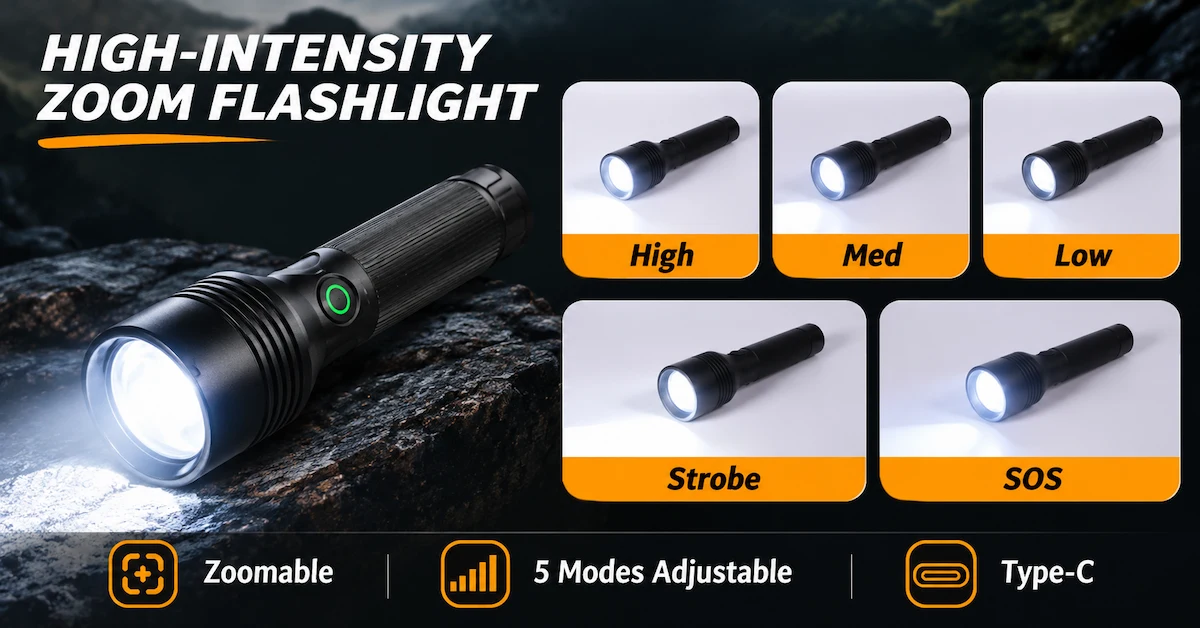
Charging-port placement
Check whether the port is obstructed by the magnetic base, housing geometry, clip, or surrounding equipment.
The buyer should distinguish physical cable clearance from actual permission to operate the product during charging.
Charging-source compatibility
The USB Implementers Forum's USB Type-C Cable and Connector Specification describes the USB Type-C connector system.
USB Type-C provides a connector interface, but its presence alone does not prove that a portable light supports a particular fast-charging protocol or charging power.
The supplier should identify the supported electrical input and compatible charging equipment.
Cable and connector testing
A suitable sample evaluation should include:
- Approved charging cable.
- Supported power source.
- Connector fit.
- Charging-start behavior.
- Charging-complete behavior.
- Indicator visibility.
- Port-cover operation.
- Charging time under defined conditions.
Charging While Mounted
Some buyers may want a work light to remain attached to a fixture during charging.
This should only be considered if the manufacturer explicitly supports the relevant charging arrangement.
Testing should be performed using a safe, approved setup with the intended electrical and mechanical configuration.
Do not assume a light can operate while charging simply because the USB-C cable can be connected.
Charging Interface Checklist
| Test | What to Record |
|---|---|
| Cable insertion | Correct physical fit |
| Approved input | Voltage/current requirements |
| Charging start | Indicator response |
| Charging completion | Indicator behavior |
| Cable clearance | Accessibility in intended setup |
| Port protection | Cover operation and condition |
| Charging interruption | Approved recovery behavior |
| Operation while charging | Supported or prohibited |
For OEM buyers, the approved electrical behavior should be recorded alongside the physical sample.
7. How Can Buyers Test Battery and Control Behavior Together?
A rechargeable work light's user interface can behave differently depending on battery condition.
The supplier should therefore define control behavior across relevant operating states.
Fully charged condition
Start with an appropriately charged battery.
Verify the normal mode sequence, switch response, and indicator behavior.
Intermediate charge condition
Repeat key functions after the battery has been partially discharged under controlled conditions.
Record whether the expected controls remain available.
Near the defined operating limit
Evaluate the product's behavior near its specified low-battery condition without abusing or over-discharging the cell.
Check for any supported warning, brightness reduction, or controlled shutdown behavior.
Charging and charge-complete conditions
Using the manufacturer's approved charging procedure, confirm the relevant status indicators.
Do not assume that a product can provide normal illumination during charging unless explicitly supported.
Four-State Control Evaluation
| Battery/Charging State | Main Test | Required Evidence |
|---|---|---|
| Charged, disconnected | Normal switching and modes | Approved control sequence |
| Partially discharged | Mode response and controls | Functional test record |
| Near operating limit | Low-battery behavior, if provided | Defined response and endpoint |
| Charging / completion | Charging status indication | Approved input and indicator log |
This approach helps buyers identify unexpected differences between a showroom demonstration and normal product use.
8. Which Brightenlux Products Are Relevant to Rechargeable Magnetic Work Lights?
Brightenlux publishes several rechargeable portable lighting products with magnetic tails, Type-C charging, and different operating modes.
These models provide relevant reference platforms for OEM and wholesale evaluation.
However, the documented examples are rechargeable magnetic flashlights, not confirmation of a complete range of dedicated COB workshop lamps.
Brightenlux Rechargeable Magnetic Lighting Comparison
| Product | Published Configuration | Relevant Control Evaluation |
|---|---|---|
| BT-FL8078 Right-Angle Flashlight | 1000lm SST25, 16340 800mAh, Type-C, magnetic tail, five modes | Switch accessibility, charge-status visibility, compact mounting |
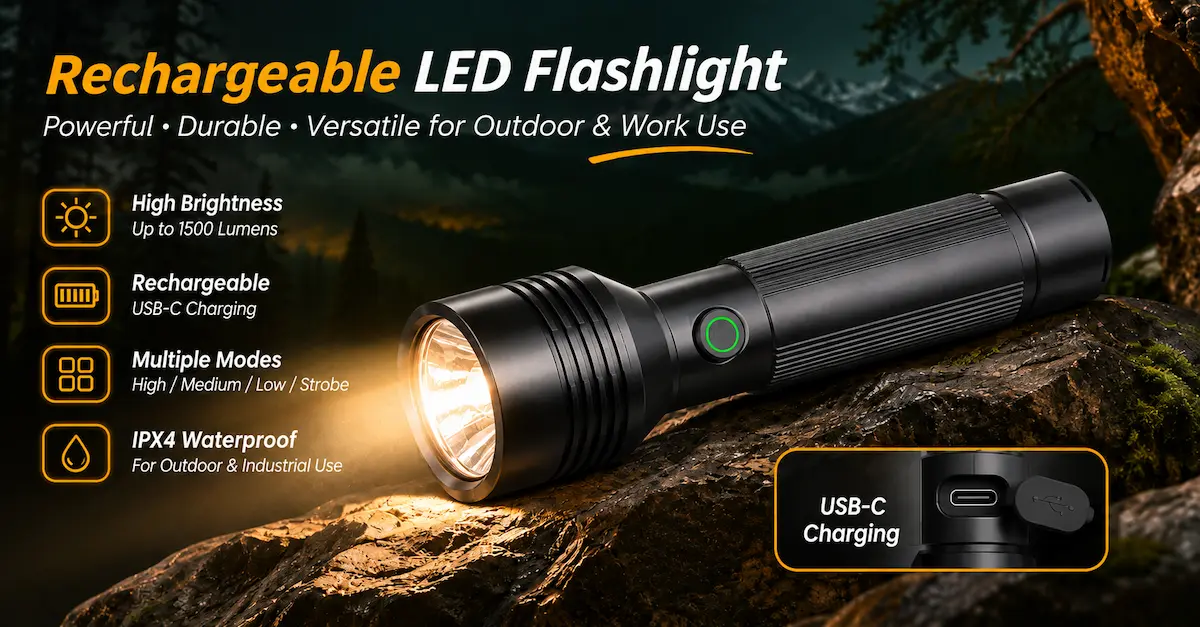
| BT-FL8088 Magnetic Flashlight | 1500lm SST40, 21700 4000mAh, Type-C, magnetic tail, red/green charging indicator | Mode switching, charging behavior, mounted usability |
| 1000lm SST40 Adjustable-Head Flashlight | 18650 2200mAh, adjustable head, magnetic tail, Type-C | Angle adjustment, switch access, charging-port handling |
| 1000lm SST25 Red-Mode Flashlight | Magnetic tail, Type-C charging, white and red modes | Mode selection and indicator interpretation |
These are manufacturer-published specifications. They are not independently verified laboratory results, and they do not establish that every suggested control feature is supported.
BT-FL8078: Compact right-angle platform
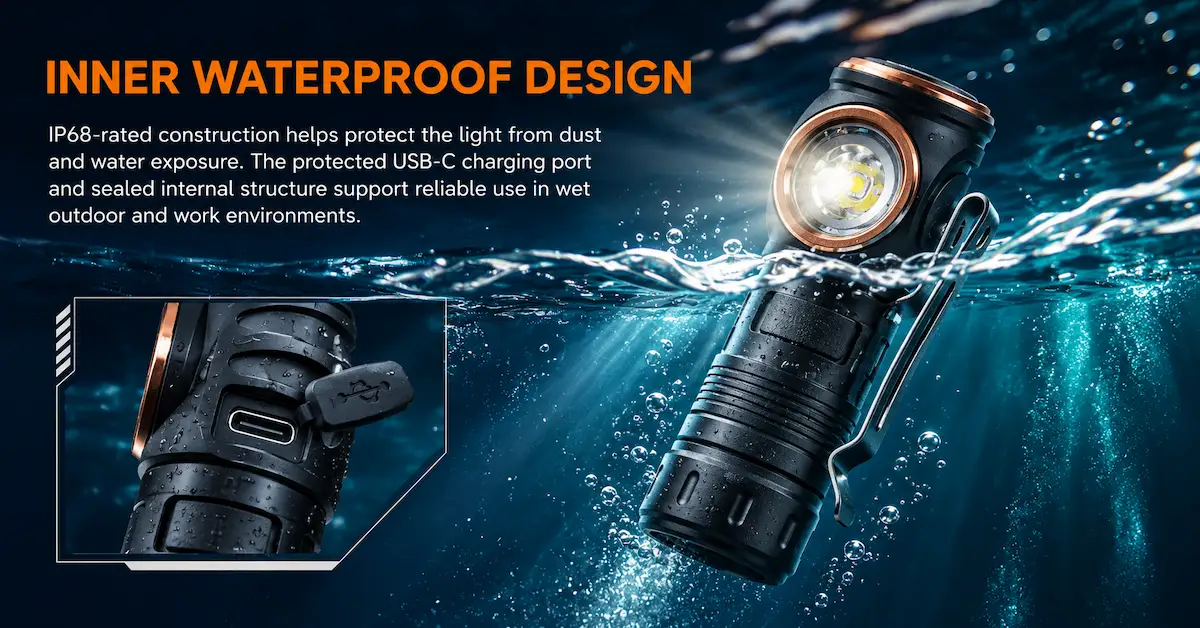
The Brightenlux BT-FL8078 Right-Angle Rechargeable Flashlight features an SST25 LED, magnetic tail, Type-C charging, and a rechargeable 16340 battery.
Its published description identifies five lighting modes and a red/green charging-status indicator.
For an OEM project, it is a relevant reference for testing control accessibility in compact maintenance spaces.
The public page also states a working-time range of two to three hours, but the operating conditions behind that figure should be confirmed before using it in a new branded product specification.
BT-FL8088: Higher-capacity rechargeable platform
The Brightenlux BT-FL8088 Magnetic Rechargeable Flashlight uses a published 21700 4000mAh rechargeable battery.
It offers Type-C charging, a magnetic tail, high/medium/low lighting modes, and a double-press strobe function.
The product description also identifies red/green charging-status indication.
Its published charging time is four to five hours, while the stated working time is up to eight hours.
Buyers should verify the charging setup, selected lighting mode, and measurement conditions associated with those figures.
1000lm SST40 adjustable-head platform
The Brightenlux SST40 Adjustable-Head Flashlight features an adjustable lighting head, magnetic tail, 18650 battery platform, and Type-C charging.
Its structure provides a reference for evaluating whether the controls remain accessible at different head positions.
The buyer should also confirm the actual charging time and operating conditions for the proposed configuration.
1000lm SST25 red-mode flashlight
The Brightenlux SST25 Rechargeable Magnetic Flashlight includes white-light and red-light functions, magnetic attachment, and a published red/green charging indicator.
This platform may be relevant when comparing mode-switching complexity.
For a new OEM program, buyers should verify the exact sequence required to activate each lighting function.
What if buyers need a dedicated COB magnetic work light?
Request Brightenlux's current work-light catalogue and confirm the available model, optical configuration, magnetic system, control functions, battery, and charging arrangement.
A flashlight with a magnetic tail should not automatically be described as a dedicated wide-area COB work lamp.
Explore Brightenlux Portable Lighting Products
9. How Should Buyers Run a Mounted-Control Sample Trial?
A structured sample trial can identify usability problems before committing to a large order.
The procedure should evaluate the actual production-intent configuration.
Step 1: Identify the sample
Record the exact model, battery, switch design, charging configuration, accessories, and engineering revision.
Step 2: Prepare representative mounting positions
Select suitable stationary test fixtures representing the intended working positions.
Do not attach standard lighting products to energized, moving, hazardous, or safety-critical equipment without appropriate authorization and controls.
Step 3: Test one-handed operation
Have representative users operate the light with one hand under the defined conditions.
If the product is intended for gloved users, include appropriate gloves.
Step 4: Verify the mode sequence
Record each button action and the resulting lighting mode.
Compare the results with the approved user-interface specification.
Step 5: Evaluate indicator visibility
Check whether users can identify the relevant charging or operating status under the intended viewing conditions.
Step 6: Verify charging behavior
Use approved charging equipment and record the product's response.
Confirm whether the indicator sequence matches the manufacturer's documentation.
Step 7: Repeat the evaluation
Test more than one representative unit.
The agreed sample quantity and procedure should reflect the buyer's product risks and project requirements.
Mounted-Control Acceptance Matrix
| Evaluation Area | Test Requirement | Acceptance Record |
|---|---|---|
| One-handed switch access | Operable in defined positions | User trial |
| Glove operation | Reliable response where required | Functional checklist |
| Mode transitions | Match approved sequence | Control table |
| Mounted stability | No unacceptable displacement | Positioning test |
| Charge indicator | Correct state indication | Charging log |
| Charging interface | Approved cable and input | Electrical test |
| Low-battery behavior | Matches supported design | Discharge-state record |
| Physical condition | No unacceptable damage | Visual inspection |
| Repeatability | Consistent tested behavior | Sample comparison |
The acceptance values should be established before testing. These are suggested inspection categories, not verified Brightenlux production results.
10. How Should Lighting Performance Be Evaluated Alongside Controls?
A convenient user interface does not compensate for insufficient lighting.
Likewise, excellent luminous output may be difficult to use if the control sequence or mounting arrangement is inappropriate.
For applicable portable lighting products, the ANSI/PLATO FL 1-2025 Flashlight Basic Performance Standard establishes standardized methods for reporting relevant performance characteristics.
These include luminous output, beam distance, runtime, and specified durability characteristics.
For rechargeable magnetic lighting, buyers should request performance evidence that identifies:
- The actual model and sample revision.
- Battery configuration.
- Selected lighting mode.
- Test conditions.
- Measurement method.
- Runtime endpoint.
- Relevant output behavior during operation.
A maximum-lumen figure does not explain whether the medium mode provides useful light throughout the intended task.
Control-Performance Relationship
| Product Behavior | Potential Effect | Buyer Evaluation |
|---|---|---|
| Starts in high mode | May create excessive glare | Test initial mode |
| Requires multiple presses | Slows routine operation | Test mode sequence |
| Output decreases during use | May reduce task visibility | Verify sustained illumination |
| Indicator is obscured | Charging state may be unclear | Evaluate viewing position |
| Switch movement changes aim | Interrupts hands-free use | Test mounted stability |
The best product configuration is the one that satisfies the actual lighting task while remaining practical to operate.
11. How Should OEM Buyers Control Product Consistency?
An approved engineering sample does not automatically guarantee consistent mass production.
A rechargeable magnetic work light may contain several components that influence the user experience.
Examples include:
- Switch mechanism.
- Electronic driver.
- Firmware or control logic, where applicable.
- Battery and charging electronics.
- Charging-status indicators.
- Magnetic assembly.
- Housing and mounting components.
- Charging-port cover.
A change to any relevant component may affect performance or operation.
Approved production specification
The buyer should retain a controlled document identifying the approved model, components, operating modes, charging behavior, accessories, and inspection requirements.
Golden sample
A production-intent sample should be retained as a reference for appearance and functionality.
However, a physical sample alone cannot fully describe internal electrical behavior or every product requirement.
Finished-goods sampling
The ISO 2859-1:2026 acceptance sampling standard provides AQL-indexed procedures for appropriate lot-by-lot inspection by attributes.
An agreed sampling plan can help evaluate relevant finished-goods characteristics.
However, sampling cannot substitute for product design validation or guarantee that every unit is defect-free.
Production Control Checklist
| Control Item | Required Evidence |
|---|---|
| Approved product revision | Controlled specification |
| Switch and controls | Operating-mode checklist |
| Battery and charging | Approved component configuration |
| Status indicators | Charging test |
| Magnetic mounting | Relevant attachment inspection |
| Appearance | Approved visual reference |
| Accessories | Packing checklist |
| Repeat orders | Component-change record |
| Finished goods | Agreed inspection report |
The buyer should require appropriate review when the manufacturer proposes a change affecting a previously approved function.
12. How Can OEM/ODM Customization Improve Product Usability?
Brightenlux publicly describes OEM/ODM support for portable lighting products.
For a rechargeable magnetic work-light project, customization should address a practical customer requirement.
Branding customization
Depending on the exact product, buyers may discuss logo placement, housing appearance, retail packaging, product identification, and manuals.
Control customization
A brand may want to evaluate a simplified switch sequence, preferred default mode, or another control feature.
Such changes may require electronic development and additional validation.
They should not be assumed available without engineering confirmation.
Charging-status customization
A buyer may request an alternative indicator position or a different approved display arrangement.
This can influence housing design, electronic components, and testing requirements.
Mounting and accessory customization
Potential requirements may include clips, holders, headstraps, and mounting interfaces.
The manufacturer should confirm compatibility and whether the requested arrangement is standard or requires development.
Recommended OEM Project Process
Application brief → Existing platform review → Control requirements → Engineering feasibility → Mounted-operation sample trial → Design approval → Production inspection → Shipment
This is a recommended purchasing workflow, not a claim that every Brightenlux order follows the same fixed internal procedure.
13. How Should Buyers Compare Wholesale Costs and Prepare an RFQ?
The lowest unit price is not necessarily the best purchasing outcome.
A rechargeable magnetic work light that requires inconvenient operation may create product complaints even when the lighting system performs correctly.
The purchasing team should compare complete configurations.
Commercial Comparison
| Cost Element | Buyer Question |
|---|---|
| Base light | Which model and revision are included? |
| Battery | Is the approved battery included? |
| Charging accessories | Which cable or charger is supplied? |
| Magnetic system | Standard or customized? |
| Switch design | Existing or modified control logic? |
| Indicators | Which functions are supported? |
| OEM branding | What customization is included? |
| Testing | Which measurements and sample tests are included? |
| Packaging | Which retail configuration is quoted? |
| Inspection | What acceptance procedure applies? |
| Logistics | Which shipping terms apply? |
Recommended RFQ Information
Provide the supplier with:
- Buyer company and target market.
- Intended repair or maintenance application.
- Preferred magnetic work-light format.
- Required operating modes.
- One-handed and glove-operation requirements.
- Battery and charging preferences.
- Required charging-state indication.
- Mounting positions and surface conditions.
- OEM customization needs.
- Expected purchase quantity and delivery requirements.
Request a model-specific proposal
Brightenlux can be contacted to discuss available rechargeable magnetic lighting products, sample requirements, customization feasibility, and wholesale terms.
Buyers should ask the factory to distinguish confirmed product specifications from proposed engineering changes.
14. Frequently Asked Questions About Rechargeable Magnetic Work Lights
1. What should buyers look for in a rechargeable magnetic work light?
Evaluate lighting performance, magnetic attachment, battery configuration, charging compatibility, controls, and mechanical construction. For professional applications, also test whether technicians can operate the light after mounting it. The best product should perform consistently in the intended working position.
2. Are all magnetic work lights rechargeable?
No. Magnetic attachment describes a mounting function, not a power system. Some magnetic lights use rechargeable batteries, while others may use replaceable cells or an external power supply. Buyers should verify the exact power configuration before placing an order.
3. Does USB-C charging guarantee fast charging?
No. USB-C identifies a connector system and does not guarantee a particular charging protocol, input power, or charging time. Request the supported input specification and verify the actual charging behavior using approved cables and power sources.
4. Can a magnetic work light be operated with one hand?
Some products can be operated conveniently with one hand, depending on the switch location, housing geometry, and mounting arrangement. Buyers should test representative samples in the intended positions rather than assume all magnetic work lights have equivalent controls.
5. What is the difference between a charging indicator and battery-level display?
A charging indicator communicates charging-related status, while a battery-level display estimates the remaining charge. A red/green indicator that identifies charging and completion does not automatically provide a precise remaining-capacity measurement.
6. Is a larger rechargeable battery always better?
Not necessarily. A larger battery may offer more energy but can also increase size, weight, charging time, and mounting demands. The correct battery configuration depends on the actual application, useful runtime, and physical design.
7. Can Brightenlux customize magnetic work lights?
Brightenlux publicly describes OEM/ODM lighting support and publishes rechargeable magnetic-tail flashlight platforms. Specific changes to controls, indicators, batteries, housing, or mounting arrangements require confirmation for the proposed model.
8. Should buyers test work lights while they are magnetically mounted?
Yes, when magnetic mounting is an intended use. Tests should evaluate control accessibility, stability, positioning, and lighting suitability on representative compatible surfaces. The setup must follow appropriate safety requirements and should not rely on the magnet as a certified support system.
9. What quality checks are important before wholesale shipment?
Relevant checks include approved model identity, battery configuration, charging function, mode sequence, switch operation, indicator behavior, magnetic attachment, housing condition, accessories, and packaging. The inspection method should be agreed before production.
10. How can I request a rechargeable magnetic work light quotation?
Provide the intended application, product format, battery and charging requirements, control preferences, magnetic mounting conditions, OEM branding needs, estimated order quantity, and destination market. Contact Brightenlux to request current product options, samples, and commercial terms.
Conclusion
Choosing a rechargeable magnetic work light requires more than comparing maximum lumens, battery capacity, magnetic holding force, and factory quotations.
For automotive tool distributors, industrial maintenance suppliers, and private-label brands, practical usability can influence the purchasing decision.
A suitable product should provide useful illumination while allowing technicians to operate the controls conveniently in the intended mounting position.
Buyers should therefore evaluate one-handed switching, glove compatibility, mode behavior, charging-state visibility, connector access, and magnetic stability.
These requirements should be documented through representative sample testing and converted into an approved production specification.
Charging indicators and battery-level displays must be described accurately, and USB-C functionality should be verified for the exact electrical configuration.
Brightenlux offers documented magnetic-tail rechargeable flashlight platforms and discusses OEM/ODM portable lighting solutions for international buyers.
For a new wholesale or private-label project, the next step is to identify the required application, compare appropriate models, and request a model-specific technical and commercial proposal.
A controlled mounted-operation trial can help buyers select more practical products and establish clearer quality expectations before bulk purchasing.
Explore available products: Brightenlux Lighting Catalogue
Review work-light applications: Brightenlux Work and Repair Lighting Solutions
Start your sourcing project: Request a Rechargeable Magnetic Work Light OEM/Wholesale Quote