

OEM Flashlight Manufacturer Guide for Outdoor Buyers
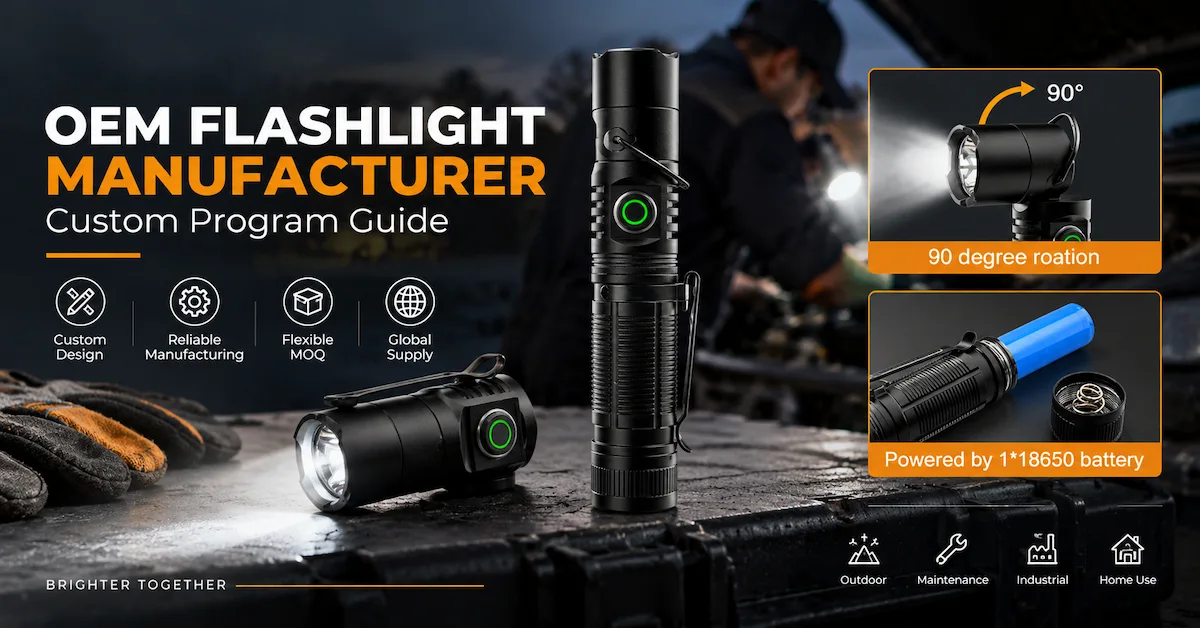
Choosing an OEM flashlight manufacturer for outdoor products looks simple until the details appear. A compact LED flashlight must be easy to carry, bright enough for low-light navigation, comfortable in the hand, and predictable when users need it most. For hiking, camping, trail walking, emergency kits, and general outdoor use, the right product is not defined by one headline feature. It is shaped by beam behavior, power strategy, housing feel, switch design, assembly quality, and practical customization. This guide helps B2B buyers compare suppliers, ask clearer questions, and avoid turning a useful outdoor tool into an overcomplicated product.
Why Outdoor Flashlight Sourcing Is More Complex Than It Looks
On paper, sourcing a flashlight seems like a sequence of simple decisions: select the LED, choose the housing, approve branding, confirm packaging, and place an order. In practice, a handheld torch hides many performance choices inside a small body. The LED emitter, reflector or lens, battery system, switch, sealing approach, and thermal control all affect how the product behaves outdoors.
A sample can look attractive under office lighting yet feel weak, awkward, or inconsistent on a trail at dusk. Outdoor buyers should therefore treat the flashlight as a field tool, not just a catalog item. The goal is dependable execution: a compact form, a bright white directional beam, simple operation, and consistent assembly that helps users trust the product when visibility is limited.
Define the Product Around Real Outdoor Use
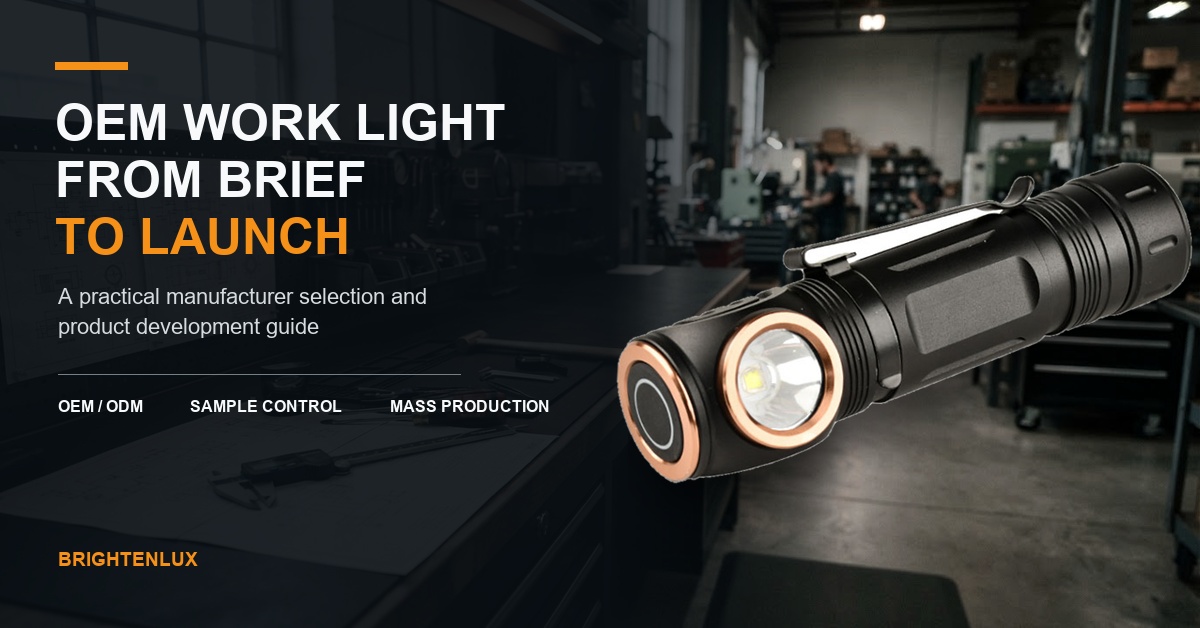
The flashlight described in the source is a compact handheld device with a bright white LED emitter and a concentrated beam. That suggests a product built for directional lighting rather than broad area illumination. For outdoor navigation, users often need to see trail edges, rocks, roots, campsite gear, or path markers ahead of them, not only the ground directly at their feet.
This use case rewards balance. A good outdoor flashlight does not have to chase extreme claims; it should be portable, stable in output, and easy to activate with minimal thought. Buyers reviewing platforms on the Brightenlux products page should begin by matching the product concept to user behavior. A hiking flashlight, an emergency kit torch, and a promotional handheld light may look similar, but each requires a different balance of grip, interface, beam shape, and packaging clarity.
Key Decisions to Set Before Sampling
Before asking a flashlight OEM supplier for samples, buyers should narrow the design brief. Early decisions reduce revision cycles and help the supplier recommend practical options instead of guessing. The most important choices are beam type, power source, switch behavior, and housing feel. Each choice affects the others, so they should be discussed together rather than as isolated specifications.
| Decision | Buyer focus | Why it matters |
|---|---|---|
| Beam type | Focused beam with usable spill | Helps users see ahead while keeping nearby terrain visible |
| Power source | Rechargeable or replaceable format | Affects size, weight, convenience, and support expectations |
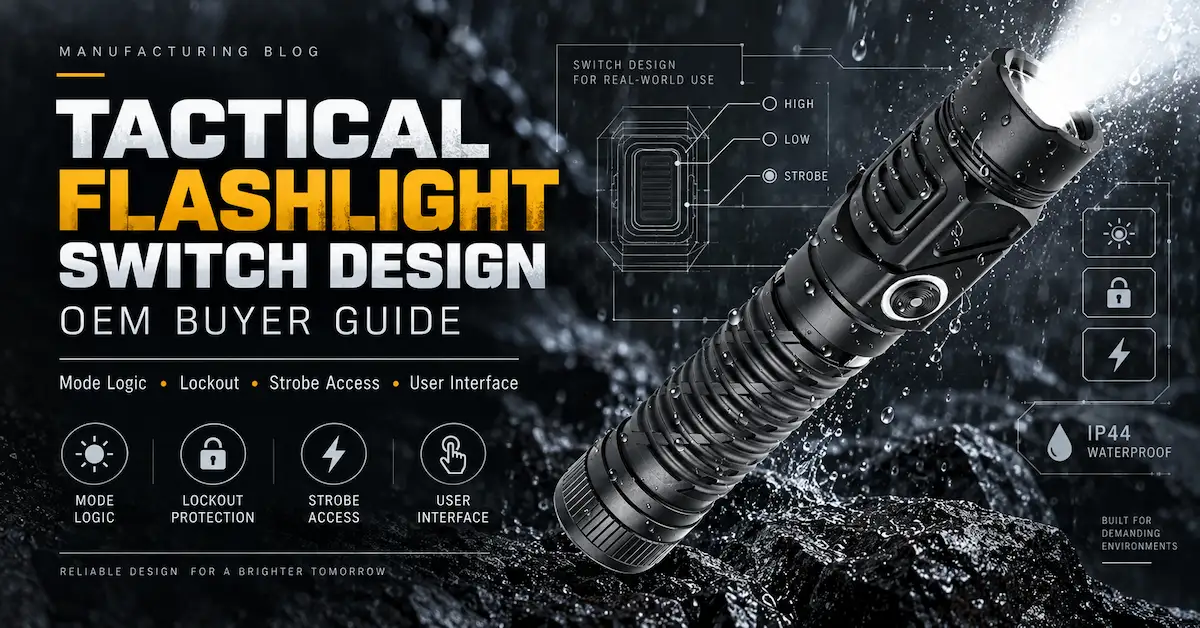
| Switch behavior | Simple, predictable operation | Important when users are cold, wet, gloved, or moving |
| Housing and grip | Comfortable, secure handling | Reduces slipping and improves confidence outdoors |
A focused beam can be useful for hiking, but an overly tight beam may feel harsh or tunnel-like. Rechargeable formats may suit frequent users, while replaceable batteries can fit emergency or remote-use scenarios. The right answer depends on channel and end user, not unit cost alone.
What a Custom Flashlight Manufacturer Should Contribute
A capable custom flashlight manufacturer does more than assemble purchased parts. The supplier should help align LED module, optics, housing, power system, switch, and finish into one coherent product. For outdoor use, the LED emitter, reflector, and lens determine whether the beam is practical, centered, and comfortable. Bright white light can support visibility, but brightness alone does not guarantee a useful beam.
Thermal management also matters in compact products. A small flashlight can heat up when driven hard, and poor heat control can affect comfort, performance, and component stress. Assembly should be clean around the lens, switch, and battery compartment, with no loose caps, rattling parts, or vague promises to fix issues later. Branding and finishing are part of the product experience too. A restrained outdoor finish may communicate durability better than decorative styling that adds cost without improving use.
How to Compare OEM Flashlight Suppliers
When comparing suppliers, avoid relying only on marketing claims. The most useful review is practical: sample consistency, revision handling, standard versus customized components, and communication about trade-offs. Ask whether the beam is centered and even, whether the switch feels reliable after repeated use, whether the body sits securely in the hand, and whether the flashlight is comfortable to carry in a pocket or pack.
Buyers should also test samples in conditions that resemble real use. A beam that appears impressive indoors may perform differently outside, where terrain, shadows, and user movement matter. Store the sample, then check whether it turns on predictably after sitting unused. If you need support with a defined use case, share your requirements through the Brightenlux inquiry page so the discussion starts with application needs rather than cosmetic preferences. Clear feedback at this stage helps prevent avoidable redesigns.
Common Sourcing Mistakes to Avoid
One common mistake is over-specifying features that do not help the user. Too many modes, excessive output goals, or a complicated interface may look strong on a specification sheet but become irritating outdoors. For hiking and emergency use, simple and predictable operation often matters more than feature volume.
Another mistake is ignoring consistency. A flashlight line depends on repeatability in beam appearance, switch feel, finish, and assembly quality. If one batch differs noticeably from another, outdoor retailers and procurement buyers may notice quickly. Packaging should not be treated as an afterthought either. For a compact flashlight, packaging communicates use case, power format, basic operation, and safety information. Incomplete instructions can create avoidable support questions. Buyers should also be cautious about vague customization promises. Ask which parts are standard, which changes require tooling, how sample revisions are managed, and what checks are performed during assembly.
Practical Next Steps for Outdoor Buyers
A strong OEM flashlight project starts with a short list of must-haves and a separate list of nice-to-haves. Must-haves may include compact carry, bright directional output, practical beam spill, a secure grip, and simple activation. Nice-to-haves may include finish variations, logo placement, packaging changes, or mode adjustments, depending on the starting platform and supplier capability.
Buyers should ask for caveats as well as promises. A compact body may limit battery space. A tighter beam may reduce spill light. A rugged exterior may add weight. These are normal product trade-offs, and a careful supplier should be willing to explain them clearly. If your team is ready to discuss a project, you can contact Brightenlux through contact us. The best result is a disciplined specification, a realistic customization scope, and a flashlight suited to the way outdoor users actually carry and rely on it.
FAQ for Sourcing Teams
Is a compact flashlight always better for outdoor use?
Not always. Compact size improves portability, especially for hiking, camping, and emergency kits, but the flashlight still needs useful beam quality, comfortable grip, and predictable operation. A very small product that is hard to hold, awkward to switch on, or poor at showing terrain is not a good outdoor trade-off.
Should buyers prioritize brightness or beam control?
For trail walking and general outdoor navigation, beam control is often more important than raw brightness. A practical beam should help users see the path ahead while keeping nearby terrain visible. An overly intense or poorly distributed beam can feel impressive at first but less useful in real field conditions.
What matters most when choosing an OEM flashlight manufacturer?
Consistency, communication, and application understanding matter most. A good OEM partner should explain how LED selection, optics, housing, power source, switch design, and finishing work together. The supplier should also be clear about customization limits, revision handling, and practical trade-offs before the project moves toward production.
Can a flashlight be customized without redesigning everything?
Often, yes. Many projects can adjust finish, color, logo placement, packaging, modes, or battery configuration while keeping the core architecture intact. The realistic scope depends on the starting platform and the supplier’s capabilities, so buyers should separate essential functional changes from branding or presentation preferences early.