

How to Evaluate a Reliable Outdoor Lighting Factory in China
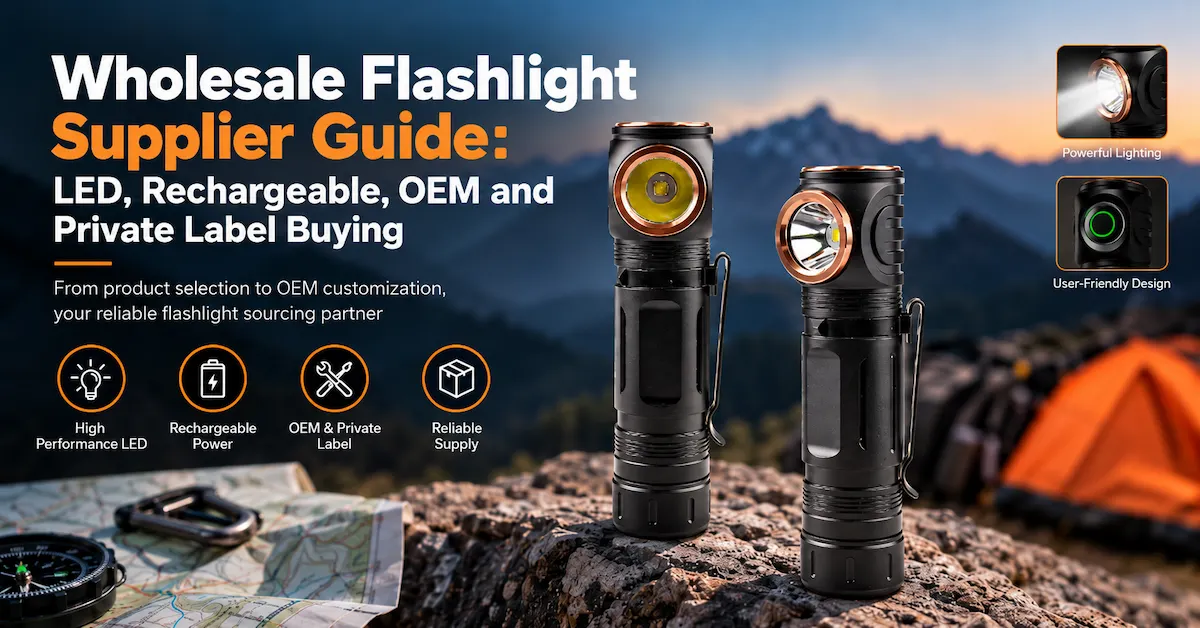
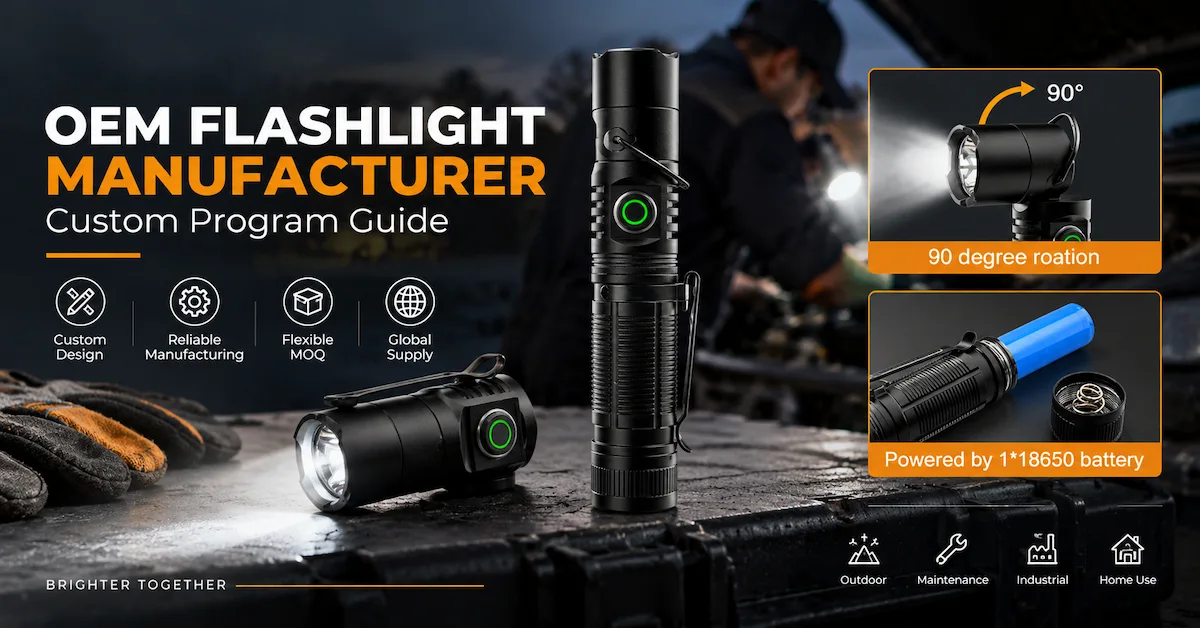
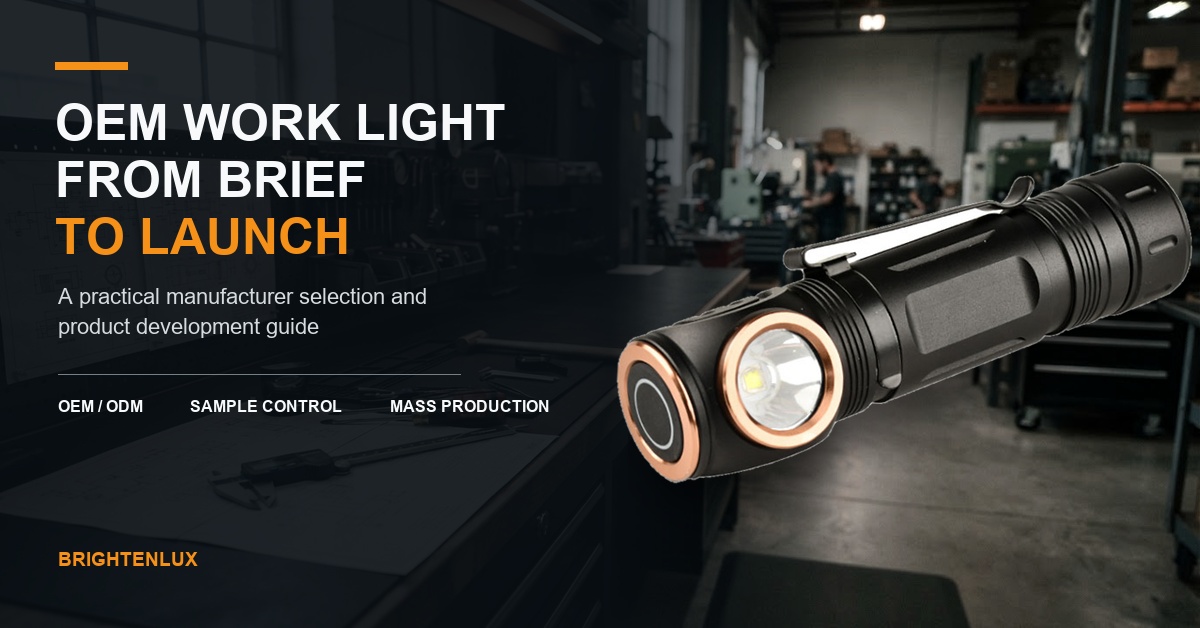
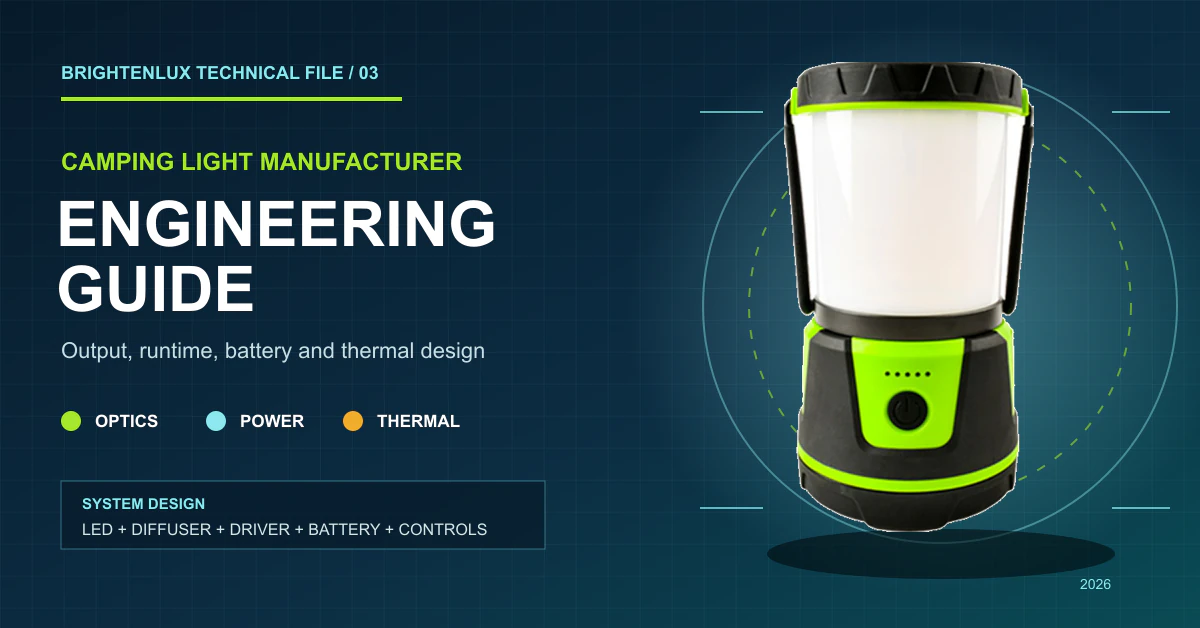
Finding a reliable outdoor lighting factory China buyers can work with is not simply a matter of comparing product photos or selecting the lowest quotation. Outdoor lanterns, flashlights, work lights, and tripod-mounted area lights may look straightforward, but their performance depends on battery design, thermal management, housing quality, assembly control, and documented testing. This guide explains how sourcing managers, product teams, and distributors can assess a potential supplier and decide whether a pictured product range is suitable for private label, contract manufacturing, or resale.
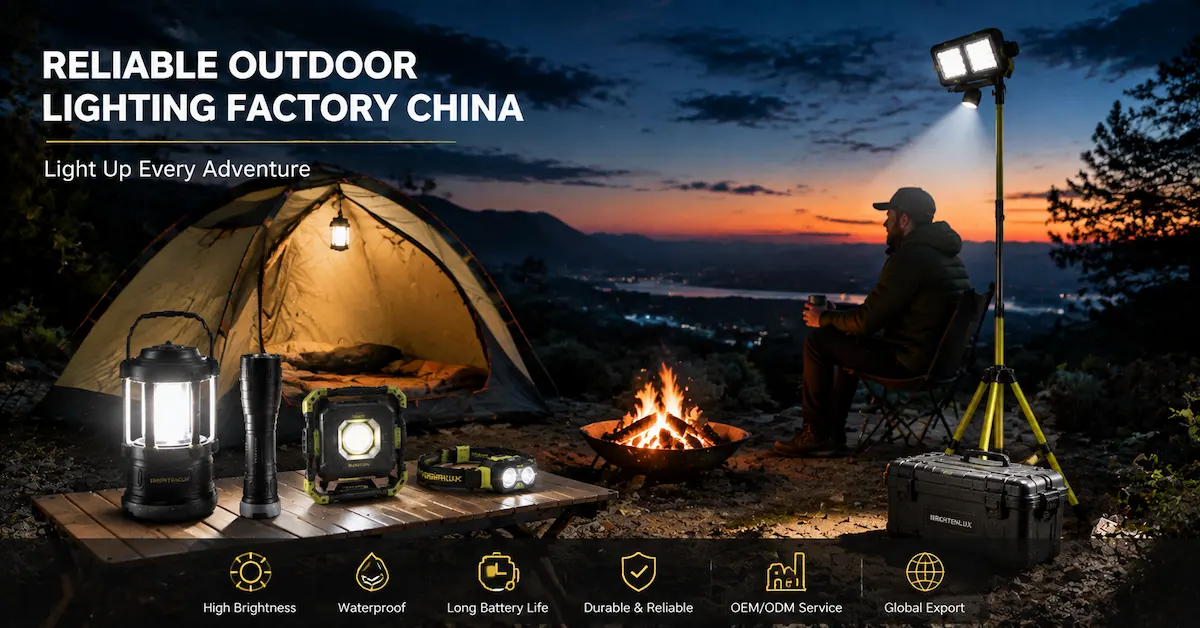
The product range considered here includes portable LED lanterns, handheld flashlights, compact work lights, rechargeable-looking low-profile lights, hanging tent lights, and freestanding area lights mounted on tripods. The visible designs suggest use in camping, emergency preparedness, maintenance, temporary work zones, and general outdoor activities. The important purchasing question is not whether the products appear useful. It is whether the supplier can provide consistent specifications and repeatable production for the intended market.
Quick assessment: what the product range appears to offer
| Product type | Likely application | Key points to verify |
|---|---|---|
| Portable LED lantern | Campsites, tents, power outages, emergency kits | Light distribution, runtime, charging method, handle strength, water resistance |
| Handheld flashlight | Inspection, roadside use, hiking, emergency illumination | Beam distance, switch durability, battery specification, impact resistance |
| Compact work light | Repair, maintenance, construction, vehicle work | Mounting options, glare control, thermal performance, operating time |
| Tripod-mounted area light | Temporary work zones, events, emergency response | Tripod stability, adjustment range, lamp-head construction, power source |
| Small hanging tent light | Camping and recreational vehicle interiors | Suspension strength, compactness, switch access, battery replacement or charging |
This comparison is a starting point rather than a product specification. The available product information does not confirm lumen output, color temperature, beam distance, battery capacity, runtime, ingress-protection rating, or safety certification. Those details should be obtained in writing before a buyer approves a sample or prepares packaging claims.
Why outdoor lighting sourcing requires more than a visual inspection
Portable lighting is often sold as a convenience product, but failure can occur in several ways. A lantern may produce adequate brightness initially and then lose output as the battery voltage falls. A compact work light may become uncomfortable to handle if heat is not managed properly. A tripod light may illuminate a broad area but remain unstable on uneven ground. A flashlight can have an attractive molded housing while its switch, charging port, or battery compartment is poorly protected.
For distributors and brands, inconsistency between production batches is a separate risk. Small changes in LED components, battery cells, diffusers, wiring, or plastic parts can alter the user experience without changing the exterior appearance. A supplier should therefore be evaluated on its ability to define and control the product, not only on its ability to send a polished sample.
Understanding the visible product construction
Housing and mechanical design
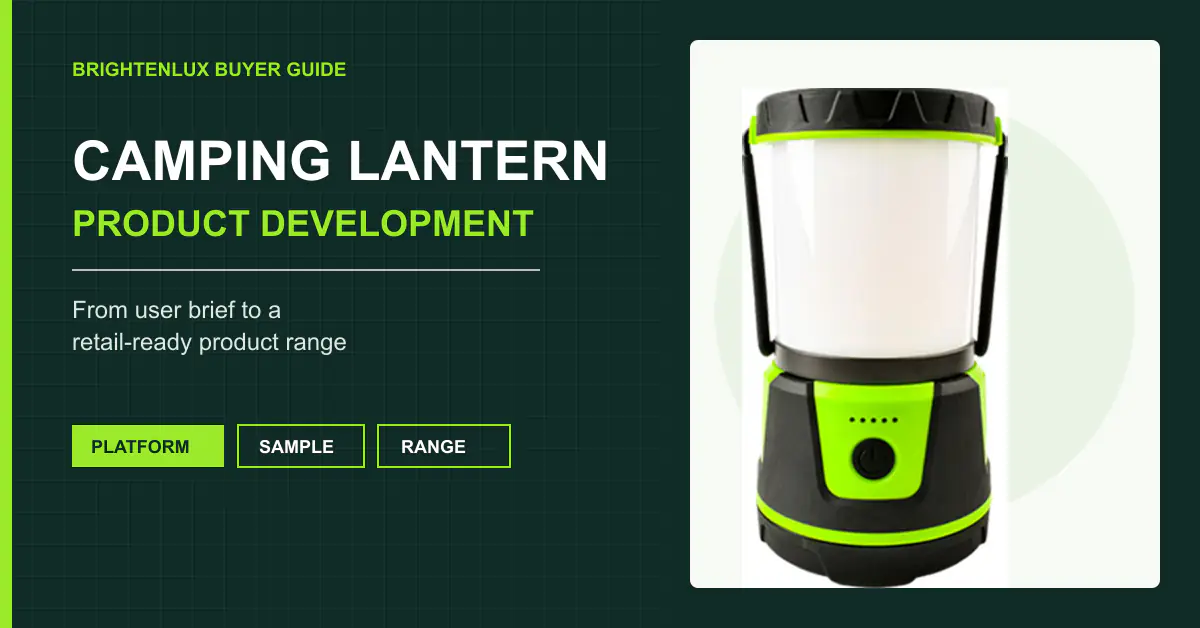
The products shown use predominantly black or dark molded housings, with lime-green or yellow accent trim on several models. The lantern has a cylindrical body, protective upper and lower sections, a carry handle, and a broad diffused panel. The handheld flashlight uses a cylindrical ridged grip and a forward-facing lamp head. These forms are familiar in outdoor equipment because they support handling and help separate product families visually.
The compact work lights appear to use rectangular housings with rounded corners and central light panels. Another low-profile model has two forward-facing lamp openings and a side or top handle. These details may support task illumination, but the actual beam pattern and adjustment mechanism are not confirmed. A buyer should ask for drawings or a sample inspection rather than infer performance from the housing shape.
Tripod-mounted area lighting
The freestanding model consists visibly of a rectangular dual-panel lamp head, a vertical pole, and a three-leg tripod base. Elevated mounting can be useful for temporary work areas because it spreads light above obstacles and reduces the need to place a lamp on the ground. It also introduces mechanical questions that do not apply to a handheld product.
Ask for the tripod height, folded dimensions, adjustment range, lamp-head tilt range, base footprint, and stability guidance. If the unit is intended for construction, emergency response, or rental use, the buyer should also examine hinge wear, locking mechanisms, cable routing, and transport protection. A hard protective equipment case is visible beside the tripod light, but its material and internal protection features cannot be confirmed.
What to verify with a prospective supplier
The promotional material identifies the range with phrases such as “High Brightness,” “Waterproof,” “Long Battery Life,” and “Durable & Reliable.” These may be useful selling themes, but they are not technical evidence. Request the supporting specification for every model, including:
- Measured light output, beam pattern, color temperature, and available lighting modes.
- Battery chemistry, rated capacity, charging interface, charging time, and protection circuitry.
- Runtime data under defined operating conditions, including high-output operation where relevant.
- Water and dust resistance ratings, if claimed, together with the applicable test basis.
- Operating-temperature range, impact or drop testing, and switch-cycle expectations.
- Housing material, diffuser material, fastener details, and replacement-part availability.
- Tripod dimensions, stability information, lamp adjustment range, and packed configuration.
- Packaging dimensions, product weight, labeling options, and any private-label requirements.
Do not accept “waterproof” as a sufficient description. The commercial meaning can range from resistance to light rain to a defined ingress-protection rating. The same caution applies to “long battery life.” A runtime claim has value only when the light level, battery condition, ambient temperature, and test method are clear.
OEM and ODM questions for buyers
The supplied graphic states “OEM/ODM Service,” suggesting that contract manufacturing, private-label production, or product customization may be available. The scope is unknown, however. Buyers should ask whether the supplier supports logo application only, or can also modify housing colors, packaging, user manuals, battery configurations, light modes, mounting hardware, and tooling.
Clarify who owns molds, artwork, firmware if any is used, and approved component lists. For a recurring program, request a sample approval process and a written change-control procedure. A substitution made to a battery, LED module, charger, or diffuser can affect safety and performance even when the product continues to look identical.
It is also worth confirming whether all pictured products belong to one controlled product line or represent separate models from different sources. The image shows several form factors, but it does not establish that every item is manufactured in the same facility. This is a small distinction during browsing and a significant one during quality management.
Common sourcing mistakes
Choosing on brightness alone
Higher nominal output is not automatically better. A narrow beam may suit inspection work, while a diffused panel may be more useful inside a tent or across a small work area. Buyers should match optical design to the task and consider glare, heat, runtime, and user control.
Skipping battery and charging checks
Battery performance is central to portable lighting. Confirm the cell type, protection features, charging connector, charger compatibility, and behavior when the battery is low. If the product may be stored for long periods in emergency kits, ask how storage conditions affect the battery and whether replacement is practical.
Treating a sample as proof of mass-production quality
A sample confirms what was shipped, not necessarily what every production batch will contain. Before ordering, define inspection points for housing fit, lens or diffuser condition, switch operation, charging, light modes, labels, packaging, and functional testing. For tripod products, include repeated folding and adjustment checks.
Practical advice for selecting a supplier
A commercial outdoor lighting manufacturer should be able to explain the product architecture in concrete terms. Ask which components are standard and which are customized. Request a current specification sheet, product drawings where appropriate, sample photos from several angles, and a clear list of available options. If the supplier presents itself as an industrial outdoor lighting supplier, ask how its products are intended to withstand transport, repeated handling, and field use rather than relying on the label alone.
Commercial terms also require verification. The available information does not establish minimum order quantities, production capacity, lead times, prices, warranty terms, factory location, legal identity, export markets, or certifications. These should be treated as open questions. A buyer should verify the contracting entity, inspection arrangements, shipping documentation, and after-sales responsibility before committing to a launch schedule.
FAQ
Are these products suitable for emergency lighting?
The visible product forms appear suitable for emergency use, power outages, roadside assistance, and emergency preparedness. Suitability for a regulated or safety-critical application depends on the actual battery system, runtime, light output, durability, and required compliance documentation.
Can the products be private labeled?
The graphic states “OEM/ODM Service,” so private labeling or customization may be possible. The exact scope, minimum order quantity, tooling responsibility, and packaging options need to be confirmed directly with the supplier.
Does “waterproof” confirm a specific protection level?
No. A buyer should request the stated protection rating and supporting test documentation. Until then, “waterproof” should be treated as an unverified marketing claim.
What should be requested before placing an order?
Request samples, technical specifications, battery and charging information, test documentation for any claimed ratings, packaging details, customization terms, inspection criteria, and commercial information. For the tripod light, include mechanical and stability details in the approval checklist.
Next step for buyers
The product range shown offers several practical formats, from handheld illumination to elevated area lighting. The sensible next step is to select the models that match the intended application, then send the supplier a structured request for specifications, samples, customization details, and verification documents. That process will reveal whether the supplier is merely presenting attractive outdoor lighting products or can support a controlled, repeatable B2B program.