

Custom Outdoor Lighting Manufacturer China: What Buyers Should Check
When buyers search for a custom outdoor lighting manufacturer in China, they are usually trying to solve a real sourcing problem, not collect another factory brochure. They need outdoor LED lighting that fits a use case, brand position, and sales channel without endless sample revisions. For portable lighting such as headlamps and handheld torches, product details shape user trust. Beam direction, comfort, housing feel, and simple controls matter in hiking, camping, trekking, emergency roadside use, and general task lighting. This guide explains what B2B buyers should verify before discussing custom outdoor lighting projects.
What Buyers Really Mean by Custom Outdoor Lighting
In B2B sourcing, “custom” should not mean changing details without a reason. It should mean adapting a product to the buyer’s market. For outdoor lighting, that may include logo placement, packaging style, body appearance, accessory presentation, or adjustments that improve practical use. A buyer serving outdoor recreation customers may need a head-mounted light for hands-free movement. Another buyer may prefer a handheld torch for focused inspection in dark areas. Some channels may benefit from presenting both formats together.
The search term “custom outdoor lighting manufacturer China” often reflects a need for stable repeat supply, private label support, and clear communication. The right supplier should help clarify what is already standard, what can be changed, and which specifications must be confirmed before sample approval.
Why Outdoor Lighting Sourcing Gets Complicated
Outdoor lighting looks simple until requirements become specific. A lamp should be bright enough for practical use, but the source material does not confirm lumens, runtime, battery design, water resistance, or charging method, so those points must be requested directly. Buyers should not assume performance from product photos. A strong beam image may look convincing, while the real product may still need checks for comfort, handling, and control layout.
The word “outdoor” also covers different categories. Portable headlamps and handheld lights are not the same as fixed landscape lighting or pole lighting. A landscape lighting supplier usually works with installed garden or building applications. An outdoor pole light manufacturer may focus on infrastructure-style fixtures. Buyers should match the supplier’s experience to the product environment they actually plan to sell.
Product Format: Headlamp, Handheld Light, or Both
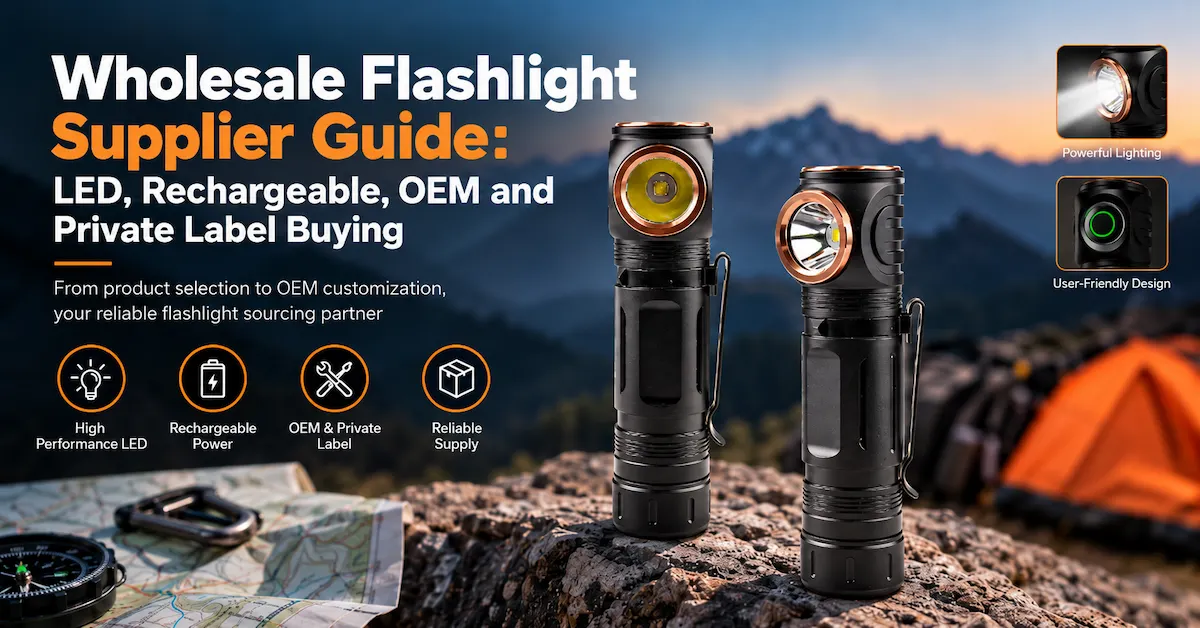
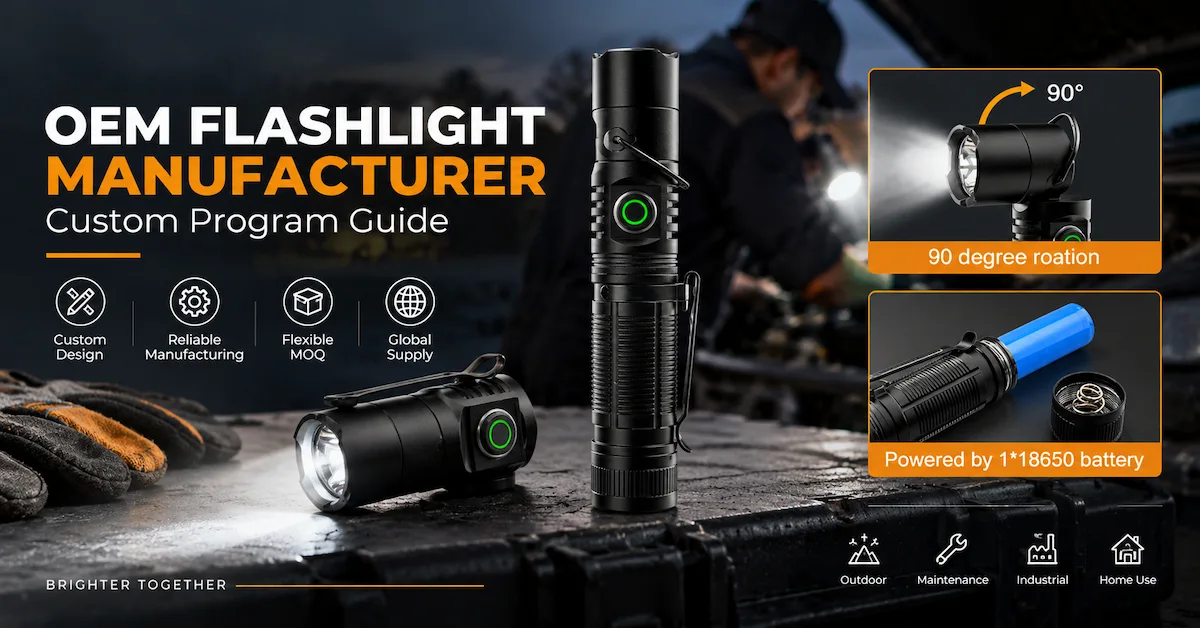
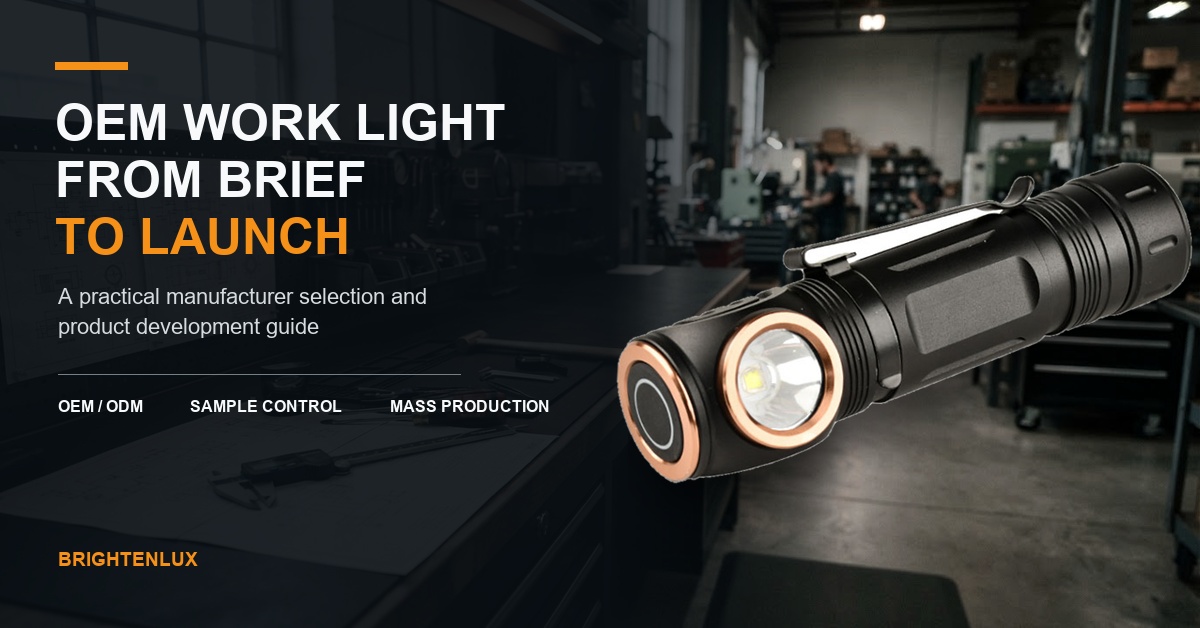
The visible product format in the source points to portable consumer LED lighting, including a head-mounted light and a handheld light. This pairing can be useful because it supports two different user behaviors. A headlamp keeps both hands free while walking, packing, checking equipment, or moving along a trail. The beam follows the user’s line of sight, which is valuable when working in low light or navigating uneven ground.
A handheld torch gives more independent control. The user can point it beyond arm’s length, inspect an object, or direct light without turning the head. For camping, hiking, emergency kits, and general task use, this combination tells a practical story: convenience, portability, and focused illumination. Buyers should confirm the exact construction, strap design, mounting method, and accessory set before treating a sample as production-ready.
Customization Points to Confirm Before Sampling
A capable supplier should be able to discuss customization in practical terms. Instead of asking only whether a product can be customized, buyers should ask which elements are standard and which can be modified. This reduces confusion when comparing quotations from different factories. It also prevents a common problem: approving a sample while both sides are still imagining different product versions.
| Check Point | What to Ask |
|---|---|
| Branding | Where can the logo be placed, and by which method? |
| Packaging | Can the supplier support retail or promotional presentation? |
| Product appearance | Which colors, finishes, or body details are adjustable? |
| Beam presentation | What beam style is standard, and what can be discussed? |
| Accessories | What is included in the sample and production version? |
Because the provided data does not confirm exact materials, LED power, runtime, charging method, certifications, or IP rating, each item should be verified in writing. For related product ideas, buyers can review Brightenlux products before preparing a custom brief.
How to Evaluate a China Outdoor Lighting Supplier
A useful supplier conversation should be structured. Ask for current production photos or drawings, a list of standard and customizable parts, and a clear description of what the sample includes. If the product will be sold through retail channels, packaging dimensions and presentation details should also be discussed. Where compliance or testing information is relevant to the target market, ask what documentation is available instead of assuming it exists.
Buyers should also clarify whether they are dealing with a factory, trading company, or hybrid business. None of these models is automatically wrong, but the buyer must know who controls sample revisions, production changes, and final order consistency. Direct answers are a good sign. Broad claims without specific confirmation are a warning sign, especially for custom outdoor lighting programs where small details can affect user experience.
Common Mistakes B2B Buyers Should Avoid
One mistake is judging outdoor lighting only by the beam image. A focused beam may look impressive, but a product also needs to be comfortable to wear or easy to hold. If the headlamp feels unstable or the handheld unit is awkward, the end user may not value the product, even if the light output appears strong in a photo.
Another mistake is treating customization as automatically better. Custom features should support the sales channel, user need, or brand position. Unnecessary changes can make the product harder to explain, more difficult to control, or less suitable for the target buyer. A third mistake is mixing product families. Fixed landscape lighting, pole lighting, and portable outdoor task lighting serve different environments. The supplier’s portfolio should match the intended application, not just the general word “outdoor.”
How to Prepare a Better Inquiry
Before contacting a custom outdoor lighting manufacturer in China, prepare a short internal brief. Define whether the primary use is hiking, camping, trekking, emergency roadside use, or general task lighting. Decide whether the preferred form is a headlamp, handheld torch, or paired solution. Separate must-have features from nice-to-have ideas, and list branding needs such as logo, packaging, insert cards, or carton marks.
This brief makes supplier responses easier to compare. It also helps avoid vague discussions about products that look similar but are not built for the same channel. If you are ready to discuss a project, you can contact Brightenlux through contact us or send details through an inquiry. Clear information at the start usually leads to a more useful sample discussion.
FAQ
What should I ask first when sourcing custom outdoor lighting from China?
Start with the use case, product format, and customization scope. Tell the supplier whether the product is for hiking, camping, emergency roadside kits, or general task lighting. Then ask what is standard, what can be customized, and which specifications must be confirmed before a sample is approved.
Can I assume waterproof rating, runtime, or certifications from product photos?
No. The source material does not confirm IP rating, runtime, battery details, certifications, or exact LED power. These points should be requested directly from the supplier and confirmed in writing. Product photos can show appearance and format, but they cannot replace technical confirmation for a B2B order.
Is a landscape lighting supplier suitable for portable outdoor lights?
Not always. Landscape lighting suppliers usually focus on fixed outdoor installation, while portable headlamps and handheld torches serve users who move, carry gear, or work in dark areas. Some suppliers may cover multiple categories, but buyers should confirm experience with the exact product type needed.
Why prepare a brief before requesting a quotation?
A short brief prevents confusion and saves time. It should include the target use case, preferred form, branding needs, packaging expectations, and must-have features. With that information, suppliers can respond more clearly, and buyers can compare quotations without being distracted by unrelated product variations.