

Certified LED Lighting Manufacturer China: Portable Emergency Kits
When B2B buyers search for a certified LED lighting manufacturer in China, they are usually trying to reduce sourcing risk, not simply buy a bright lamp. Portable emergency lighting must be practical in roadside, rescue, and field-service situations where equipment may be handled quickly, stored in vehicles, and used in wet or low-light conditions. The right supplier should understand rugged housings, dependable electronics, kit-based packaging, and OEM requirements. For buyers building private-label emergency lighting programs, the goal is a reliable field-ready solution that matches real use cases.
Why Portable Emergency LED Kits Need Careful Sourcing
Emergency lighting is judged differently from decorative, office, or retail lighting. A roadside technician may need a broad work light for a tire change, a handheld flashlight for inspection, and an area light for team visibility. Rescue and maintenance crews also need equipment that is easy to carry, quick to deploy, and simple to organize after use.
This is why many buyers look beyond a single lamp and source a complete kit. The product range described here includes a flood or work light, a handheld flashlight, a lantern-style area light, a compact dual-lamp unit, a warning triangle, and a molded hard protective case. Together, these items support vehicle breakdowns, outdoor repairs, low-light maintenance, roadside assistance, and rescue operations. Buyers comparing options can review current product categories at Brightenlux products before preparing a sourcing brief.
What Buyers Should Expect from an OEM LED Lighting Manufacturer
A capable OEM LED lighting manufacturer should be able to discuss field performance in practical terms. Brightness is useful, but it is only one part of the decision. The supplier should also understand beam usefulness, charging and storage behavior, assembly consistency, housing durability, waterproofing claims, and how the kit will be packed for transport.
In portable emergency lighting, customization often means more than adding a logo. Buyers may request private-label artwork, revised housing colors, different kit contents, local-language instructions, warning labels, or branded carrying cases. Some programs may need compact kits for passenger vehicles, while others may need a broader package for service trucks or fleet support. The strongest supplier conversations start with use cases: roadside repair, tow recovery, field maintenance, or rescue support. Only after that should teams discuss branding, accessories, and packaging formats.
Common Portable Emergency Lighting Formats
Portable emergency kits usually combine several lighting types because one beam style cannot cover every roadside or field task. A rectangular flood or work light with a fold-out stand is useful when crews need broad, hands-free illumination across a repair zone, shoulder lane, tire area, or engine bay. A handheld flashlight remains important because it is familiar, fast to grab, and suitable for directed inspection.
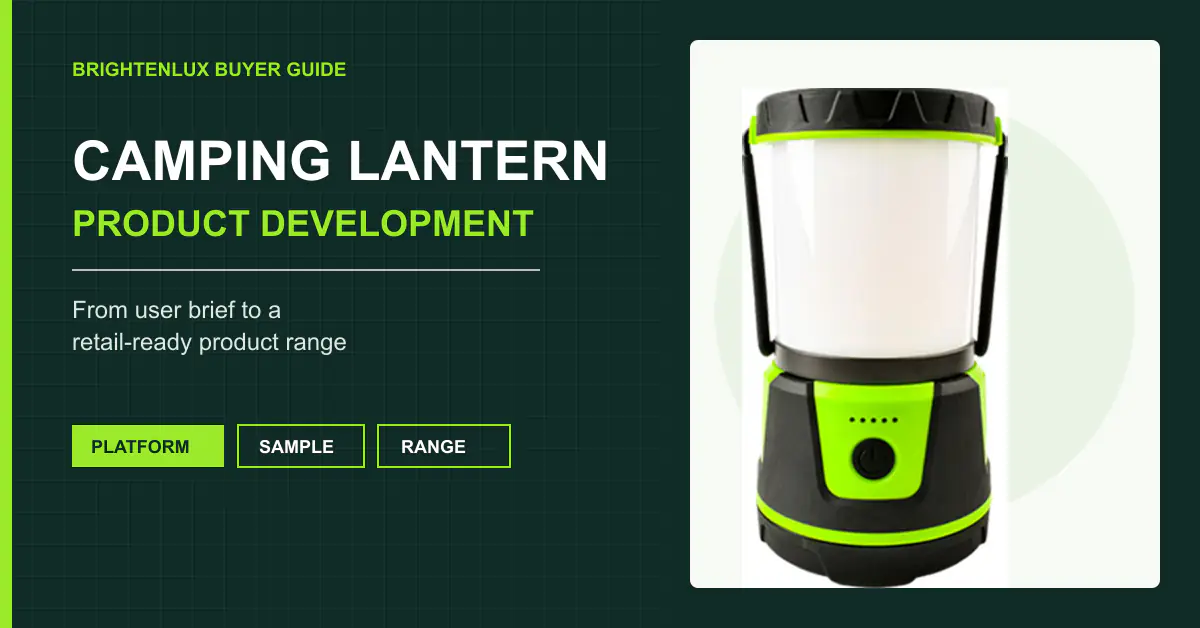
A lantern-style area light, often with a protective cage-like body, supports surrounding illumination where several people may need visibility from different angles. A compact dual-lamp unit can offer a balance between portability and coverage when buyers want something smaller than a full flood light but more flexible than a basic flashlight. The warning triangle and protective case complete the kit by improving roadside organization and storage discipline.
| Format | Typical role in the kit |
|---|---|
| Flood or work light | Broad hands-free illumination for repair areas |
| Handheld flashlight | Directed inspection and quick-use lighting |
| Lantern-style light | Area lighting for teams or temporary workspaces |
| Dual-lamp unit | Compact coverage with flexible positioning |
| Hard carrying case | Storage, protection, and kit organization |
Product Details That Matter in Field Use
The visible black and yellow housings suggest a rugged, impact-oriented design language suitable for towing, emergency, and maintenance environments. The exact body material is not stated, so buyers should not assume details without confirmation. However, the clear lens covers, portable frames, warning triangle, and molded hard case all point to field use rather than indoor storage.
On-image claims such as high brightness, IP65 waterproof rating, long battery life, durable and reliable, and certified quality can be valuable selling points, but sourcing teams should verify them carefully. In emergency equipment, a waterproof claim depends on the test method, sealing approach, ports, and real handling conditions. Battery performance also depends on storage, charging habits, and operating mode. A responsible supplier should be willing to explain these points clearly and provide relevant documentation for the target market before volume orders are placed.
How to Evaluate a Certified LED Lighting Manufacturer in China
Supplier evaluation should go beyond brochure images. Ask how housings are formed and assembled, how seams are controlled, and how repeatability is maintained across production. Injection-molded parts are common in portable products, but fit and consistency matter more than the molding method alone. Also ask how electronic assemblies are protected against moisture, vibration, and transport stress.
For emergency kits, packaging is part of the product. A hard case that keeps lights and accessories organized can reduce loose-item damage and make fleet inventory easier. Buyers should ask whether the case is included, optional, or configurable. It is also useful to confirm what can be customized without retooling the whole product line. If your sourcing team is preparing a private-label program, share your target use case and ask the supplier to respond with recommended configurations. You can start a project discussion through Brightenlux contact or send details through the inquiry page.
Common Sourcing Mistakes to Avoid
One common mistake is buying a portable LED lighting kit as if it were a consumer flashlight. Emergency and rescue users need repeatable performance, practical beam coverage, organized storage, and simple deployment. A strong first-use impression is not enough if the kit is awkward to handle or difficult to keep ready between calls.
Another mistake is assuming that one certification or quality claim automatically applies to every part of the kit. The light, battery, charger, accessories, packaging, and case may require separate review depending on the destination market and sales channel. Buyers should also avoid over-specifying the product too early. Asking for exact lumen figures, battery sizes, or runtime promises before defining the duty cycle can lead to mismatched products. Start with the environment, user type, storage method, and task duration. Then review the supplier’s available formats and documentation.
Building a Practical Private-Label Emergency Kit Program
Custom LED lighting solutions in this segment often include branding, packaging, kit layout, user instructions, housing color preferences, and accessory selection. A fleet supply customer may need a compact vehicle emergency kit, while a towing or rescue channel may prefer a fuller package with multiple light formats and a warning triangle. The point is not only to look different, but to create a coherent kit for a defined user.
Buyers should prepare a clear sourcing brief before final comparison. Include the intended application, target market, expected storage environment, preferred kit contents, branding needs, and documentation requirements. Ask what options are standard, what can be adjusted, and which changes require a larger development conversation. A manufacturer that can explain trade-offs in plain language is often more useful than one that only repeats marketing claims. To compare available formats before briefing your team, visit Brightenlux product options.
FAQ: Sourcing Portable Emergency LED Lighting Kits
Is a complete emergency lighting kit better than buying individual lights?
Often yes, especially when the end user needs a coordinated vehicle or work-team solution. A kit can simplify storage, deployment, and replenishment because the lights and accessories stay organized in one case. Individual lights may still suit large fleets or mixed-use operations with separate inventory systems.
Should buyers prioritize brightness over battery life?
Not automatically. The better choice is usually the light that provides enough usable illumination for the full task. A very bright beam may be less useful if it causes glare, drains quickly, or does not cover the work area well. Match brightness, beam type, and runtime expectations to the real use case.
Can portable emergency LED kits be customized for private-label programs?
In many OEM programs, customization can include logos, packaging artwork, kit layout, instruction sheets, housing color preferences, and accessory combinations. The practical limits depend on the supplier’s existing product structure and production setup. Buyers should confirm what can be changed without retooling before planning launch schedules.
What should buyers verify before placing volume orders?
Ask for the product breakdown, available kit combinations, packaging details, and documentation supporting important claims such as waterproofing or quality references. Confirm whether the case is standard or optional, and ask how the product is stored, transported, charged, and maintained in real outdoor or vehicle-based conditions.