

Certified LED Lighting Manufacturer China: Buyer Guide to Portable Outdoor Lights
When procurement teams search for a certified LED lighting manufacturer China, they are usually trying to reduce sourcing risk, not read another sales pitch. Portable outdoor lights must survive real handling, storage, damp conditions, and repeated use. This guide explains how to evaluate a China LED light factory for a product family that includes a headlamp, lantern, flood/work light, handheld flashlight, and protective carrying case.
What Buyers Mean by a Certified LED Lighting Manufacturer in China
In B2B sourcing, the word certified should slow the conversation down. It is useful only when the supplier can name the relevant standard, issuing body, and scope. The supplied product image uses terms such as Certified Quality, Super Bright, IP65 Waterproof, Long Battery Life, and Durable & Reliable. Among these, IP65 is the only claim that reads like a specific rating. Other phrases may describe intended value, but they cannot be verified from an image alone.
For buyers, this distinction matters because portable lights fail in practical ways: weak switches, loose lens fit, brittle housings, strap discomfort, or poor sealing. A capable LED lighting manufacturer China should be able to discuss the finished assembly, not only show polished product photos.
Portable Outdoor Lighting Product Family Overview
The product family is not a single SKU. It covers several portable lighting roles for hiking, camping, work-site tasks, blackout kits, temporary indoor use, and emergency storage. A buyer should evaluate each item by its own application rather than treating all portable lights as interchangeable.
| Product | Visible role | Buyer focus |
|---|---|---|
| Headlamp | Hands-free task lighting | Strap comfort, stability, lamp positioning |
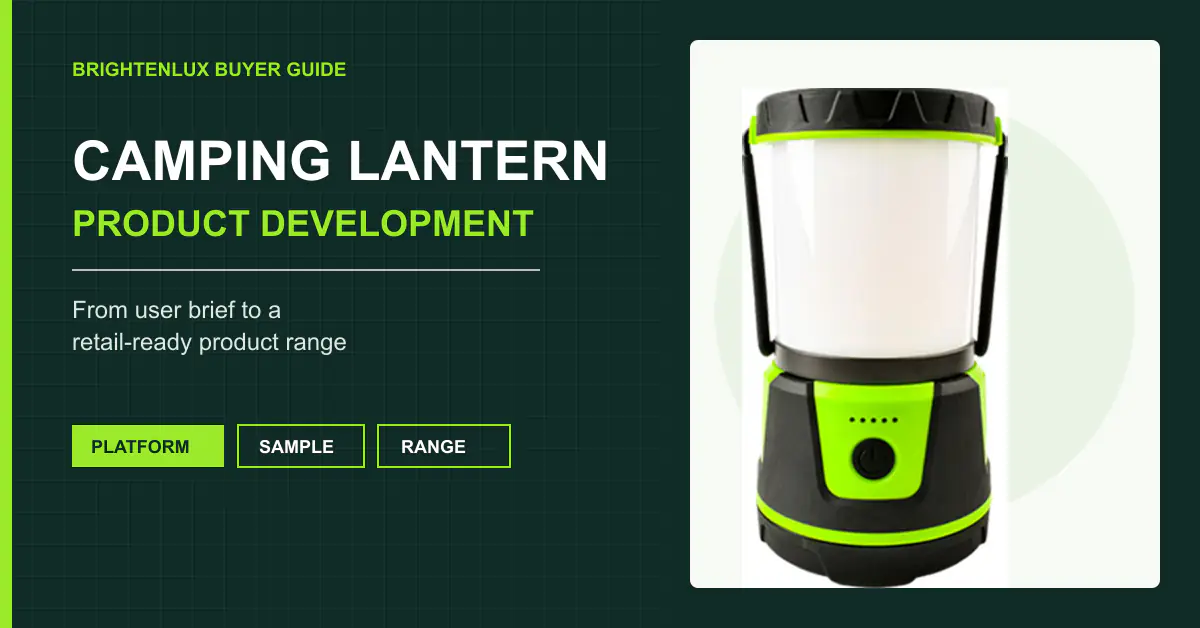
| Lantern | Area lighting | Handle strength, diffuser fit, stable placement |
| Flood/work light | Directed work lighting | Stand strength, aiming angle, housing durability |
| Flashlight | One-hand carry | Grip, switch feel, body alignment |
| Hard case | Transport and storage | Latches, molded corners, kit protection |
This simple comparison helps buyers turn a product photo into a technical discussion. The same factory may offer all items, but each one has different mechanical and user-experience requirements.
Construction Details That Reveal Manufacturing Control
The visible designs suggest assembled portable lighting products with plastic housings, electronic components, lenses, switches, straps, stands, and storage hardware. The black and yellow exterior gives an industrial outdoor appearance, while textured areas suggest attention to grip. Those details are useful, but they are only starting points for evaluation.
A serious buyer should ask how the housings are formed, how lenses are seated, how switches are installed, and how straps, hinges, handles, or stands are attached. Many portable lighting issues are mechanical before they are electrical. A bright LED module cannot compensate for a weak latch, unstable kickstand, poor lens fit, or uncomfortable head strap.
This is where a real China LED light factory can separate itself from a trading source. The supplier should explain fit, assembly, storage, and inspection in plain language.
How to Check Waterproof and Durability Claims
The image text includes an IP65 waterproof claim, but buyers should not treat any rating as complete until it is tied to documentation and scope. Ask whether the claim applies to the full finished unit, not only a component. In portable lighting, the casing, lens, switch, seals, hinges, cable openings, and battery access points can all affect resistance to dust, rain, splash, or job-site exposure.
Durability also goes beyond waterproof language. A headlamp must remain stable on the forehead. A lantern handle should carry or hang the product without feeling loose. A work light stand must hold position after repeated folding. A flashlight should feel balanced in one hand and resist slipping. The protective case should keep the set together and help prevent damage in shipping or storage.
Before moving to volume purchasing, request product photos, specifications, and clarification of every certification or rating claim. If the answers stay vague, the sourcing risk remains high.
Selection Criteria for B2B Buyers
Buyers often compare outdoor LED products by appearance first, but a stronger sourcing process starts with use case. Hiking, camping, emergency preparedness, maintenance, roadside work, and general outdoor retail all create different performance expectations. A product that looks rugged may still be poorly matched to its target channel.
For headlamps, focus on strap comfort, front lamp positioning, and whether the light remains steady during movement. For lanterns, look at handle security, diffuser fit, and stability when carried or hung. For flood/work lights, review the stand, housing protection, and how easily the unit can be positioned. For flashlights, inspect switch feel, grip texture, body balance, and head-to-body alignment.
The hard case also deserves attention. It is not just packaging; it can support transport, storage, retail presentation, and kit management. For distributors and outdoor programs, a case can help keep multiple lighting items together and reduce avoidable damage.
Common Sourcing Mistakes to Avoid
One common mistake is accepting broad marketing phrases without asking what they mean. Certified Quality, Super Bright, Long Battery Life, and Durable & Reliable are not enough for procurement unless the supplier provides supporting detail. Buyers should not invent assumptions from a product image, and suppliers should not be allowed to hide behind general claims.
Another mistake is ignoring the differences among product types. A lantern with a diffuser, a slim flashlight, a hands-free headlamp, and a rectangular work light each places pressure on different parts of the design. Testing only one item does not prove the whole product family is suitable.
Buyers also overlook packaging and case design. If the items are intended for outdoor retail, emergency kits, or work teams, storage is part of the product experience. Before comparing offers, review available models at Brightenlux products and define which format best matches your channel.
How to Start a Supplier Conversation
A productive supplier conversation should move from product role to construction, then from claims to proof. Start by confirming whether the lights are offered as a set, separate SKUs, or configurable items. The supplied information does not confirm the commercial structure, so buyers should clarify it before quoting packaging or planning distribution.
Next, ask how each product is assembled and how the case protects the lights in transit. Discuss the headlamp strap, lantern handle, work light stand, flashlight body, and case latches. These details quickly show whether the supplier understands the practical demands of portable lighting.
Finally, request documentation for any certification, waterproof rating, or quality claim. If you are ready to compare samples or ask for a specification pack, contact the team through Brightenlux contact or send project details via the inquiry page. Clear questions early can prevent costly misunderstandings later.
FAQ for Portable Outdoor LED Light Buyers
Is IP65 enough for outdoor portable lighting?
It may be suitable for some outdoor uses, but buyers should confirm how the IP65 claim was tested and whether it applies to the complete finished product. The lens, switch, housing seams, seals, and access points all influence performance in rain, splash, dust, or damp work environments.
Are these lighting products sold as one kit or separate items?
The supplied information shows a headlamp, lantern, flood/work light, flashlight, and protective case, but it does not confirm whether they are sold as a full set or separate SKUs. Buyers should clarify the commercial structure before planning packaging, retail positioning, or distributor quotes.
What should I ask a China LED light factory first?
Start with product specifications, real photos, available samples, and clarification of any certification or waterproof claim. Then ask about housing materials, lens fit, switch assembly, strap or stand attachment, case protection, and whether the supplier can explain the intended use of each lighting item clearly.
Why does the protective carrying case matter?
The hard case can support transport, storage, and kit organization. For distributors, emergency programs, or work teams, keeping lights protected and grouped together reduces avoidable damage and misplaced items. It also improves the presentation of a multi-item portable lighting set.