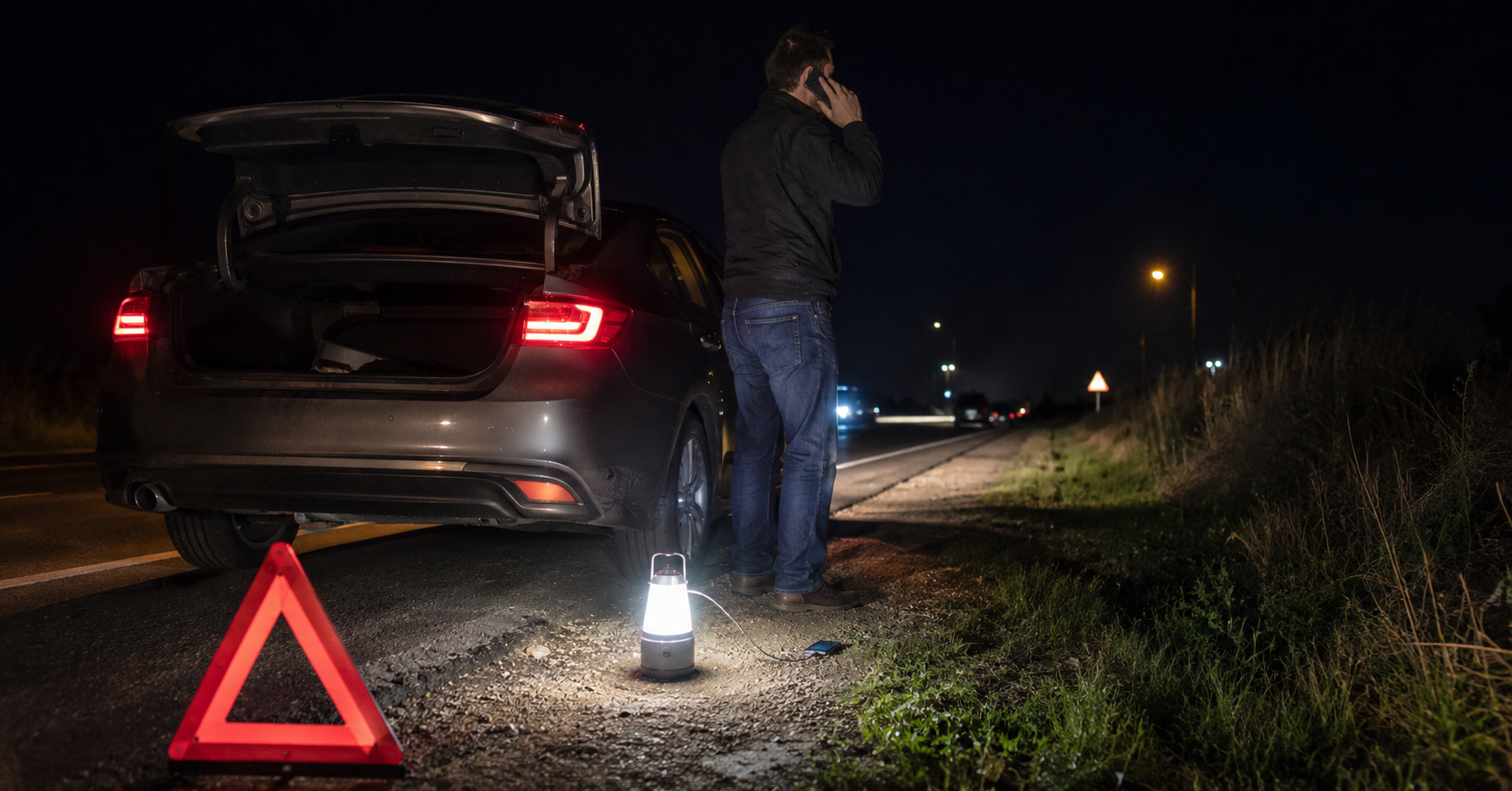


Camping Lantern Manufacturer Guide for Outdoor Buyers
A camping lantern manufacturer is more than a supplier of portable light. For outdoor retailers, private label teams, and industrial buyers, the right partner affects product reliability, user satisfaction, and long-term sales confidence. A lantern that looks strong in a catalog still needs to survive packing, handling, charging, and repeated campsite use. This guide explains what to evaluate when sourcing rechargeable camping lights with portable power features, without relying on unsupported claims or inflated specifications.
Why the Right Camping Lantern Manufacturer Matters
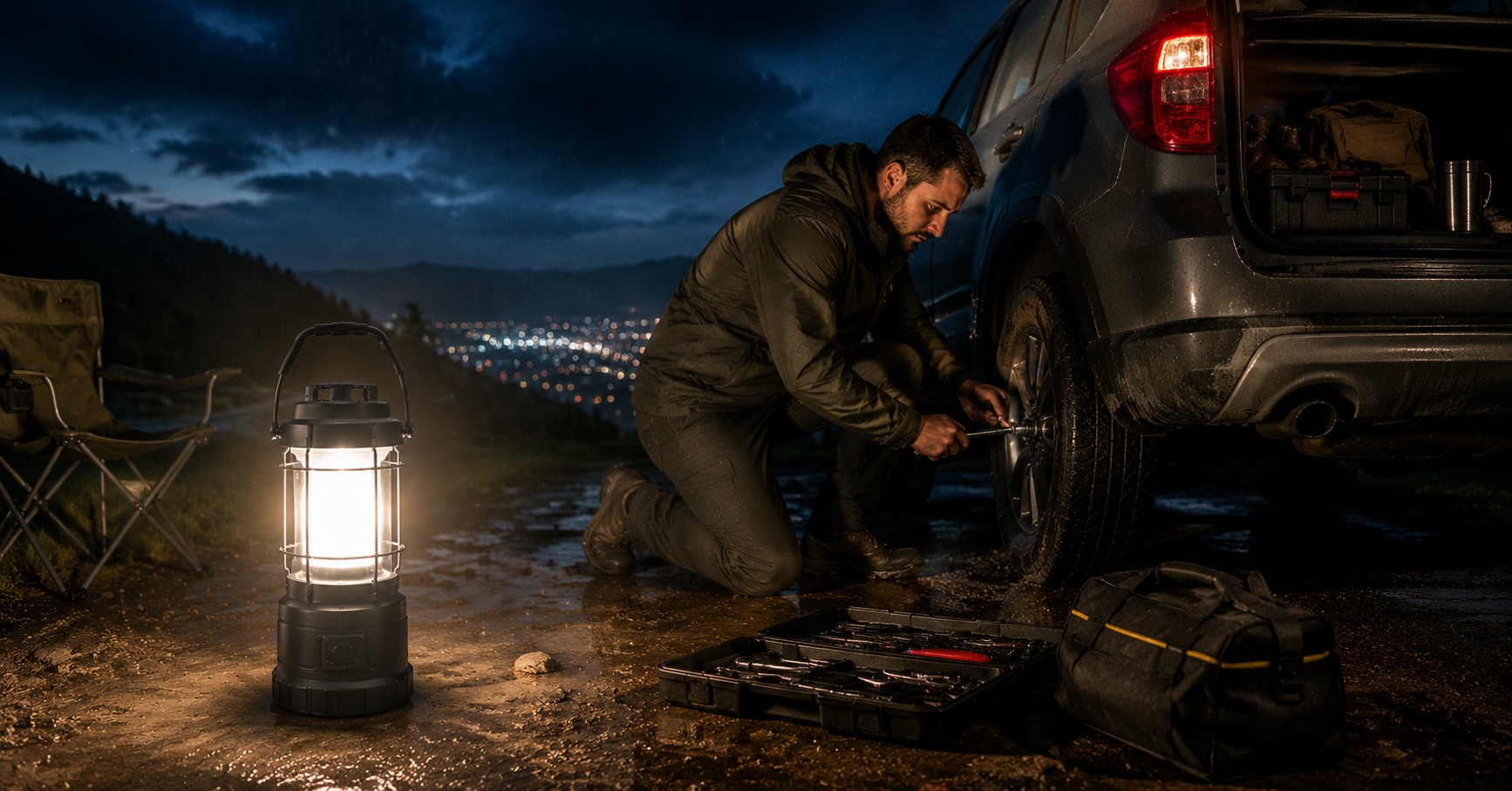
Outdoor lighting products are used in conditions that are rarely clean, flat, or predictable. A buyer may inspect a lantern on a desk, but the end user may place it on wet ground, carry it with gloves, or connect a cable in the dark. Small design choices become important: the stability of the housing, the feel of the handle, the clarity of the diffuser, and the position of charging ports.
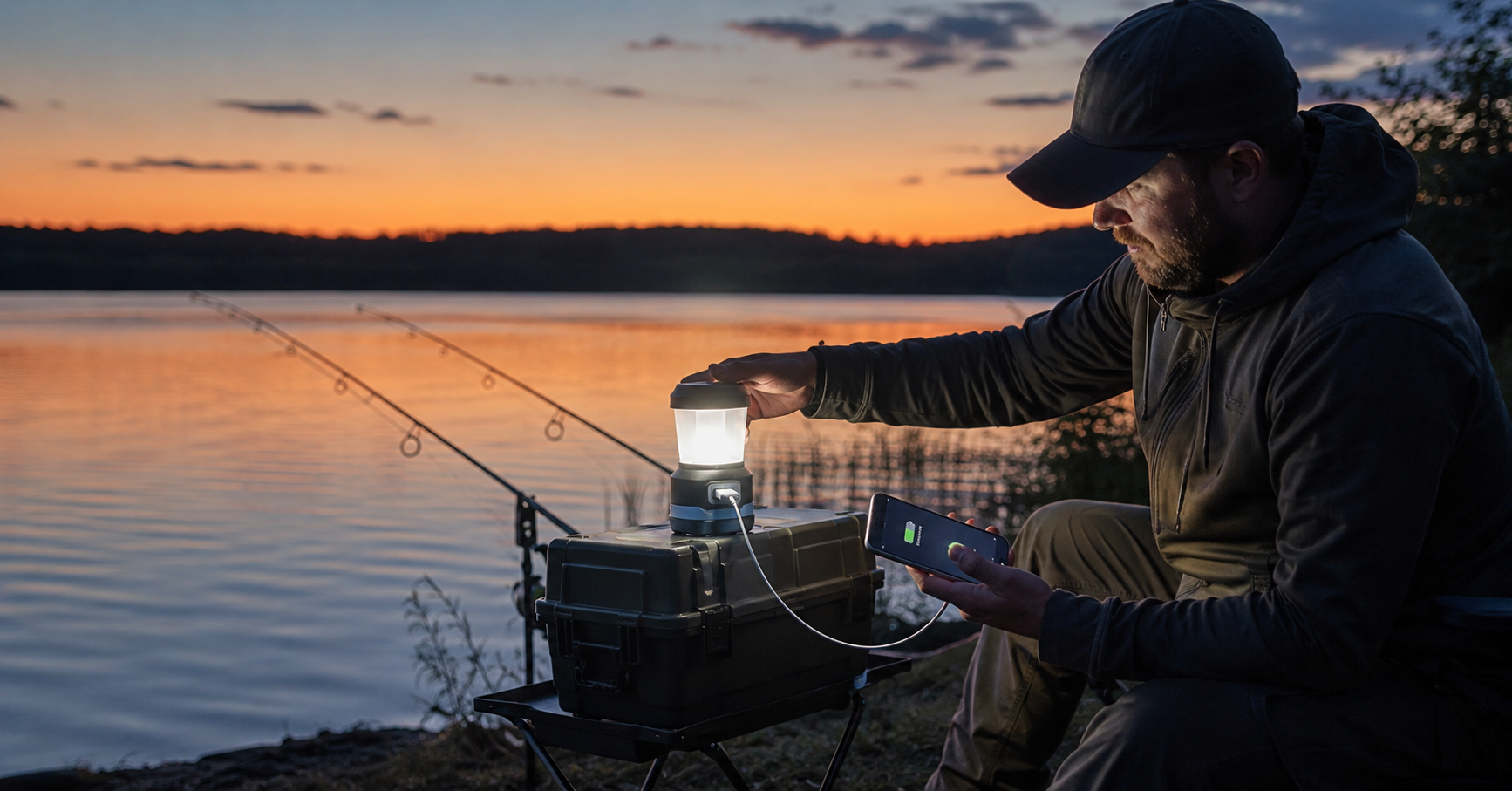
The source product appears to combine a compact lantern with a rugged-looking external power box and a cable connection. That format is useful for camping, fishing, and backup lighting because it can provide area light and charging convenience. It also adds complexity. Buyers should evaluate the lantern, the power unit, and the interaction between them as one complete system.
Understanding the Product Category
The visible product category is a portable camping and fishing lighting setup with a rechargeable lantern form factor and a separate hard plastic power unit. The lantern appears compact and cylindrical, with a translucent diffuser and a darker cap or base section. The power box has a matte black appearance and latching details, suggesting a carry-and-protect role rather than a decorative one.
This is not the same sourcing challenge as buying a simple promotional light. Outdoor buyers must balance light distribution, portability, and power management. The product needs to illuminate a tent, table, or fishing spot while remaining easy to move and simple to operate. A capable manufacturer considers housing design, electrical assembly, and user experience together. A weaker supplier may focus mainly on appearance, leaving practical problems to appear after delivery.
Quick Buyer Checks Before Comparing Models
Before discussing styling, packaging, or private label options, buyers should confirm the basic sourcing questions. A compact checklist keeps the conversation focused and helps separate a serious camping lantern supplier from a catalog reseller. Use these points when reviewing samples, product photos, or early technical discussions.
| Area to Check | Why It Matters |
|---|---|
| Housing structure | Shows whether the lantern is built for repeated handling, not only display. |
| Diffuser consistency | Affects light comfort and signals mold and process control. |
| Power interface | Clarifies whether charging or cable use is convenient in the field. |
| Port and cable layout | Reduces confusion when users operate the product at night. |
| Documented claims | Prevents unsupported assumptions about protection, output, or performance. |
For current product direction, buyers can also review the wider Brightenlux lighting range at Brightenlux products before preparing a comparison brief.
Housing, Diffuser, and Structural Details
The most visible manufacturing clue in this category is the molded enclosure. The lantern appears to use a translucent plastic diffuser with darker top or base parts, while the power unit appears to use a harder matte housing with latch-style hardware. Plastic is normal in this category; the important question is how it is specified, molded, and assembled.
Buyers should ask about wall thickness in the handle, cap, and base areas. Thin sections may look refined but can crack after repeated knocks. They should also review how parts are joined. Snap fits, screws, internal ribs, and sealing choices each affect durability and serviceability. Diffuser quality deserves close attention because stress marks, uneven color, or inconsistent translucency may indicate weak process control.
The power box should also be evaluated carefully. A rugged appearance does not automatically prove impact resistance. Latches, corners, hinges, port openings, and cable exits often reveal whether a design is genuinely practical or only styled to look outdoor-ready.
Power Architecture and User Experience
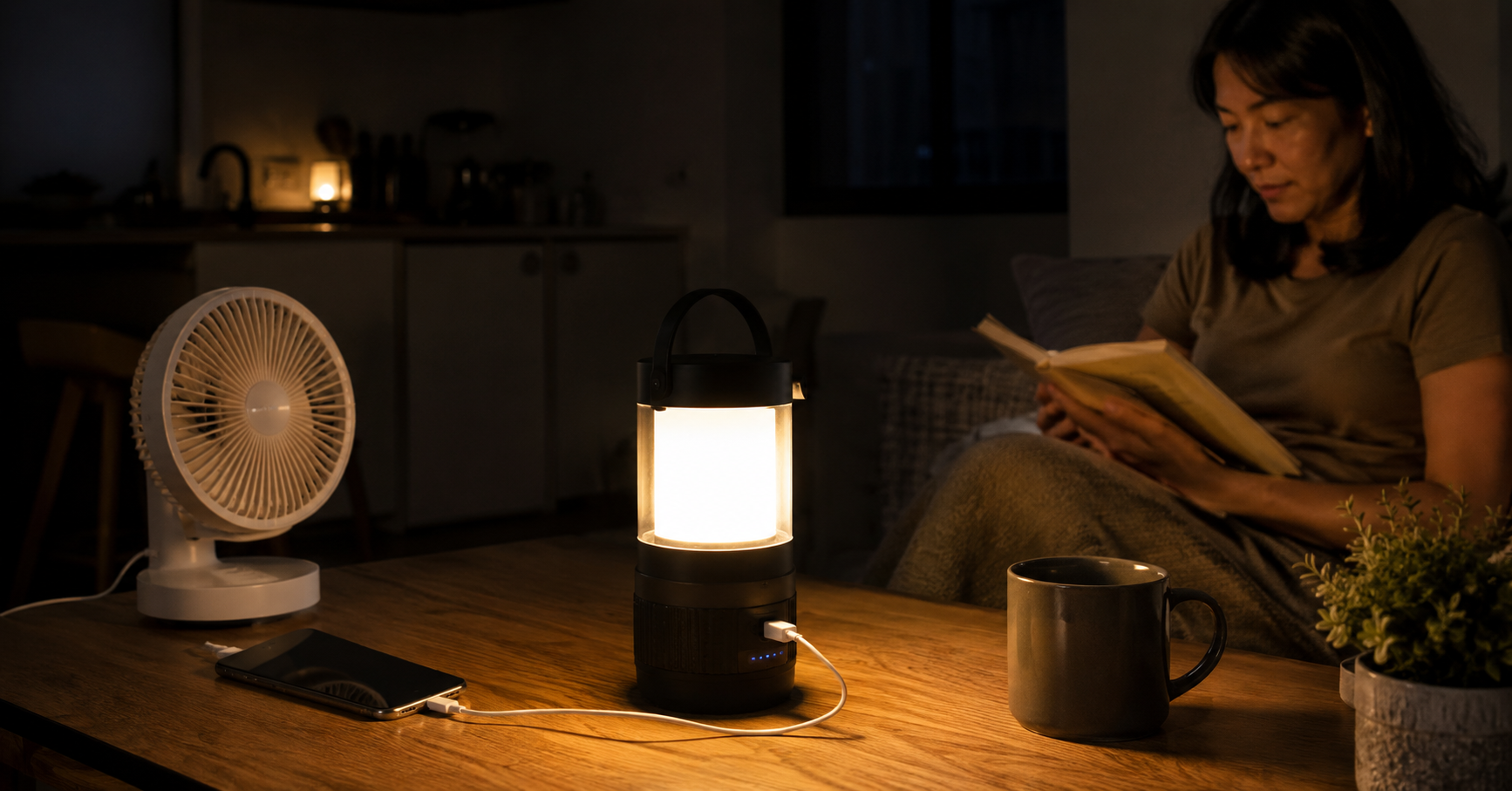
The visible setup suggests a rechargeable camping light system, possibly with a power box that supports the lantern through a cable and may help keep a phone or small device powered. That kind of convenience can be valuable for camping, night fishing, and emergency backup use, but buyers should not assume exact capacity, output, or runtime without supplier confirmation.
User experience is just as important as the electrical concept. If a phone is connected, the user should understand whether the system is charging, discharging, or powering the lantern. Button placement, indicator visibility, cable strain relief, and port location all matter when the product is used outdoors at night. A neat cable in a studio photo may be awkward if it is too short, poorly routed, or easy to snag.
For B2B sourcing, the safest approach is to ask for a plain-language explanation of the charging method, included accessories, and commercial bundle. If the scene shows a lantern, power box, cable, and phone, confirm which items are actually included.
How to Identify a Strong Camping Lantern Supplier
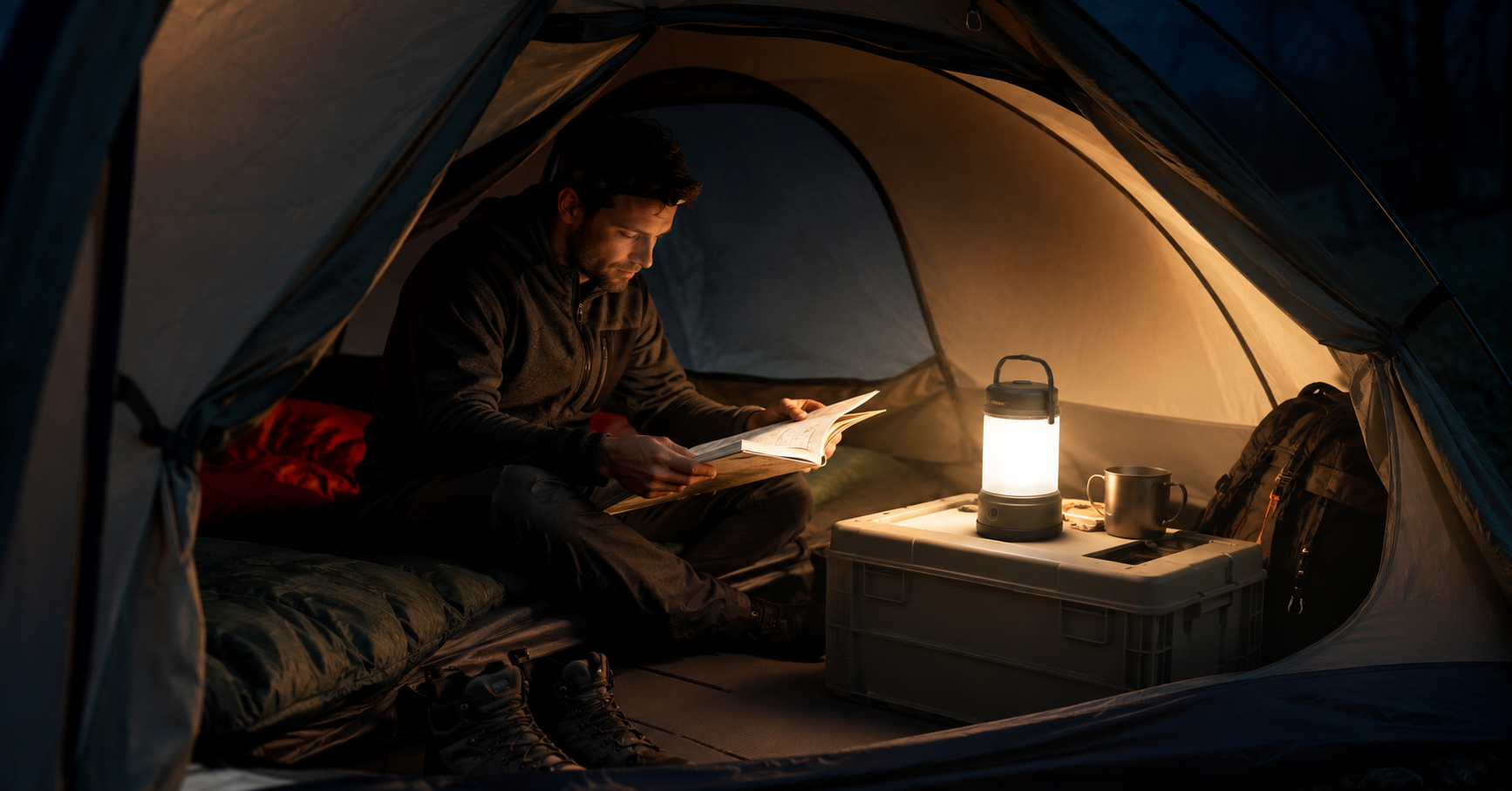
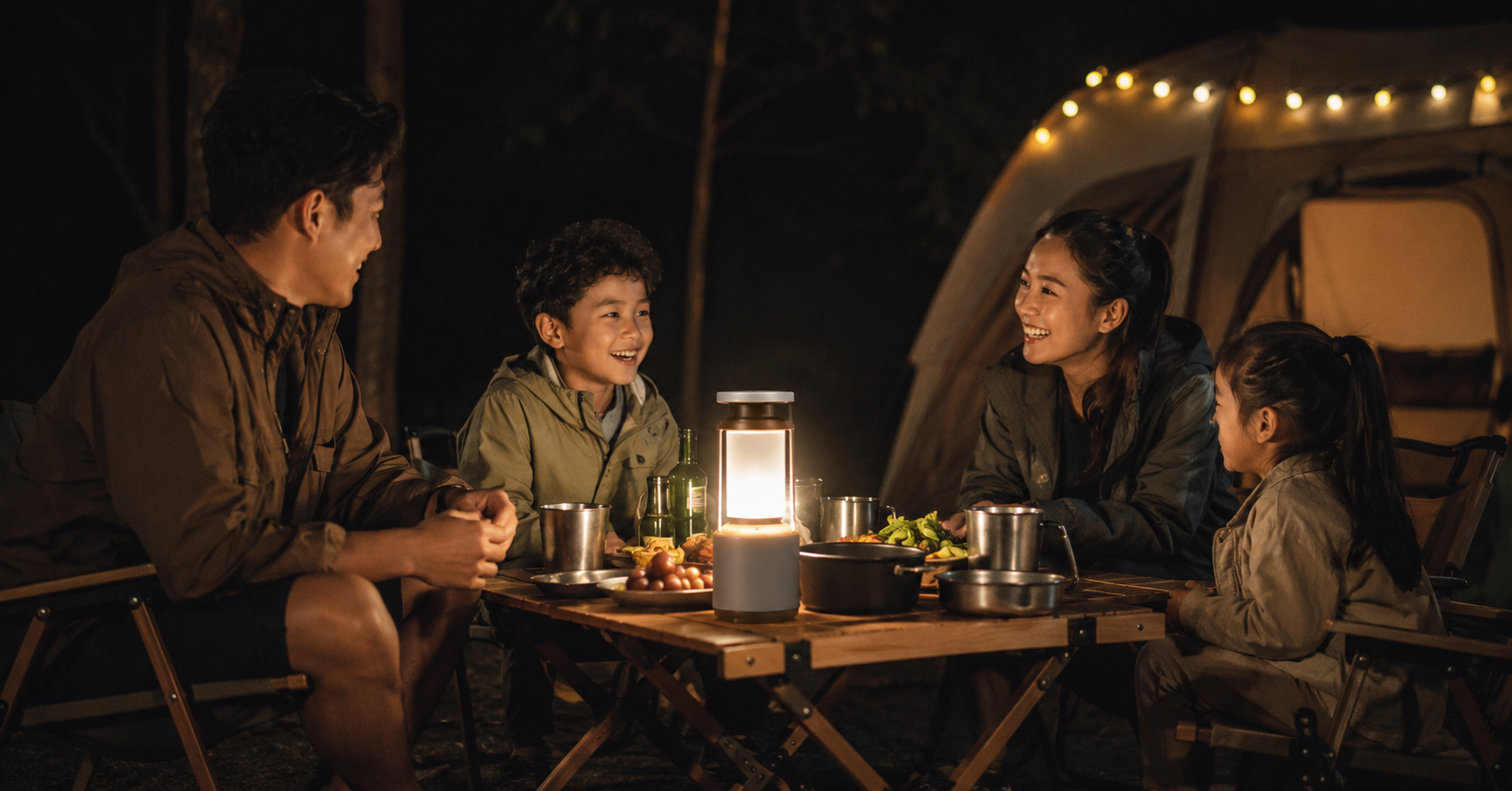
A strong supplier discusses use cases, not only part numbers. Camping, fishing, emergency lighting, and general outdoor work create different expectations. A product used beside a tent may need comfortable area light, while a fishing setup may be moved often and handled with wet or cold hands. The manufacturer should understand these situations and explain how the design supports them.
Consistent mold quality, stable assembly, practical connector protection, and clear configuration options are important for repeat orders. Private label buyers should also ask how branding, packaging, and retail presentation are handled, while avoiding unsupported performance claims. A supplier that cannot clearly explain internal construction, housing choices, or the power interface may create problems later.
It is also useful to compare specialization. Some factories can produce general lighting products, but fewer can deliver outdoor products that feel coherent in real use. If you are developing a private label range, prepare a short sourcing brief and contact Brightenlux through contact us or submit details via inquiry.
Common Sourcing Mistakes and Practical Order Questions
One common mistake is treating a rechargeable lantern as a simple accessory. In reality, it is an electromechanical product with housing, lighting, charging, and interface requirements. Poor assembly choices can increase returns even if the product looks attractive online. Another mistake is overvaluing a single visible feature, such as a rugged case or glowing diffuser, while overlooking port layout, cable handling, and internal assembly.
Buyers should also avoid assuming waterproof performance, certified ratings, exact runtime, or power-bank capacity unless the supplier provides documented information. The source data does not verify those details, so catalog language should stay conservative. Position the product around visible and confirmed strengths: portable camping and fishing lighting, charging convenience, and a rugged carry-oriented design.
Before placing an order, ask for sample photos from multiple angles, including the base, handle, ports, latches, and cable connection. Confirm the shipment contents, accessory configuration, branding options, and the difference between demonstration images and the actual commercial package. This final review helps reduce misunderstandings before production.
FAQ
Is this type of lantern only suitable for camping?
No. The visible product concept also fits night fishing, outdoor seating, temporary work lighting, and emergency backup use. Its appeal comes from combining area light with portable power convenience. Buyers should still define the main use case clearly so the catalog message does not promise more than the product can support.
Should buyers assume the lantern or power box is waterproof?
No. The available source information does not verify an IP rating or waterproof protection level. Outdoor buyers should request documented protection claims before relying on the product in wet environments. Without evidence, it is safer to describe the design as outdoor-oriented rather than making specific water-resistance statements.
Can the external power unit be marketed as a battery bank?
Possibly, but only if the supplier confirms the function, capacity, output, and included connections. The visible setup suggests a portable power source and phone connection, but exact details are not verified. B2B buyers should keep marketing language tied to confirmed specifications and actual package contents.
What should buyers ask a manufacturer before ordering samples?
Ask how the lantern housing is assembled, how the diffuser is produced, how the power interface works, and which accessories are included. Request photos of ports, latches, handles, and the base. A competent manufacturer should answer clearly and help buyers understand both the visible design and the practical use experience.