

Camping Lantern Supplier Guide for Buyers and Sourcing Teams
Choosing a camping lantern supplier is not only about finding a bright light at a competitive cost. For B2B buyers, the stronger question is whether the product is practical, safe enough for the intended retail channel, easy to explain, and consistent from sample to production. A compact rechargeable camping lantern may serve home backup, bedside lighting, patio ambience, tent use, and travel. That versatility is attractive, but only when the supplier can clearly confirm the charging design, product function, and user experience without relying on vague claims.
What Buyers Actually Need From a Camping Lantern Supplier
A camping lantern supplier is usually judged by the whole product, not by brightness alone. Sourcing teams need a lantern that feels stable in the hand, stands properly on a flat surface, charges in a way customers understand, and performs consistently across batches. A product that looks appealing in a photo can still create problems if the handle feels weak, the housing seems flimsy, or the USB port is unclear.
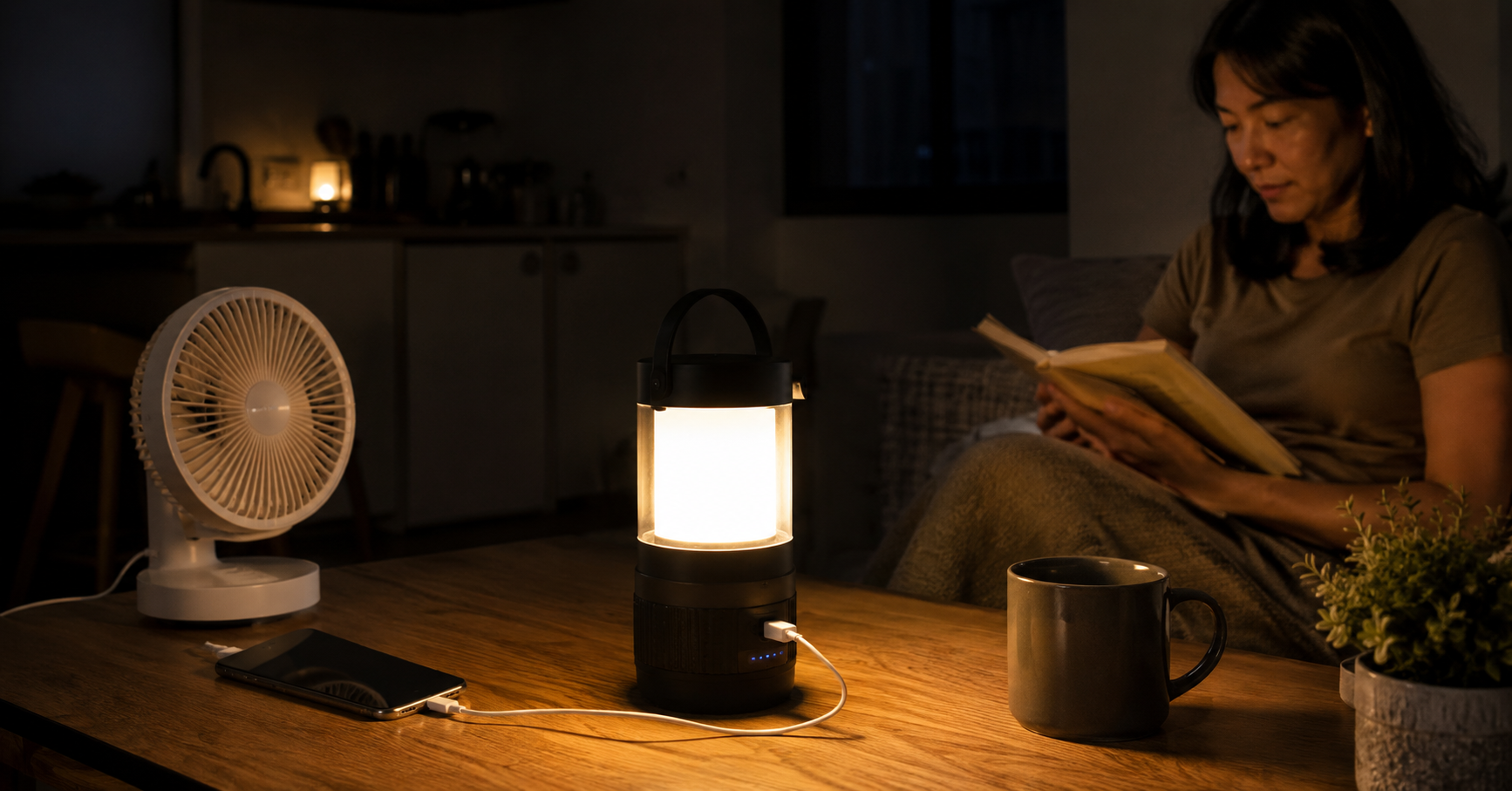
The product type discussed here sits between a household backup lamp and an outdoor accessory. The visible design suggests a compact rechargeable lantern with a cylindrical body, frosted diffuser, carry handle, and USB connection. Buyers should treat those as observable design points, not proof of every function. If a supplier describes the item as a USB camping lantern with power bank capability, confirm whether the USB port supports input, output, or both before using that claim in sales materials.
For buyers comparing portable lighting options, reviewing the wider Brightenlux product range can help clarify whether a tabletop lantern, camping light, or another LED category better fits the intended channel.
Why This Product Category Is Harder to Source Than It Looks
On the surface, a lantern appears simple. In practice, it is a small electrical product with several sourcing risks: battery behavior, heat management, switch feel, charging response, plastic quality, diffuser performance, and packaging instructions. A showroom sample may look acceptable but still disappoint customers later if the indicator is confusing, the charging port is awkward, or the base feels unstable during everyday use.
This is especially important for importers, distributors, and private-label teams. End users may tolerate small cosmetic imperfections on outdoor gear, but they are much less forgiving when a rechargeable light dies unexpectedly, charges in an unclear way, or feels unreliable during a power outage. A good rechargeable camping lantern should work first as a consumer product and then as an outdoor product. That mindset helps buyers avoid treating the item like a generic commodity light.
The strongest suppliers can explain what is confirmed and what should still be verified. Buyers should not assume exact lumen output, runtime, battery capacity, water resistance, or brightness adjustment unless the supplier provides written details.
Key Product Features Buyers Should Inspect
The visible lantern design has several practical features that deserve close inspection during sourcing. The compact upright form and integrated loop handle matter because users often move a lantern between a tent, table, vehicle, bedroom, or storage area. If the handle feels awkward or weak, the product becomes less convenient even when the light itself is acceptable.
The frosted diffuser is also important. Bare LEDs can feel harsh indoors or inside a small tent. Diffused light usually feels more comfortable for ambient lighting and casual reading, even when buyers do not focus on high output claims. Charging and indicators should be checked carefully. Small blue status lights may help users understand charging condition, but only if their meaning is clear in the manual and packaging.
| Feature | Buyer Check |
|---|---|
| Handle | Carry, hang, and move the lantern as a customer would. |
| Diffuser | Check whether the light feels soft in a dim room or tent. |
| USB port | Confirm input, output, or dual function in writing. |
| Indicators | Verify that charging status is easy to understand. |
If power-bank functionality is promoted, test that claim during sampling. Do not rely on appearance alone, because a USB connection may serve different functions depending on the design.
Where a Rechargeable Camping Light Manufacturer Adds Value
A rechargeable camping light manufacturer adds value by managing the fit between the battery, LED module, charging circuit, housing, diffuser, and controls. Those elements must work together. If the battery system and control board are poorly matched, the result may be inconsistent charging behavior, unstable user experience, or early product dissatisfaction. Marketing language cannot compensate for weak integration.
For a buyer, supplier value is mostly about repeatability. The approved sample should represent what later production units will feel and do. That means checking switch response, indicator visibility, charging port alignment, base stability, and the general assembly quality of the body. Injection-molded plastic housing is common in this category, so the visible finish should be examined for seam lines, surface texture consistency, and any wobble when the lantern is placed on a flat surface.
A supplier that understands these details can help buyers avoid unnecessary feature inflation. Sometimes a simple rechargeable lantern with a comfortable handle, soft area light, and clear charging design is more useful than a model with complicated modes that are harder for customers to understand.
Selection Criteria and Common Buyer Mistakes
When evaluating a camping lantern supplier, begin with the intended use. Is the product meant for tent lighting, tabletop ambience, emergency backup, bedside use, travel, or a hybrid of several applications? This answer affects the way buyers judge size, light diffusion, controls, packaging language, and customer expectations. A compact rechargeable lantern should not be evaluated like a heavy-duty work lamp.
One common mistake is focusing too quickly on price while ignoring the battery system and user experience. Rechargeable products depend on consistent charging behavior and clear instructions. If a supplier cannot explain the charging process, indicator meaning, and USB function clearly, that is a warning sign. Another mistake is over-specifying features that may not matter to the end user. Extra complexity can increase confusion in retail support and after-sales communication.
Buyers should also avoid repeating unverified catalog claims. If a sales sheet says the lantern doubles as a power bank, confirm the function during sample testing before promoting it. For category matching, buyers can compare related lighting items through Brightenlux products before deciding which product direction fits their market.
Practical Checks Before You Place an Order
Before placing an order, request samples and test them as an end customer would. Put the lantern on a table, carry it by the handle, charge it, use it in a dim room, and observe how comfortable the diffused light feels. If the lantern is intended for camping, evaluate it in a low-light setting where area illumination matters. If it is positioned as an emergency light, check whether it is easy to find and operate quickly.
Packaging also deserves attention. Small electrical products often require clearer labels than factories initially provide. End users should understand how to charge the unit, what the indicator lights mean, and whether the USB connection is input, output, or both. Unclear packaging can make a useful product feel unfinished and may increase support questions.
The visible lantern type is best suited to compact, portable, soft-area lighting situations: bedside use, living-room backup lighting, patio or terrace ambience, tent lighting, and travel. It is not the right category for buyers seeking heavy-duty work lighting or high-output task lamps. To discuss sourcing details or request clarification, buyers can contact Brightenlux through contact us or send a product request via inquiry.
FAQ for Camping Lantern Sourcing
What should buyers verify first with a camping lantern supplier?
Buyers should first verify the product’s intended use, charging method, USB function, and sample-to-production consistency. Observable design features are helpful, but they should not replace written confirmation. Exact output, runtime, battery capacity, water resistance, and power-bank function should only be used in sales claims when the supplier provides clear details.
Is a rechargeable camping lantern always suitable for outdoor retail?
Not automatically. A rechargeable camping lantern may be suitable for outdoor retail if its handle, diffuser, base, charging behavior, and packaging match customer expectations. Buyers should test samples in realistic low-light settings and confirm whether the product is positioned for camping, home backup, travel, or general portable lighting.
How can buyers confirm power-bank capability?
Buyers should ask whether the USB port is designed for charging input, device output, or both. The claim should be confirmed in writing and checked during sample testing. A visible USB connection does not prove power-bank function, and unverified claims can create customer complaints after launch.
What makes a supplier easier to work with in this category?
A practical supplier explains confirmed functions, known limitations, charging behavior, and intended applications without overpromising. They should support sample evaluation and provide clear product information for packaging and retail communication. For rechargeable lanterns, clarity and repeatability are often more valuable than a long list of unverified features.