

Camping Lantern Supplier Guide for Roadside Emergency Kits
Buyers often search for a camping lantern supplier when the real application is not camping at all. Roadside emergency kits, fleet vehicle packs, retail safety bundles, and preparedness products all need compact portable lighting. In a breakdown situation, a lantern helps the driver see nearby tasks, supports visibility around the stopped vehicle, and works alongside warning equipment. For B2B sourcing teams, the important question is not whether a product is called a camping lantern. The better question is whether the design is simple to deploy, practical to store, and suitable for repeated handling in real roadside conditions.
Why Roadside Buyers Search for Camping Lanterns
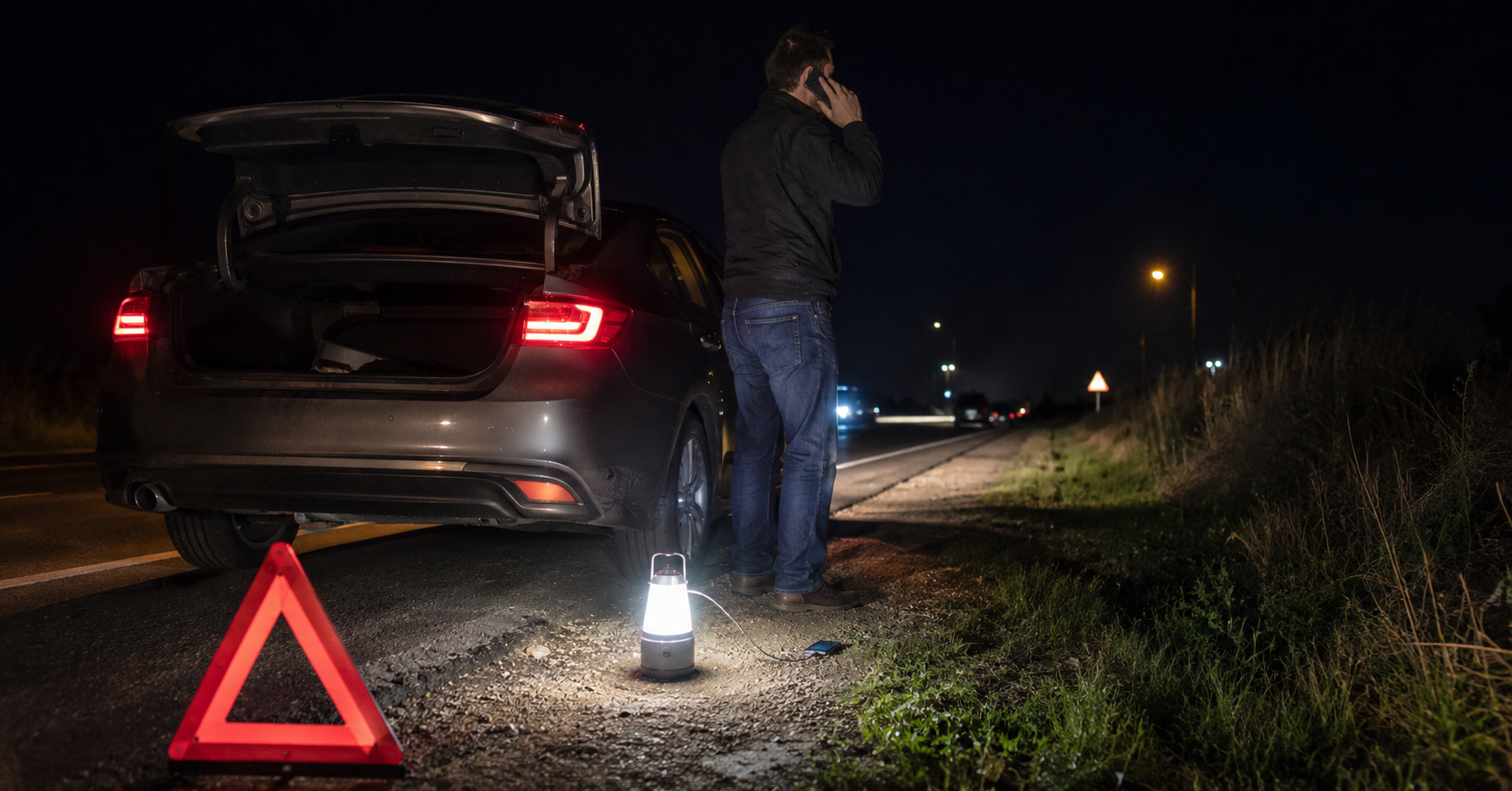
The term camping lantern supplier appears in sourcing searches because camping lights are commonly built for off-grid use. That same design logic fits emergency situations where users cannot rely on vehicle lighting, street lamps, or a phone alone. A portable LED lantern can be placed on the ground, carried by hand, or stored inside a compact vehicle kit. In the roadside scene, the lantern is part of a wider safety setup that may include a reflective warning triangle and a phone for assistance. The product is not decorative; it supports basic visibility and helps the driver stay organized. Buyers should therefore evaluate the lantern as emergency equipment, not merely as an outdoor accessory.
What Emergency Kit Use Reveals About Design
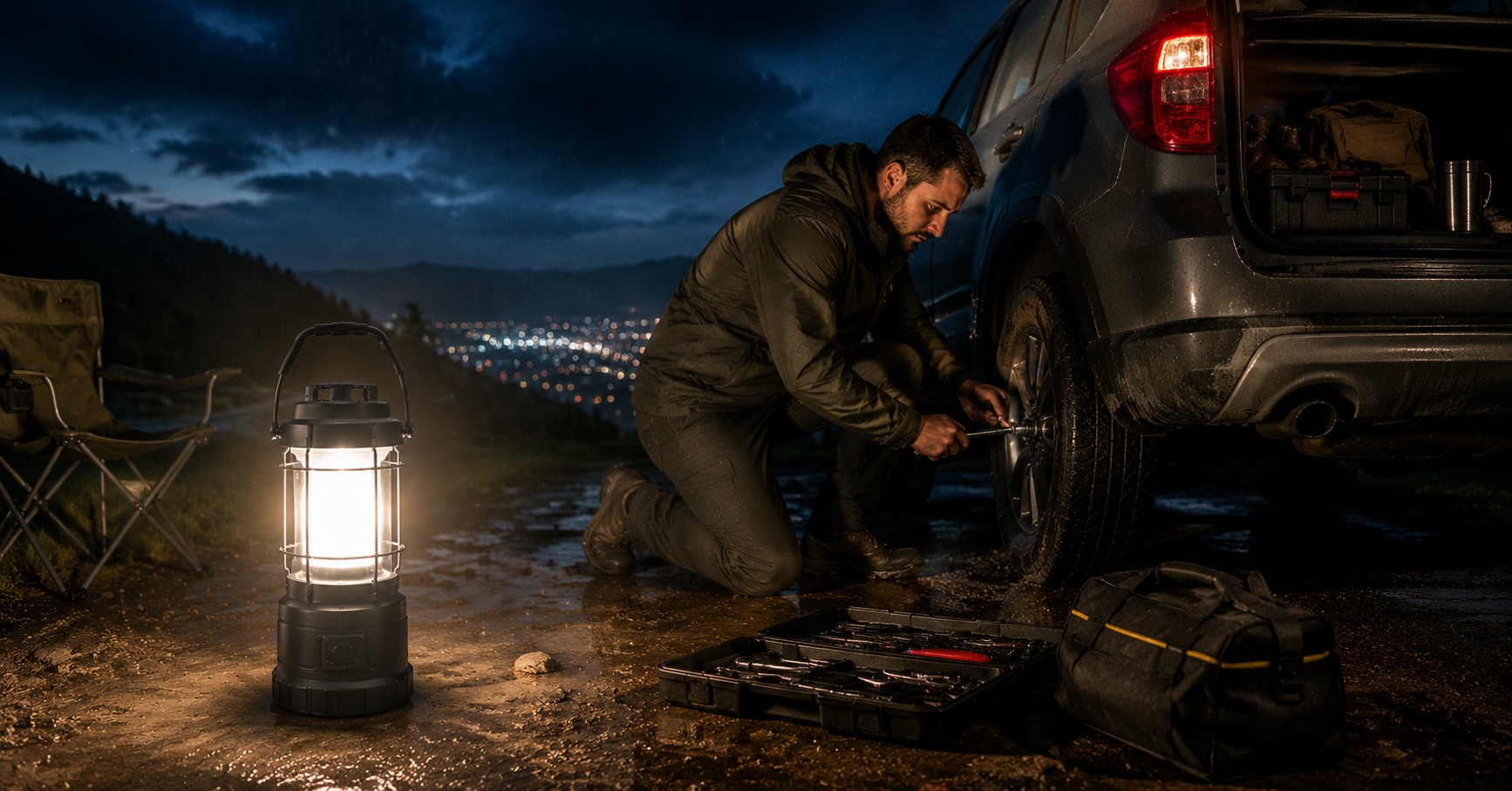
A roadside emergency setup exposes design issues quickly. The user may be stressed, working in poor light, holding a phone, or trying to move around a stopped vehicle. A lantern for this use should be easy to understand without instructions and stable enough to stand on asphalt, gravel, or a shoulder edge. A compact body, freestanding base, visible diffuser, and practical handle all matter. Brightness alone is not enough if the lantern tips over, blinds the user, or takes too long to position. Buyers should focus on how the product behaves during short, urgent tasks. The best choice is usually the one that feels obvious to use when conditions are inconvenient.
Product Type Comparison for B2B Programs
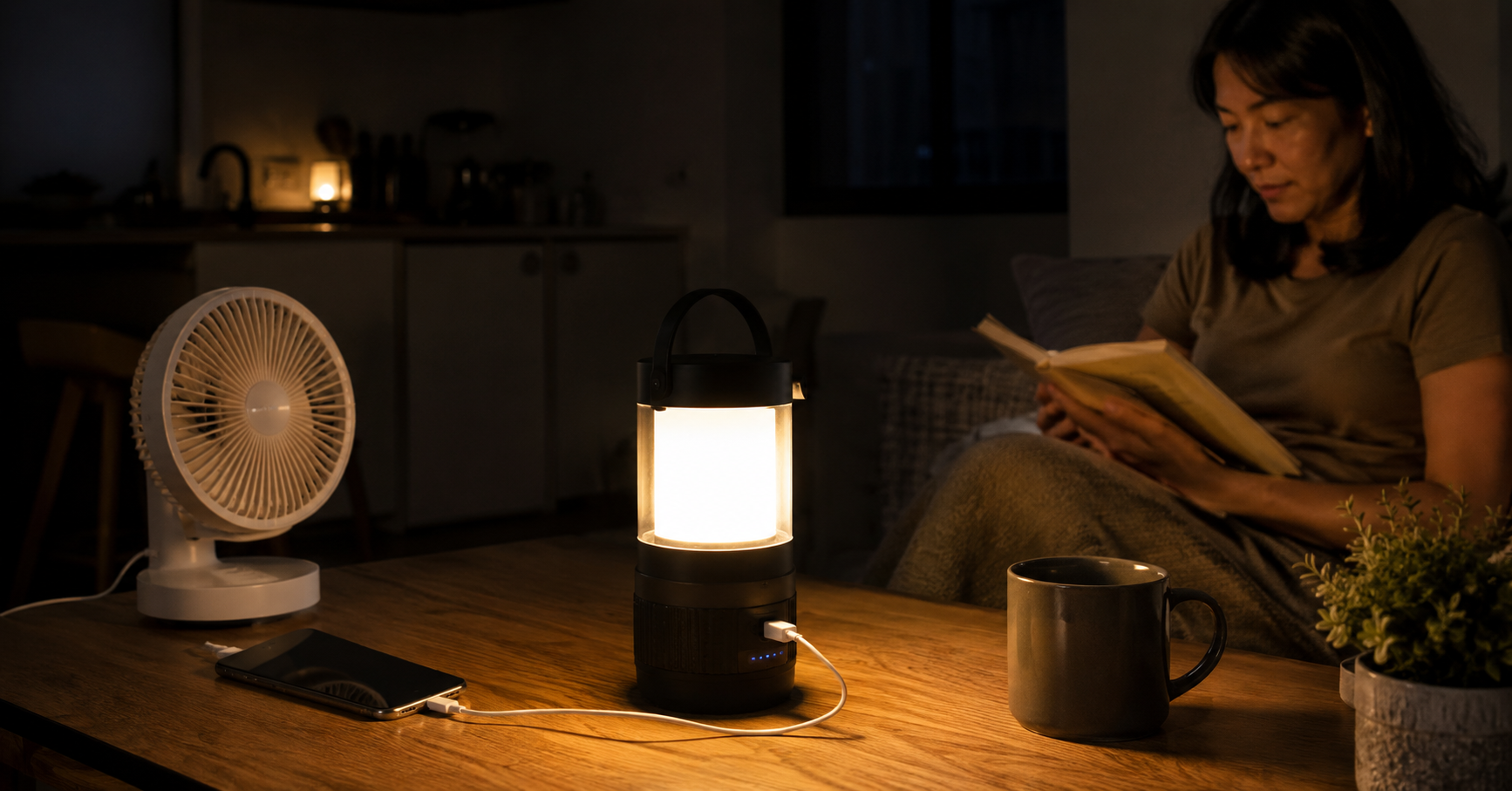
Not every sourcing program needs the most feature-heavy lantern. A simple portable lantern may suit seasonal retail kits or value-focused emergency bundles. A rechargeable camping light can be better for repeat use, fleet operators, or higher-positioned safety products. A power bank camping lantern adds phone-charging potential, which can be useful when the phone is part of the driver’s communication plan. However, the lighting function should remain the main priority. Extra functions add internal components, packaging claims, and supplier questions. Buyers should choose according to end-user need, storage conditions, and how the product will be explained at retail or in a kit.
| Lantern type | Best fit | Main sourcing caution |
|---|---|---|
| Simple portable lantern | Basic emergency kits | Battery replacement planning |
| Rechargeable camping light | Fleet or repeat-use programs | Charge status and storage behavior |
| Power bank camping lantern | Roadside kits with phone support | Lighting must remain dependable |
Selection Criteria Sourcing Teams Should Verify
When evaluating a camping lantern supplier, start with the power source. The visible product design alone cannot confirm whether a lantern is rechargeable, battery-operated, or built with another charging method, so buyers should ask directly. Next, define the lighting role: general area light, close-up task light, or emergency visibility support. The housing, diffuser, base, and handle should also be reviewed for repeated storage and transport inside a car kit, where items may be packed with tools, cables, and other safety products. A wide or stable base can be more valuable than a dramatic catalog photo. For available portable lighting options, buyers can review Brightenlux products and compare form factors against the intended kit layout.
Common Mistakes in Emergency Lantern Sourcing
One common mistake is buying on brightness claims alone. A lantern may look impressive in a catalog while still being awkward beside a broken-down vehicle. Beam spread, diffuser comfort, base stability, and switch accessibility often matter more in practice than a single headline claim. Another mistake is treating campsite use and vehicle emergency use as identical. Camp use may allow more size, more setup time, and more accessories. A roadside kit is tighter on storage and faster to deploy. Buyers also overlook user stress. If switches are hidden, charging routines are confusing, or the lantern requires careful positioning, the product may disappoint when the driver needs it most.
How Lanterns and Warning Triangles Work Together
A warning triangle and a portable lantern serve different roles in the same roadside system. The triangle helps mark the hazard and draw attention from a distance. The lantern supports close-range work near the vehicle, such as checking belongings, finding tools, or waiting with better visibility. Treating them as a pair helps buyers think beyond single-product sourcing. Packaging, storage layout, and perceived durability should be reviewed together. If one item appears fragile or difficult to repack, the full emergency kit loses credibility. For retail bundles or vehicle safety packs, the aim is not to overload the kit. The aim is to make each item easy to find, use, and store again.
Supplier Questions Before Commitment
Before placing an order, ask the supplier for samples, clear power specifications, and a practical explanation of the intended use. If the lantern is for a vehicle emergency kit, ask whether it sits securely on flat or slightly uneven ground. If it is rechargeable, ask how charging status is shown and how storage should be managed. If the model includes a charging output, ask what the function is designed to support and under what conditions. Packaging should also be discussed early because roadside kits often have fixed storage dimensions. Buyers preparing a program can contact Brightenlux to discuss application needs or send a project request through the inquiry page.
FAQ for Buyers
Is a camping lantern suitable for vehicle emergency kits?
Yes, if the design is compact, stable, and simple to use in low light. Many camping-style portable LED lanterns match roadside needs because they are made for off-grid lighting. Buyers should still evaluate storage size, base stability, handling, and the way the user turns the light on quickly.
Should I choose a rechargeable or battery-powered lantern?
The right choice depends on the program. Rechargeable units can suit managed fleets, repeat-use packs, or higher-positioned retail kits. Battery-powered models may be simpler for long-storage emergency kits, but replacement batteries become part of the plan. Buyers should match the power format to how the kit will be maintained.
Does a power bank feature always add value?
Not always. A power bank function can be useful in a roadside stop because the phone may be needed for calls, navigation, or assistance. However, charging capability should not distract from the lantern’s primary job. For emergency kits, dependable lighting remains the core requirement.
What should buyers confirm before ordering samples?
Confirm the power source, charging method if applicable, storage dimensions, basic handling, packaging requirements, and any documentation the supplier can actually provide. Buyers should also test whether the lantern stands securely and feels intuitive to operate, because real roadside use often happens under stress and poor visibility.