

OEM Headlamp Supplier Guide for Smarter Sourcing
Choosing an OEM headlamp supplier is not only about buying a compact LED light. For outdoor brands, distributors, and private-label teams, the decision affects comfort, assembly quality, charging convenience, and field usability. A headlamp may look simple, yet buyers notice problems quickly when the strap slips, the beam feels awkward, or the housing looks weak. Smarter sourcing begins with understanding how the product is built, how users will wear it, and whether the supplier can keep quality consistent as orders grow.
What B2B Buyers Need From a Headlamp Supplier
The first priority is consistency. A rechargeable LED headlamp includes several connected parts: molded housing, LED module, battery system, charging components, switch, and elastic strap. If one part is poorly handled, the sample may still look acceptable online, but the final user may experience discomfort or unreliable operation. A capable OEM headlamp supplier should explain the product structure in practical language, not just promote a finished appearance.
Buyers should also look for manufacturing awareness. A compact front-mounted lamp is useful because it follows the user’s line of sight during camping, hiking, caving, trail walking, emergency preparation, or hands-free repair work. However, compact housing also limits internal space. That affects battery arrangement, assembly decisions, and overall product balance. The right supplier helps buyers understand these trade-offs before specifications are confirmed.
Product Structure Points to Compare Early
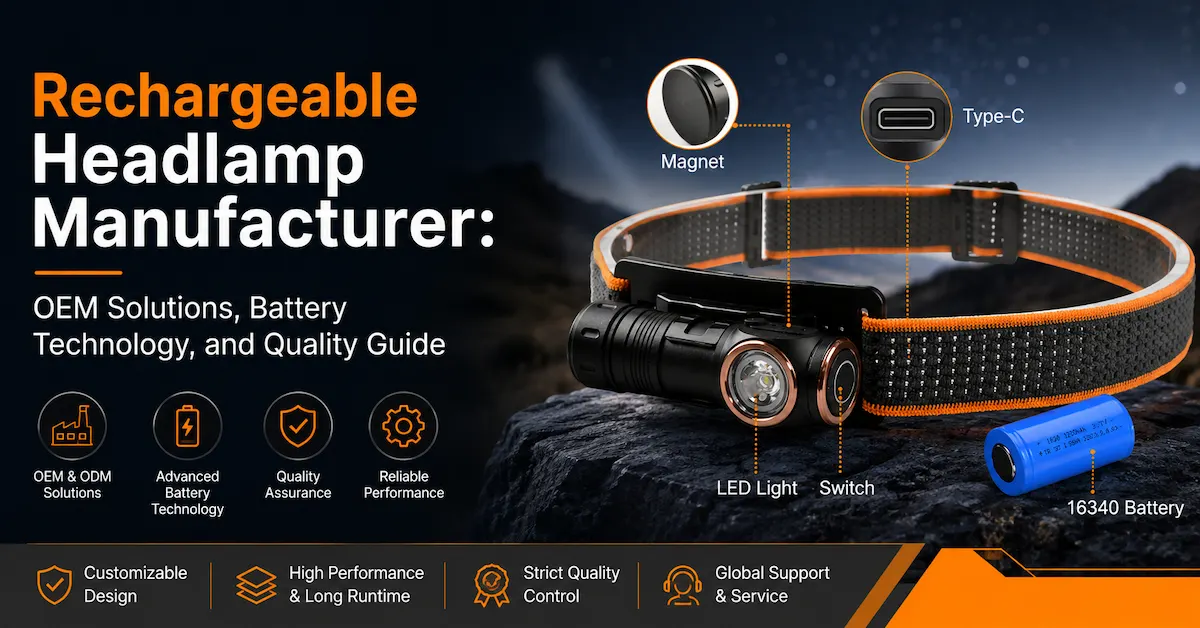
A headlamp’s value comes from how well its visible and hidden components work together. The housing appears to be molded plastic with a dark or matte finish, while the strap is an elastic textile or webbing style. These are common choices because plastic helps keep the unit wearable, and an elastic band helps maintain position during movement. Still, the practical question is whether each choice matches the product’s intended use.
| Area | What to Review |
|---|---|
| Housing | Shape, finish, front module stability, and assembly fit |
| Strap | Elastic feel, stitching, width, buckle adjustment, and comfort |
| Rechargeable system | Charging interface, battery arrangement, and user instructions |
| Beam behavior | Forward direction and suitability for navigation or task lighting |
Before placing an order, buyers can compare related lighting options through the Brightenlux product range to clarify which headlamp style fits their channel.
Rechargeable Function Should Be Treated as a System
A custom rechargeable headlamp should not be evaluated by the word “rechargeable” alone. The supplier should be able to discuss the charging interface, battery arrangement, and basic safety considerations without making unsupported claims. If some details are still under development, that can be normal. What matters is whether the supplier communicates clearly and documents what will be used in production.
Rechargeable lighting is attractive for many outdoor and retail programs because it reduces disposable battery handling and suits regular use. However, buyers should think from the end user’s perspective. Will the product be easy to charge, store, and understand? Are instructions clear enough for non-technical customers? A rechargeable feature that seems convenient in a product brief can still create service issues if the charging method is awkward or poorly explained.
Where OEM Headlamp Sourcing Often Goes Wrong
Many sourcing mistakes begin with too much focus on the outer shape. A headlamp can look clean in a catalog image but still be difficult to wear, hard to adjust with gloves, or inconvenient when packed in a bag. Outdoor accessories are judged during real use, not during a short visual inspection. A product that is technically complete may still feel annoying to the customer.
Another issue is assuming compactness automatically means better quality. A smaller housing improves portability, but it also compresses the available space for electronics and the battery system. Buyers should not ignore those limitations. Visual similarity can also mislead teams. Two headlamps may look nearly identical in photos while differing in internal layout, strap quality, switch feel, and packaging sturdiness. For a private-label program, those differences directly affect brand perception.
How to Evaluate an OEM Headlamp Supplier
Practical questions often reveal more than polished product descriptions. Ask how the housing is produced, how the strap is assembled, and which components are most likely to vary between production runs. If the supplier can describe injection-molded housing, electronic assembly, and strap fabrication in plain terms, that suggests a stronger understanding of the product as a manufacturing system.
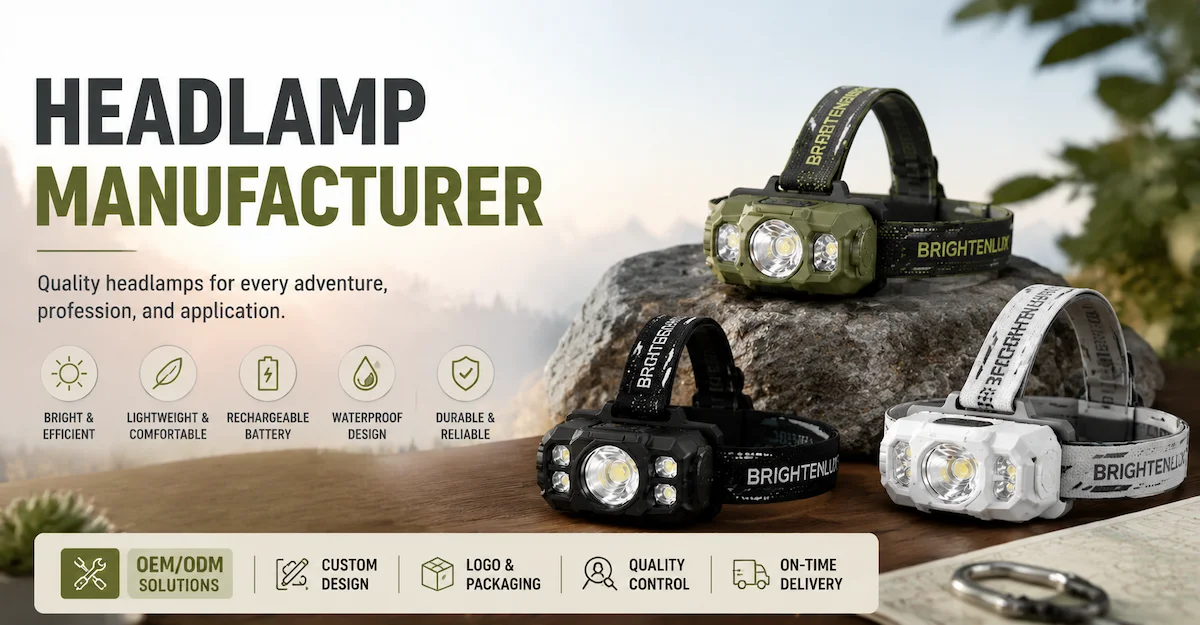
Customization should also be discussed realistically. Buyers may request color changes, logo placement, strap style, packaging updates, or interface details. These are common OEM requests, but they should be managed carefully. If every change is treated as effortless, quality may drift. If every request is rejected, development becomes too rigid. A useful supplier is flexible but disciplined. For project-specific questions, procurement teams can contact Brightenlux before locking the specification.
Use Case Matters More Than Generic Specifications
Headlamps serve different user groups even when the basic product type looks similar. Campers often value comfort and convenience. Hikers and cavers need secure wear and directional light. Maintenance users want hands-free illumination that stays in place while working. Emergency-preparedness buyers may prefer straightforward operation and easy storage. The best specification is the one that supports the main use case instead of collecting unnecessary features.
This is where a custom rechargeable headlamp can be more useful than a standard selection. For outdoor retail, presentation, portability, and comfort may be important. For repair work or emergency supply, simple operation and repeatable function may matter more. A supplier that understands market differences can help narrow the product brief, reduce confusion, and avoid adding features that do not improve the user experience.
Buyer Cautions Before Approving a Sample
Do not approve a headlamp only because it feels comfortable for a few seconds. Wear it, adjust the strap, and imagine how customers will use it outdoors or during repair work. If glove operation matters, test adjustment and switching with gloves. Check whether the front module sits securely and whether the band lies comfortably against the head.
Buyers should also avoid filling gaps with assumptions. If the supplier cannot confirm a detail, it should not be silently added to the order sheet. Battery capacity, lighting modes, charging method, water resistance, and impact resistance may all be important, but they must be documented rather than guessed. When specifications are ready for review, sourcing teams can send details through the Brightenlux inquiry page.
FAQ for OEM Headlamp Sourcing Teams
Is a rechargeable headlamp always the better option?
Not always. Rechargeable models are attractive for repeat outdoor use and reduced disposable battery handling, but the right choice depends on the user environment, sales channel, storage conditions, and charging expectations. Some programs benefit strongly from rechargeability, while others may prioritize simple operation and easy replacement.
What makes an OEM headlamp supplier reliable?
A reliable supplier communicates clearly, understands product structure, and supports repeatable manufacturing. They should be able to discuss housing, strap assembly, charging design, beam behavior, and likely user issues without vague promises. This helps buyers reduce uncertainty before a sample becomes a larger sourcing program.
Can branding and packaging changes be requested?
Usually, branding and packaging requests can be discussed during OEM development. Logo placement, carton design, strap printing, and presentation updates may be easier than structural changes, but every request should be reviewed against production consistency. The goal is customization without creating avoidable quality variation.
What should buyers define before contacting a supplier?
Buyers should define the main use case, expected sales channel, preferred product appearance, and the few functional details that matter most. A clear brief helps the supplier match materials, strap design, rechargeable setup, and beam direction to real user needs instead of relying on generic specifications.