

Lightweight Headlamp: What Buyers Should Look For
A lightweight headlamp may look like a simple accessory, but B2B buyers know the category depends on more than a lamp body and an elastic strap. The product must stay stable, point where the user is looking, and remain comfortable during real activity. For outdoor retail, emergency kits, roadside assistance, and general utility channels, the right choice is not just the brightest-looking option. It is the model that supports hands-free work without becoming distracting, awkward, or unnecessarily complex.
Why a Lightweight Headlamp Matters in the Field
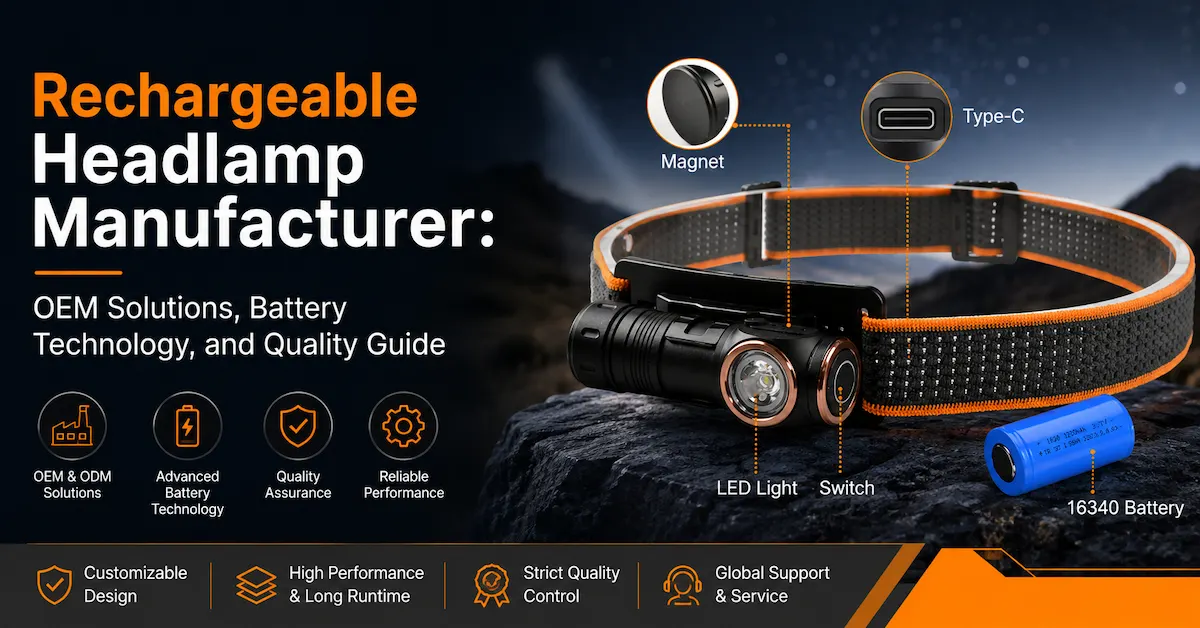
A headlamp is valuable because it keeps both hands available while placing light in the user’s natural line of sight. That matters during night hiking, campsite setup, backpacking, mountaineering, and roadside repair, where a handheld torch can interfere with balance or tool use. A compact front-mounted LED housing with an elastic strap is a sensible format because it directs light forward and moves with the wearer’s head. The visible product shows a black lamp housing and textile strap, suggesting a practical hands-free design for dark conditions. However, buyers should avoid assuming unseen details. The image may suggest rechargeability, but the charging method is not visible, so power configuration must be confirmed before any sourcing decision.
What Buyers Are Really Comparing
When sourcing a lightweight headlamp, buyers often begin with visible brightness, but the more useful comparison is how well the product solves the user’s task. Beam quality, comfort, power convenience, and build confidence all affect whether the lamp will be worn or abandoned in a pocket. A focused white beam can support forward visibility on a trail or direct light into a repair area. Comfort determines whether users keep it on during longer activities. Power design affects daily convenience, emergency readiness, and customer expectations. Buyers reviewing options across outdoor or utility lines can start by comparing formats on Brightenlux LED lighting products, then narrow choices by use case rather than appearance alone.
What the Visible Structure Tells You
The shown headlamp appears to use a compact black lamp unit mounted at the forehead on an elastic strap. This familiar structure supports hands-free use and allows the beam to follow head movement. The low-profile front housing can help reduce the top-heavy feeling that some users dislike, while the elastic webbing allows adjustment across different head sizes or hats. The face of the lamp projects a concentrated white beam, which is more suitable for forward visibility than broad area lighting. From a sourcing perspective, the likely construction involves a molded plastic enclosure, LED module, battery area, and strap assembly. Those elements are common, but mold finish, attachment points, balance, and assembly quality still decide the user experience.
Selection Criteria for Sourcing Teams
Engineering, purchasing, and product teams should evaluate a lightweight headlamp as a complete wearable tool. Weight matters, but it should not be judged separately from stability, strap quality, beam direction, and power clarity. A unit that feels light for a few minutes can still irritate the forehead after extended wear. A lamp that looks compact may still wobble during active movement if the strap or housing balance is poor. Before discussing packaging, branding, or volume plans, buyers should define the target user scenario and inspect samples under realistic conditions. The following compact checklist helps teams focus on details that can be observed or verified without relying on unsupported performance claims.
| Criterion | What to Check |
|---|---|
| Comfort | Forehead pressure, strap feel, stability during movement |
| Beam Direction | Forward visibility and natural alignment with the wearer’s sightline |
| Power System | Whether the unit is rechargeable, battery-based, or another configuration |
| Housing | Plastic enclosure quality, fit, and resistance to routine handling |
| Strap Assembly | Elastic recovery, stitching, attachment points, and adjustment range |
Common Mistakes When Sourcing This Category
One common mistake is treating brightness as the only meaningful buying factor. A powerful-looking beam is not enough if the lamp slips, presses uncomfortably, or points poorly during movement. Another mistake is assuming rechargeable models are automatically the best choice. They can be convenient for frequent users, but the charging method, battery access, and long-term expectations should be clear. Buyers also sometimes overlook the strap because it seems like a minor accessory. In practice, the strap is part of the core product experience. If it stretches, twists, or irritates the wearer, customer satisfaction drops even if the lamp body itself looks acceptable. Clear use-case definition prevents many of these errors.
Best-Fit Channels and Use Cases
This type of lightweight LED headlamp fits channels where simple hands-free lighting is easy to understand and valuable in practice. Outdoor retail buyers may consider it for night hiking, camping, backpacking, and mountaineering. Emergency-preparedness distributors may evaluate it for kits where users need both hands free in dark conditions. Utility and roadside-assistance channels may value the same format for repair work or inspection tasks. The compact head-mounted design is its central advantage: it places directional light where the user is looking without occupying a hand. For private-label and distribution teams, the product is also straightforward to explain, but that does not remove the need to verify construction, comfort, power configuration, and intended environment.
How to Evaluate Samples Before Ordering
Sample review should imitate real use as much as possible. Put the headlamp on, adjust the strap, walk with it, bend down, and check whether the housing stays stable. Inspect the plastic enclosure for clean molding and secure assembly. Stretch and release the strap to judge basic recovery, then look at stitching and attachment points. Test beam direction by using the lamp in a dark area and observing whether the light naturally falls where the wearer looks. Confirm power details directly with the supplier instead of relying on assumptions from photos. If your team needs clarification before specification review, contact Brightenlux through the contact page with the intended channel and use scenario.
Practical Next Step for Buyers
The best sourcing sequence starts with the user scenario, not the catalog image. Decide whether the lamp is meant for camping, hiking, emergency storage, roadside repair, or general utility use, then evaluate whether the structure supports that need. Ask for samples, check comfort over time, confirm beam direction, and verify the power system before moving to packaging or branding discussions. A professional headlamp supplier should communicate clearly about known product details and avoid filling information gaps with unsupported claims. When your team is ready to compare options or request more product information, you can send a requirement through Brightenlux inquiry.
FAQ
Is a lightweight headlamp always better than a heavier one?
Not always. The goal is controlled weight with stable performance, not simply the lowest possible weight. If a lamp is too minimal, it may feel less durable or less comfortable in real use. Buyers should consider balance, housing strength, strap quality, and wear comfort together.
Should buyers prioritize rechargeable headlamps?
Rechargeable models can be attractive for frequent users, but buyers should confirm the actual charging method before making decisions. For emergency storage or occasional use, other power configurations may still be appropriate. The right choice depends on user habits, channel expectations, and maintenance convenience.
What should buyers ask a headlamp supplier first?
Start with construction and use-case questions. Ask about housing material, strap design, power configuration, beam direction, and intended applications. A reliable supplier should explain what is confirmed and what still needs verification, especially when details are not visible from product photos.
Why does strap quality matter so much?
The strap determines whether the lamp remains wearable during movement and longer use. If it loosens, twists, stretches too quickly, or irritates the wearer, the product experience suffers. Even with a useful beam, poor fit can cause users to stop wearing the headlamp.