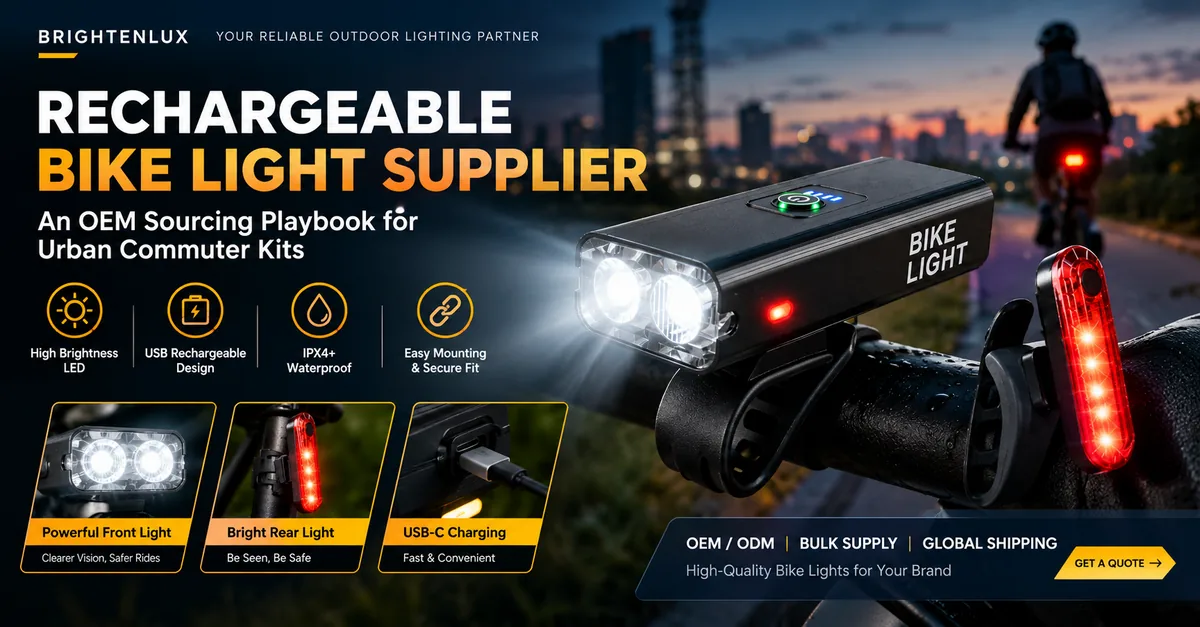


Quick Answer: A reliable custom LED work light supplier should help buyers control the complete sellable product—not just the light itself. Before wholesale production, importers should confirm the approved battery, charging cable, mounting accessories, retail artwork, barcode, documentation, and carton configuration. Each variation should have an identifiable specification and acceptance procedure. This prevents discrepancies between product samples, factory quotations, online listings, and delivered retail packages.
A custom LED work light may perform perfectly during engineering evaluation and still fail to meet a retailer's purchasing requirements.
The problem is not always brightness, battery runtime, or mechanical durability.
Sometimes a customer opens the package and discovers that the advertised charging cable is missing. A distributor receives two visually identical cartons with different battery configurations. An online retailer lists a product under the wrong barcode, or an importer discovers that the battery documentation does not match the supplied equipment.
These problems can create avoidable returns, relabeling costs, delayed deliveries, and disagreements between buyers and suppliers.
For automotive equipment distributors, industrial supply companies, and private-label lighting brands, the solution is to treat packaging, accessories, and product identification as controlled parts of the OEM manufacturing project.
This guide explains how to establish that control when working with a custom LED work light supplier, using real Brightenlux portable lighting products as reference examples.
1. Why Does Retail Pack-Out Accuracy Matter When Sourcing Custom LED Work Lights?
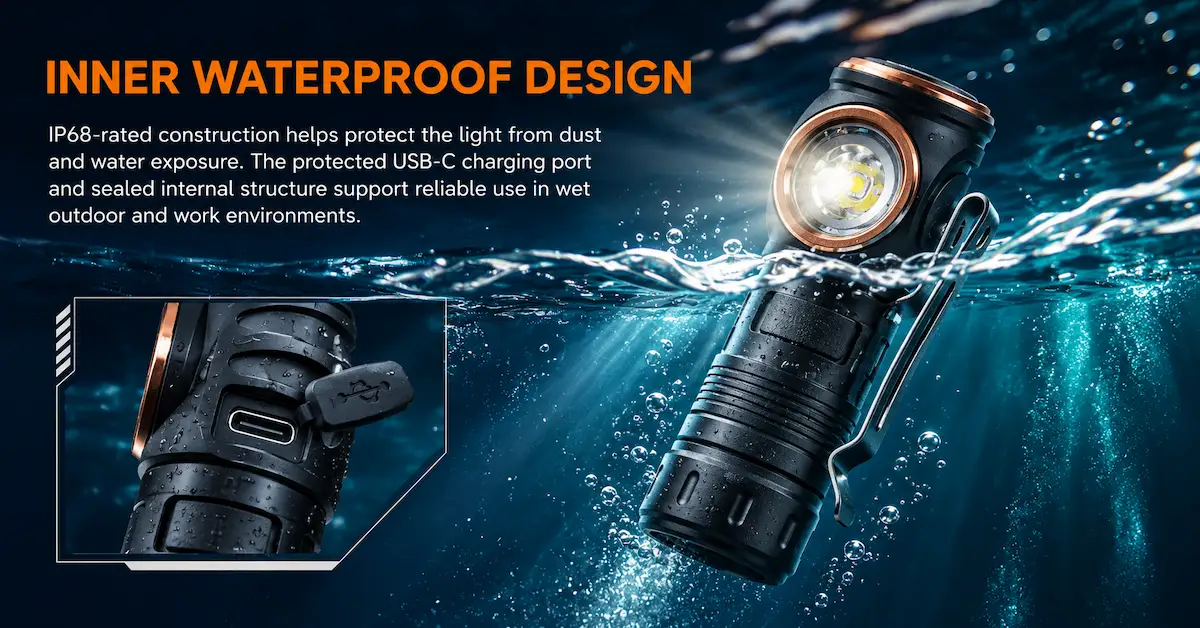
A retail-ready LED work light is a complete commercial unit.
It includes the agreed physical light, its power configuration, approved accessories, product markings, instructions, and packaging.
The buyer is purchasing that complete configuration—not merely the lamp body.
Automotive tool distributors
Automotive distributors commonly sell portable lighting through professional tool channels, repair equipment catalogues, and retail outlets.
Their customers need to know whether a light includes a rechargeable battery, charging cable, magnetic mount, or additional accessories.
Incorrect pack contents can lead to complaints even when the lighting product itself functions correctly.
Industrial maintenance suppliers
Industrial supply companies may provide portable lighting to maintenance teams, facilities, and equipment service businesses.
They often require consistent model identification and predictable replacement ordering.
A change in the charging accessory or battery configuration can affect how equipment is deployed and supported.
Private-label lighting brands
Private-label brands need product listings, cartons, manuals, and actual goods to communicate the same specifications.
For example, advertising a rechargeable work light as "battery included" creates a clear customer expectation.
If the factory quotation covers the lamp without a battery, that difference must be resolved before packaging approval.
E-commerce and hardware retailers
Retailers depend on product identifiers and accurate inventory information.
Even when two configurations look similar, different accessories or battery inclusion may affect what customers believe they are buying.
A suitable OEM program should therefore establish a clear relationship between the product configuration and its commercial identity.
2. What Customization Should Buyers Request From an LED Work Light Supplier?
Customization can range from simple branding to substantial engineering changes.
The scope determines the documentation, sampling, cost, and production controls required.
Private-label customization
Typical requests may include:
- Logo marking.
- Product color or approved finish.
- Retail packaging and artwork.
- User manuals and language versions.
- Product identification labels.
- Barcode placement.
- Accessory packaging.
These changes may be possible without modifying the underlying lighting design.
However, even a packaging-only project requires accurate information about the product and its included components.
Configuration customization
A buyer may request a particular battery, charging arrangement, lighting mode, or mounting accessory.
Such changes can influence the approved product specification.
For example, substituting a battery may affect operating time, weight, charging behavior, documentation, and transportation requirements.
New product development
A completely different work-light housing, optical arrangement, charging system, or mounting mechanism may require engineering assessment, tooling, and new validation.
The manufacturer should distinguish these activities from straightforward private-label work.
Customization Scope Comparison
| Customization Level | Typical Changes | Main Approval Requirement |
|---|---|---|
| Private Label | Logo, labels, packaging | Artwork and physical sample approval |
| Accessory Configuration | Cable, strap, clip, holder | Complete pack-out specification |
| Battery Configuration | Approved cell or pack selection | Electrical and shipping review |
| Functional OEM | Lighting modes, optical system, charging | Engineering and product validation |
| New ODM Development | Housing, mechanical design, electronics | Design feasibility, tooling and testing |
Procurement recommendation: Ask the supplier to mark each requested change as standard, configurable, engineering-dependent, or unavailable.
This helps prevent an attractive product concept from becoming an inaccurate quotation.
3. Which Brightenlux Lighting Platforms Can Support OEM Evaluation?
Ningbo Brightenlux Electric Appliance Co., Ltd. offers portable LED lighting products and publicly describes OEM/ODM outdoor lighting services.
Its product range includes rechargeable flashlights and headlamps with different battery and accessory arrangements.
These products are useful references for understanding how packaging requirements change between configurations.
However, the following examples are documented portable lighting models, not a confirmed complete range of dedicated COB workshop lights.
Brightenlux Product Configuration Comparison
| Product | Published Configuration | Packaging Question |
|---|---|---|
| BT-FL8078 Right-Angle Flashlight | 1000lm, SST25 LED, rechargeable 16340 battery, Type-C charging, headstrap and mount | Which accessories are included in the approved retail kit? |
| BT-FL8034 Rechargeable Flashlight | 1000lm, OSRAM P9, 18650 battery platform, Type-C charging | Is the rechargeable battery included or excluded? |
| 1000lm SST40 Adjustable-Head Flashlight | Adjustable lighting head, magnetic tail, Type-C charging | Which configuration and mounting accessories are approved? |
These are manufacturer-published reference specifications, not independently verified product measurements or guarantees of customization availability.
BT-FL8078: Multi-accessory portable lighting
The Brightenlux BT-FL8078 Right-Angle Rechargeable Flashlight provides a practical example of a product with multiple potential uses.
Its public description identifies a rechargeable battery, Type-C charging cable, headstrap, and plastic mounting accessory.
For a private-label project, the buyer should verify which items will be included in the exact ordered configuration.
The retail box, manual, barcode record, and packing checklist should all correspond to that configuration.
BT-FL8034: Battery inclusion needs clarification
The Brightenlux BT-FL8034 Rechargeable Flashlight is published as a Type-C rechargeable flashlight using an 18650 battery platform.
Its product information indicates that the battery is not included by default.
This illustrates a common purchasing distinction:
A product described as rechargeable does not necessarily include a rechargeable battery in every sales configuration.
The buyer should confirm battery inclusion before approving the retail copy or carton artwork.
Adjustable-head lighting
The Brightenlux SST40 Adjustable-Head Flashlight demonstrates another portable lighting architecture suitable for inspection-related evaluation.
For OEM buyers, the relevant questions concern the exact battery, charging cable, mounting components, and approved product revision.
A custom work-light program should start with a verified product configuration rather than assume features can be transferred between different models.
For dedicated COB work lights, request Brightenlux's current available models and detailed product specifications before preparing a commercial quotation.
Explore documented lighting platforms
Start with the actual model and confirm which battery, cable and accessories are included.
4. How Should Buyers Define Retail Work Light Configurations?
Different sales channels may need different product configurations.
However, increasing the number of variants also creates additional purchasing and inventory-management requirements.
A useful approach is to define each sellable configuration before creating its packaging.
Example Retail Configuration Matrix
| Proposed Configuration | Contents | Intended Channel | Main Control |
|---|---|---|---|
| Standard Lighting Pack | Approved light, specified basic accessories | General hardware retail | Contents and price clarity |
| Rechargeable Pack | Approved light, battery where included, charging cable | E-commerce and outdoor retail | Battery and charging information |
| Maintenance Accessory Pack | Approved light plus compatible mounting accessories | Industrial tool distributors | Accessory compatibility |
| Private-Label Retail Pack | Approved product and branded packaging | Brand owners and retail chains | Artwork, barcode and model identity |
These are hypothetical packaging options for planning purposes. They are not confirmed Brightenlux stock-keeping units or standard factory bundles.
Avoid unnecessary variants
A distributor may be tempted to create separate product versions for every accessory combination.
Before doing so, ask:
- Does the configuration solve a different customer problem?
- Will customers understand the difference?
- Does the variant require a different inventory identifier?
- Will the supplier be able to maintain the specified components?
- Can the expected purchasing volume justify the additional packaging and administrative cost?
A smaller number of clearly differentiated configurations can be easier to manage than many nearly identical products.
Keep the physical product and commercial configuration separate
The same lamp body may be used in more than one sellable package, subject to technical and commercial approval.
However, each sellable configuration must have accurate contents and identification.
For example, a battery-included pack and battery-excluded pack should not be treated as interchangeable simply because the lamp body looks identical.
5. How Do You Build a Pack-Out Specification for OEM Work Lights?
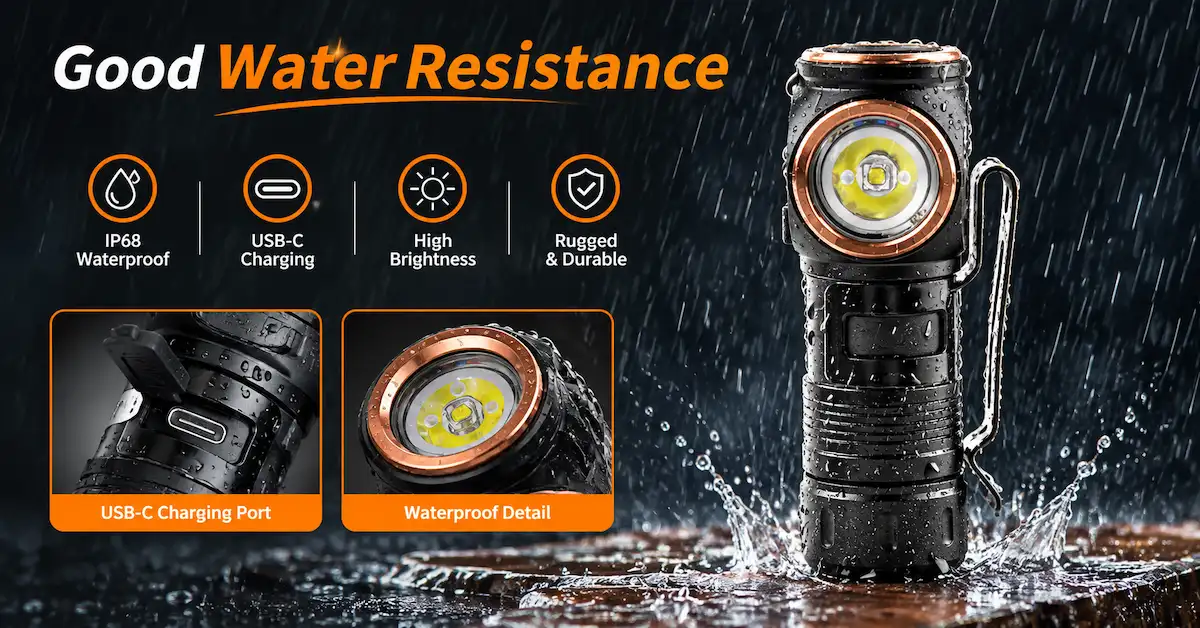
A pack-out specification states exactly what should be inside the finished package.
It should be approved before bulk production and used during final inspection.
Recommended Pack-Out Control Table
| Control Field | Required Information | Verification Method |
|---|---|---|
| Product identity | Model and revision | Label and approved sample |
| Light source | Approved configuration | Product specification |
| Battery | Exact type and inclusion status | Component identification |
| Charging cable | Type and quantity | Physical count and compatibility check |
| Charger | Included or excluded | Packing list and artwork |
| Mounting accessories | Approved clip, strap, holder or stand | Accessory checklist |
| Instructions | Correct language and revision | Printed document inspection |
| Logo | Approved location and appearance | Golden sample |
| Retail barcode | Correct product identifier | Barcode scan and database check |
| Retail carton | Approved artwork and structure | Physical packaging approval |
| Master carton | Correct quantity and identification | Carton packing inspection |
The exact requirements depend on the product and sales channel.
Use a single approved configuration record
The supplier and buyer should work from a controlled document that identifies:
- Sellable product code.
- Physical product revision.
- Approved component list.
- Accessory quantities.
- Packaging artwork revision.
- Barcode and inventory identity.
- Required inspection records.
This helps purchasing, production, quality control, and marketing refer to the same product.
Why photographs alone are insufficient
A product photograph can help demonstrate an accessory arrangement.
However, it may not show whether a battery is installed, which charging cable is included, or whether a product version has changed.
A photograph should support the approved specification rather than replace it.
Make every retail kit repeatable
Send the approved pack-out list, label artwork and sample requirements when requesting a quote.
6. When Does a Custom Work Light Need a New Retail Barcode or GTIN?
Product identification is particularly important when supplying retailers and online marketplaces.
A Global Trade Item Number (GTIN) identifies a trade item in commercial systems.
It helps retailers and supply-chain partners distinguish products that may have different configurations or purchasing characteristics.
According to the official GS1 guidance on changes requiring a new GTIN, certain product changes require a new identifier, including changes relevant to consumer purchasing decisions or supply-chain handling.
For custom LED work lights, this can matter when changing the sellable configuration.
Example: Battery-included versus battery-excluded products
Consider two hypothetical retail configurations:
Version A: Rechargeable work light with battery and charging cable.
Version B: The same basic light without an included battery.
Customers purchasing these versions receive different contents.
The brand should review the applicable GS1 GTIN rules and retailer requirements to determine the appropriate product identifiers.
Example: Accessory bundle changes
A light sold with a magnetic mounting accessory may represent a different sellable trade item from a version without it.
The relevant identification decision depends on the actual configuration and GS1 rules.
Not every cosmetic or manufacturing change automatically requires a new GTIN.
Barcode Approval Checklist
Before printing retail packaging, verify:
- Correct GTIN assignment where applicable.
- Product code and description.
- Barcode symbol and print quality.
- Scan readability on the physical carton.
- Corresponding retailer or marketplace record.
- Consistency between the barcode and approved pack contents.
- Correct identification on master cartons where required.
Important: The factory can help apply approved artwork and barcode labels, but responsibility for GTIN allocation and product-master data should be clearly established between the brand and its trading partners.
7. What Battery and Charging Information Must Be Confirmed Before Export?
Rechargeable work lights can involve different lithium battery configurations.
For overseas importers, battery-related decisions affect more than product runtime.
They can also affect packaging, transportation, documentation, and delivery arrangements.
Identify the actual battery configuration
Ask the custom LED work light supplier to confirm:
- Battery chemistry.
- Approved cell or battery-pack model.
- Nominal voltage.
- Rated capacity and watt-hours where applicable.
- Battery inclusion status.
- Whether the battery is installed in the equipment or packed separately with it.
- Relevant safety and transport documentation.
An 18650 or 21700 designation identifies a cell form factor; it does not fully specify the battery's electrical characteristics or approval status.
Understand transport classifications
The IATA guidance for shipping lithium batteries explains that battery transportation requirements depend on factors including battery type, shipment configuration, packaging, and transport conditions.
For example, lithium batteries contained in equipment can be subject to different packing instructions from batteries shipped separately or packed alongside equipment.
Buyers should confirm the actual classification with a qualified freight forwarder or dangerous-goods specialist.
Verify the complete shipping configuration
The final shipment may include:
- Rechargeable work lights.
- Batteries installed in the lights.
- Spare batteries, if approved and included.
- USB charging cables.
- Charging adapters.
- Retail cartons.
- Master cartons.
A change in battery inclusion or placement may affect the documentation and transport review.
Do not treat product compliance as universal
The applicable requirements can vary by destination country and product configuration.
A statement such as "CE certified" or "battery approved for shipping" should not be included unless the supporting evidence applies to the exact product and relevant requirement.
Procurement takeaway: Resolve battery configuration and shipping documentation before releasing the packaging and production order.
8. What Packaging Materials and Structural Details Should Buyers Evaluate?
Good packaging must protect the product while presenting accurate information to customers.
However, the most expensive packaging is not necessarily the most suitable.
Product protection
The package should protect the relevant components against the expected distribution environment.
Important areas may include:
- LED lens or diffuser.
- Housing finish.
- Switches and controls.
- Charging connector.
- Magnetic components.
- Detachable accessories.
- Battery compartment or installed battery.
Internal packaging
Possible solutions include shaped inserts, partitions, sleeves, and other retaining structures.
The correct choice depends on the product geometry, packaging material, order volume, and distribution route.
A compact rechargeable flashlight may require a different internal arrangement from a larger folding COB work lamp.
Retail presentation
The carton should communicate the product's actual purpose.
A hardware retailer may emphasize work-light positioning, charging convenience, and key accessories.
A professional tool distributor may need clearer technical specifications and model identification.
An e-commerce package may need additional consideration for individual parcel handling.
Packaging Inspection Matrix
| Packaging Feature | Main Requirement | Potential Risk |
|---|---|---|
| Retail carton | Correct product identity and artwork | Wrong variant shipped |
| Internal insert | Appropriate product restraint | Movement and damage |
| Lens protection | Suitable protective arrangement | Scratching or breakage |
| Accessory location | Identified and secured components | Missing or loose parts |
| Printed instructions | Correct language and product version | Customer confusion |
| Barcode | Correct, readable identification | Inventory errors |
| Master carton | Correct quantity and markings | Warehouse discrepancies |
| Battery-related labeling | Applicable configuration-specific information | Transport or receiving issues |
Should packaging undergo transport testing?
The buyer should assess the expected distribution conditions.
Where appropriate, testing may include handling, vibration, compression, or impact exposure under an agreed procedure.
A successful packaging trial should be documented for the actual packed configuration.
Do not assume that a packaging test for one product automatically applies to another product with a different weight, housing, or accessory arrangement.
9. How Should a Supplier Control Pack-Out Quality During Production?
Correct packaging requires more than a final visual inspection.
A reliable process should connect material preparation, assembly, packing, and shipment verification.
Incoming materials
Check that the correct printed cartons, manuals, labels, inserts, batteries, and accessories are available for the approved product version.
First-pack approval
Before routine packing begins, assemble a complete sample package.
Compare it with the approved configuration record.
Verify the physical light, accessories, markings, barcode, and documentation.
In-process verification
Where appropriate, packing staff should use a version-specific checklist.
Changes between different product configurations should be controlled to reduce the risk of mixing accessories or cartons.
Finished-goods inspection
The official ISO 2859-1:2026 standard for acceptance sampling by attributes provides sampling plans that can be used for appropriate lot-by-lot inspection.
An agreed sampling plan may help evaluate packaging appearance, accessory completeness, and product identification.
However, random sampling does not guarantee that every package is correct.
For high-consequence packing errors, additional controls such as barcode scanning, controlled component dispensing, or comprehensive verification of selected critical items may be necessary.
Recommended Final Pack-Out Acceptance Checklist
| Inspection Item | Acceptance Requirement |
|---|---|
| Correct lamp | Matches approved model and revision |
| Battery | Agreed type and quantity |
| Cable | Correct configuration and quantity |
| Accessories | All required items present |
| Manual | Correct language and revision |
| Product label | Correct identity and approved information |
| Retail barcode | Readable and mapped to correct trade item |
| Carton artwork | Matches approved version |
| Product protection | Suitable internal retention |
| Carton count | Matches packing record |
| Records | Traceable to the approved order |
The inspection method and acceptance limits should be agreed before production.
Control pack-out quality before shipment
Confirm an approved packaged sample, accessory checks and order-specific acceptance criteria.
10. How Do Packaging Errors Affect Wholesale Purchasing Costs?
The lowest factory price is not always the lowest delivered cost.
A product with an incomplete package may require repacking, additional freight, customer replacement, or retailer administration.
Cost example
Consider a hypothetical distributor ordering 2,000 custom rechargeable work lights.
Assume that an avoidable packing error affects 3% of the shipment.
That represents:
2,000 × 3% = 60 affected units
If each affected unit costs an additional $12 to investigate, correct, replace, or process, the total expense is:
60 × $12 = $720
This is an illustrative calculation, not an actual Brightenlux defect rate or customer case.
The real cost may be higher or lower depending on the return process, freight, labor, and retailer agreements.
Compare total delivered cost
A useful commercial framework is:
Total delivered cost = Product purchasing cost + Customization + Packaging + Inspection + Freight + Applicable duties and taxes + Expected support costs
For customized work lights, also identify one-time expenses such as tooling, artwork preparation, printing setup, and engineering validation.
Why accessory inclusion affects price
Two quotations may appear similar while offering different contents.
For example:
- Supplier A includes the battery and charging cable.
- Supplier B quotes the lamp body without either component.
These are not equivalent product configurations.
Ask suppliers to quote against the same approved contents before comparing prices.
11. What MOQ, Sample, and Lead-Time Questions Should Buyers Ask?
A custom LED work light supplier may have different commercial conditions for standard products, branded packaging, special components, and engineered modifications.
There is no universal MOQ or lead time that applies to every configuration.
MOQ questions
Ask for separate information concerning:
- Standard product minimum quantity.
- Logo customization minimum.
- Special housing color or finish.
- Custom retail carton minimum.
- Accessory configuration requirements.
- New tooling or component development.
Sample approval stages
A practical purchasing process may involve four stages.
Stage 1 — Product sample: Evaluate the underlying lighting platform.
Stage 2 — Customization sample: Confirm logo, finish, and approved accessories.
Stage 3 — Packaged sample: Verify retail carton, manual, barcode, and complete contents.
Stage 4 — Production reference: Approve the final configuration for manufacturing and inspection.
Lead-time planning
Ask the supplier to identify the main milestones:
Product selection → Customization review → Sample confirmation → Artwork approval → Component preparation → Production → Inspection → Shipment
Actual timing depends on the order and available manufacturing resources.
The objective is to identify where approval delays or component constraints may affect the launch schedule.
12. How Can Brightenlux Support Custom LED Work Light Projects?
Brightenlux describes support for OEM/ODM outdoor lighting programs, including product selection, branding, and manufacturing discussions.
Its work and repair lighting solutions cover lighting concepts for workshops, repair environments, and field-service applications.
For importers and private-label brands, the appropriate starting point is to confirm the exact product architecture and intended sales channel.
Product selection
Review the available portable lighting range and identify products suitable for evaluation.
For a dedicated COB work light, request the current model catalogue and confirm actual production specifications.
Branding and packaging
Provide the proposed logo, carton design, destination market, product description, and accessory list.
Brightenlux can then be asked to assess the requested customization scope and identify items requiring further confirmation.
Sample and production discussion
Before approving a bulk order, request a complete product configuration, packaged sample, acceptance criteria, and commercial quotation.
Recommended RFQ Checklist
| RFQ Field | Information to Provide |
|---|---|
| Buyer profile | Company, destination country, sales channel |
| Product application | Automotive, industrial, workshop or field service |
| Product type | COB work lamp, inspection light, magnetic light |
| Lighting requirements | Brightness, beam, modes, operating time |
| Power configuration | Battery type, charging and inclusion |
| Customization | Logo, color, packaging, accessories |
| Retail configuration | Exact sellable package contents |
| Product identification | Buyer SKU, barcode and GTIN requirements |
| Documentation | Manuals, test evidence and destination-market needs |
| Packaging | Retail box, inserts, master-carton arrangement |
| Quality control | Sample approval and inspection criteria |
| Purchasing | Quantity, forecast, target schedule and price basis |
For a more general technical specification framework, buyers can review the Brightenlux OEM Work Light Specification Guide.
For product-specific requirements, contact Brightenlux to discuss the available configurations and request a quotation.
Ready to request a model-specific RFQ?
Share your destination market, target configuration, battery, accessory list and packaging artwork.
13. Frequently Asked Questions About Custom LED Work Light Suppliers
1. What should I look for in a custom LED work light supplier?
Look for a supplier that can identify the exact proposed product, explain available customization, provide relevant technical information, and agree on packaging and quality requirements. For retail programs, the supplier should help ensure the approved battery, charging accessories, barcode, manuals, and carton match the final order.
2. Can Brightenlux customize LED work lights for private-label brands?
Brightenlux publicly offers OEM/ODM outdoor lighting support. The availability of a specific work-light design, branded housing, packaging, accessories, or functional changes must be confirmed for the proposed model. Engineering-dependent modifications may require additional sampling and validation.
3. Is a rechargeable LED work light always supplied with a battery?
No. Battery inclusion depends on the product and commercial configuration. Some rechargeable portable lighting products are listed with batteries, while others may exclude them by default. The quotation, retail artwork, and order specification should clearly state what is supplied.
4. What is the difference between OEM customization and private labeling?
Private labeling usually focuses on adapting an existing product's visual identity, packaging, and approved accessory combination. OEM customization can involve more substantial changes to the defined product configuration. Actual services vary, so buyers should confirm the specific manufacturing and engineering scope rather than rely only on terminology.
5. Does changing a work light's accessory bundle require a new barcode?
It may require a new GTIN when the sellable trade item changes under applicable GS1 rules. The buyer should review whether the difference affects customer purchasing decisions, product identity, or supply-chain handling. Not every minor change automatically requires a different identifier.
6. What documentation is needed when shipping rechargeable work lights?
Requirements depend on the actual battery chemistry, watt-hour rating, packing arrangement, transport method, carrier, and destination market. Buyers should request relevant battery test and transport documentation and confirm the shipment classification with qualified logistics professionals.
7. How can buyers prevent missing accessories in bulk orders?
Create a controlled pack-out specification listing every required component and quantity. Approve a complete packaged sample, use the correct packing checklist during production, and establish appropriate finished-goods verification. Product photographs alone are not sufficient to define the delivered contents.
8. What packaging options should importers compare?
Possible options include standard retail cartons, private-label boxes, e-commerce-oriented packaging, and industrial distribution packs. The best option depends on product geometry, expected handling, presentation requirements, protection needs, volume, and total delivered cost.
9. How can I compare quotations from different work light manufacturers?
Give each supplier the same product specification and packaging requirements. Confirm battery and cable inclusion, accessory quantities, customization charges, test scope, carton information, freight terms, MOQ, and lead time. Comparing equivalent configurations is more meaningful than comparing headline unit prices.
10. How do I request a custom LED work light quotation from Brightenlux?
Provide the target application, desired product type, lighting and battery requirements, packaging design, accessory list, destination market, expected order quantity, and sample requirements. Contact Brightenlux to confirm available models, customization feasibility, technical documentation, and commercial conditions.
Conclusion
Choosing a custom LED work light supplier involves more than selecting a lighting product and adding a brand logo.
For automotive tool distributors, industrial supply companies, and private-label importers, the complete retail configuration must be accurate, repeatable, and suitable for the intended sales channel.
The most effective purchasing process begins with the actual application and establishes a controlled relationship between the physical light, battery, charging accessories, packaging, product identification, and shipment documentation.
Buyers should define each sellable configuration, approve complete samples, verify barcode and packaging information, and agree on suitable production inspection procedures before releasing a wholesale order.
These steps can help reduce avoidable packing discrepancies, support clearer retailer listings, and improve repeat-order control.
Brightenlux offers portable LED lighting products and OEM/ODM development discussions for international buyers.
For a new customized work-light program, the next step is to identify the intended application, determine the required product and packaging configuration, and request a model-specific quotation.
A well-prepared RFQ helps the supplier understand what needs to be manufactured, packed, documented, and delivered.
Explore available lighting products: Brightenlux Product Catalogue
Review OEM/ODM services: Brightenlux Outdoor Lighting Solutions
Start your sourcing project: Request a Custom LED Work Light Quotation
Request a complete product-and-packaging proposal
Confirm the exact product, accessory kit, shipping documents, branding requirements and wholesale terms with Brightenlux.