

Rechargeable Flashlight Supplier Guide for Warehouse Buyers
A rechargeable flashlight supplier may seem like a narrow sourcing category until a warehouse team needs dependable handheld light during stock checks, receiving work, or maintenance rounds. In industrial spaces, a flashlight is not a casual accessory. It helps workers read labels, inspect cartons, check shelf positions, and identify issues in low-light aisles. For buyers, the real question is not whether flashlights are needed, but which supplier can provide practical, consistent tools that workers will actually carry and use every shift.

Why Supplier Choice Still Matters
Warehouse buyers often compare products first, but supplier type can affect the entire purchasing outcome. A rechargeable flashlight manufacturer may offer stronger control over product consistency and possible customization. A wholesale supplier may be useful for stock availability, order consolidation, and repeat purchasing. A general hardware vendor may be convenient for urgent needs, but may have less influence over specifications or future batch consistency.
For daily industrial use, those differences matter. A flashlight may look simple, yet body shape, beam pattern, switch feel, charging arrangement, packaging, and batch appearance all influence whether teams trust it. If units feel different from one order to the next, operators may complain or stop using them. A suitable supplier should understand that warehouse lighting is a working tool, not just a catalog item.
What Warehouse Buyers Usually Compare
When sourcing LED rechargeable flashlight wholesale options, buyers are usually comparing more than unit price. They are checking durability expectations, beam usefulness, charging convenience, packaging consistency, and how well the product fits daily work. In a warehouse or plant, these details can influence replacement rates, user satisfaction, and how smoothly teams move through routine tasks.
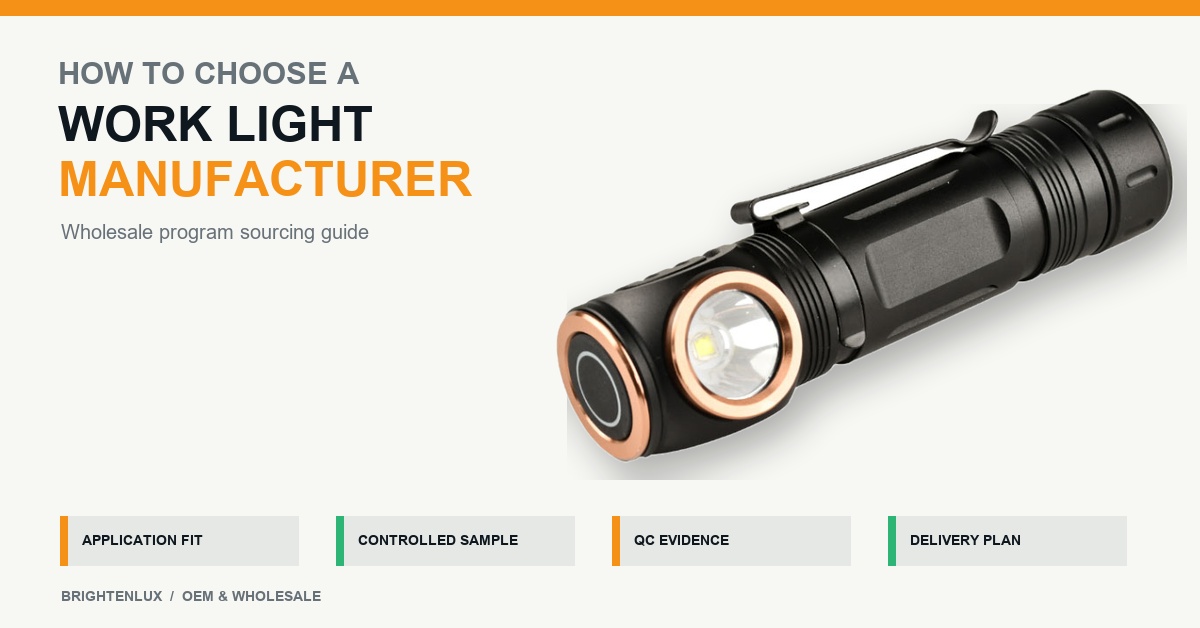
The product format described in the source is a compact handheld flashlight or inspection torch for industrial visibility. Its visible features include a black cylindrical body, textured grip, round head, and focused white beam. This style is suited to one-handed use, short inspections, and movement between racks, pallets, service points, and receiving areas. Buyers should treat the visible design as a starting point, then confirm the technical details before placing a bulk order.
Why Handheld Design Matters in Industrial Work
Industrial lighting needs are different from home lighting. In a warehouse aisle, a worker may be carrying paperwork, checking a barcode, opening a carton, or reading shelf labels while holding a flashlight. A bulky body can interfere with movement. A beam that is too diffuse can make labels harder to read. A slippery shell can become frustrating when gloves are dusty or damp.
The visible black cylindrical body and textured grip are practical design cues for one-handed handling. A focused beam is also useful for quick inspection points, carton condition checks, and shelf label reading. That does not mean every compact flashlight is automatically suitable for industrial use. Housing material, switch design, charging method, runtime, lumen output, and IP rating are not visible from the provided product data and should be confirmed directly with the supplier before purchase.
Rechargeable or Replaceable-Battery Models
For sourcing teams, the key comparison is often the operating model. A rechargeable flashlight can reduce disposable battery use and may simplify fleet management if workers follow a charging routine. A replaceable-battery flashlight may still make sense for remote, backup, or occasional-use scenarios, but it adds recurring battery purchases and storage considerations.
The best choice depends on how often the light is used and how the warehouse manages shared tools. If flashlights are used every shift, buyers often prefer models that are easy to recharge, assign, store, and replace when one goes missing. If use is rare, a different calculation may apply. Avoid choosing rechargeable simply because it sounds modern. Choose it because the charging method, carrying style, and daily workflow make sense for your team.
| Option | Best Fit | Buyer Check |
|---|---|---|
| Manufacturer | Product control and possible customization | Confirm specifications and repeatability |
| Wholesale supplier | Bulk purchasing and order consolidation | Check packaging and batch consistency |
| General vendor | Small or urgent purchases | Verify industrial suitability |
Questions to Ask Before a Bulk Order
Before choosing a rechargeable flashlight supplier, begin with the actual use case. Is the light for warehouse stock checks, receiving inspection, general visibility, or maintenance walk-throughs? A picking team may value portability and one-handed handling. A maintenance team may care more about grip, beam concentration, and a body style that feels secure during repeated use.
Then ask the supplier to confirm details that are not clear from images. These include housing material, charging method, beam style, switch feel, packaging arrangement, and whether future batches can remain visually and functionally aligned with the approved sample. If your purchasing team is comparing several models, review related industrial lighting options on the Brightenlux products page. For project-specific requirements, send details through the inquiry page before committing to a wholesale run.
Common Sourcing Mistakes to Avoid
One common mistake is buying by price alone. A low-cost flashlight may look acceptable on a procurement sheet but create hidden costs through returns, short service life, inconsistent batches, or operator complaints. Another mistake is choosing a light that is too large, too specialized, or uncomfortable for general warehouse work. If workers leave it in a drawer, the specification has failed in practice.
A subtler problem is not matching supplier capability to the buyer’s replenishment rhythm. If several sites need ongoing supply, batch consistency and communication become more valuable than a one-time low price. Buyers should also avoid assuming that every rechargeable light is suitable for industrial handling. Drops, dust, repeated switching, and daily carrying are normal in warehouse environments. Sample testing under real conditions is the simplest way to reveal whether the flashlight format is practical.
How to Build a Practical Supplier Shortlist
A strong shortlist should compare supplier role, product clarity, communication, and willingness to confirm details. A rechargeable flashlight manufacturer may be preferable when your company wants a repeatable specification or potential customization. A wholesale supplier may be better if your immediate priority is ordering efficiency. A general vendor may be suitable for small urgent buys, but buyers should still verify industrial fit.
During sample evaluation, ask operators to use the flashlight in normal working conditions. Have them read shelf labels, inspect cartons, move through aisles, and handle the light with gloves if that reflects daily work. Check whether the body feels secure, whether the beam helps with the task, and whether charging or storage would be easy to manage. If your team needs help narrowing options, Brightenlux can be reached through the contact page.
FAQ for Warehouse Flashlight Buyers
Is a focused beam better for warehouse work?
Often, yes. A focused beam helps workers read shelf labels, check cartons, and inspect specific points in low-light aisles. Wide lighting has its place, but it may not be ideal when the task requires a bright spot on a barcode, label, pallet edge, or small defect.
Should buyers choose rechargeable or replaceable-battery flashlights?
Rechargeable models can make sense when lights are used often and the team has a clear charging routine. Replaceable-battery models may still be useful for occasional, remote, or backup situations. The decision should follow the workflow, not a general assumption that one format is always better.
What should be confirmed before ordering in bulk?
Confirm housing material, charging method, beam style, switch feel, packaging consistency, and whether future batches can match the approved sample. Also ask how the supplier supports wholesale ordering and repeat purchases. Product photos show the format, but they do not confirm every operational detail.
Why test samples in the warehouse instead of only reviewing photos?
Photos help buyers understand shape and visible design, but they cannot show handling feel, switch response, beam usefulness, or comfort during real work. Testing samples in aisles, receiving areas, and maintenance routes helps reveal whether workers will actually carry and use the flashlight daily.