

Rechargeable Flashlight Supplier Guide for Roadside Repair Buyers
Roadside repair work leaves little room for weak lighting. When a technician is standing beside a wheel in the dark, the flashlight has to do more than shine. It must help reveal lug nuts, tread damage, valve stems, and the jack point without making the task harder. That is why many fleet buyers, emergency service teams, and automotive distributors look carefully at the source of the light, not just the light itself.
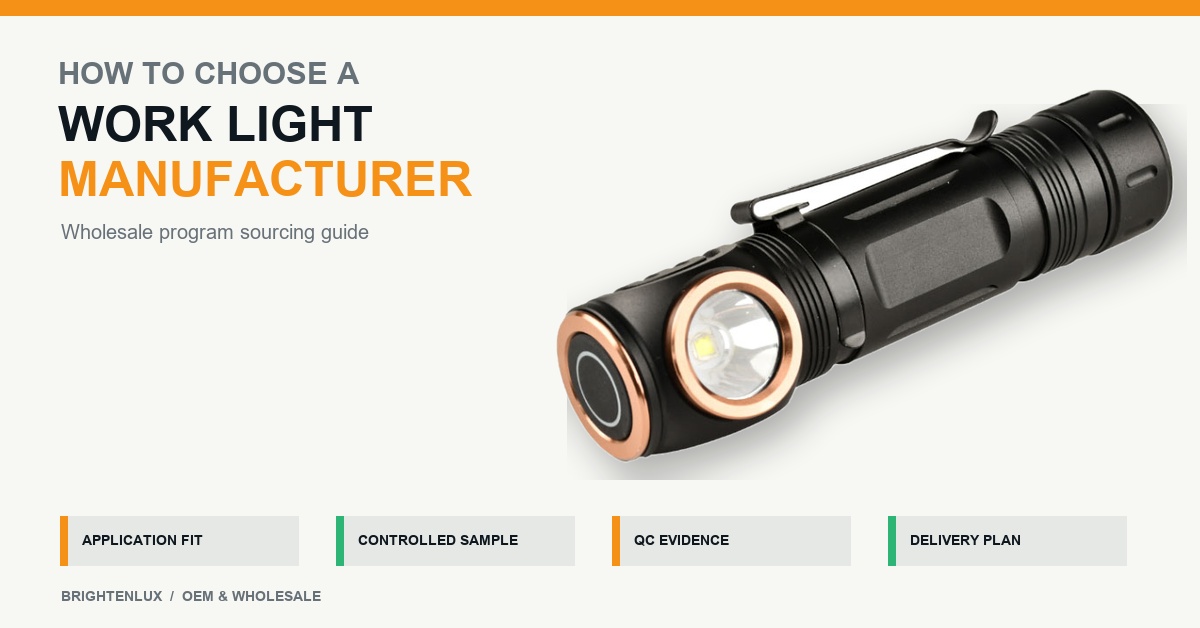
This guide explains what matters when choosing a rechargeable flashlight supplier for roadside use, how wholesale sourcing fits fleet purchasing, and what buyers should test before ordering. For product browsing, see the product range.
Why roadside buyers care about the source
A roadside repair scene is unforgiving. There may be passing traffic, limited shoulder space, wet pavement, and a customer waiting nearby. In that setting, a flashlight becomes part of the repair process, not a casual accessory. Buyers who support roadside work need a light that helps technicians see clearly while also keeping the work area manageable and safe.
The reason sourcing matters is consistency. If one unit is awkward to hold, weak in the beam, or unreliable after repeated use, it can slow the entire response. Teams often standardize their lighting so every technician can pick up the same tool and use it in the same way. That reduces confusion, shortens setup time, and helps keep attention on the repair instead of the equipment.
What the job demands in the field
Emergency tire service and roadside checks place several demands on one tool at the same time. The flashlight needs to illuminate close mechanical details, stay portable, and remain easy to manage with one hand. Technicians may be wearing gloves, crouching by a wheel, or reaching into a dark wheel arch, so the light should not force an awkward grip or a complicated switch routine.
It also needs to fit into a real workflow. A light that can be recharged in a vehicle, tool locker, or depot is easier to keep ready than one that depends on special handling. In roadside work, the goal is not to make lighting the main event. The goal is to give the technician enough controlled visibility to inspect safely, move quickly, and finish the task without struggling around the tool.
Features that matter most in a roadside flashlight
There is a clear difference between a general-purpose torch and a tool meant for vehicle repair. Buyers should focus on practical details that match the environment rather than broad marketing claims. A focused beam helps with small inspection points, while some spread is useful for lighting the surrounding tire and pavement. Rechargeability should also fit the way technicians actually work, not just the way the product looks in a catalog.
Durability matters because roadside conditions are hard on equipment. Concrete, dust, oil residue, rain, and occasional drops are part of the job. Easy one-handed use matters because technicians may need to hold a wrench or steady themselves at the same time. The flashlight should also be easy to find in a dark tool bag or vehicle compartment.
| Selection point | Why it matters |
|---|---|
| Beam control | Helps inspect wheel parts without hiding detail or creating glare. |
| Recharge method | Makes it easier to keep the light ready between calls. |
| Grip and balance | Supports one-handed use in crouched or awkward positions. |
| Housing durability | Helps the light cope with roadside conditions and frequent handling. |
| Visibility in storage | Reduces time lost searching for the tool in a dark kit or vehicle. |
How wholesale sourcing supports fleet buying
For distributors and procurement teams, LED rechargeable flashlight wholesale is often the most practical path when the goal is standardization. Fleet operators, garage service carts, roadside kits, delivery vehicles, and mobile maintenance units all benefit when the same light is used across the group. That reduces training time and keeps user expectations simple.
Wholesale buying is not only about ordering multiple units. It also helps keep the same beam style, charging method, and body format across vehicles or service teams. That said, low-cost options can look similar while still differing in battery quality, switch reliability, and charging consistency. Before placing a larger order, buyers should ask for clear product information and check a sample in a real work setup. If you are comparing options, review the available models before building a shortlist.
Manufacturer or supplier: which path fits
Working with a rechargeable flashlight manufacturer can be useful when a buyer needs a specific body shape, button layout, beam pattern, or packaging format. A manufacturer may also be better positioned to support consistency across repeat orders. That matters when the flashlight becomes part of roadside kits or an industrial catalog where continuity is important.
At the same time, not every buyer needs a custom build. Many teams only need a reliable standard product and a dependable supply path. The practical question is whether the source can support the volume, repeatability, and documentation the operation requires. If the supplier can explain battery type, charging method, casing design, and real use conditions in plain language, that is a good sign. If you need a direct conversation, contact the team here.
Common mistakes in flashlight sourcing
One common mistake is choosing more light than the task actually needs. Roadside wheel service usually benefits from controlled illumination, not unnecessary glare. Another is ignoring ergonomics. A flashlight may look fine on paper but feel awkward when a technician is working in wet weather or in a tight position beside the tire.
Buyers also make trouble for themselves when they forget charging discipline. If a team has no clear routine, even a decent product can be left uncharged and unavailable when needed. Finally, it helps to think beyond the flashlight itself. In real roadside work, it functions alongside gloves, warning triangles, tool cases, and vehicle access. A good sourcing decision supports the whole workflow, not just one item.
How to evaluate a supplier before ordering
Start with use-case questions instead of feature hype. Ask where the light will be used, how it will be carried, where it will be recharged, and how it will be stored. A source that understands roadside service, fleet maintenance, and emergency response is usually easier to work with over time. Clear answers matter more than dramatic language.
Sample evaluation should be simple and practical. Check the switch feel, beam pattern, charging access, and how the body behaves with oily hands. Test the light in a dark wheel inspection scenario, not only on a desk. If the product is for a buying program, keep the range focused. Too many near-duplicate options create confusion for users and after-sales teams. When you are ready to move forward, send an inquiry here.
FAQ
Is a rechargeable flashlight enough for emergency tire work?
Usually yes, as long as the light supports inspection, tool handling, and safe movement around the wheel area. The key is not just having a rechargeable unit, but choosing one that fits the work pattern, charging routine, and level of control needed during roadside repairs.
Should fleet buyers choose a supplier or a manufacturer?
It depends on the project. A supplier can be a practical choice for standard products and faster purchasing. A manufacturer may be better when you need tighter control over product details, repeatability, or packaging. The right choice is the one that fits your operating needs.
Why not use any portable flashlight for roadside repair?
Because roadside work is a specific environment. The lighting must support close inspection, work in awkward positions, and remain useful around traffic, wet pavement, and tools. A general portable light may work in a pinch, but it often lacks the control and reliability needed for regular service.
What should buyers test first in a sample unit?
Start with the basics: switch feel, grip, charging access, and beam behavior in a real wheel inspection setup. It is also worth checking how the flashlight feels with gloves and oily hands. Those small details often determine whether the product is practical in daily roadside use.