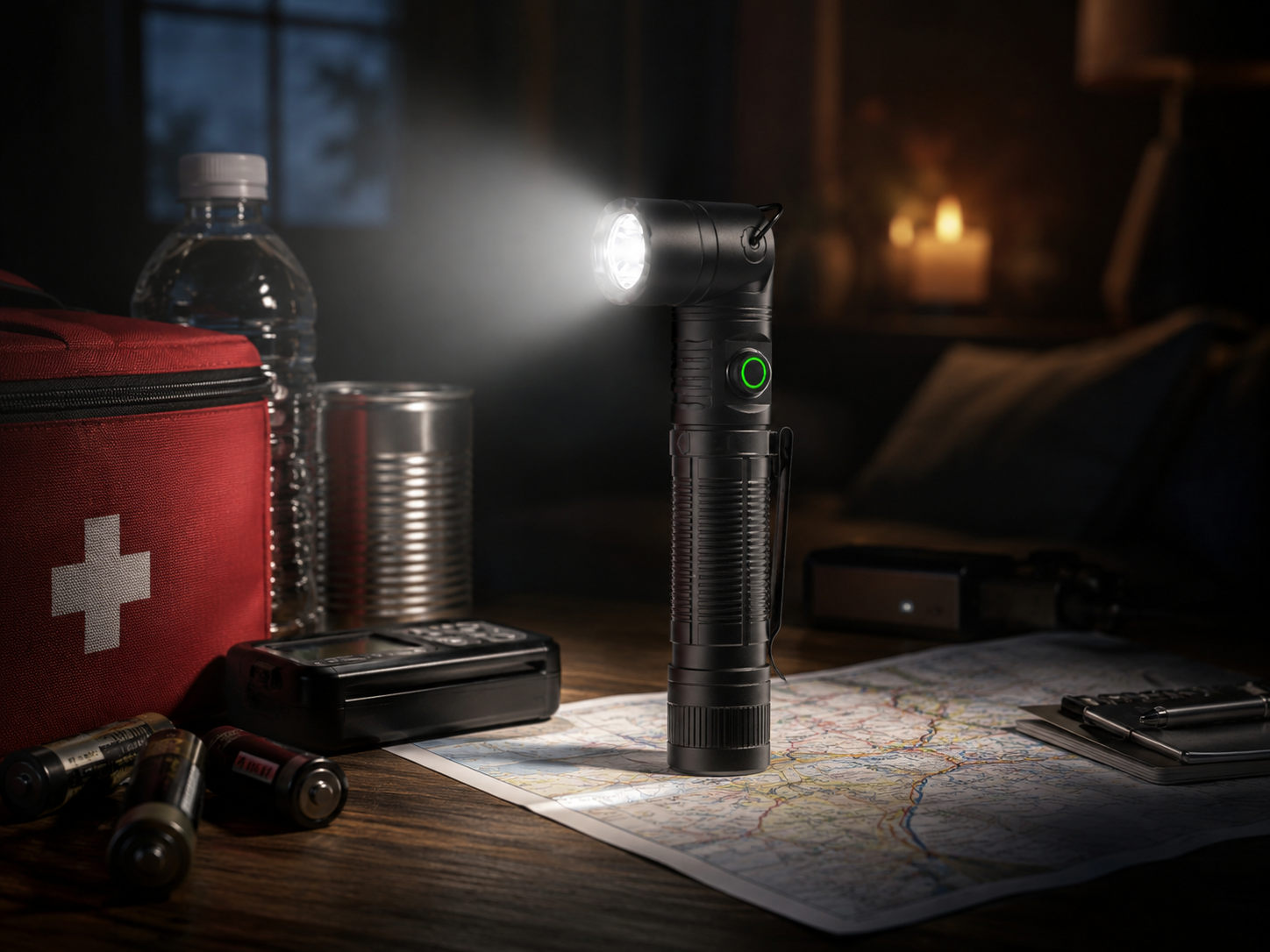


TL;DR: A portable rechargeable emergency light supplier should provide lighting equipment that can be charged, stored, inspected, issued, and replenished reliably. For facility contractors, maintenance distributors, and mobile-service teams, the critical purchasing factors are usable light output, battery readiness, charging compatibility, complete kit contents, and production consistency. A product should be approved against a real deployment workflow—not maximum lumens alone.
A rechargeable emergency light can perform well during a factory demonstration and still be unavailable when a technician needs it.
The battery may have discharged during storage. A charging cable may be missing. The wrong battery configuration may have arrived in a later shipment, or nobody may know which unit was inspected most recently.
These problems reveal an important distinction between product performance and operational readiness.
For overseas B2B buyers, both must be considered before approving a wholesale lighting program.
This guide provides an application-based comparison, technical selection criteria, a measurable equipment-readiness calculation, and an OEM procurement process using documented products from Brightenlux.
1. Quick Reference: Which Portable Emergency Lighting Format Should Buyers Choose?
The first purchasing decision is to match the product format to the lighting task.
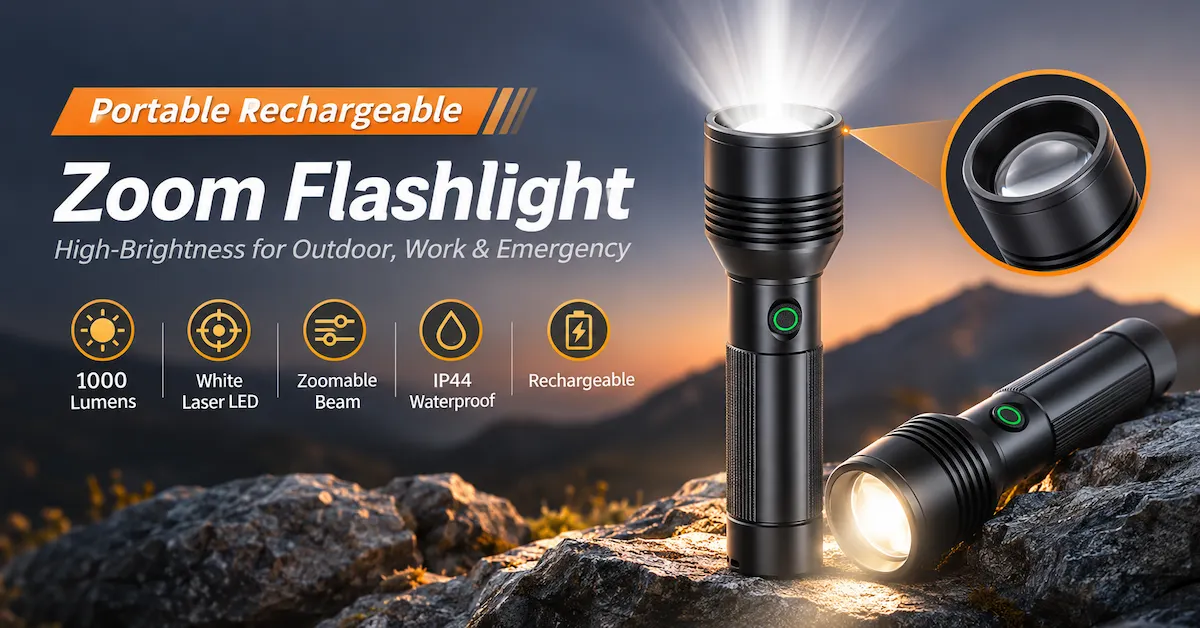
A rechargeable lantern, handheld flashlight, and headlamp can all provide portable illumination, but they should not be evaluated as interchangeable products.
Portable Rechargeable Lighting Decision Matrix
| Evaluation Factor | Rechargeable Lantern | Rechargeable Flashlight | Rechargeable Headlamp |
|---|---|---|---|
| Main function | Area illumination | Directional illumination | Hands-free task lighting |
| Typical application | Household blackout, temporary shared spaces | Equipment inspection, mobile servicing | Maintenance and outdoor tasks |
| Optical priority | Broad coverage, controlled glare | Beam direction and useful distance | Comfortable near-field illumination |
| Battery priority | Practical low-mode runtime | Power flexibility and rechargeability | Runtime relative to wearable weight |
| Handling priority | Stable base, handle or hook | Grip, switch and carry convenience | Strap fit and tilt stability |
| Storage concern | Battery maintenance and placement | Accidental activation or missing cable | Strap condition and charging |
| Best purchasing fit | Preparedness retailers and area-lighting programs | Vehicle and field-service distributors | Maintenance teams needing both hands |
Selection recommendation: Choose lanterns for shared-area illumination, flashlights for directed tasks, and headlamps for wearable lighting.
For a coordinated emergency kit, consider combining different formats only when each has a distinct user function.
Additional products increase accessory counts, inventory requirements, and maintenance responsibilities.
2. Key Takeaways for B2B Procurement
-
Product readiness is not deployment readiness. A working LED does not guarantee that the product is charged, accessible, and complete.
-
Battery state must be managed. Rechargeable lights stored for long periods need product-specific inspection and charging procedures.
-
Charging compatibility matters. A USB-C connector does not guarantee every charger and cable will work as intended.
-
Accessories are part of the purchasing specification. Batteries, cables, straps, instructions, and packaging should match the approved kit.
-
Model selection should follow the job. Beam distribution and handling are often more important than maximum lumens.
-
OEM quality control should support repeat orders. Critical components and product revisions need traceability and change approval.
For institutional deployment, a practical supplier comparison should address technical performance, operational availability, and complete delivered cost.
3. What Makes Portable Emergency Lighting Technically Ready?
Technical readiness involves several connected systems.
A suitable portable light must produce the required illumination, store adequate energy, recharge predictably, and withstand the conditions expected during use and storage.
Optical performance
Maximum lumens describe total emitted light, not the duration for which the product can sustain useful output.
A lantern may provide diffused illumination suited to a room, while a flashlight concentrates light on a smaller area.
Buyers should request mode-specific output and runtime information under defined conditions.
For applicable portable-light products, ANSI/PLATO FL 1-2025 provides a technical framework for performance measurement and reporting.
The buyer may also establish an additional practical illumination threshold for the actual task.
Battery energy
Battery capacity in milliamp-hours is insufficient for comparing different electrical architectures without knowing voltage and cell configuration.
Where the energy reserve matters, request nominal battery energy in watt-hours and a defined usable-runtime test.
Charging system
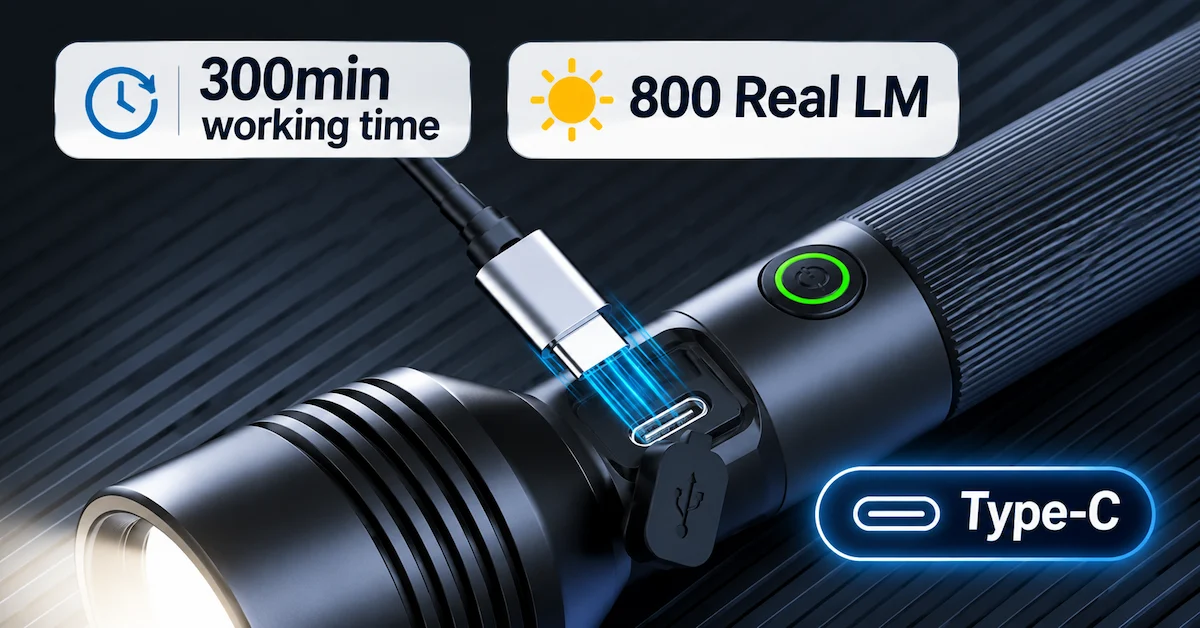
Document the electrical input, supplied cable, compatible charging equipment, indicators, and any applicable charging restrictions.
A Type-C connector alone does not prove a specific fast-charging protocol.
Physical durability
Check the enclosure, charging cover, controls, straps or handles, and any mounting features.
If an IP rating is advertised, request evidence relevant to the actual model and configuration.
IEC 60529 defines enclosure ingress-protection classifications, but an IP code does not cover every environmental exposure.
Product scope
Portable blackout lanterns and general-purpose flashlights should not automatically be described as certified building emergency escape luminaires.
Regulated emergency-lighting installations may require separately assessed products and systems.
Technical takeaway: Approve a clearly defined operating configuration, not an isolated brightness or battery specification.
4. Which Brightenlux Products Fit Different Deployment Kits?
Brightenlux, formally Ningbo Brightenlux Electric Appliance Co., Ltd., offers rechargeable LED flashlights, headlamps, camping lanterns, and OEM/ODM lighting discussions.
Its published product portfolio provides several starting points for portable backup-lighting projects.
The following specifications are manufacturer-published claims and should be validated for the actual proposed order.
Brightenlux Model Comparison
| Product | Published Configuration | Potential Deployment Role | Verification Priority |
|---|---|---|---|
| BT-PL4031R Rechargeable Lantern | Up to 2000 lm; COB LED; three 2200mAh lithium cells; dimming; white/red modes; power-bank function | Shared-area blackout lighting | Mode-specific runtime, battery arrangement and charging |
| 1000 lm Rechargeable Camping Lantern | Up to 1000 lm; rechargeable battery; multiple white-light modes; USB power-bank feature | Compact preparedness kits | Battery energy, practical runtime and pack-out |
| BT-HL9040 Rechargeable Headlamp | Up to 800 lm; OSRAM P9; included 18650 2200mAh cell; Type-C charging; red/white modes | Hands-free facility inspection | Fit, mode controls, charging and runtime |
| BT-FL8104 Dual-Power Flashlight | Up to 1000 lm; included 18650 2200mAh lithium battery or three AAA cells; adjustable focus; Type-C; battery indicator | Mobile-service and equipment inspection | Alternate power operation, indicator accuracy and accessories |
Which model should a facility contractor evaluate first?
For equipment inspections requiring a directed beam, BT-FL8104 provides a useful candidate architecture.
Its published rechargeable and AAA options can be evaluated for a program where alternative battery availability is important.
However, the actual battery carrier, included accessories and operating differences must be confirmed.
Which product suits shared-area backup lighting?
BT-PL4031R offers a lantern format with dimming and multiple lighting modes.
For blackout applications, the buyer should determine whether its practical lower mode meets the intended illumination requirement for the specified duration.
The advertised maximum lumen figure alone is insufficient.
Which model fits hands-free maintenance?
BT-HL9040 is a candidate when the user needs wearable illumination.
The product's headband, operating weight, switch sequence and charging procedure should be assessed through a task-based trial.
Important qualification
These models are portable lighting products, not confirmed certified substitutes for code-required emergency evacuation lighting.
Their current availability, OEM options, MOQ and technical evidence should be confirmed with the supplier.
Compare Brightenlux Lighting Products
Request Current Product Datasheets
5. How Can Buyers Measure Whether an Emergency Lighting Fleet Is Ready?
The operational value of a portable emergency light depends on whether it is usable when required.
For institutional buyers, a practical readiness indicator can support equipment management.
Define an issue-ready unit
A product may be classified as issue-ready when it meets all buyer-defined requirements, such as:
-
Correct approved model and configuration.
-
Sufficient charge according to the agreed check.
-
Functional light modes and controls.
-
No observed damage affecting intended use.
-
Required cable or accessories present.
-
Inspection completed according to the buyer's schedule.
The organization must define these checks; there is no universal readiness percentage guaranteed by a supplier.
Readiness Rate Calculation
A simple equipment-readiness measure is:
Issue-Ready Rate (%) = Ready Units ÷ Total Units Checked × 100
Consider a hypothetical facilities distributor with 48 portable lights.
After an inspection, 45 meet the agreed issue-ready criteria. Three require charging, replacement accessories or further attention.
The readiness rate is:
45 ÷ 48 × 100 = 93.75%
This is an illustrative operational calculation, not a Brightenlux performance test or a documented customer result.
If a buyer establishes a target readiness rate, it can compare its actual inspection records against that internal threshold.
What does this measurement reveal?
A relatively low readiness rate might result from charging practices, accessory loss, physical damage or other operational causes.
It does not automatically mean the underlying product is defective.
The buyer should classify the reasons before deciding whether to change supplier, update maintenance procedures or purchase additional backup inventory.
Deployment takeaway: Product quality and organizational maintenance both influence the availability of emergency lighting.
6. How Should Portable Emergency Lighting Kits Be Configured?
A useful purchasing unit may be a controlled kit rather than a bare flashlight.
This is particularly relevant to facilities contractors, mobile-service fleets and preparedness brands.
The kit should contain everything specified as necessary for its intended function.
Recommended Kit Manifest
| Kit Field | Buyer Specification | Required Check |
|---|---|---|
| Lighting model | Approved SKU and revision | Compare with golden sample |
| Battery | Specified rechargeable cell or pack | Confirm battery identity and condition |
| Charging cable | Approved cable type and quantity | Verify compatibility and inclusion |
| Operating instructions | Modes, charging, storage and precautions | Match actual product behavior |
| Identification | Product/kit label or buyer asset reference | Readable and traceable |
| Storage arrangement | Approved case, holder or location | Check access and physical protection |
| Replacement rule | Procedure for damaged or missing components | Record responsible party |
| Inspection record | Buyer-defined check date and status | Confirm before issue |
This is a suggested procurement framework, not a claim that every Brightenlux product includes these components as standard.
A supplier quotation should clearly distinguish included and optional parts.
For example, the supplier may provide a rechargeable headlamp with its battery and cable, while a customer requests additional storage inserts or asset labels.
Those accessories should be specified separately rather than assumed.
7. How Does the Charge–Inspect–Issue Workflow Reduce Deployment Risk?
A buyer should establish a repeatable operating procedure that connects storage, inspection, field use and replenishment.
A practical sequence is:
Receive → Identify → Charge → Inspect → Issue → Return → Recharge
Receive and identify
Verify incoming goods against the approved model, battery and accessory specification.
Assign a suitable kit or asset identifier if the organization tracks equipment individually.
Charge and inspect
Use the manufacturer's approved charging procedure.
Check the applicable battery indication, light modes, visible condition and accessories.
Battery indicators may be useful but are not necessarily calibrated measurements of remaining usable energy.
Issue and use
Place the product in its intended location or assign it to the authorized user.
For maintenance activities, the equipment should be used only within applicable workplace safety procedures.
Return and recharge
After use, inspect the product for defects or missing accessories.
Remove nonconforming units from issue-ready inventory and follow the agreed correction or replacement process.
Recharge eligible equipment according to the approved instructions.
Why is this useful for OEM sourcing?
The workflow reveals which accessories, labels, charging features and packaging arrangements matter to the customer.
A lighting supplier can then quote a more appropriate configuration.
The operational procedure itself remains the buyer's responsibility unless a separate service agreement is established.
8. What Tests Should Buyers Complete Before Approving Bulk Orders?
A portable rechargeable emergency light supplier should provide samples that represent the intended production configuration.
Buyers should agree the acceptance requirements before testing.
Functional test
Verify light modes, switches, indicators and any operating memory functions.
Runtime test
Select the intended brightness mode and record useful output over time under defined conditions.
Do not infer low-mode runtime from the headline maximum-lumen rating.
Charging test
Check supported input, charging-state indication, cable compatibility and charging behavior.
Battery and storage review
Verify the cell specification and obtain product-specific storage and maintenance instructions.
A stored-product trial may be useful where the light will remain unused for long periods.
Mechanical inspection
Inspect the housing, lens, port cover, carrying components and relevant mounting hardware.
Environmental evidence
Request model-specific support for any advertised water or dust protection claim.
Pack-out inspection
Confirm that the actual battery, cable, manual, labels and other agreed contents match the quotation.
Golden sample approval
Retain an approved sample and controlled technical specification for comparison with future orders.
Important: A product may pass a brief on/off test yet fail a deployment requirement because of incomplete accessories or incorrect charging information.
9. How Do OEM/ODM and Wholesale Costs Affect the Final Decision?
Brightenlux offers OEM/ODM customization discussions through its outdoor lighting services.
For a portable emergency lighting program, customization should support a clear user requirement.
Branding and packaging
Possible requests include logos, retail cartons, multilingual instructions and product identification labels.
Their feasibility and minimum quantities depend on the selected model.
Kit configuration
A buyer may request specific accessory combinations, storage packaging or compatible charging arrangements.
The supplier should distinguish available standard options from changes that require further engineering.
Technical modifications
Changes to the battery, driver, charging circuit, controls or enclosure may require updated specifications and tests.
A branding MOQ should not be assumed to apply to a new electronics design.
Cost comparison
Compare complete delivered-kit costs rather than the bare product price.
A useful cost structure is:
Delivered Kit Cost = Light + Battery + Accessories + Branding/Packaging + Testing/Inspection Allocation + Freight, Duties and Handling
Organizations may also include internal maintenance labor, replacement inventory and warranty processing when evaluating total ownership cost.
Do not invent a fixed savings percentage or failure rate without supporting records.
Lead time and repeat orders
Request separate milestones for sample approval, customization, production, inspection and dispatch.
For repeat purchasing, require notification of significant component or configuration changes.
Explore OEM/ODM Lighting Services
Request a Configured Kit Quotation
10. Illustrative Case: Portable Lighting for Two Service Depots
Consider a hypothetical facilities contractor operating two service depots.
Each depot must maintain a supply of rechargeable portable lights for temporary, non-critical inspection activities.
This is an illustrative purchasing scenario, not an actual Brightenlux customer project or measured deployment result.
Initial purchasing problem
The contractor previously selected lighting based mainly on brightness and unit price.
Its proposed new program introduces a requirement for identified, charged and inspected kits.
Engineering selection
The buyer compares a rechargeable flashlight for directed tasks and a rechargeable headlamp for hands-free work.
It does not assume the two products have identical batteries, charging methods or runtime.
Kit specification
Each kit receives a defined product reference, included accessories, operating instructions and inspection criteria.
Pilot validation
Technicians assess the lights under representative permitted tasks.
The purchasing team records any charging, comfort, beam or accessory problems.
Operational control
Each depot establishes charging, issue, return and replacement responsibilities.
Issue-ready status is recorded according to the contractor's internal procedures.
Reorder decision
The contractor approves volume purchasing only after sample acceptance and a configuration-specific quotation.
Future shipments must match the approved build or receive documented change approval.
What this example demonstrates
The key procurement outcome is not simply acquiring a brighter device.
It is creating a reliable process for keeping the right equipment available and usable.
11. What Should a Portable Emergency Lighting RFQ Include?
A complete RFQ helps the supplier identify the most appropriate existing platform and evaluate customization feasibility.
Include the following information:
-
Buyer and market: Company, destination countries and purchasing channel.
-
End-user application: Facility maintenance, preparedness retail, mobile servicing or outdoor use.
-
Product format: Lantern, handheld flashlight, headlamp or coordinated kit.
-
Optical requirements: Working distance, beam type, modes and required useful runtime.
-
Battery requirements: Cell type, capacity, energy evidence and storage expectations.
-
Charging requirements: Input specifications, cable inclusion and inspection needs.
-
Kit contents: Packaging, instructions, labels and approved accessories.
-
Environment: Intended handling, temperature, moisture and storage conditions.
-
Quality: Sample testing, golden sample, applicable documents and component-change rules.
-
Commercial terms: Pilot quantity, order forecast, customization, MOQ, pricing and delivery milestones.
Ask Brightenlux to distinguish standard features, customizable options, engineering requirements and unavailable specifications.
This helps avoid quotations based on incomplete assumptions.
Submit a Portable Emergency Light OEM RFQ
12. Frequently Asked Questions
1. What should I look for in a portable rechargeable emergency light supplier?
Look for identifiable products, suitable lighting performance, clear battery and charging information, complete kit specifications, quality records and repeat-order controls. The supplier should explain which features are standard and which require project-specific confirmation.
2. Are portable rechargeable lights suitable for power outages?
They can provide supplementary illumination when their runtime and optical performance meet the intended use. However, general portable lanterns and flashlights are not automatically compliant replacements for regulated building emergency-lighting systems.
3. Which is better for facility maintenance: a flashlight or a headlamp?
A flashlight is useful for directed illumination, while a headlamp frees both hands. The appropriate choice depends on the task, required beam, mounting and user comfort. Some programs benefit from both formats.
4. How can buyers verify battery readiness during storage?
Follow product-specific storage instructions and establish an inspection procedure covering battery indication, charging function and operating modes. Longer-term storage validation may also be appropriate. No universal maintenance interval should be assumed.
5. Does USB-C guarantee fast charging?
No. USB-C identifies a connector interface, not necessarily a specific charging protocol or input power. Buyers should verify the accepted electrical input, cable and charging behavior on the proposed model.
6. What is a dual-power emergency flashlight?
A dual-power flashlight supports two defined power configurations, such as a rechargeable lithium cell and specified AAA batteries. Buyers should verify the supplied adapter, battery inclusion and correct operating procedures.
7. What is an issue-ready lighting kit?
It is a buyer-defined equipment kit that meets agreed availability criteria, including an approved light, adequate battery condition, working controls and complete necessary accessories. Its readiness depends on both product quality and appropriate maintenance.
8. Can Brightenlux customize emergency lighting kits?
Brightenlux advertises OEM/ODM lighting services. Logo, packaging, accessory and configuration options require model-specific confirmation, and technical changes may involve additional engineering and testing.
9. How should buyers compare wholesale prices?
Compare the same approved product configuration, included battery, cable, accessories, packaging, inspection requirements and delivery terms. A lower bare-unit price may not represent a lower complete-kit cost.
10. What information should I send when requesting samples and quotations?
Provide the intended user, application, product format, lighting and runtime needs, battery and charging preferences, kit contents, target market, customization requirements and expected quantity. Use the Brightenlux contact page to request a model-specific proposal.
Conclusion
Choosing a portable rechargeable emergency light supplier requires a measurable approach to both product performance and deployment readiness.
A lighting unit that produces sufficient brightness is only one part of a useful emergency kit. Battery condition, charging compatibility, complete accessories, storage, inspection and replenishment determine whether equipment will be available when required.
For facility contractors, distributors and private-label brands, the strongest sourcing process begins with an application-specific selection matrix, continues through sample validation and kit approval, and ends with controlled production and repeat-order procedures.
Brightenlux provides several relevant portable lighting platforms, including the BT-PL4031R rechargeable lantern, 1000-lumen rechargeable lantern, BT-HL9040 headlamp and BT-FL8104 dual-power flashlight.
These are starting points for portable backup-lighting procurement, not automatic guarantees of suitability for every emergency application.
To evaluate a wholesale or OEM/ODM program, buyers should provide their intended use, charging and storage requirements, desired kit contents, target market and forecast quantities.
Explore Brightenlux Portable Lighting Products
Request a Portable Rechargeable Emergency Lighting OEM/Wholesale Quote