

Magnetic LED Flashlight Supplier Guide for Industrial Maintenance
Industrial maintenance teams need lighting that frees both hands, fits tight machine spaces, and stays aligned on steel surfaces. A magnetic LED flashlight supplier should understand that setting, not just offer a long list of features. The right light supports inspection, troubleshooting, and preventive checks around gears, shafts, and housings. It also helps technicians work more comfortably in oily, cramped conditions. If you are comparing options, you can review the broader product range while you narrow the fit for your workflow.
Why a magnetic LED flashlight supplier matters in industrial maintenance
Anyone who has inspected gears, shafts, or bearings inside a machine housing knows the real problem is not simply finding a light. It is finding enough light, in the right place, without tying up a hand or losing the angle every time you move. In workshops and plant rooms, a flashlight that can mount to metal changes the task from awkward to manageable. That matters for maintenance teams, OEMs, and distributors because the light becomes part of the service process, not a spare item.
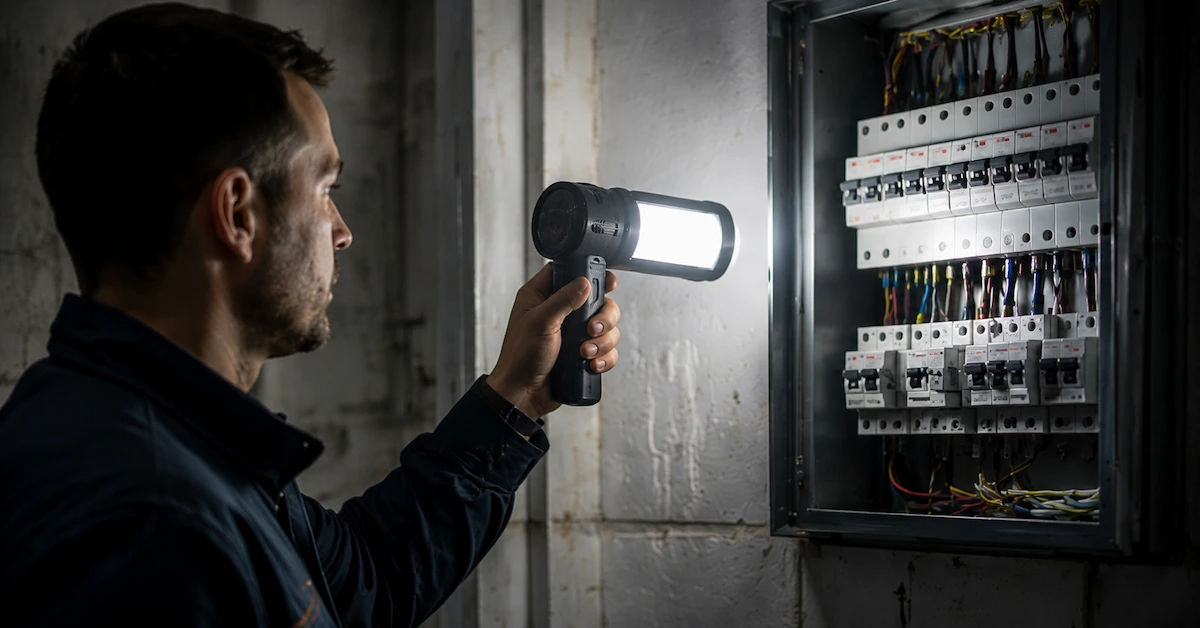
The source use case makes that clear: a technician is working close to a steel mechanical assembly, with an access opening, exposed gear teeth, and tools in hand. In that kind of setting, a compact LED torch with magnetic mounting can help reduce inspection time, improve alignment checks, and make preventive maintenance less awkward. Buyers usually do not need a glamorous product story. They need a reliable light source that stays put, survives workshop abuse, and gives a clear view of internal components.
What buyers are really trying to solve
The search intent behind this topic is practical. Engineers and sourcing managers are not browsing for a flashlight in the consumer sense. They are looking for a lighting solution that fits maintenance workflows: inspection in low-light machine spaces, temporary mounting on steel surfaces, and enough beam quality to show wear, misalignment, contamination, or loose fasteners. That is why the buyer conversation should start with the task, not the catalog.
In a gearbox or similar mechanical assembly, shadows are the enemy. Oily surfaces reflect badly, narrow openings block ambient light, and hand tools cast moving shadows. A magnetic LED flashlight supplier should understand that these are not small inconveniences. They slow the job, make detail harder to read, and can force the technician to reposition the lamp again and again. A useful light helps the operator keep both hands on the tool and eyes on the assembly, which is exactly what maintenance work calls for.
How magnetic lighting fits maintenance work
In the source scenario, the light is mounted on a steel mechanical assembly near an access opening, with exposed gear teeth and a technician working with gloves and a hand tool. That is a strong example of why magnetic mounting matters. The light does not just brighten the cavity; it reduces the need to hold or reposition a torch, which is useful during inspection and alignment checks. The operator can compare surfaces, watch how parts move, and keep attention on the assembly instead of on the lamp.
For preventive maintenance, the same setup can help technicians spot early signs of trouble such as polished edges, dark debris, scoring, oil leakage, or unusual wear patterns. During troubleshooting, stable placement matters even more because the technician needs a fixed reference point. A light that remains steady while the work continues can reduce guesswork and make it easier to read what the machine is showing. In that sense, the light is not just a convenience. It is part of the inspection method.
That also explains why a compact LED torch is often preferred over a larger, more general tool. When the work area is cramped, a light that is easy to mount and easy to move from one machine to another usually gets used more often. The aim is not to turn the machine room into a showroom. The aim is to make inspection more direct and less awkward.
What to evaluate in a supplier
A good supplier should discuss workshop use, not only catalog features. Ask how the light performs around oily metal, how secure the magnetic hold is on vertical or slightly curved surfaces, and whether the housing is suited to repeated handling by gloved operators. If a supplier cannot speak to those conditions, they may understand the product in theory but not in maintenance practice. That gap matters when the light has to work in real plant environments.
Consistency is another important point. Buyers who standardize maintenance kits or serve multiple plants need repeatable products, not one sample that feels different from the next batch. Technicians notice changes in beam behavior, switch feel, and mounting reliability quickly. A supplier should be able to talk about whether the light can be used on machine frames and enclosures that are actually found in the plant, rather than on a clean sample plate. If you want to discuss fit for your own application, you can contact us directly with the machine type and maintenance task in mind.
| Buying focus | Why it matters in maintenance |
|---|---|
| Magnetic hold on steel | Keeps the light steady during inspection and troubleshooting. |
| Fit in tight openings | Helps illuminate gears, shafts, and enclosed parts without crowding the work area. |
| Use with gloves | Makes the light easier to handle in real workshop conditions. |
| Repeatable performance | Supports standard kits and predictable results across batches. |
Common mistakes buyers make
The most common mistake is treating a work light like a general consumer flashlight. Industrial maintenance places different demands on the product. Oily gloves, metal chips, vibration, and repeated mounting all change the equation. Another error is focusing only on brightness. A high-lumen flashlight can still be a poor inspection tool if the beam is too harsh or the body is awkward to position inside a housing. In maintenance, fit and control often matter more than headline output.
Ergonomics also matters more than many buyers expect. If a compact LED torch is too small to grip securely, or too smooth to adjust safely with gloves, technicians may stop using it properly. One more practical issue is magnetic attachment itself: paint, oil, chips, and curved surfaces all affect hold strength. A buyer should confirm the light works on the actual machine frames and housings used in the plant, not just on a clean sample plate. That simple check can prevent a lot of frustration later.
Matching the light to the job
The best choice depends on how the maintenance team works. For close inspection of exposed gears and shafts, a focused beam with steady placement is usually most useful. For general machine-room service, a broader beam may help. For mobile maintenance kits, compact size and quick mounting can matter more than maximum output. A supplier that understands these tradeoffs can help buyers avoid overbuying features that do not add value in the field.
If your application includes machine refurbishment, troubleshooting, or periodic checks in low-light enclosed areas, it is worth testing a sample on the actual equipment. That simple step reveals whether the light fits the opening, stays put on the frame, and shows the internal components clearly enough for inspection. If you are narrowing options, review the available products and compare them against the exact maintenance task rather than against a generic spec sheet. Practical fit is usually what turns a light into a tool technicians keep using.
Frequently asked questions
Is a magnetic light always better than a handheld torch?
Not always. Magnetic mounting is most useful when the technician needs both hands free and the surface can support the light securely. For short tasks, quick checks, or non-ferrous surfaces, a handheld torch may be enough. The better choice depends on the maintenance workflow and the access point.
Do technicians need the brightest option available?
No. Brightness helps, but only when it supports detail. In confined machine spaces, too much light can create glare on oily or reflective surfaces and make inspection harder. Beam control, placement, and comfort often matter more than a headline brightness claim.
Why choose a compact LED torch for maintenance?
A compact LED torch is easier to carry from machine to machine, easier to store in a service cart, and easier to position near tight openings. In crowded workshop environments, that practical size can make the difference between a tool that gets used and one that stays in a drawer.
What should a buyer test before ordering more units?
Test the light on the actual machine frame, housing, or enclosure where it will be used. Check magnetic hold, beam placement, and how well it reveals the internal parts that matter. A real-world test often says more than a product sheet, especially in maintenance settings.