

Magnetic LED Flashlight Supplier Guide for Automotive Inspection Lights
Buyers looking for a magnetic LED flashlight supplier usually need more than a simple torch. In automotive service, the right inspection light helps technicians work under vehicles, check hard-to-see components, and keep both hands free. That is why this category matters to garages, fleet operators, tool brands, and industrial distributors. If you are reviewing options, start with use case, mounting behavior, and handling quality. For product browsing, you can also review the current range at Brightenlux products or send a direct inquiry.
Why this category keeps coming up in sourcing
A magnetic LED flashlight is not only about lighting a dark space. In automotive work, it supports inspection tasks where access is tight and visibility is limited. Underbody checks, brake service, suspension inspections, leak detection, and wheel-end work all benefit from a lamp that stays in place while the technician keeps working. That practical value is why buyers keep returning to this category.
The decision is rarely made on brightness alone. Buyers want a compact body, stable mounting, and a beam that reaches the area that matters. A flashlight that slips, falls, or gets in the way slows the job. A well-designed inspection light does the opposite and becomes part of the workflow.
Where the light is used in automotive service
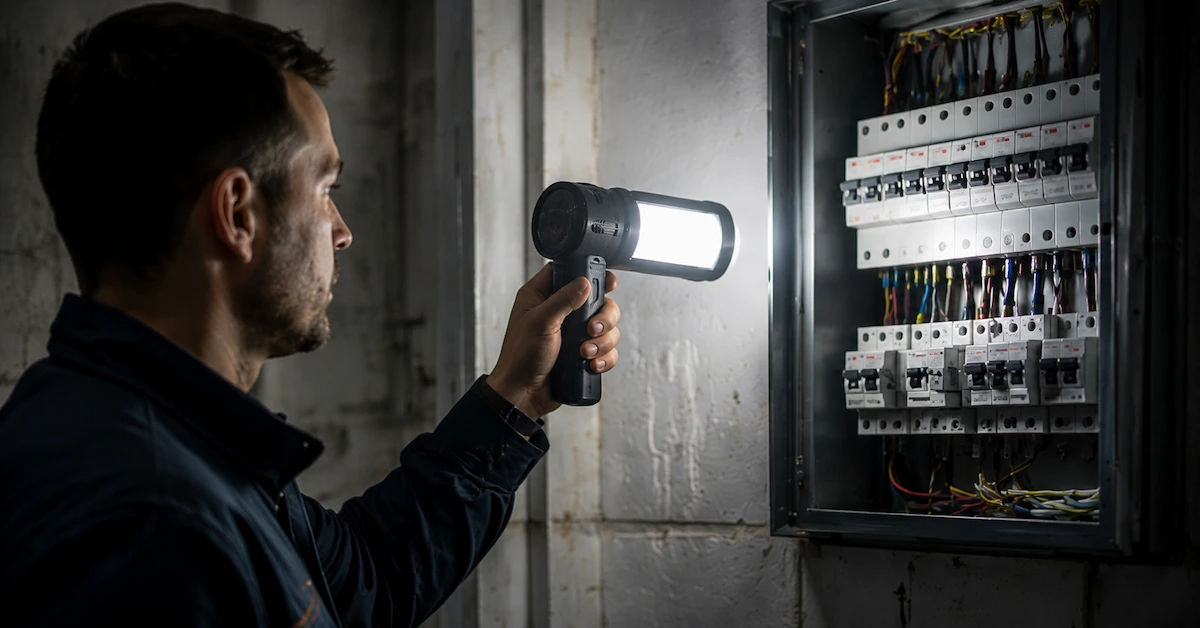
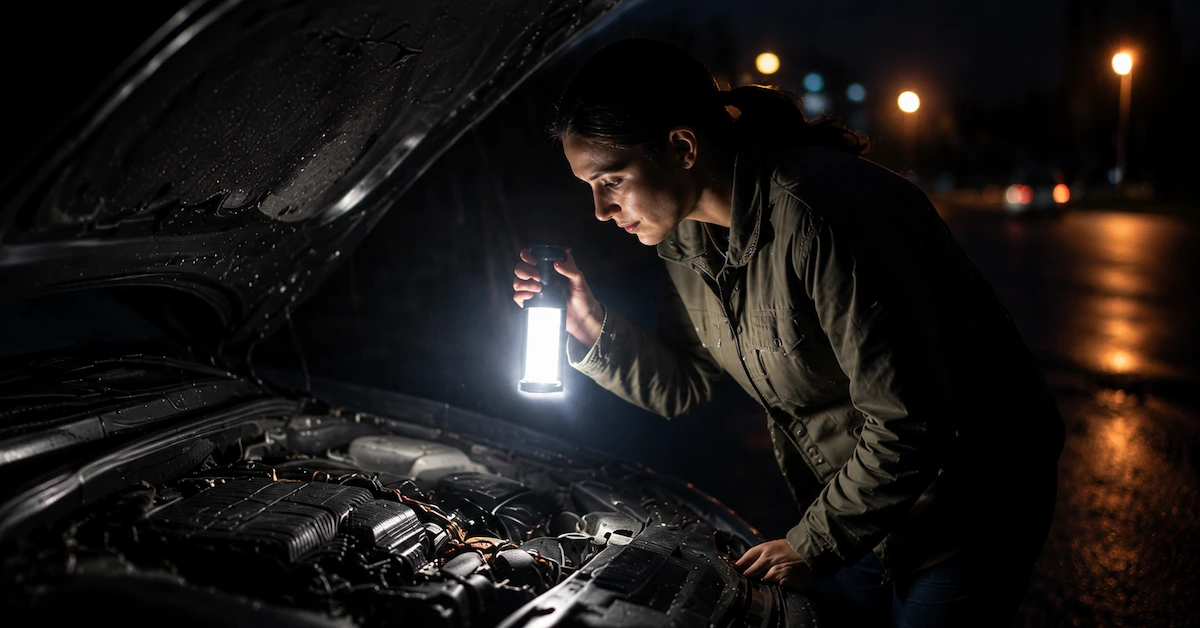
The product described in the source fits the inspection light category: a compact handheld or worklight-style LED lamp used under a vehicle. Its main function is to project focused white light onto areas that are difficult to inspect directly, including suspension parts, brakes, drivetrain sections, and chassis zones. That makes it useful across daily maintenance tasks.
Typical use cases include routine undercarriage inspection, wheel-end service, brake work, suspension checks, and leak spotting around lines or housings. It is also useful when a technician needs general garage lighting without holding the lamp. This is a small advantage, but in a busy service bay, small advantages matter. A fixed light leaves the operator free to work more accurately and with less interruption.
Features buyers should compare first
The visible product details point to the features sourcing teams should check early. The housing appears compact, cylindrical, black, and textured for grip. It also has a front lens or diffuser and a swivel or ball-style base that allows directional adjustment. Those details suggest a tool made for focused inspection rather than broad flood lighting.
| Feature | Why it matters |
|---|---|
| Mounting stability | Helps the light stay in place during under-vehicle work |
| Beam direction | Lets the technician aim light where inspection is needed |
| Compact housing | Reduces interference in crowded repair spaces |
| Grip and finish | Supports handling with gloves or oily hands |
These details are practical, not cosmetic. In workshop conditions, a lamp that is easy to position and easy to hold usually performs better than one that looks impressive in a catalog.
Magnetic or mountable: verify the attachment
The search term magnetic LED flashlight supplier is often used broadly, but not every product in this category uses the same attachment method. Some lights rely on a magnetic base, while others use suction-style or mixed mounting setups. The source describes a swivel or ball-style magnetic or suction-style base, but the exact mounting method is not fully verifiable. Buyers should treat that as a point to confirm, not assume.
This matters because the best attachment depends on the working surface. A magnetic base is often preferred on steel surfaces in automotive environments. A suction-style light may work differently on smoother surfaces. In a dusty or oily shop, the wrong attachment choice can turn a useful tool into a nuisance. If the product will be part of your trade offering, request a sample and test the mount in real conditions before buying more.
What to ask a supplier before placing an order
A B2B inspection flashlight supplier should be able to speak clearly about use case, build consistency, and attachment behavior. Tool distributors and private-label buyers usually need more than a generic LED light. They need something that can be positioned as an automotive service accessory with a clear role in the field. That means asking specific questions early.
Confirm the power source, charging method if the light is rechargeable, beam description, housing material, swivel range, and retention strength of the base. Also ask how the light is intended to be used under vehicles. If possible, request photos or video showing the lamp in that setting. For direct follow-up, use the contact page so you can clarify details before committing to samples or volume discussion.
Common sourcing mistakes to avoid
One common mistake is treating all LED task lights as interchangeable. They are not. A bench light is different from an underbody inspection light, and a general flashlight is different again. Mounting method, beam shape, and housing size all affect whether the lamp helps or hinders the technician. Another mistake is buying only from photos, because images can make a light look sturdier or smaller than it really is.
A sample is usually worth the time. A simple hands-on check can show whether the base stays secure, whether the swivel feels smooth, and whether the beam suits inspection work. Buyers also sometimes ignore grip and finish. The textured surface on the black housing is a functional detail, not decoration. If a replacement model loses that feature, the user experience may suffer more than expected.
How this product fits automotive service and maintenance
This product category is strongest in routine service, which is exactly why it has commercial value. Mechanics and fleet technicians need tools that reduce friction in repetitive jobs. An underbody inspection lamp can help speed diagnosis, reduce missed visual cues, and make it easier to check condition before a repair starts. It supports work that is practical, fast, and repetitive.
For distributors and sourcing managers, that creates a simple story. The product is easy to explain, easy to bundle with other automotive service accessories, and easy to position for workshop use. The buyer is not purchasing a novelty item. They are buying visibility, convenience, and a tool that helps technicians stay efficient under a vehicle. If your team wants to explore suitable models, start with the product catalog and narrow by use case.
FAQ for buyers
Is a magnetic base always better than suction?
Not always. Magnetic mounting is often preferred on steel surfaces, but suction can be useful in some environments. The better choice depends on the intended surface, the shop conditions, and how often the light needs to be moved. For automotive inspection, the safest approach is to test both behavior and stability on real job surfaces.
Should I prioritize brightness or size?
For inspection work, size and placement stability can matter as much as brightness. A compact lamp with a clean beam may be more useful than a larger light that is hard to position. If the light stays where it should and reaches the inspection point clearly, technicians are more likely to use it consistently.
Can this product fit non-automotive channels?
Possibly, but the strongest fit is automotive service, maintenance, fleet work, and general shop use. The product story is clearest in those channels because the function is tied to under-vehicle inspection. Outside that environment, buyers may need a different feature set or a different product presentation.
What should I request from a supplier first?
Start with the mounting method, power source, and real-use images or video. Those details tell you more than a generic specification sheet. If possible, ask how the light behaves on dirty or uneven surfaces, since that is where inspection tools often succeed or fail in daily shop work.