

LED Flashlight Supplier Guide for Workshop and Inspection Use
Choosing an LED flashlight supplier for workshop and inspection use is not the same as buying a consumer torch. In automotive repair, machinery maintenance, and close-range diagnostics, the light must support real work: tight access, repeated handling, oily surfaces, and quick visual checks when downtime matters. Buyers need more than a bright product photo. They need a supplier that can explain the tool, support repeatable quality, and answer practical questions before an order is placed. This guide helps sourcing teams evaluate inspection lights by use case, construction, power system, customization, and supplier reliability.

Why Workshop Lighting Needs Different Sourcing Rules
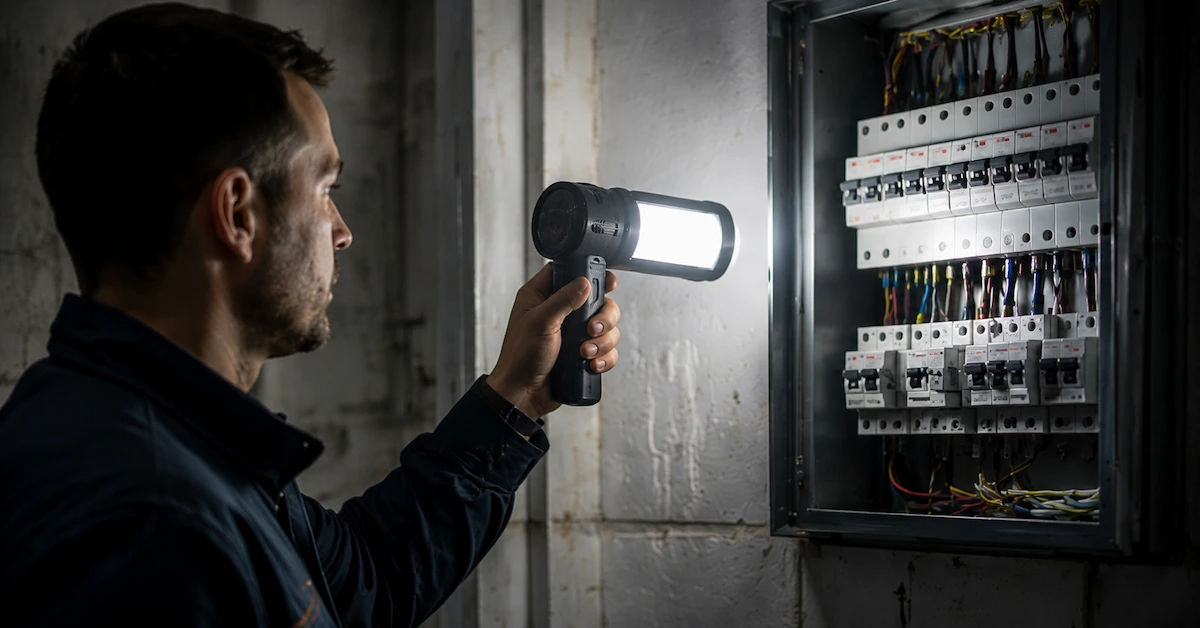
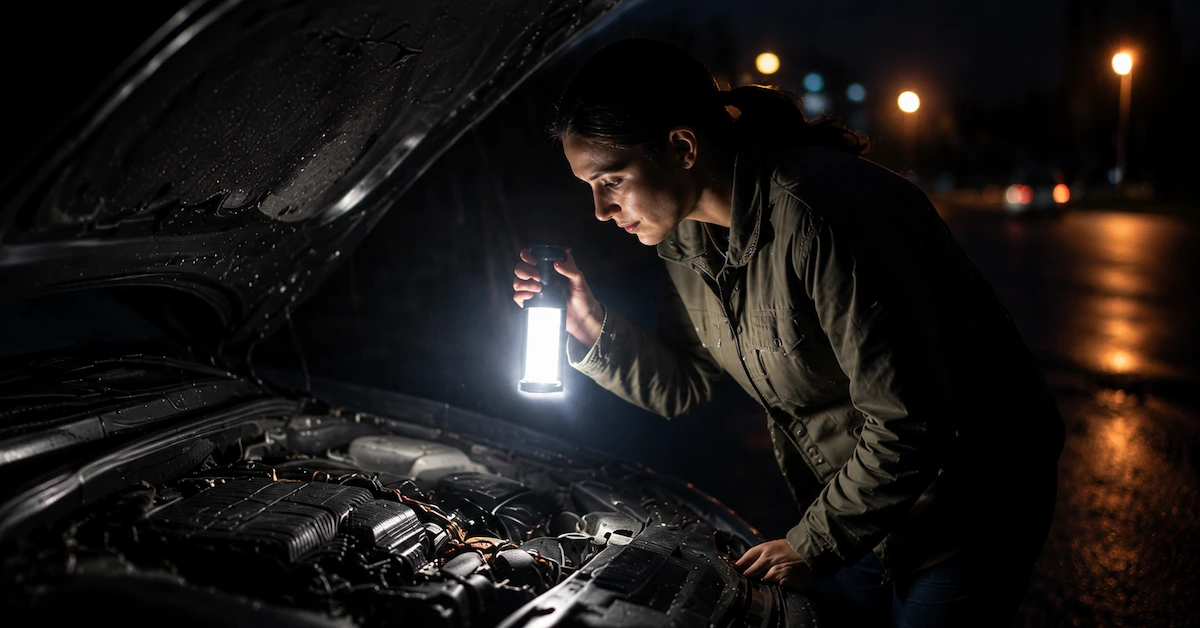
A workshop inspection light is judged by how well it helps a technician see details at arm’s length, not by novelty or outdoor beam distance. The product shown in the source is a compact handheld LED work light with a dark body and a bright white strip, a form commonly associated with close inspection inside engine bays or machinery compartments. That use case changes procurement priorities. The light must be easy to aim, comfortable to hold, and practical in confined areas. A smaller body may reach tight places, while a larger body may be easier to grip and position. A capable supplier should discuss these trade-offs in work terms, not only in promotional language.
Quick Reference for Comparing Inspection Lights
Before asking for samples or quotations, compare the basics in a structured way. Not every workshop needs the same feature set, and buyers should not assume that hooks, magnets, charging accessories, or protective details are included unless the supplier confirms them. The goal is to match the light to the working environment first, then evaluate commercial fit. For current product browsing, buyers can review Brightenlux lighting options at Brightenlux products and use the same checklist during internal comparison.
| Item to Check | Why It Matters |
|---|---|
| Form factor | Determines grip, access, and positioning in confined spaces. |
| Power source | Affects charging routine, spare parts planning, and field use. |
| Beam behavior | Impacts visibility on fasteners, hoses, wiring, and components. |
| Housing design | Influences resistance to handling, drops, grease, and workshop wear. |
| Customization | Supports branding, packaging, labeling, or accessory requirements. |
Key Product Types Buyers Often Compare
Most sourcing discussions in this category fall into practical product types. Handheld inspection lights are often used by mechanics and service technicians because they are compact, direct, and easy to point into equipment cabinets or engine areas. USB rechargeable flashlight models can be attractive for workshops and service fleets because charging can be simpler than managing disposable batteries, but buyers should confirm the charging method, port protection, and included accessories. Waterproof LED flashlight designs may be useful in wet bays, outdoor service, washdown areas, or places exposed to coolant and splashes. However, the word “waterproof” should always be supported by an exact rating or test basis supplied by the manufacturer.
How to Evaluate an LED Flashlight Supplier
Spec sheets are useful, but they do not tell the whole supplier story. A serious LED flashlight supplier should be able to explain construction, materials, packaging, available options, and the intended working environment. The visible product has a rectangular handheld body, dark housing, and a bright LED strip or panel on one side. Buyers should ask what the casing is made of, how the switch and lens areas are protected, and whether any drop, wear, or sealing information is available when required. The LED may not be the first failure point; seams, switches, charging interfaces, and housings often deserve equal attention during review.
Selection Criteria for Maintenance Environments
In maintenance work, the best light is often the one that fits naturally into the workflow. It should be easy to grab, easy to aim, and difficult to misuse. Ergonomics matter because technicians may work with gloves, oily hands, or awkward wrist angles. Access matters because a rectangular inspection lamp may fit one compartment well and another poorly. Power management also matters: rechargeable designs, replaceable batteries, and included charging accessories affect daily routines. Industrial buyers should also consider batch consistency. If units differ noticeably in feel, charging behavior, or light color, users may quickly lose confidence even when the headline specifications appear acceptable.
Common Buying Mistakes to Avoid
One common mistake is buying only for brightness. A harsh beam can create glare, while an uneven beam may force the technician to keep repositioning the light. Another mistake is treating all portable lights as interchangeable. A consumer-style flashlight for casual use may not perform well after repeated exposure to vibration, dust, oil, and workshop handling. Buyers also overlook user acceptance. If the switch feels awkward, the balance is uncomfortable, or the charging routine is inconvenient, the tool may stay on the bench instead of being used. Procurement success depends on matching the light to the task, not simply selecting the strongest claim on a catalog page.
Questions to Ask Before Placing an Order
A short, disciplined question set can reveal whether the supplier understands B2B requirements. Ask what use case the inspection light is designed for, which body materials and protective features are used, and whether the unit is rechargeable or battery-operated. Confirm what accessories are included and whether workshop, field, or moisture-prone versions are available. If branding is important, ask which customization options apply to packaging, labeling, color, or accessories. Also request realistic product photos, samples, and documentation when needed. For direct project discussion, buyers can contact Brightenlux through contact us or send requirements via inquiry.
Next Steps for B2B Sourcing Teams
Start with the actual work environment, then build the specification around it. A sample should reflect the real task, not only a polished catalog presentation. Confirm the power system, housing design, beam usability, and any durability or water-resistance claims that matter to your operation. Compare how clearly each supplier answers practical questions. A dependable partner should be able to explain everyday use, reasonable customization, and repeatable production without turning every order into an unclear project. In workshop and inspection lighting, time saved during sourcing often prevents larger problems later, especially when technicians depend on the tool during active maintenance work.
FAQ
Is a handheld inspection light different from a general flashlight?
Yes. A handheld inspection light is typically chosen for close-range visibility in confined spaces, such as engine bays, machinery compartments, or equipment cabinets. A general flashlight may emphasize distance or casual outdoor use. For workshop sourcing, beam usability, grip, access, and reliable handling are usually more important than novelty features.
Should buyers choose a USB rechargeable flashlight for workshops?
A USB rechargeable flashlight can be practical when charging is easy to manage across the workshop or service team. Buyers should still confirm the charging method, port protection, included accessories, and suitability for frequent handling. Convenience alone is not enough if the design is not robust for daily professional use.
When is a waterproof LED flashlight necessary?
A waterproof LED flashlight may be worth considering when the work involves wet bays, washdown zones, outdoor service, coolant exposure, or frequent splashes. It may be less critical in a dry indoor workshop. Buyers should ask for the exact rating or test basis rather than relying only on the word “waterproof.”
What should I request from an LED flashlight supplier before ordering?
Request samples, realistic product photos, construction details, power system information, accessory confirmation, and documentation for any claims that matter to your application. If customization is required, ask what can be adjusted without disrupting standard production. Clear answers at this stage reduce risk before moving into repeat orders.