

LED Flashlight Manufacturer: What Buyers Should Look For
Choosing an LED flashlight manufacturer is rarely about buying one bright torch. For B2B buyers, the real task is matching a compact handheld light to a defined use case: camping, emergency kits, inspection work, everyday carry, or damp outdoor conditions. A good supplier should help you understand the product beyond its appearance, including the housing, beam behavior, switch feel, carry features, and assembly consistency. The right flashlight is not simply the one that looks rugged in a photo. It is the one that can be built repeatedly and perform reliably for the intended customer.
What B2B Buyers Really Need From a Flashlight Supplier
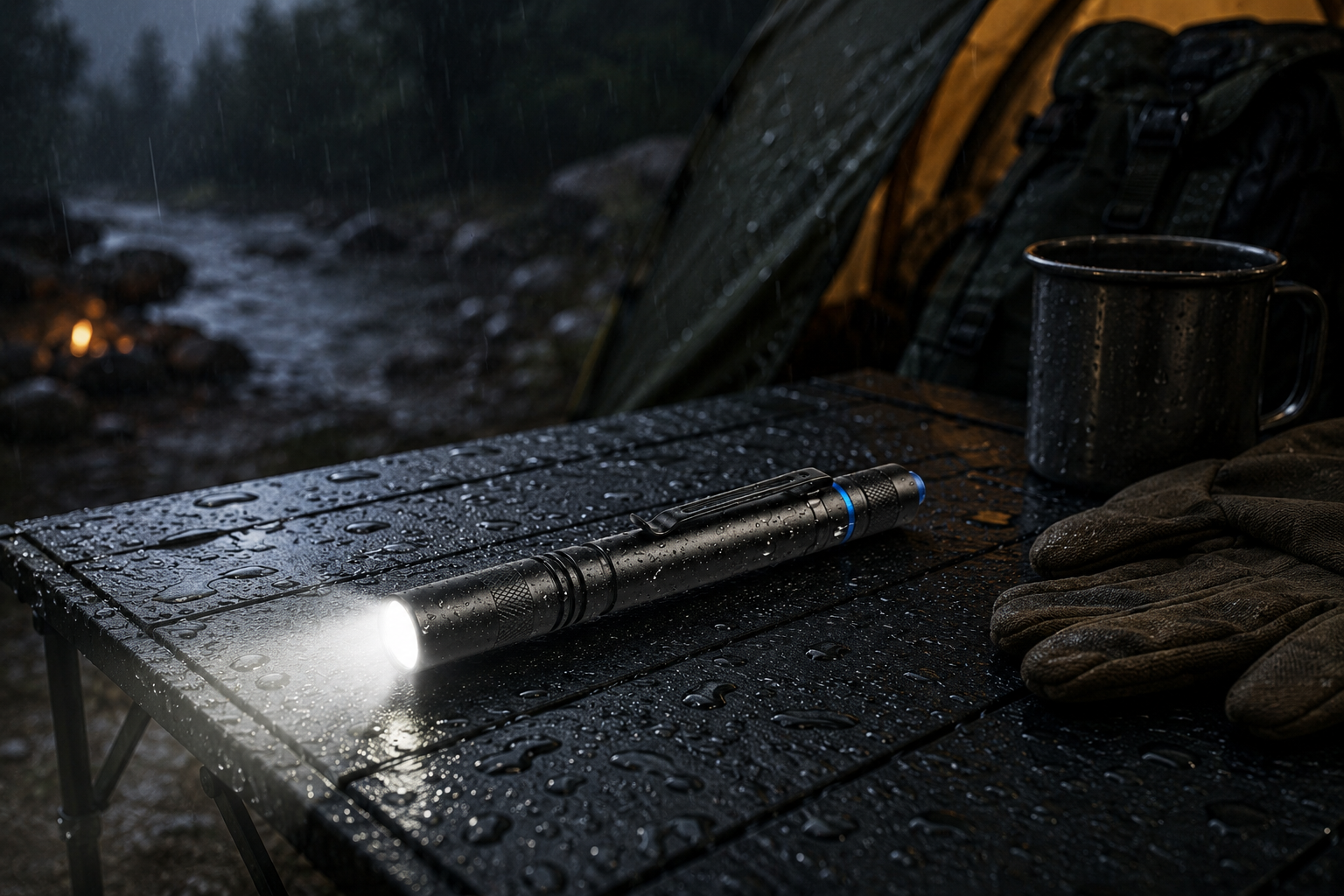
When sourcing a compact flashlight, buyers should begin with the user problem rather than the sales description. The visible product style is a black handheld flashlight with a cylindrical body, focused white beam, textured grip, blue accent ring near the head, and a pocket clip for easy carry. These features suggest practical use in outdoor, inspection, or emergency settings, but they do not prove performance levels by themselves.
A capable manufacturer should be able to explain how the body, lens area, internal light module, switch, clip, and head assembly work together. If your team is comparing options, start with actual product categories on the Brightenlux products page and use the supplier discussion to confirm what is documented, what is optional, and what should not be claimed without support.
Product Design Details That Affect Real-World Use
The flashlight body matters because it is the part users touch, drop into bags, clip to clothing, and use in low-light conditions. A compact cylindrical form is easy to carry, while a textured grip can help when hands are wet, cold, or gloved. A pocket clip is also more than a small accessory. It improves daily carry and helps prevent the light from being lost at the bottom of a tool bag, backpack, or emergency kit.
Finish quality should be discussed carefully. A matte or satin metallic-looking surface may hide wear better than a glossy appearance, but durability depends on the actual surface treatment and production process. Buyers should ask whether the finish is mainly decorative or intended to add abrasion resistance. If the product will be positioned as a work light flashlight, these mechanical details can matter as much as the beam itself.
Beam Behavior, Handling, and Use-Case Fit
A focused white beam is often useful for general-purpose tasks such as campsite setup, quick inspection, emergency repairs, and short-range navigation. However, buyers should avoid treating every bright-looking beam as equivalent. A narrow beam may be useful for inspection work, while broader area lighting may be more practical around a tent, vehicle, or work corner. The best beam choice depends on the user environment.
Camping, emergency readiness, and field work overlap, but they are not identical buying categories. Camping users often care about portability and simple utility. Emergency kit buyers want readiness and straightforward operation. Field and maintenance users focus on handling, daily durability, and whether the light remains useful when conditions are damp or dirty. A single design may serve more than one channel, but the sales message should be adapted to the actual application.
Questions to Ask an LED Flashlight Manufacturer
Before requesting a larger order, buyers should ask direct questions that reveal how well the supplier understands the full assembly. The goal is not to overwhelm the factory with lab language, but to confirm whether the manufacturer can explain the product clearly and avoid unsupported claims. This is especially important for lumen output, runtime, beam distance, battery life, and water resistance, which should never be assumed unless provided in a clear and supportable form.
| Area to Check | Useful Buyer Question |
|---|---|
| Body and finish | What material and surface treatment are used? |
| Lens and head | How are the front parts joined and protected? |
| Clip design | Is the pocket clip integrated or added separately? |
| Light module | How is the LED module fitted into the housing? |
| Use claims | Which claims are verified, and which are only visual impressions? |
If you need a version for a defined channel, share the use case through the Brightenlux inquiry page so the discussion can focus on realistic product requirements rather than generic specifications.
How to Evaluate Samples Before a Larger Order
Sample testing should copy real customer behavior. Put the flashlight in a pocket, attach it to a bag or vest, and handle it with wet or gloved hands. Try the switch repeatedly and check whether activation feels simple. Place the light on a work surface where condensation or splash might occur, but do not make water-resistance claims unless the supplier provides verified protection information.
Beam usefulness should also be judged practically. Does the light point where users need it? Is the beam helpful for close-range inspection, campsite tasks, or emergency use? Is operation simple enough for a general consumer, or does it require unnecessary mode cycling? These checks often reveal issues that a product photo cannot show. A sample that looks premium but feels awkward may create poor reviews, returns, or weak repeat orders.
Common Sourcing Mistakes to Avoid
One common mistake is choosing a flashlight mainly because it appears bright. Brightness is valuable, but it is only one part of the product experience. Build quality, assembly consistency, switch feel, carry convenience, and beam usefulness all affect whether the end user keeps trusting the light. A flashlight that performs well in one sample but varies from batch to batch can become more expensive than a higher-quality option.
Another mistake is treating all metal-bodied flashlights as equal. A metal appearance does not automatically prove ruggedness. Wall thickness, internal fit, surface treatment, clip attachment, and sealing design all influence durability. Buyers should also avoid overstating wet-weather suitability. The visible product looks appropriate for outdoor or damp-condition use, but the exact protection level is not provided in the source information, so any claim must be confirmed before publication or packaging.
Where This Flashlight Category Fits Best
This compact flashlight style fits channels where portability, a directed beam, and simple carry matter more than a bulky lighting format. It can be positioned for camping, basic inspection, emergency kits, everyday carry, or general field use when the final specification supports that message. Its visible pocket clip, textured grip, cylindrical form, and focused beam make it a practical category for buyers who want a straightforward handheld light.
For sourcing teams, the most important decision is whether the manufacturer can build a simple product consistently. Simple does not mean easy. A reliable flashlight depends on the relationship between mechanics, optics, electronics, and user handling. To discuss a defined requirement or compare suitable options, buyers can contact Brightenlux with the target market, usage environment, and any verified claims required for the project.
FAQ
Can one camping flashlight also work for inspection or jobsite use?
Sometimes it can, if the body feels durable, the grip is practical, the clip holds securely, and the beam is useful at close range. Buyers should still define the primary application first. A product that suits camping may need different positioning or design choices for daily inspection work.
Should buyers request waterproof claims from a flashlight supplier?
Buyers should request only claims that can be supported. A flashlight may look suitable for damp outdoor conditions, but that is not the same as a verified water-resistance level. If protection details are not documented, avoid adding waterproof language to listings, packaging, or sales materials.
What matters most when evaluating compact flashlight samples?
Focus on handling, switch operation, clip strength, grip comfort, beam usefulness, and overall assembly consistency. Brightness is important, but it should not be the only selection factor. A sample should be tested the way customers will actually carry, activate, and use the flashlight.
How should buyers compare different LED flashlight manufacturers?
Compare suppliers by how clearly they explain materials, finish, lens area, LED module integration, assembly checks, and supported claims. A good manufacturer should help separate documented facts from marketing assumptions. This reduces sourcing risk and helps buyers choose a flashlight that fits the intended channel.