

How to Evaluate a Professional Outdoor Lighting Manufacturer in China for Portable Inspection Lights

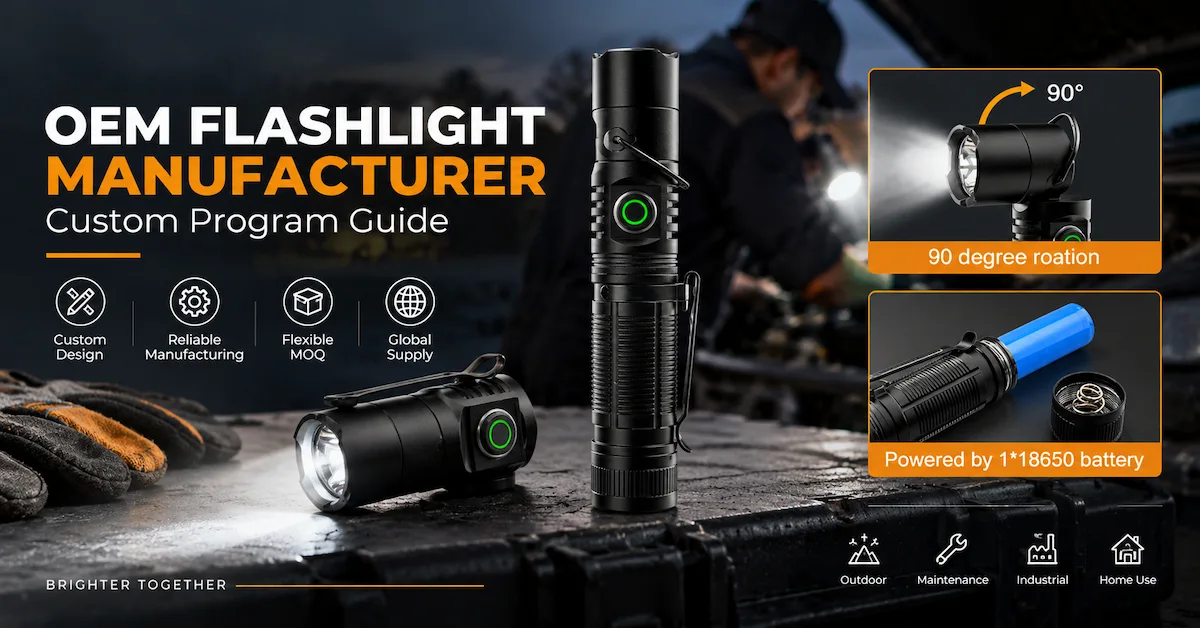
Searching for a professional outdoor lighting manufacturer China buyers can rely on usually means more than finding a supplier with a product catalogue. It means checking whether the manufacturer can translate a lighting concept into a repeatable, serviceable product. In this case, the product shown is a compact handheld automotive inspection flashlight intended to illuminate engine-bay components during vehicle maintenance or repair. That distinction matters: an inspection flashlight is not automatically an outdoor lighting product, so buyers should evaluate the supplier’s actual engineering, assembly, testing, and customization capabilities rather than relying on a broad category label.
This article helps sourcing managers, automotive tool brands, repair-equipment distributors, and product teams decide what to verify before requesting quotations. It covers the visible product characteristics, likely production route, questions about materials and electronics, and the information needed to move from a sample image to a manufacturable specification.
Quick assessment of the product shown
| Area | What can be reasonably identified | What still requires confirmation |
|---|---|---|
| Product type | Handheld LED work light or automotive inspection flashlight | Exact model, output, beam pattern, and electrical design |
| Use environment | Engine compartments, garages, workshops, and enclosed mechanical areas | Resistance to oil, moisture, heat, drops, and chemicals |
| Form factor | Compact cylindrical body with a front light head; suitable for one-handed use | Dimensions, weight, grip design, balance, and mounting features |
| Exterior | Dark or black appearance | Whether the housing is polymer, coated metal, or another material |
| Manufacturing route | Likely involves housing production, LED and electronic assembly, and final assembly | Actual process, equipment, component sources, and quality controls |
The image supports only a preliminary product assessment. It does not establish light output, battery capacity, charging method, operating time, ingress protection, impact resistance, certifications, warranty terms, or thermal performance. Those details should be treated as open specification items, not assumed selling points.
Why supplier capability matters for an inspection flashlight
A small work light can look simple, but several design decisions affect its usefulness in a repair bay. The beam must illuminate a target without creating excessive glare. The body needs to remain comfortable during one-handed use. The switch, power system, lens, housing, and internal electronics must work together in a confined and sometimes dirty environment.
For an automotive repair shop, a flashlight may be used to locate leaks, inspect wiring, identify worn components, and find fasteners in shadowed areas. A fleet maintenance team may need a product that can be handled repeatedly across many vehicles. A distributor may care more about consistent assembly, packaging, private-label options, and stable component supply. These are different purchasing priorities, even when the visible product is the same.
A capable outdoor lighting manufacturer may have experience with LED assemblies and portable products, but buyers should ask whether that experience applies to this particular construction. Outdoor area lights, vehicle lamps, and handheld inspection tools can require different optics, thermal arrangements, housings, controls, and service expectations. The relevant question is not simply, “Can you make a light?” It is, “Can you make this light consistently for the intended working environment?”
Likely construction and manufacturing stages
Housing and exterior components
The flashlight has a compact cylindrical appearance and a dark finish. The housing may use black polymer, coated metal, or a combination of materials, but the available information does not confirm which. That uncertainty should be resolved early because material selection influences weight, impact behavior, heat dissipation, surface durability, and tooling cost.
If the body is injection-molded, the buyer should request information about resin selection, mold ownership, surface texture, parting lines, and expected cosmetic standards. If formed or machined metal is used, questions shift toward wall thickness, finishing, corrosion protection, and assembly interfaces. A sample that feels solid in the hand is not enough evidence of its construction.
LED, lens, and optical arrangement
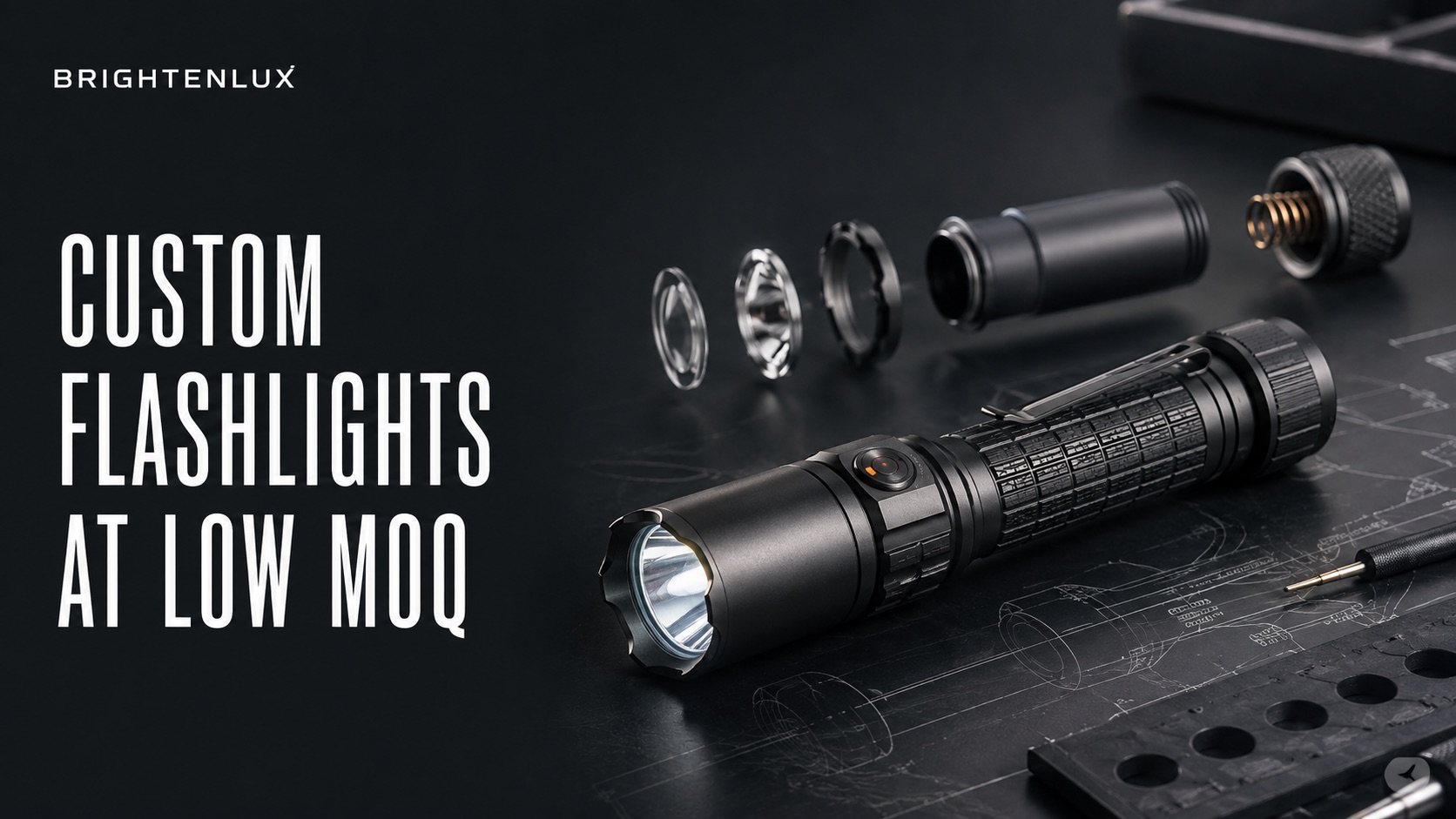
The front of the product includes a circular illuminated lens. It is reasonable to describe the tool as providing directional illumination, but the image does not verify the LED type, lumen rating, color temperature, beam distance, beam angle, or optical efficiency.
These specifications should be defined with the application in mind. Engine-bay inspection often benefits from a controlled beam that reaches recessed components without making the surrounding area completely unreadable. A product intended for general workshop use may need a broader spread. Buyers should ask for a clear optical specification and, where practical, review a working sample in the actual repair environment. A bright beam is not automatically a useful beam.
Electronics and power system
The power source and control arrangement are not visible from the supplied product information. The flashlight may use replaceable batteries, an integrated rechargeable battery, or another configuration, but none should be assumed. The same applies to charging interface, switch type, low-voltage protection, charging indication, and operating modes.
For a commercial product, these details affect more than convenience. They influence packaging, shipping requirements, service procedures, replacement policy, and regulatory documentation in the destination market. Ask the supplier to identify the battery configuration, charger or cable requirements, expected operating time under defined conditions, and any protection built into the circuit. Do not accept a runtime figure without knowing the brightness setting and test method.
Questions to ask a potential China lighting manufacturer
Whether the supplier describes itself as a China lighting manufacturer or as a broader electronics factory, the first discussion should focus on evidence. Useful questions include:
- Is the shown flashlight an existing production model, a concept, or a reference design?
- Which components are made in-house and which are sourced from outside vendors?
- Can the supplier provide a dimensional drawing, bill of materials, and electrical specification?
- What housing material and surface finish are available?
- Can the light head, lens, switch, grip, or mounting arrangement be modified?
- How are incoming components, assembled units, and finished products inspected?
- What sample approval process is used before production?
- Can the supplier support private labeling, packaging development, or instruction materials?
- Which documents are available for the selected battery and electronic components?
The purpose is not to collect impressive-sounding claims. It is to identify which specifications are controlled, which are still estimates, and who is responsible for approving changes. A supplier that cannot clearly separate confirmed data from assumptions creates avoidable risk at the production stage.
Common buying mistakes
The first mistake is treating a product photograph as a complete specification. The image shows the general shape and intended use, but not the performance that determines whether the tool is suitable for professional service work.
The second is using “outdoor” as a substitute for environmental qualification. A product used outdoors, in a workshop, or inside an engine bay may face very different exposure to water, oil, dust, vibration, and heat. Unless an ingress or durability rating is supplied and tested under a defined method, buyers should not market the product with specific protection claims.
The third mistake is approving a sample without considering repeated handling. One-handed operation is visible and appears to be a practical feature, but grip comfort, switch position, balance, and access around hoses and brackets should be assessed by actual users. A compact body can be helpful; it can also be difficult to hold if the surface is slippery or the switch is poorly placed.
Finally, do not overlook end-of-life and service questions. Battery replacement, lens damage, charging failure, and housing wear may become important after the product is deployed across a workshop or fleet. Even if the buyer chooses a low-cost model, the service expectations should be documented.
A practical sourcing sequence
Start with a one-page product brief covering the intended users, inspection environments, operating position, preferred beam behavior, power system, branding needs, packaging, and target market. Mark every item as confirmed, preferred, or undecided.
Next, request technical documents and a sample. Evaluate the sample in an engine compartment and in a general workshop, not only on a desk. Check handling, illumination of recessed areas, switch usability, glare, charging or battery access, and apparent assembly quality. Record observations instead of relying on memory.
After that, freeze the important design inputs before discussing volume production. The final approval package should identify the housing, lens, electronics, power source, markings, packaging, and inspection points. If the manufacturer proposes a component change later, require written approval before implementation.
FAQ
Is this product an outdoor light?
Based on the supplied information, it is best described as a handheld automotive inspection flashlight or portable LED work light. Its suitability for outdoor use cannot be confirmed without environmental and durability specifications.
Can the flashlight be used for engine-bay maintenance?
Yes, that is the stated practical application. It is intended to illuminate engine components during vehicle maintenance or repair. Performance details such as brightness, runtime, heat resistance, and beam coverage still need confirmation.
What material is the black body made from?
The exterior appears to be black polymer or coated metal, but the material is not verified. Request the confirmed material, finish type, and relevant durability information from the supplier.
What should a buyer request before placing an order?
Request a technical data sheet, sample, dimensional information, power-system details, component documentation, quality-inspection plan, packaging specification, and written confirmation of any customized features. Exact certifications, tolerances, prices, lead times, and test results should only be accepted when formally supplied.
Next step for product teams and sourcing managers
Use the shown flashlight as a starting reference, not as a finished specification. A serious supplier review should connect the product’s compact handheld format with the real demands of automotive inspection: clear illumination, practical handling, dependable assembly, and transparent documentation. Contact candidate manufacturers with a structured brief and ask them to identify what they can confirm, what they recommend changing, and what must be tested before approval. That conversation will reveal far more than a catalogue description—and will help determine whether the supplier is genuinely suited to your inspection-light program.