

Camping Lantern Wholesale: What Buyers Should Check Before Ordering
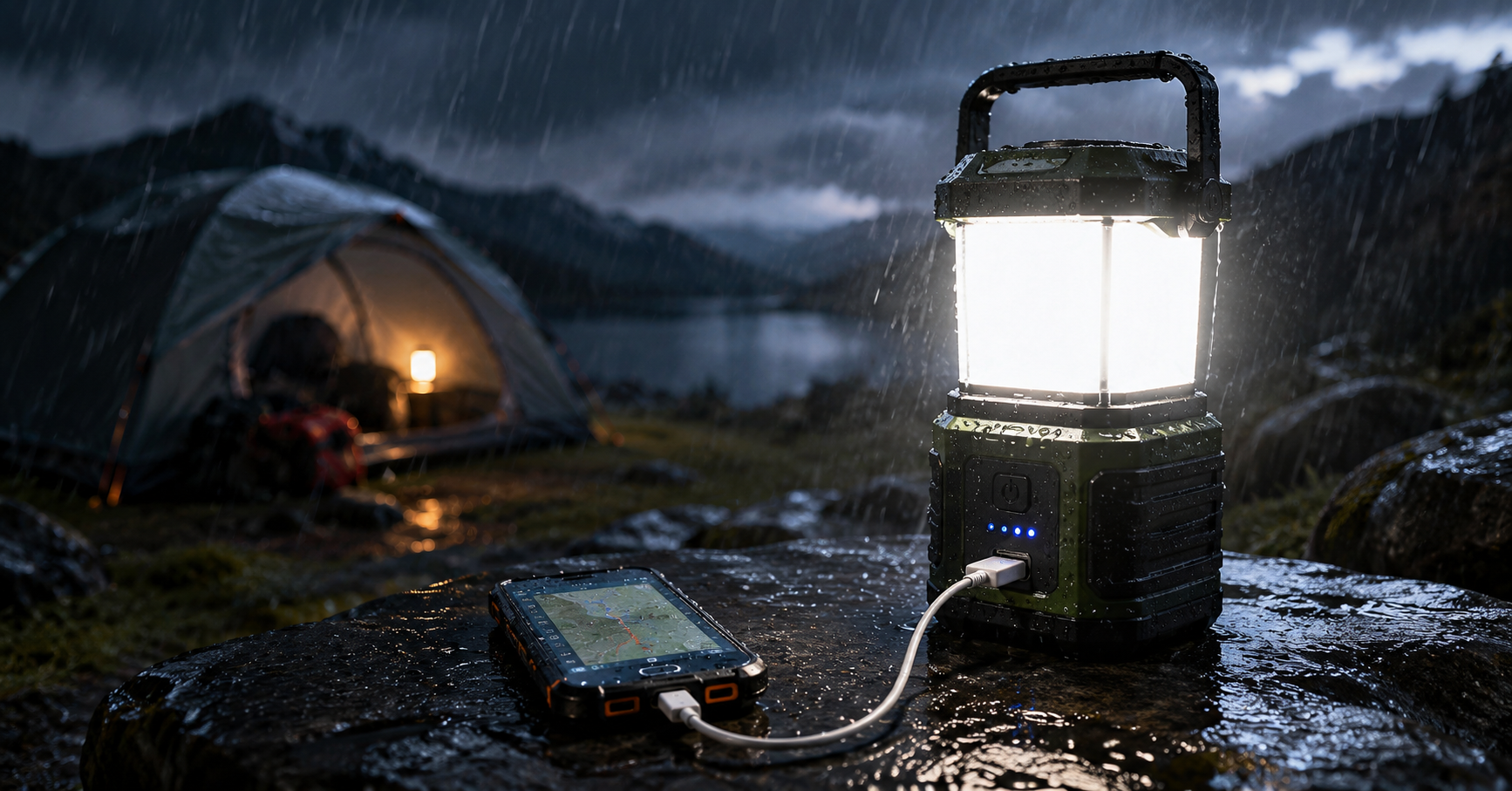
Camping lantern wholesale buyers rarely compare products by price alone. They need outdoor lighting that looks sellable, handles real use, supports customer expectations, and avoids avoidable after-sales issues. For retail shelves, e-commerce listings, promotional programs, or private-label outdoor ranges, the buying decision should balance lighting performance, battery behavior, housing durability, charging convenience, and packaging quality. The product type discussed here is a portable camping lantern with an integrated USB charging or power bank function, a rugged box-style body, translucent diffuser panels, a carry handle, visible battery indicator LEDs, and a USB output port.
Why Wholesale Buyers Should Look Beyond Unit Cost
A camping lantern can look simple, but the commercial risk is not simple. If the lantern arrives with weak packaging, unclear functions, or performance that does not match customer expectations, the lowest quote can become expensive quickly. Buyers need to know whether the product can survive handling, storage, shipping, and normal outdoor use.
Modern customers often expect more than a basic light source. Many now look for USB charging, backup power, convenient handling, and broad area lighting for tents, picnic setups, sheds, roadside emergencies, or power outages. For B2B buyers, those features help explain the product value, but only when they are verifiable. Before committing to volume orders, compare what is visible with what can be confirmed in writing.
What This Power Bank Lantern Type Is Designed to Solve
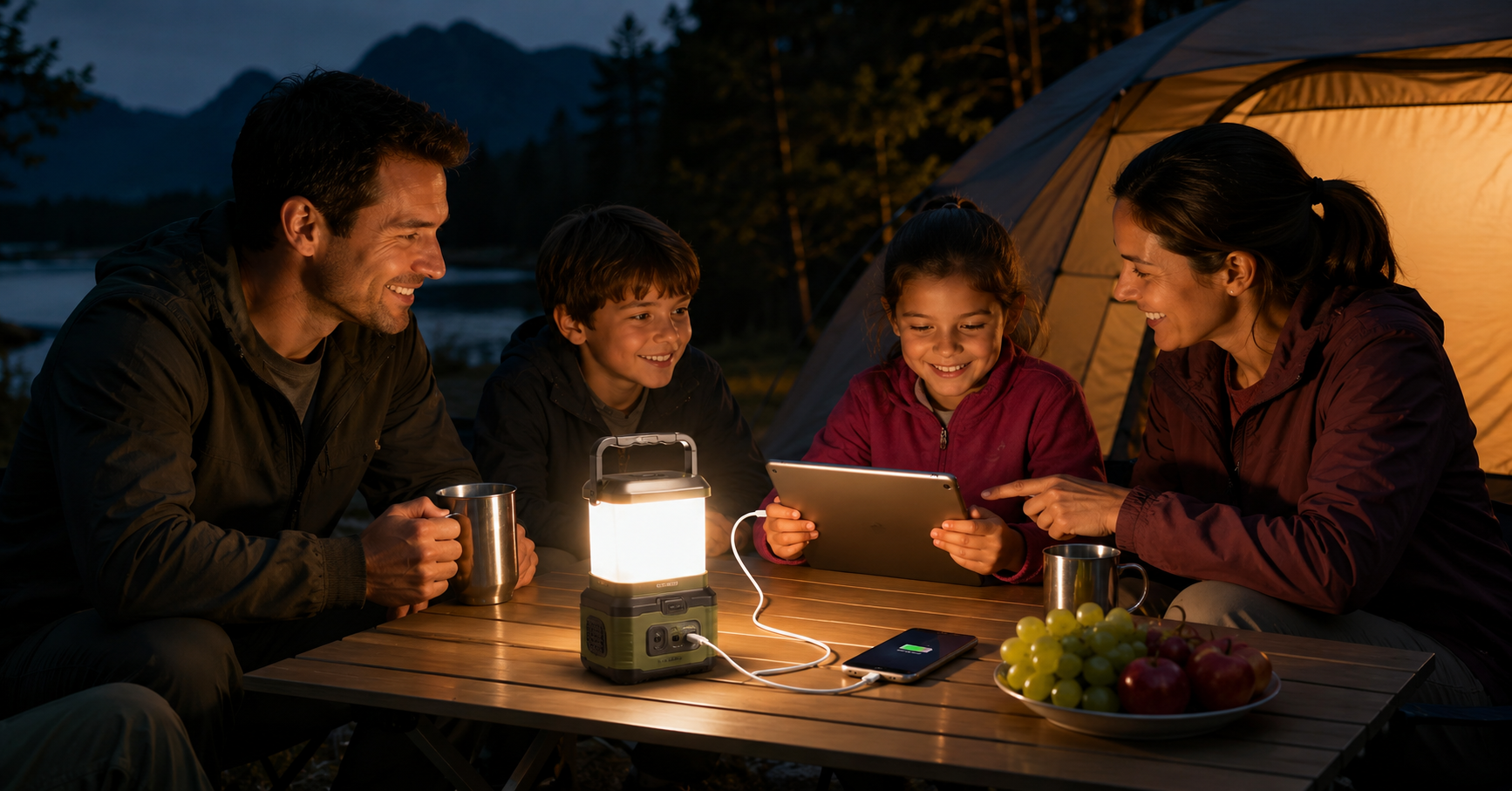
A good outdoor lantern solves two practical problems at once. First, it provides broad area lighting rather than a narrow beam. That matters when users need light across a tent, table, campsite, entrance area, or emergency workspace. Second, the USB output gives users a small amount of power independence for charging a phone or small device.
This dual-purpose function is why the category can be attractive for wholesale buyers. A basic flashlight is directional, while a lantern fills a shared space. The power bank feature adds another use case that can support clearer merchandising and stronger customer interest. When reviewing options on the Brightenlux products page, buyers should evaluate the lantern as both a light source and a compact backup power device, not only as an outdoor accessory.
Visible Features That Deserve Closer Checking
The most obvious details on this product type are not just cosmetic. A sturdy carry handle suggests the lantern is intended to be moved, hung, packed, and used in practical situations. Translucent diffuser panels suggest broad light distribution. A front control panel and multiple battery indicator LEDs help users understand power status without guessing.
The visible USB port is also important because it makes the charging function easy to recognize. In retail and online channels, customers often judge product value quickly from photos and short descriptions. However, appearance cannot confirm battery capacity, runtime, brightness, recharge time, or protection rating. Buyers should request these details directly and avoid building catalog claims from visual assumptions. A rugged look is useful, but it is not proof of measured outdoor performance.
| Buyer check | Why it matters |
|---|---|
| Carry handle | Supports hanging, transport, and campsite use |
| Diffuser panels | Indicates broad area lighting rather than a narrow beam |
| Battery indicators | Helps users monitor remaining charge |
| USB port | Shows the power bank or charging function clearly |
| Packaging protection | Helps reduce damage to handles, ports, and panels |
Construction, Diffuser Design, and User Controls
The visible design suggests a textured outdoor-style housing with a dark green and black appearance. This type of finish is common in outdoor lighting because it can hide scuffs better than glossy plastic and gives the product a more rugged shelf presence. Many consumer outdoor housings use molded plastic because it keeps weight manageable and supports repeatable production.
Still, words such as weather-resistant need careful handling. They are not the same as a confirmed dustproof or waterproof rating. If your market requires outdoor exposure claims, ask for the actual specification and test basis. Light distribution also needs review. The translucent white panels indicate an omnidirectional pattern, but buyers should still compare glare, color feel, and edge hotspots. Two lanterns with similar descriptions can feel very different in actual use.
How to Evaluate a Camping Lantern Bulk Supplier
When comparing suppliers, start with information that affects real customer satisfaction. Ask what the housing is made from, how the internal electronics are protected, and what battery information can be provided. The exact battery chemistry should not be assumed. Request the product specification and the shipping documentation required for your market before moving into quantity planning.
Next, confirm the charging architecture. A USB input and output can add strong value, but only when the ports are robust and the device behaves predictably as a power bank. Some products work acceptably as lights but disappoint when charging a phone or small device. Packaging is another important check. A lantern with a handle, diffuser panels, and ports needs carton protection that prevents crushing and cosmetic damage during wholesale handling.
Common Ordering Mistakes in This Category
One mistake is treating all camping lanterns as interchangeable. They are not. Some products are closer to emergency lamps, while others are positioned for repeated camping use. Without verifiable performance data, buyers may receive a product that looks suitable but does not match the customer’s actual use case.
Another mistake is focusing only on brightness claims. Brightness matters, but beam quality, runtime, charging behavior, and practical usability also shape customer satisfaction. A high number in a product description does not automatically make the lantern easier to use. Buyers also need to pay close attention to the power bank claim. If a listing says the lantern can charge devices, customers will test that feature quickly. Weak or inconsistent USB behavior can create complaints even when the lighting function seems acceptable.
Matching the Lantern to Sales Channels
For retail, visual communication matters. Rugged styling, a carry handle, battery indicator LEDs, and a visible USB port help shoppers understand the value proposition in seconds. Packaging and product photos should make the dual lighting and charging function easy to understand without exaggerated claims.
For e-commerce, clarity is even more important. Buyers compare many listings, and vague descriptions can reduce trust or increase questions before purchase. Strong product images, accurate feature copy, and confirmed specifications help reduce mismatched expectations. For industrial, institutional, or preparedness channels, styling may matter less than repeatability, packaging efficiency, and dependable backup lighting use. If your sourcing team needs clarification before selecting samples, use the Brightenlux contact page to discuss product requirements before committing to an order plan.
Next Step Before Placing a Wholesale Order
Before ordering in bulk, build a shortlist and request samples with a simple review plan. Check beam spread, control behavior, charge indicator response, housing feel, port fit, and the way the lantern sits, hangs, and packs. These practical checks often reveal more than a polished specification sheet.
Buyers should also ask the supplier to state lighting modes, battery information, recharge details, USB input and output function, housing material, surface finish, available protection or durability basis, carton dimensions, unit weight, and pack configuration. If key details are missing, the product may still be workable, but the buying risk is higher. To move from sample review to a sourcing discussion, submit details through the Brightenlux inquiry page.
FAQ for Wholesale Buyers
Is a power bank lantern worth sourcing instead of a basic camping lantern?
It can be worth sourcing if your customers value multifunction outdoor products. The USB charging function adds practical utility and can improve perceived value. However, the feature should be verified before ordering because customers will expect it to work reliably, not only appear in photos or product copy.
Can I describe a rugged-looking lantern as weatherproof?
No. Rugged styling is only a design signal and should not be treated as proof of weatherproof performance. If you want to make water, dust, or outdoor protection claims in a catalog or listing, request the actual protection specification and any available test basis from the supplier.
What is the safest way to compare camping lantern suppliers?
Compare suppliers on verifiable details rather than appearance alone. Focus on housing construction, battery information, charging behavior, light distribution, packaging protection, and sample consistency. Visual similarity can be misleading, especially when internal electronics, port quality, and diffuser performance are not shown in product photos.
Should my listing emphasize camping use or emergency backup use?
The best angle depends on your sales channel. Outdoor retailers can naturally lead with camping, tent lighting, and campsite use. General merchandise, preparedness, or institutional channels may find emergency backup lighting more persuasive, especially when the USB charging function is clearly explained and accurately supported.