

High Brightness Camping Lantern: What Buyers Should Look For
A high brightness camping lantern should do more than look powerful in a product photo. It needs to give usable light for tents, tables, and dark corners, while staying easy to carry and simple to recharge. In outages, travel, or outdoor gatherings, the best lantern is the one people actually reach for. If you are comparing options, review the current range at our products or send details through an inquiry.
Why a high brightness camping lantern matters beyond brightness
The value of a camping lantern is not just in how bright it feels. Once the sun goes down, people need light they can use without holding a beam in one spot. A campsite needs enough visibility for cooking, reading, and moving safely around gear. At home, the same lantern can serve as room lighting during an outage instead of a flashlight that has to be aimed everywhere. That is why sourcing teams should think about usability first. A good lantern supports the setting, the task, and the people around it.
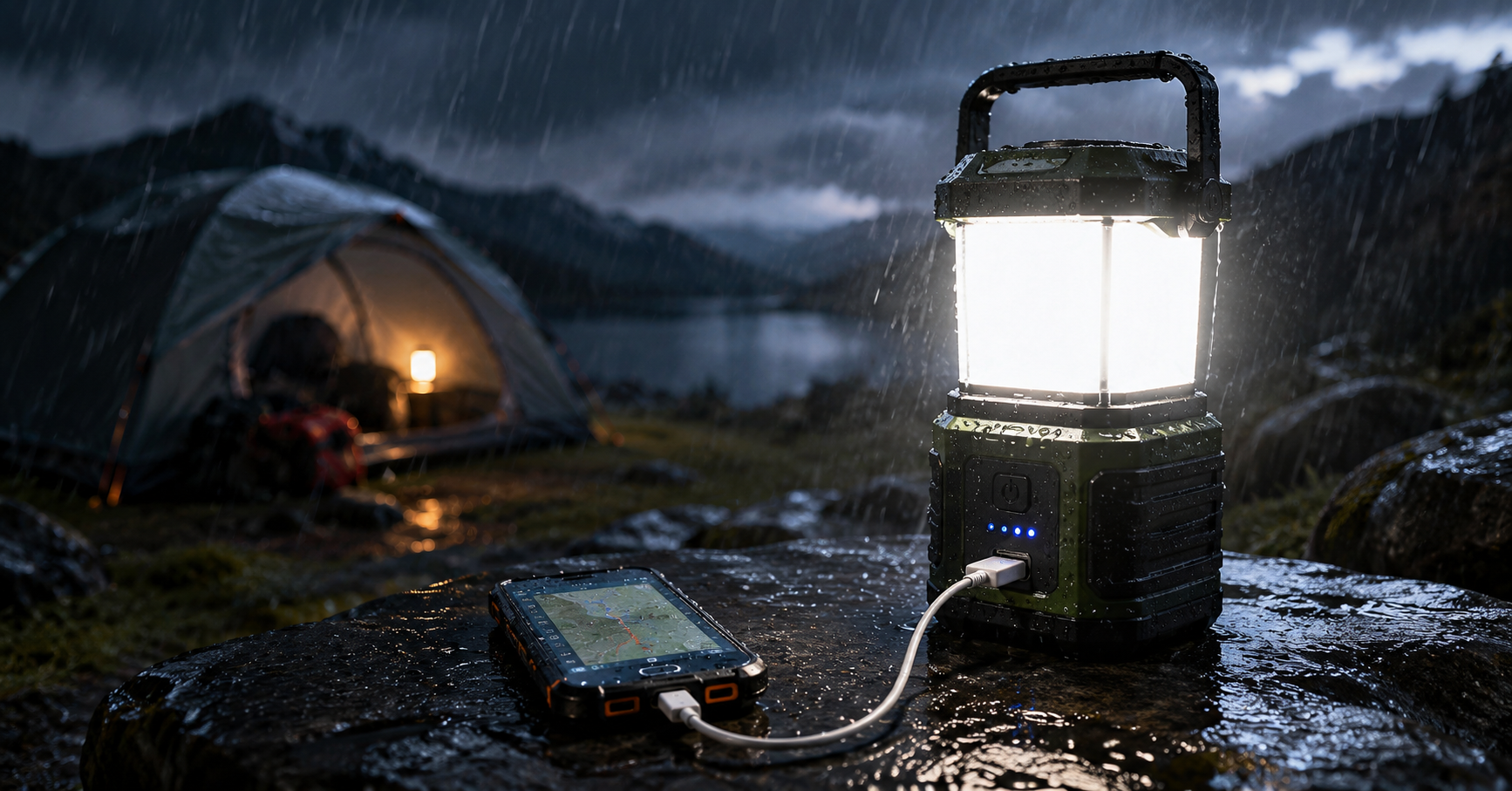
The product shown in the source fits that idea well. It is compact, tabletop-friendly, and uses a frosted diffuser to spread light more evenly. The carry handle also suggests frequent movement between tent, table, and storage space. That mix of features is often more valuable than a strong but narrowly focused beam.
What buyers usually mean by high brightness
In real purchasing decisions, high brightness does not always mean the highest output on paper. Buyers often want enough light for a practical area, not a harsh spotlight. A lantern can seem impressive in a catalog and still feel weak if the light is uneven or concentrated in one spot. For camping and emergency use, users usually care about whether the light reaches the table, the tent floor, or the area where they are moving gear.
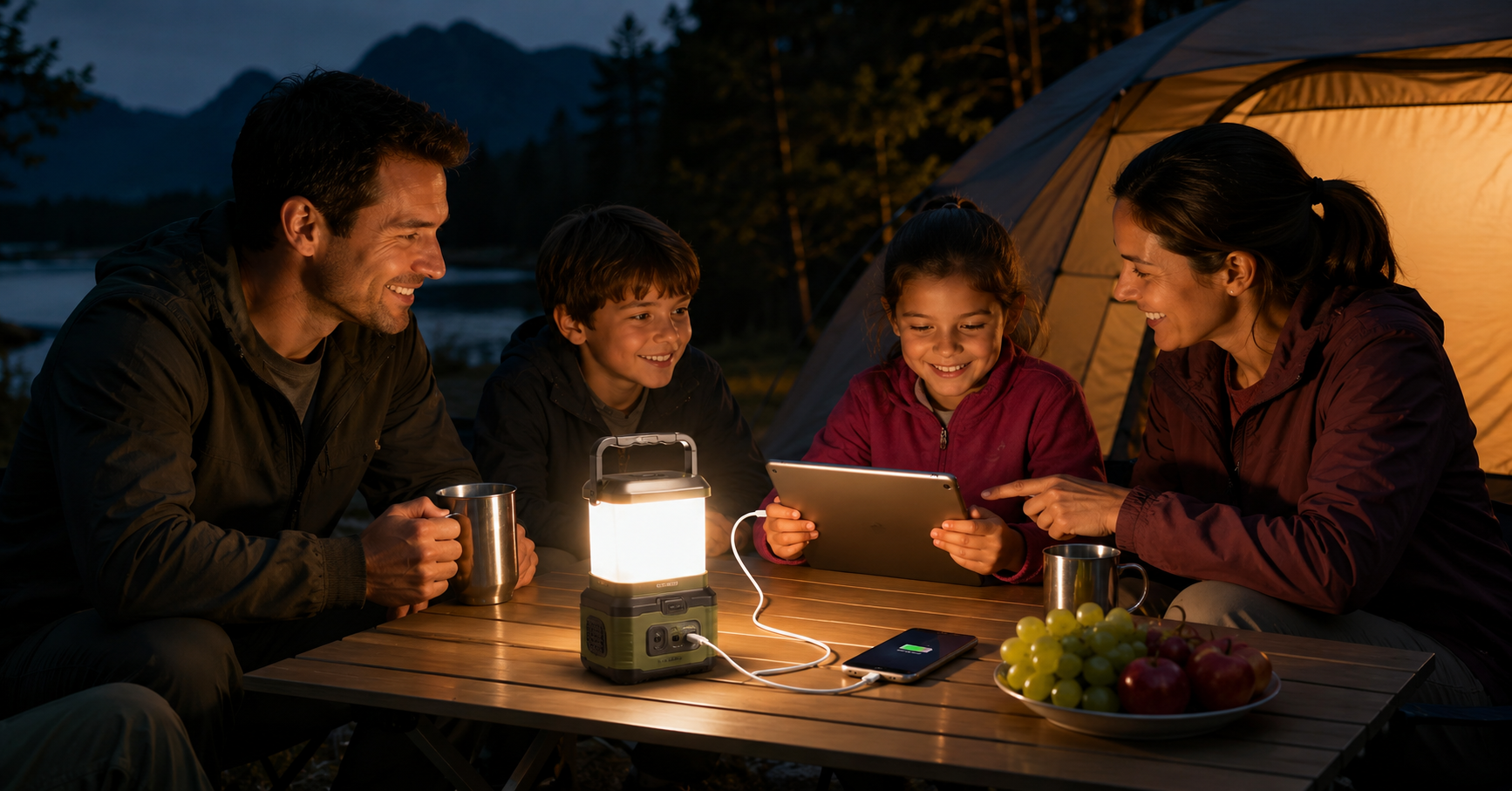
That is why diffusion matters. A lantern with a frosted or translucent cover can be easier to look at and more comfortable to use in close spaces. In group settings, even lighting is usually more useful than intensity alone. If the light helps people see each other, find supplies, and finish a task, it is doing its job.
Design details that change daily use
The source image shows a compact rectangular body with rounded edges, a visible handle, and a central light-emitting section. That shape is common for a reason. It protects the light source, keeps the lantern stable on flat surfaces, and creates a form that is easy to store in a car, RV, or emergency kit. For buyers, those basics can matter as much as the lighting itself.
The diffuser is especially important. It softens the output and helps reduce glare inside tents or around dining areas. The handle also changes how people use the product. It makes the lantern easier to carry, hang briefly, or reposition without touching awkward surfaces. The lower housing appears to contain the controls and charging area, so it is worth checking whether that section feels durable and easy to use during sampling.
Why rechargeable lighting has changed the category
Rechargeable lanterns have become the default for many portable lighting programs because they are easier to manage than disposable battery products. Users can keep them charged at home, place them in a vehicle, and expect them to be ready when travel plans change or storms arrive. That convenience matters in both retail and B2B channels, because it makes the product easier to understand and easier to use.
The lantern type in the source also appears to support phone charging from the body, which increases its value in mixed-use situations. One device can provide area lighting and a small amount of backup power. That can be useful for camping, roadside stops, or outages. For buyers, the key is not simply that the lantern charges something else, but that the charging function is clearly explained and practical in real use.
A compact sourcing checklist
When comparing a high brightness camping lantern, the most useful questions are the simple ones. Is the shape stable on a table? Is the light spread comfortable for close use? Is the handle secure enough for frequent carrying? Is the charging method simple for the intended user? Does the phone-charging feature work in a way that makes sense for emergency or outdoor use? Those answers are more valuable than a polished sales line.
| What to review | Why it matters |
|---|---|
| Light spread | Shows whether the lantern works for tents, tables, and small group areas |
| Handle and base | Affects portability, balance, and everyday handling |
| Charging layout | Determines how easy the lantern is to keep ready |
| Phone-charging function | Confirms whether the added utility is genuinely useful |
For product teams, this type of check often reveals more than a spec sheet can. If you need to discuss a project directly, use contact us.
Common mistakes buyers make with camping lanterns
One of the biggest mistakes is buying for brightness alone. A lantern can look strong and still fail to create comfortable, usable light. Another mistake is ignoring charging convenience. If users have to work too hard to recharge the product, it stops being an everyday item and becomes something they only remember in an emergency.
Physical form is another issue. A lantern may be portable in theory, but if it feels top-heavy, awkward on a table, or hard to move, it quickly loses value. Buyers should also be careful not to assume that any USB-style port automatically makes the product a reliable backup source. The charging feature should be checked during sampling, not treated as a label claim.
Where this lantern type fits best
This style of lantern works well wherever people need portable area lighting. Camping is the obvious use, but the same product also fits backyard gatherings, picnic tables, emergency home backup, and travel kits. The handle and compact tabletop shape make it easy to move between those settings. That flexibility is one reason rechargeable lanterns remain attractive to both retailers and sourcing teams.
The source product is especially suited to mixed-use positioning because it combines a bright diffused light, a carry handle, and a rechargeable form factor. That makes it useful as outdoor gear and as emergency gear without forcing the buyer into one narrow category. For teams building an assortment, it helps to think in use cases first and specifications second. A lantern that serves several everyday situations is easier to sell and easier to keep in use.
FAQ
Is a brighter lantern always better for camping?
Not always. Too much direct brightness can create glare in a tent or at a close table. Many users prefer even, usable light that helps them see gear, food, and people clearly. For camping, comfort and spread often matter as much as raw output.
Why does the handle matter if the lantern sits on a table?
Because campers and households move lanterns often. A handle makes the product easier to carry, reposition, and store. It also gives the lantern a more practical field-ready feel, especially when people move between a tent, picnic area, vehicle, or indoor room.
Is the phone-charging feature important?
It can be very useful during outages or outdoor trips because it adds value without requiring another device. Still, buyers should confirm how it works rather than assuming it performs like a dedicated charger. The feature should be practical, clear, and easy for users to understand.
What should distributors watch for?
Distributors should look for consistency in the housing, controls, handle feel, and charging performance. Those details shape customer satisfaction more than a single spec line. If the lantern is meant for camping and backup use, it needs to feel dependable in both everyday handling and emergency situations.