

Tactical Flashlight Manufacturer Guide: Performance, Applications, and Buying Tips
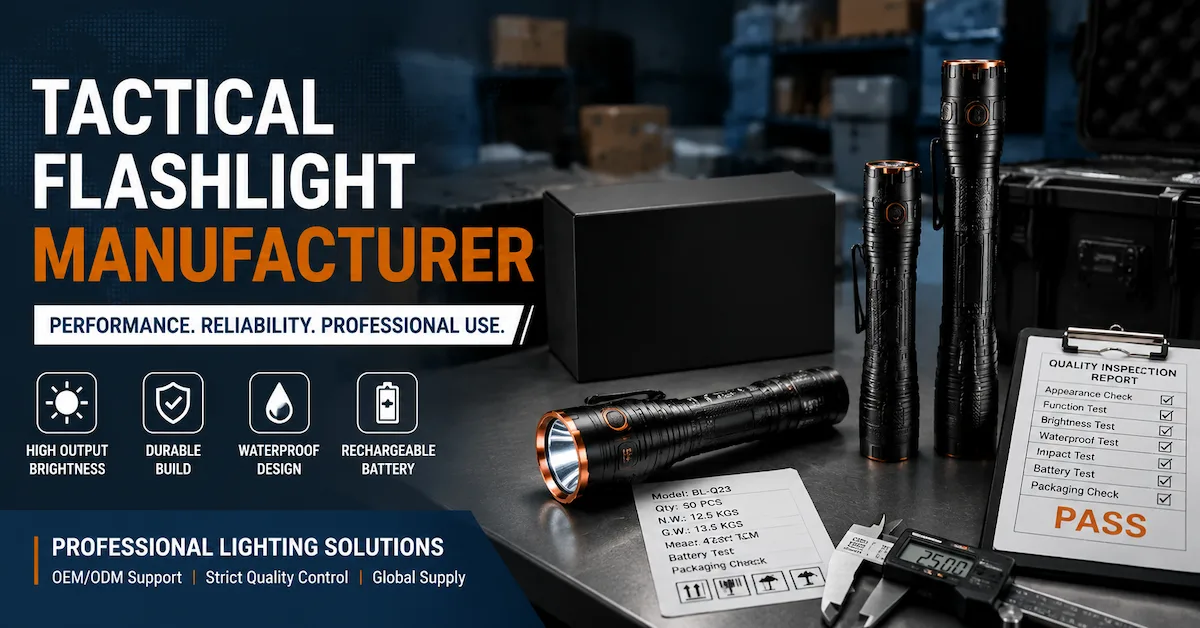
Choosing a tactical flashlight manufacturer is an important decision for brands, distributors, security suppliers, outdoor product companies, and industrial lighting buyers. Tactical flashlights are not only portable lighting tools. They are designed for demanding environments where durability, reliable operation, battery efficiency, lighting performance, and environmental resistance matter.
A professional tactical flashlight manufacturer specializes in developing and producing high-performance flashlights for professional applications. Unlike standard consumer flashlights, tactical models must be designed around stronger requirements and real usage conditions. Buyers need to understand how these products differ, where they are used, which features matter most, and how to evaluate a manufacturing partner before starting an OEM or customized project.
Brightenlux provides LED flashlights, rechargeable flashlights, work lights, and customized lighting solutions for global customers. You can explore the Brightenlux product portfolio to review professional portable lighting solutions.
1. What Is a Tactical Flashlight Manufacturer?
A tactical flashlight manufacturer develops and produces flashlights intended for professional and demanding use. The manufacturer must understand lighting technology, product structure, power systems, and the practical requirements of users working in challenging environments.
Tactical flashlights are commonly used in security operations, outdoor activities, industrial inspection, emergency response, and professional equipment markets. For B2B buyers, working with an experienced manufacturer helps align products with market expectations for reliability and performance.
Compared with ordinary flashlights, tactical models usually focus on stronger construction, more reliable operation, better heat management, and improved battery performance. These characteristics support use cases where a flashlight may be handled frequently, exposed to difficult surroundings, or needed during time-sensitive work.
2. Tactical Flashlight vs Standard Flashlight
Both standard and tactical flashlights provide illumination, but they are designed with different priorities. A standard flashlight is generally used for daily lighting, while a tactical flashlight is built for professional applications where structure, performance, and reliability are more important.
| Feature | Standard Flashlight | Tactical Flashlight |
|---|---|---|
| Main purpose | Daily lighting | Professional applications |
| Durability | Basic protection | Enhanced durability |
| Material | General housing | Strong aluminum construction |
| Environment | Normal use | Harsh environments |
| Performance | Basic lighting | High-performance output |
This difference is important for distributors and brands because customer expectations vary by market. A buyer serving professional equipment markets may need a product with durable housing, reliable switches, suitable battery systems, and consistent lighting performance. A buyer serving general household markets may have different priorities.
3. Professional Applications for Tactical Flashlights
Tactical flashlights are used across multiple professional and outdoor scenarios. Each application places different demands on product design, beam performance, body structure, and battery configuration.
Security Operations
Security professionals often require flashlights that provide fast activation, reliable brightness, durable structure, and long operating time. Important features include strong beam output, a comfortable grip, reliable switches, and impact resistance. In security work, a flashlight should be easy to operate and dependable during repeated use.
Outdoor and Survival Use
Outdoor users depend on flashlights in unpredictable environments. Common requirements include waterproof construction, long runtime, portable size, and strong lighting performance. Typical applications include camping, hiking, exploration, and emergency preparation. For outdoor markets, product size, grip comfort, beam distance, and battery convenience may all influence buyer decisions.
Industrial Inspection
Industrial users require lighting tools that can handle frequent use. Important characteristics include stable performance, durable housing, easy operation, and reliable battery systems. Applications include equipment inspection, workshop maintenance, and construction environments. A practical industrial flashlight should help users work efficiently in areas where dependable illumination is required.
Emergency Response
Emergency situations require products that can work when needed. Key requirements include quick activation, strong visibility, reliable power supply, and durable construction. For emergency preparation markets, buyers often look for lighting products that are simple to operate and suitable for unpredictable use conditions.
4. Key Features Buyers Should Evaluate
A reliable tactical flashlight manufacturer focuses on several product characteristics. B2B buyers should review these factors carefully before choosing a model or starting a customized project.
- LED performance: Evaluate lumens, beam distance, beam focus, and lighting modes according to the intended application.
- Body construction: Many professional tactical flashlights use aluminum alloy housing for high strength, lightweight construction, better heat dissipation, and a premium appearance.
- Environmental protection: Important protection features include waterproof design, dust resistance, impact protection, and drop resistance.
- Battery options: Common options include rechargeable batteries, lithium battery systems, and replaceable battery solutions.
- Power considerations: Review runtime, charging convenience, battery safety, and product size.
Different applications require different lighting characteristics. Outdoor users may need longer beam distance, while industrial users may prefer wider area illumination. The best product choice depends on the target market and usage environment rather than a single specification.
5. How Manufacturers Develop Professional Tactical Flashlights
A professional manufacturing process involves multiple stages. These stages help transform market needs into practical lighting products that balance performance, usability, and durability.
Product Design
The design stage considers user requirements, application environment, product size, grip comfort, and heat management. The goal is to create a flashlight that balances performance and usability. A good design should be comfortable to hold, practical to operate, and suitable for the environments where the product will be used.
Component Selection
Important components include LED chips, driver circuits, battery systems, switch design, and housing materials. Component selection directly affects brightness, runtime, and reliability. For B2B buyers, this stage is important because product performance depends on the combination of lighting, power, control, and housing choices.
Prototype Testing
Before mass production, prototypes are tested for lighting performance, battery runtime, switch operation, durability, and user experience. Prototype testing helps manufacturers and buyers confirm whether the product direction meets application requirements before moving forward.
6. OEM and Custom Tactical Flashlight Solutions
Many brands require products that match their own market positioning. A tactical flashlight manufacturer can support customization based on brand, channel, and product requirements. Customization may include logo customization, packaging design, product appearance, functional improvements, and product specifications.
Custom tactical flashlight solutions are suitable for tactical equipment brands, outdoor product companies, security suppliers, and industrial distributors. For buyers, customization can help build a product line that reflects the needs of a specific market segment.
When discussing custom products, it is helpful to define the target application first. For example, a flashlight intended for outdoor users may emphasize portability and beam distance, while a product intended for inspection work may need easy operation and wide area illumination. Clear communication helps the manufacturer recommend suitable design directions without unnecessary complexity.
7. Buying Tips for Choosing a Tactical Flashlight Manufacturer
Selecting the right manufacturing partner is essential for long-term success. Buyers should evaluate both product capability and communication quality. The goal is to find a manufacturer that understands professional lighting applications and can support the product category you plan to sell.
Start by reviewing manufacturing experience. Relevant product categories and previous projects can help indicate whether the manufacturer understands similar requirements. Then review available product types, such as LED flashlights, rechargeable flashlights, work lights, and customized lighting solutions. This helps determine whether the manufacturer can support your target product range.
Buyers should also prepare clear requirements before communication. Useful information may include the intended application, preferred power option, desired body style, packaging needs, logo customization needs, and expected product positioning. Clear requirements make it easier to compare options and avoid misunderstanding during development.
If you need support for a new flashlight project, you can contact Brightenlux to discuss product direction and customization needs. For project submissions or sourcing requests, you may also use the Brightenlux inquiry page.
8. Practical Checklist for B2B Buyers
Before selecting a tactical flashlight manufacturer, B2B buyers can use a structured checklist to compare options. This helps ensure that product decisions are based on application needs rather than isolated features.
- Define the target market: security, outdoor, industrial, emergency response, or professional equipment.
- Clarify key product requirements: durability, lighting performance, battery efficiency, and environmental resistance.
- Review body material and construction, including aluminum alloy housing where suitable.
- Evaluate lighting requirements such as beam distance, beam focus, lighting modes, and general output needs.
- Compare battery solutions, including rechargeable, lithium battery, and replaceable battery options.
- Check customization needs such as logo, packaging, appearance, functions, and specifications.
- Discuss prototype evaluation for lighting performance, runtime, switch operation, durability, and user experience.
This checklist can also support internal purchasing discussions. It gives product managers, sourcing teams, and sales teams a shared framework for evaluating tactical flashlight projects.
9. FAQ: Tactical Flashlight Manufacturer Questions
What does a tactical flashlight manufacturer do?
A tactical flashlight manufacturer develops and produces high-performance flashlights for demanding environments and professional applications. These products focus on durability, lighting performance, reliable operation, battery efficiency, and environmental resistance.
What are tactical flashlights commonly used for?
They are commonly used in security operations, outdoor activities, industrial inspection, emergency response, and professional equipment markets.
How is a tactical flashlight different from a standard flashlight?
A standard flashlight is mainly for daily lighting and normal use. A tactical flashlight is designed for professional applications, enhanced durability, harsh environments, strong aluminum construction, and high-performance output.
What features should buyers evaluate?
Buyers should evaluate LED performance, beam distance, beam focus, lighting modes, body durability, waterproof design, dust resistance, impact protection, battery options, runtime, charging convenience, battery safety, and product size.
Can tactical flashlights be customized?
Yes. Customization can include logo customization, packaging design, product appearance, functional improvements, and product specifications. Custom solutions are suitable for tactical equipment brands, outdoor product companies, security suppliers, and industrial distributors.
Conclusion
A tactical flashlight manufacturer plays an important role in helping B2B buyers develop reliable portable lighting products for professional markets. The right product should match the intended application, whether it is security work, outdoor use, industrial inspection, emergency response, or professional equipment distribution.
By comparing product structure, LED performance, battery systems, protection features, customization options, and manufacturing experience, buyers can make more informed sourcing decisions. Brightenlux supports LED flashlights, rechargeable flashlights, work lights, and customized lighting solutions for global customers seeking professional portable lighting products.