

Rechargeable Flashlight Manufacturer: What Buyers Should Look For
Choosing a rechargeable flashlight manufacturer is not only about finding a portable light that looks good in a catalog. For B2B buyers, the real question is whether the product can perform in outdoor, emergency, camping, hiking, and field work settings. A handheld light may seem simple, but its value depends on housing design, grip, switch placement, beam control, charging usability, and assembly consistency. This guide explains what buyers should review before sourcing rechargeable flashlights and how to build a clearer supplier brief.
Understand the Real Use Case Before Comparing Suppliers
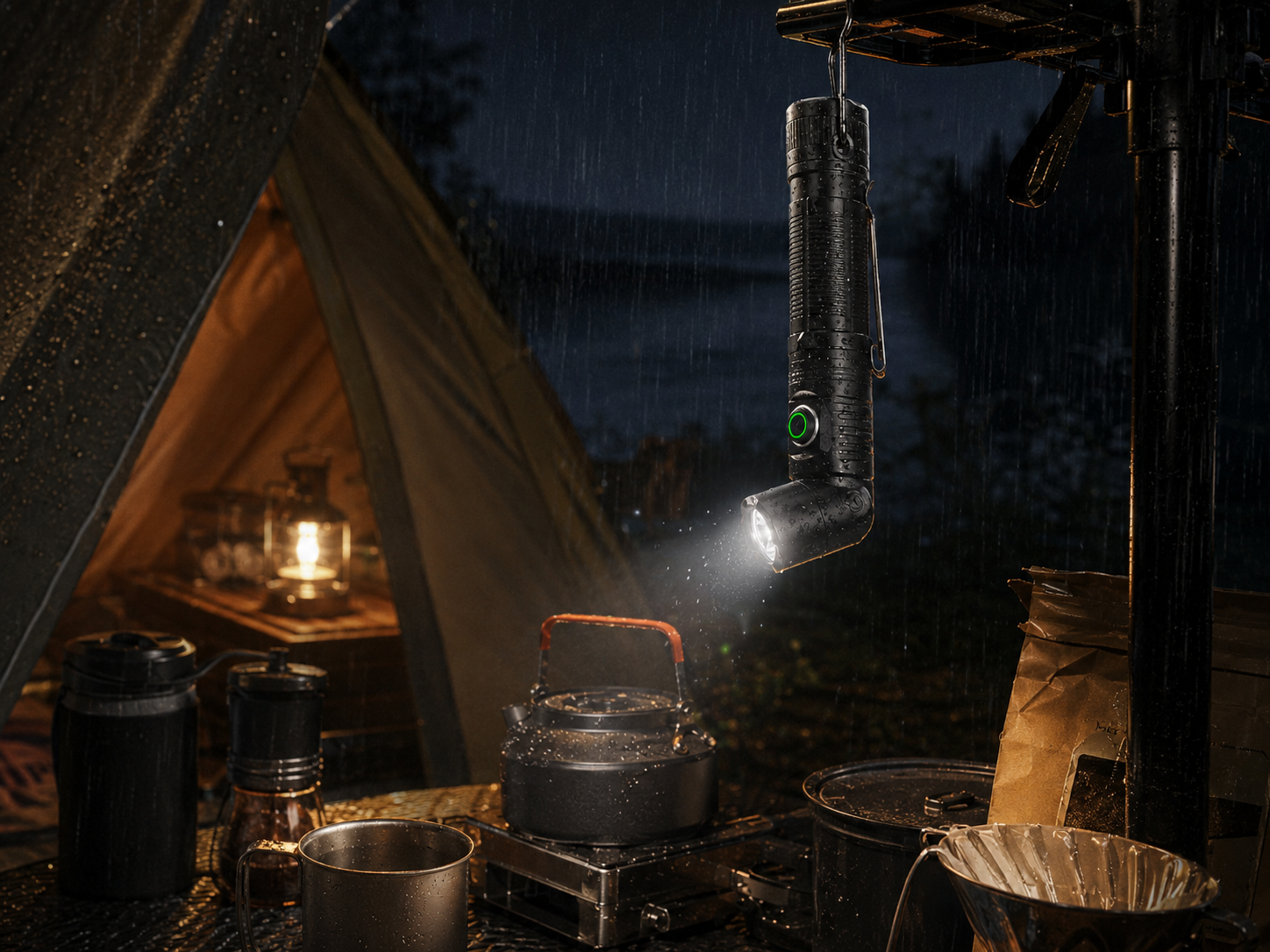
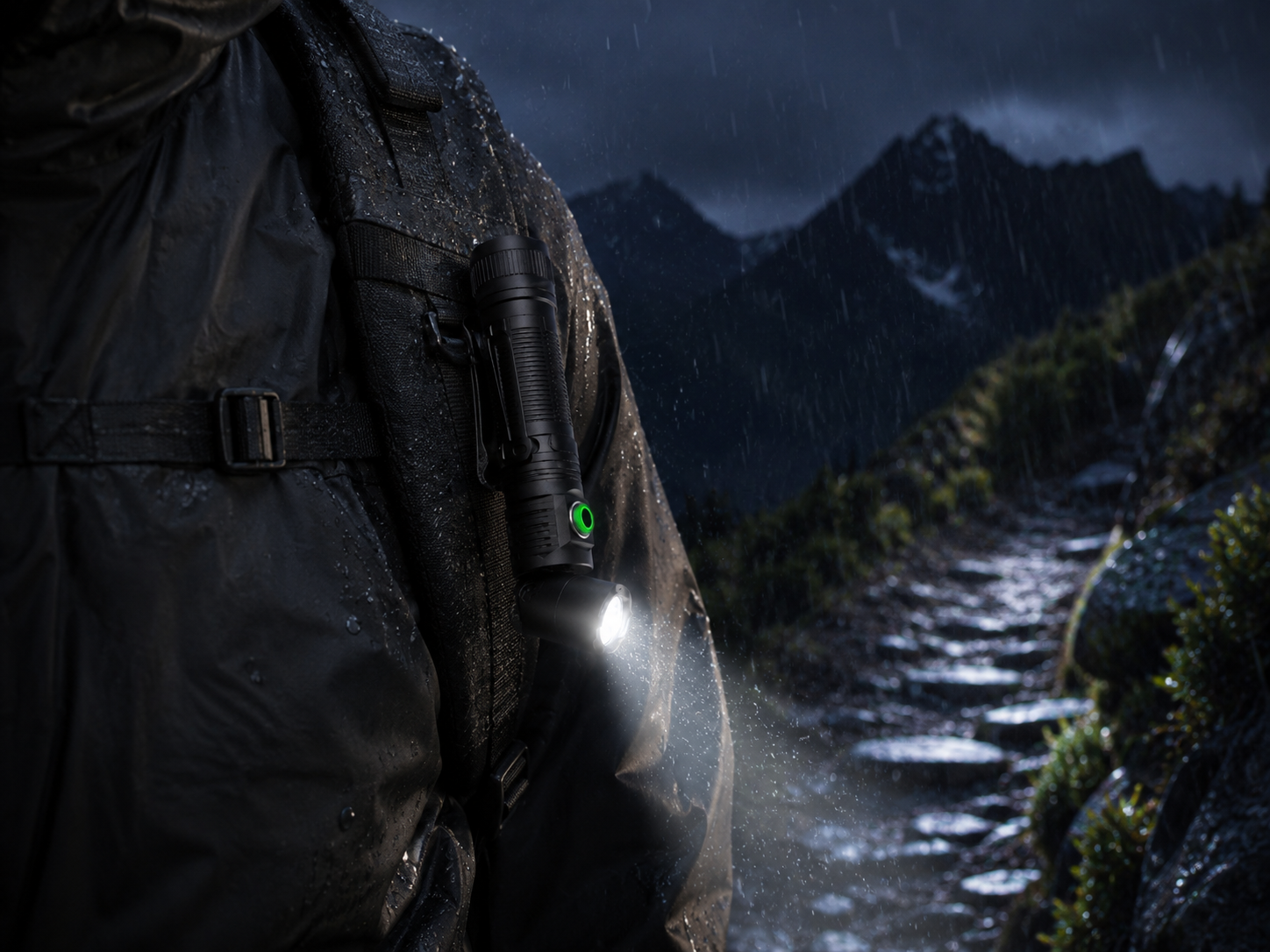
Before asking for samples, buyers should define where the rechargeable flashlight will actually be used. A compact outdoor flashlight with a directed white beam and angled head serves a different purpose from a broad area light. It may be used to check a trail, search inside a gear bag, inspect equipment, or support emergency preparedness. In the background of the reference product, a lantern-like light suggests that buyers may also need ambient camp lighting. That contrast matters. Task lighting and area lighting require different design priorities, even when both belong in the same outdoor product range. If you are building a wider lighting program, reviewing related models on the Brightenlux products page can help clarify which form factors belong together.
Check Housing, Grip, and Handling Details
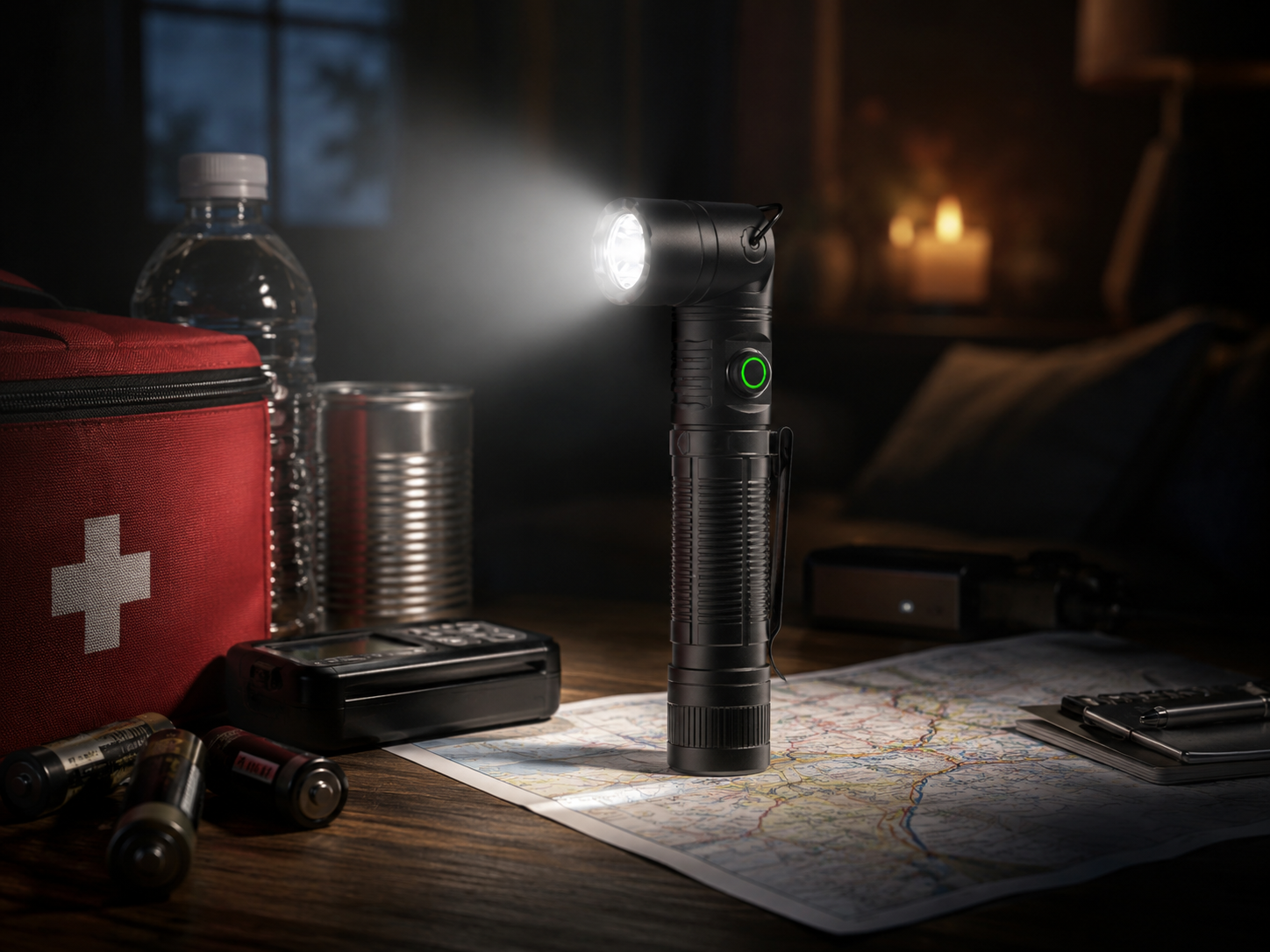
The visible product suggests a black matte or satin housing with a ribbed, textured body. For outdoor use, that kind of surface can support a more secure hold and a more durable appearance. Buyers should still ask what the housing structure is made from and how it is produced. An injection-molded polymer body, a metal body, or a hybrid structure can each make sense depending on the target market and expected handling conditions. The important point is not to assume one material is always better. Instead, evaluate whether the flashlight feels balanced, easy to carry, and practical in cold, wet, dusty, or uneven environments. A product that slips, rolls away, or feels awkward will frustrate users even if the lighting element itself works.
Evaluate Switch Design and Beam Behavior
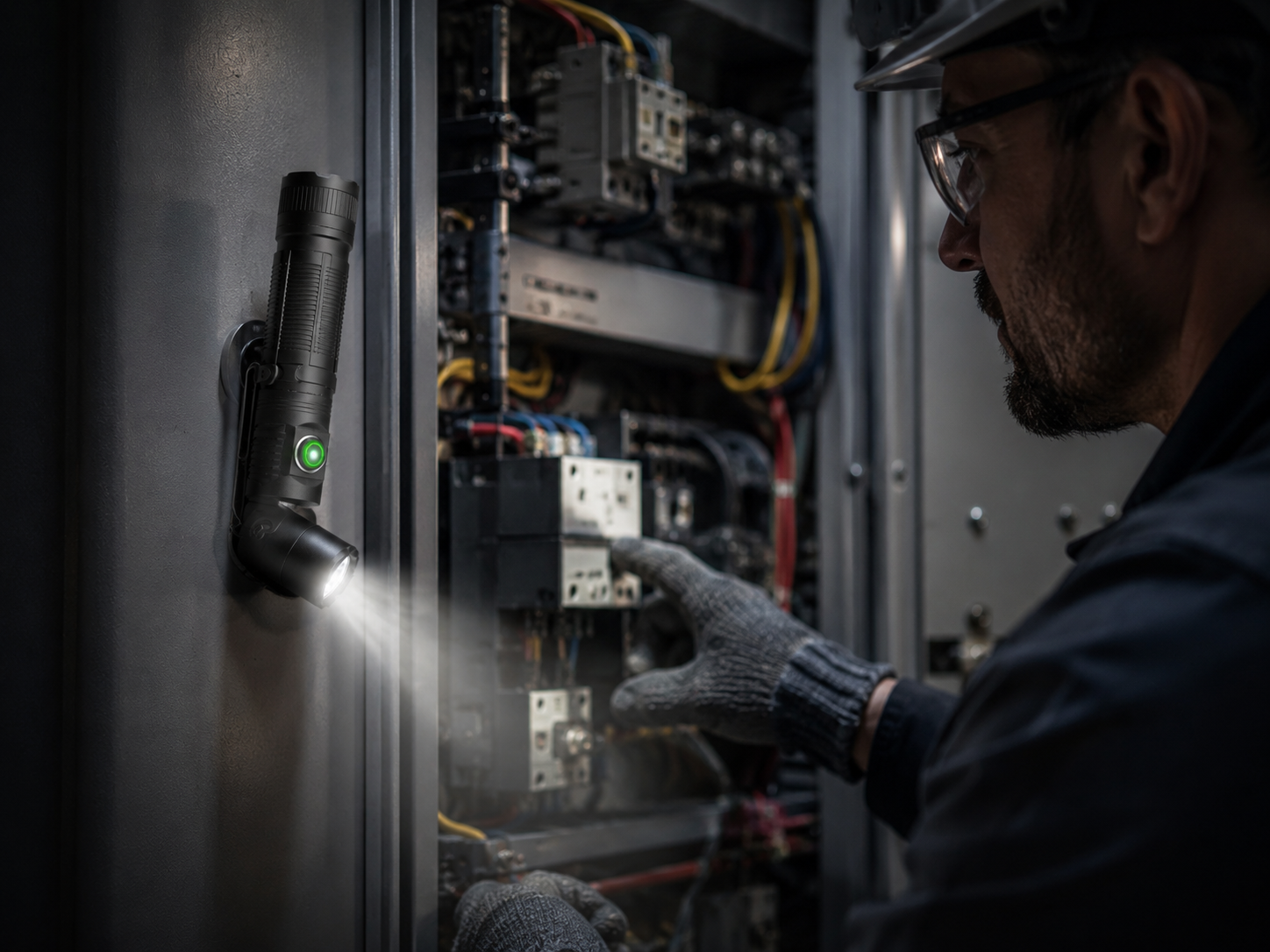
Small exterior details often decide whether a rechargeable flashlight is used regularly or left behind. The reference product shows an illuminated circular side button, a feature that can be helpful when the light is handled as a campsite or work tool. However, buyers should confirm whether the button is easy to find in low light and protected from accidental activation in a truck, tool bag, or emergency kit. Beam behavior deserves the same attention. The visible directed white output points toward task use rather than broad flood lighting only. Ask whether the optic is fixed, adjustable, or part of a multi-mode system if such options are being considered. A beam that is too narrow can be tiring at close range, while one without enough focus may be less useful for navigation.
Compare Suppliers With Practical Criteria
A long specification sheet is useful only when it connects to real use. Instead of leading with broad claims, ask each rechargeable torch manufacturer to explain how the product design supports carrying, charging, placement, and repeated handling. The table below keeps the discussion focused on points that are visible to users and relevant to sourcing decisions.
| Area to Review | Buyer Question | Why It Matters |
|---|---|---|
| Grip texture | How is the surface produced? | Supports handling in outdoor use. |
| Switch position | Can it be found without accidental activation? | Affects storage and night operation. |
| Beam control | Is the output suited to task use? | Improves navigation and close work. |
| Body geometry | Can it sit or tilt securely? | Helps campsite and emergency use. |
| Assembly consistency | Will samples match later batches? | Reduces sourcing uncertainty. |
These questions do not require complex engineering language, but they quickly reveal whether a supplier understands the product or only the part number.
Look Beyond the Headline Specification
Many sourcing teams begin with output numbers or battery claims, yet those details are only part of the decision. A handheld outdoor flashlight also needs consistent fit, reliable controls, and a shape that supports real handling. Buyers should examine whether the head assembly feels secure, whether the lens area appears aligned, and whether the body feels balanced during extended carry. If the product is intended for emergency readiness, it may sit unused for a long period and then need to work immediately. That makes switch reliability, shelf readiness, and charging behavior important topics to discuss with the supplier. Avoid judging the product only from marketing images. Put samples into realistic use scenarios and ask users whether the light feels practical.
Avoid Common Sourcing Mistakes
One common mistake is treating every portable LED light as interchangeable. A compact outdoor flashlight with an angled head and textured grip is not the same as a generic hand torch. The form factor changes how the item is stored, carried, set down, and activated. Another mistake is assuming that rechargeable automatically means convenient. The charging method, connector durability, and power management behavior all affect the user experience, especially for camping or emergency kits. Packaging and storage also deserve attention. If the unit will be dropped into a gear bag, the switch, protective areas, and exterior finish can influence how well the product feels after repeated use. For project-specific discussions, buyers can contact Brightenlux through the contact page.
Build a Clear Sourcing Brief for the Manufacturer
A strong sourcing brief starts with the usage scene rather than a list of generic claims. State whether the flashlight is intended for camping, hiking, emergency preparation, work tasks, or mixed-use applications. Then describe expected handling conditions, preferred product style, switch expectations, beam needs, and storage concerns. A capable rechargeable flashlight manufacturer should be able to respond with practical suggestions about body geometry, grip performance, switch position, and optical direction. Buyers should also ask which parts are custom and which are standard components, because this affects design flexibility and consistency across future orders. If you are ready to share requirements, Brightenlux provides an inquiry channel for sourcing discussions.
FAQ
What should buyers check first when choosing a rechargeable flashlight manufacturer?
Start with the intended use case. A flashlight for campsite navigation, emergency readiness, or field work needs different priorities from a general consumer hand torch. Once the application is clear, review grip, switch placement, beam behavior, body stability, and supplier communication before focusing on decorative details.
Why is switch design important for rechargeable flashlights?
The switch affects both usability and storage safety. A side button may be convenient during night tasks, but it should be easy to locate without being too easy to trigger accidentally. Buyers should test samples in low light and consider how the flashlight behaves inside bags, vehicles, or kits.
How should buyers evaluate beam behavior without relying on marketing claims?
Use the flashlight in realistic situations. Check whether the beam helps with walking, searching, equipment inspection, and close-range tasks. A useful beam is not only bright; it should match the working distance and avoid becoming tiring or awkward for the user during repeated handling.
What makes a rechargeable flashlight supplier worth keeping?
A reliable supplier understands the product’s real environment and can connect design choices to user needs. Look for clear answers about housing, grip, switch protection, beam direction, assembly consistency, and customization limits. The best partner helps refine the product instead of relying only on broad claims.