

Rechargeable Flashlight Manufacturer: How to Choose the Right Supplier
Choosing a rechargeable flashlight manufacturer is not just a sourcing task. For B2B buyers, the real goal is to find a product that works reliably in roadside repairs, power outages, field inspections, camping, emergency kits, and night work around machinery. If you are comparing options, start with how the light will be used, carried, and charged, then review the supplier’s ability to build it consistently. You can also review available formats at /products before narrowing your shortlist.
What buyers really need from a rechargeable flashlight manufacturer
A good supplier should deliver more than a bright beam. Buyers need predictable quality, practical serviceability, and a design that fits the task. A handheld rechargeable torch may look simple from the outside, but the details behind it decide whether it becomes a repeat-order product or a support issue. Cell selection, charging architecture, thermal control, switch durability, optical design, and body construction all matter because they affect real use, not just product photos. That is why sourcing should combine engineering judgment with practical skepticism. Ask whether the supplier can explain how the light is built and why those choices suit the intended application.
The most reliable manufacturers are usually the ones that can discuss structure, carry style, and beam behavior in plain language. They should be able to explain how the product supports the user in the field, not only how it looks in a catalog. For B2B buyers, that clarity often matters more than a polished presentation.
Why the product format matters
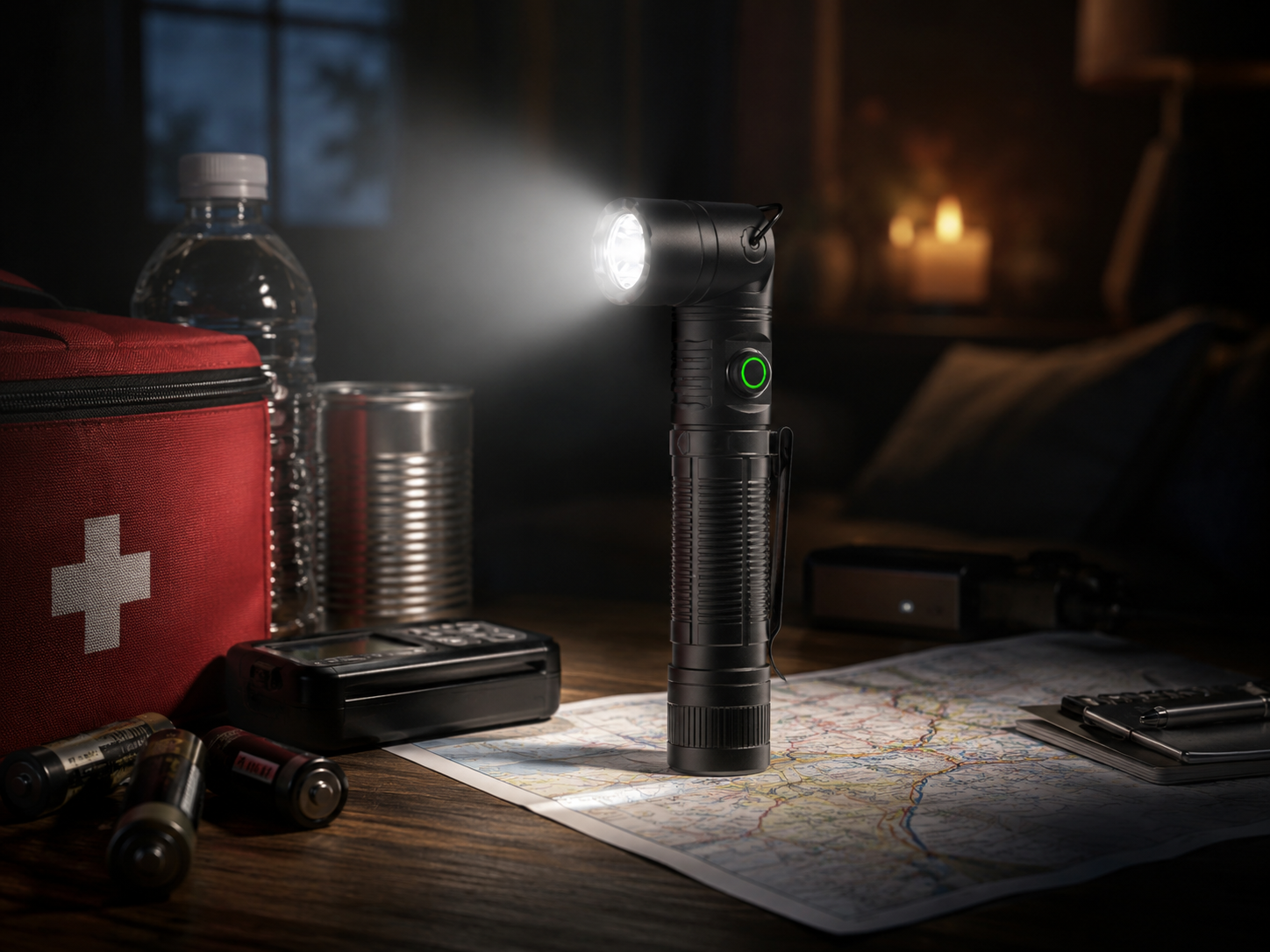
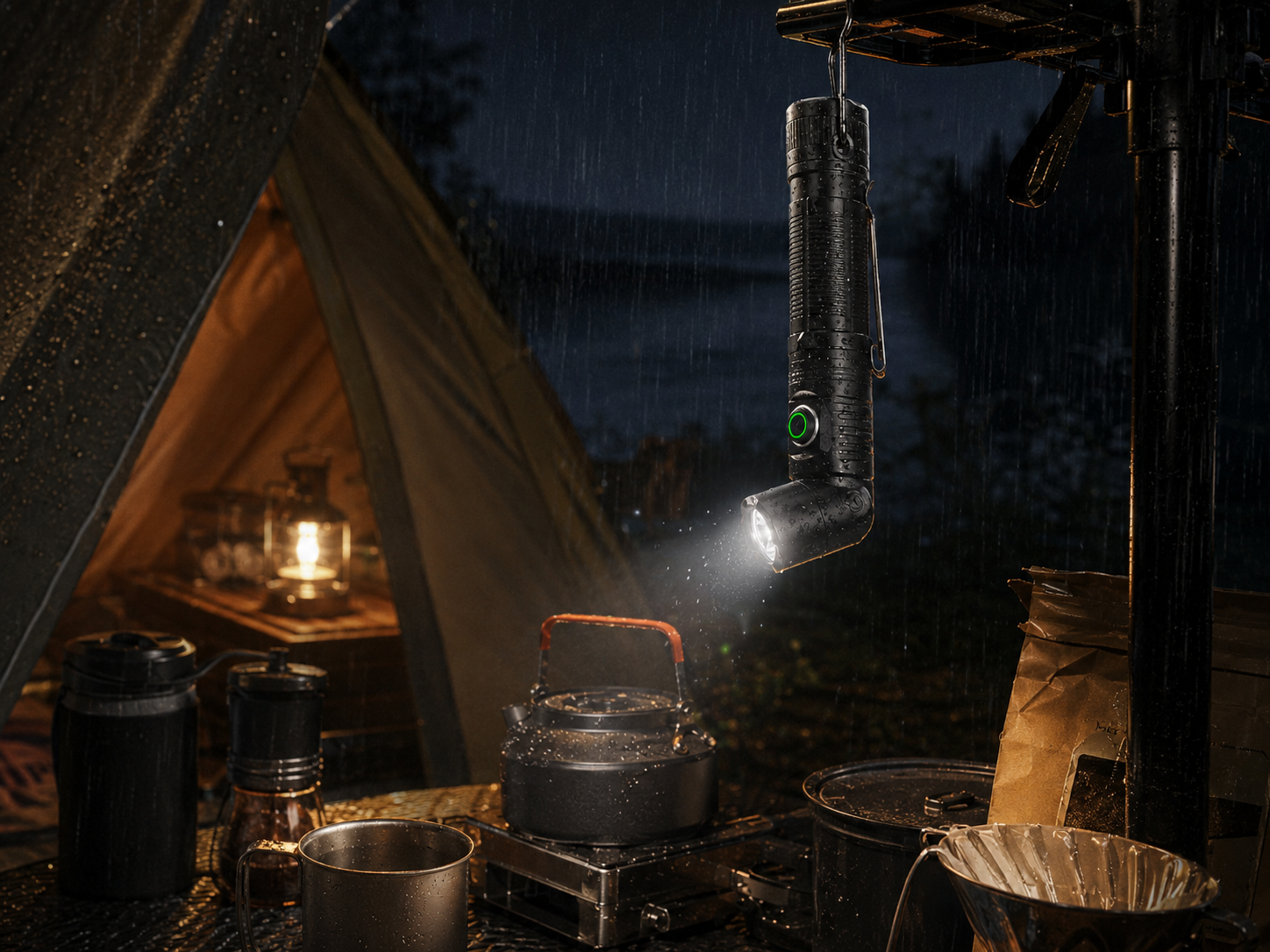
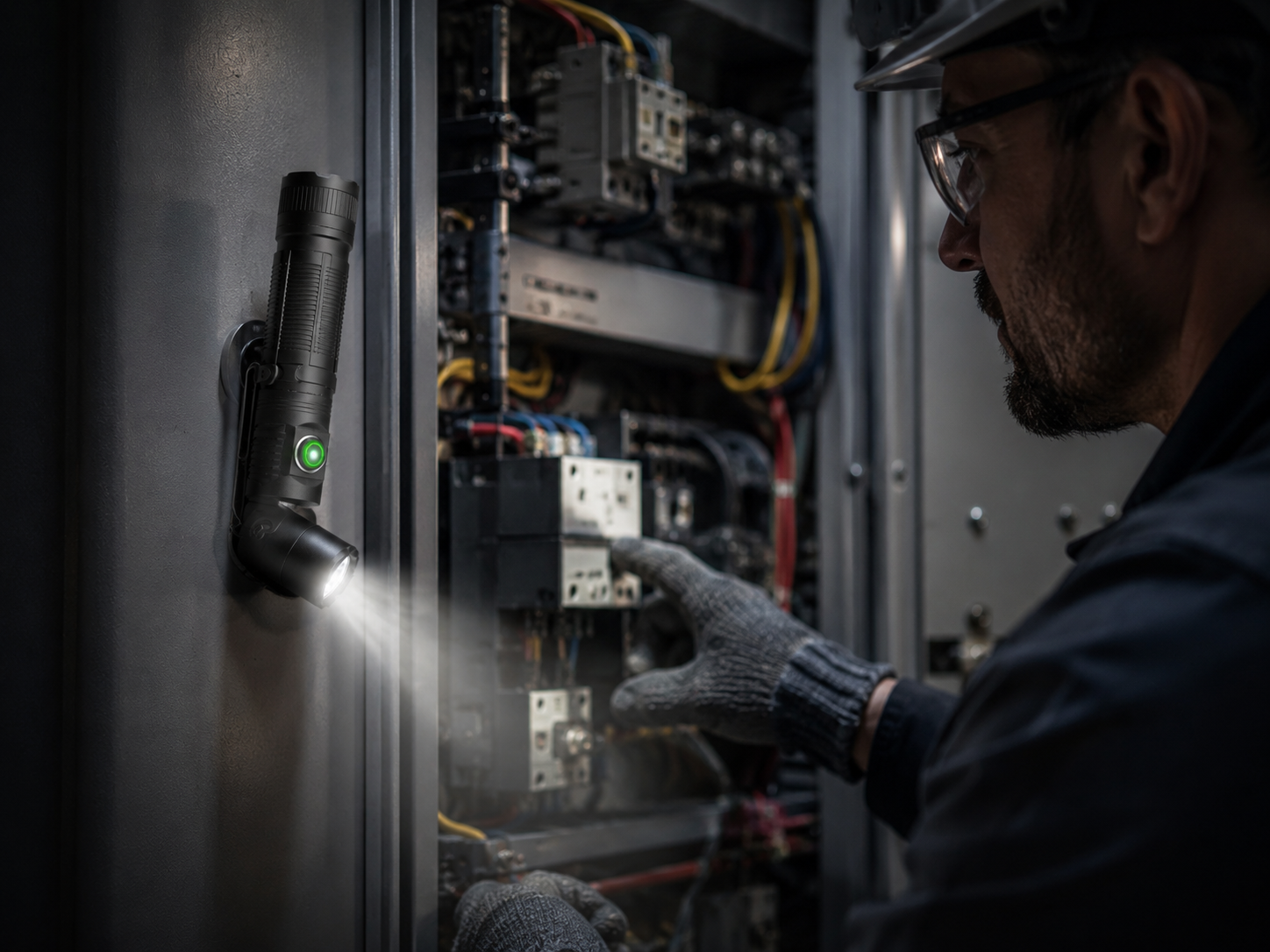
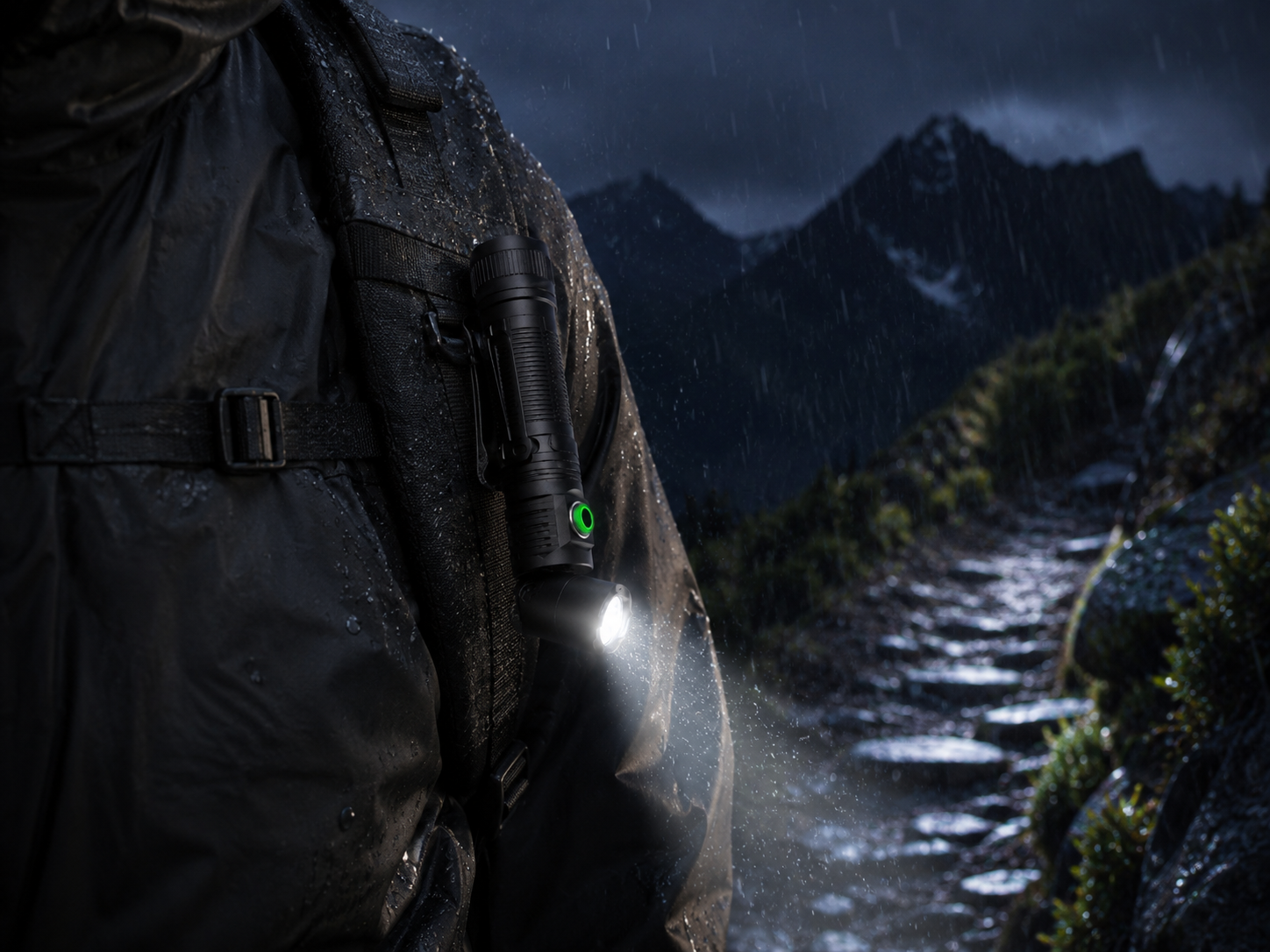
The product type in this category is often a compact right-angle light used as a work light or utility lamp rather than a pure pocket flashlight. The 90-degree head helps direct the beam while keeping hands free or semi-free, especially when the light is clipped to clothing, a bag strap, or gear. A side-mounted mode button, a pocket clip, and a ribbed body all point to practical carry and quick access. That format is popular because it solves a real problem: users need directional light without holding the beam straight ahead all the time.
In a toolbox, emergency bag, or camping kit, a right-angle light can be easier to live with than a traditional tube-style torch. Some buyers may compare it with a tactical rechargeable flashlight if they want rugged handling or one-handed use, but the priorities are not always the same. Tactical styles tend to emphasize grip and rapid access, while utility lights lean more toward clip placement, hands-free use, and a beam that suits everyday tasks.
Features to compare before you order
Do not start with the output claim alone. Start with how the light will function for the end user. The same body style can feel very different depending on switch placement, clip behavior, and beam shape. A compact right-angle design can be ideal for mechanics, inspectors, and outdoor users who need to aim light into a compartment, under a vehicle, or across a work surface. The small details are often what determine long-term satisfaction.
| Buyer focus | Why it matters |
|---|---|
| Right-angle body | Improves clipped carry and hands-free aiming. |
| Switch placement | Affects ease of use, glove handling, and accidental activation. |
| Clip tension | Controls whether the light stays accessible all day. |
| Body finish | Changes grip, scratch visibility, and comfort in field use. |
| Beam character | Determines whether the light suits close work or longer reach. |
Surface treatment also matters. A matte or semi-matte finish can be easier to handle than a glossy one, and a ribbed grip zone may help with traction. The beam itself should be judged by hotspot, flood, spill, and usable range, not by a single headline number.
How to evaluate a supplier before placing a real order
Good sourcing is usually a sequence of practical checks. Begin by asking for product structure details, charging method, battery architecture, and mode layout. If a supplier cannot clearly describe the core design, that is a warning sign. You do not need trade secrets, but you do need enough information to understand how the light is assembled and where common failures are controlled. For a compact light with a black matte finish and ribbed grip, the build details tell you a lot about intended use and durability.
Then move to sample testing in realistic conditions. Drop testing, switch cycling, pocket carry, and charging convenience often reveal more than a spec sheet. If the light is meant for emergency preparedness or roadside use, test those situations directly. Can the light be found quickly? Does the clip hold on jacket fabric? Is the beam useful at arm’s length and across a room? For next-step conversations, use the contact page or submit details through the inquiry form.
Finally, check consistency. One good sample is not enough. A dependable rechargeable flashlight manufacturer should be able to deliver a stable product across batches, with consistent feel, alignment, and mode behavior. In this category, even small changes are noticeable in daily use.
Common buyer mistakes
One common mistake is assuming brighter is always better. Many users need an efficient beam, not simply an intense one. Excess brightness can create glare in tight spaces and waste runtime. The better question is whether the beam matches the task. A balanced beam often serves utility users better than a dramatic one.
Another mistake is overlooking charging convenience. Buyers may focus on the lamp and ignore how the light will actually be topped up, but rechargeability only matters if the charging experience fits daily use. A third mistake is choosing a design that looks rugged but is awkward to carry. If the product is too bulky or the clip is inconvenient, users often stop carrying it. Tactical styling can also distract teams that really need utility performance rather than a more aggressive look.
What to ask a rechargeable flashlight manufacturer
Before moving from sample to sourcing discussion, ask direct questions that reveal how flexible the platform really is. Find out what battery and charging configuration the product uses, whether the beam is optimized more for close work or longer throw, and how the switch is protected from wear and accidental activation. Also ask which parts are metal, molded, or finished separately. Those answers help you judge build logic, not just appearance.
It is also useful to ask whether the design can be adapted for different carry clips, body colors, or mode configurations. For many buyers, that matters because the same base light may need to support emergency kits, outdoor retail, industrial use, or private label programs. A supplier that can discuss those options clearly is usually easier to work with than one that only shows a finished sample. If you are still comparing options, you can review the current range again at /products.
FAQ: practical questions buyers ask
Is a right-angle flashlight always better than a straight tube light?
No. It depends on the task. A right-angle design is often better for hands-free use, clipped carry, and aiming light into a compartment while working. A straight tube can still be better for traditional aiming and some tactical preferences. The right shape depends on how the light will actually be used.
Should I prioritize lumens or runtime?
Neither in isolation. Ask how the beam performs in the intended task. A balanced beam, sensible runtime, and practical carry often matter more than a headline output number. Many buyers discover that a useful beam in the real work area is more valuable than a number that looks impressive on paper.
How do I judge a new supplier from samples?
Use the sample in real conditions. Test the switch, clip, charging convenience, and beam behavior, then repeat the checks across more than one sample if possible. A supplier that answers structure questions clearly and produces consistent samples is usually easier to trust than one that relies on broad claims.
Can one base design serve more than one market?
Yes, if the platform is flexible enough. A base design can often be adapted with different clips, body colors, or mode layouts. That is useful when the same light needs to fit emergency kits, outdoor retail, or industrial use. The key is whether the manufacturer can support those changes consistently.