

Rechargeable Flashlight Manufacturer Guide for Automotive Work Lights
Choosing a rechargeable flashlight manufacturer for automotive work lights is not only about finding a product that turns on. In service bays, maintenance workshops, and repair environments, the real value is hands-free visibility in tight spaces. A compact under-hood inspection light can help technicians see wiring, fluid points, fasteners, and components without holding a torch. For B2B buyers, the better question is whether the light design, mounting method, beam direction, and supplier support match the way the product will be used every day.
Why Automotive Buyers Focus on Practical Work Lighting
Automotive repair is full of awkward angles, shadowed compartments, and jobs that require both hands. That is why buyers often look beyond ordinary handheld flashlights and focus on task-oriented work lights. A slim inspection light mounted under an open hood can direct light into the engine bay while leaving room for tools and movement. This makes the product closer to a workshop tool than a consumer accessory.
For sourcing teams, a poor choice can lead to complaints about glare, unstable mounting, switch feel, or inconvenient handling. A well-chosen model becomes part of the technician’s normal workflow. Before reviewing samples, buyers should define the target environment: dealership bays, independent repair shops, fleet maintenance, or industrial service. That use case should guide every product question.
What This Style of Inspection Light Is Built to Do
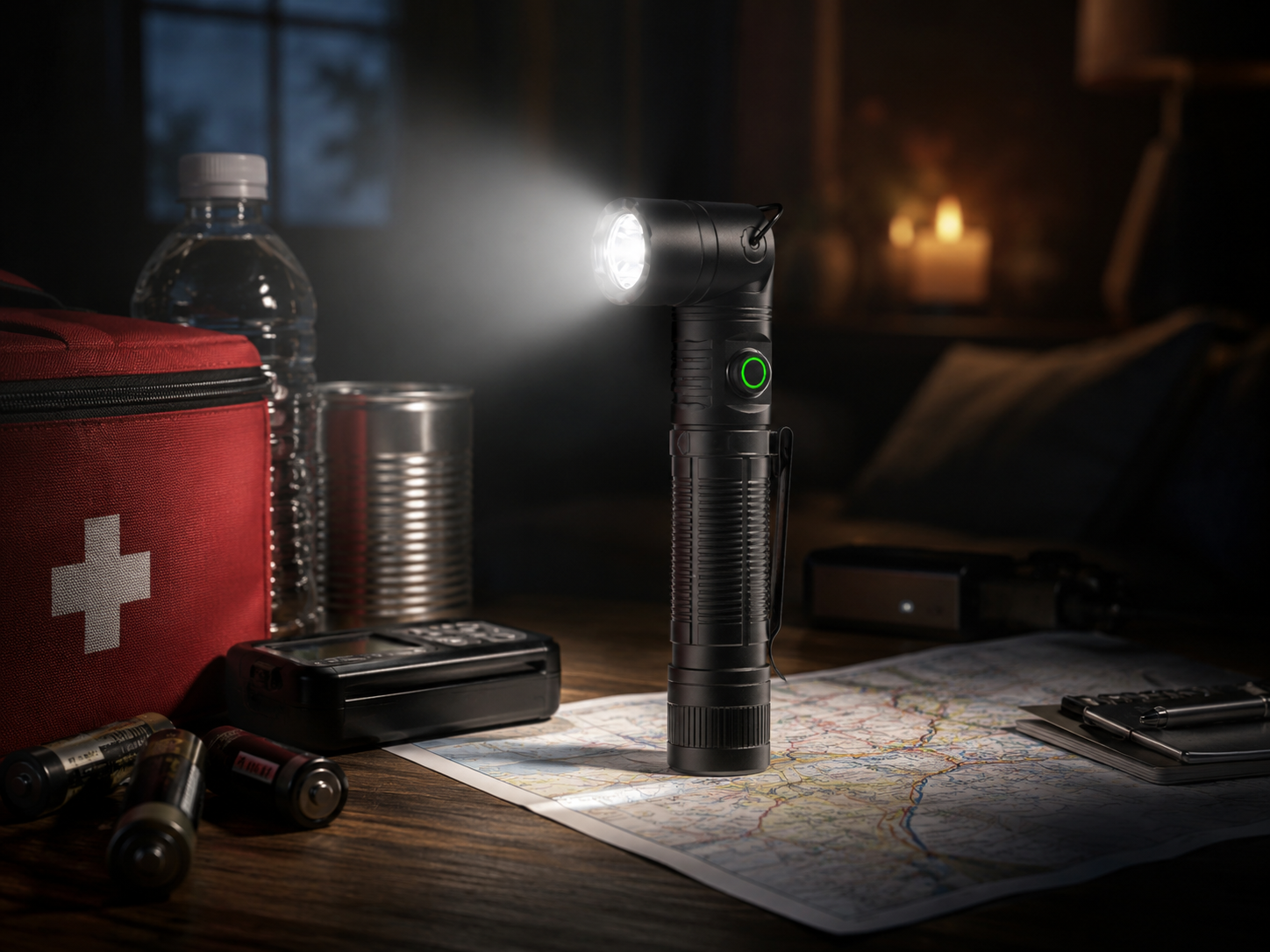
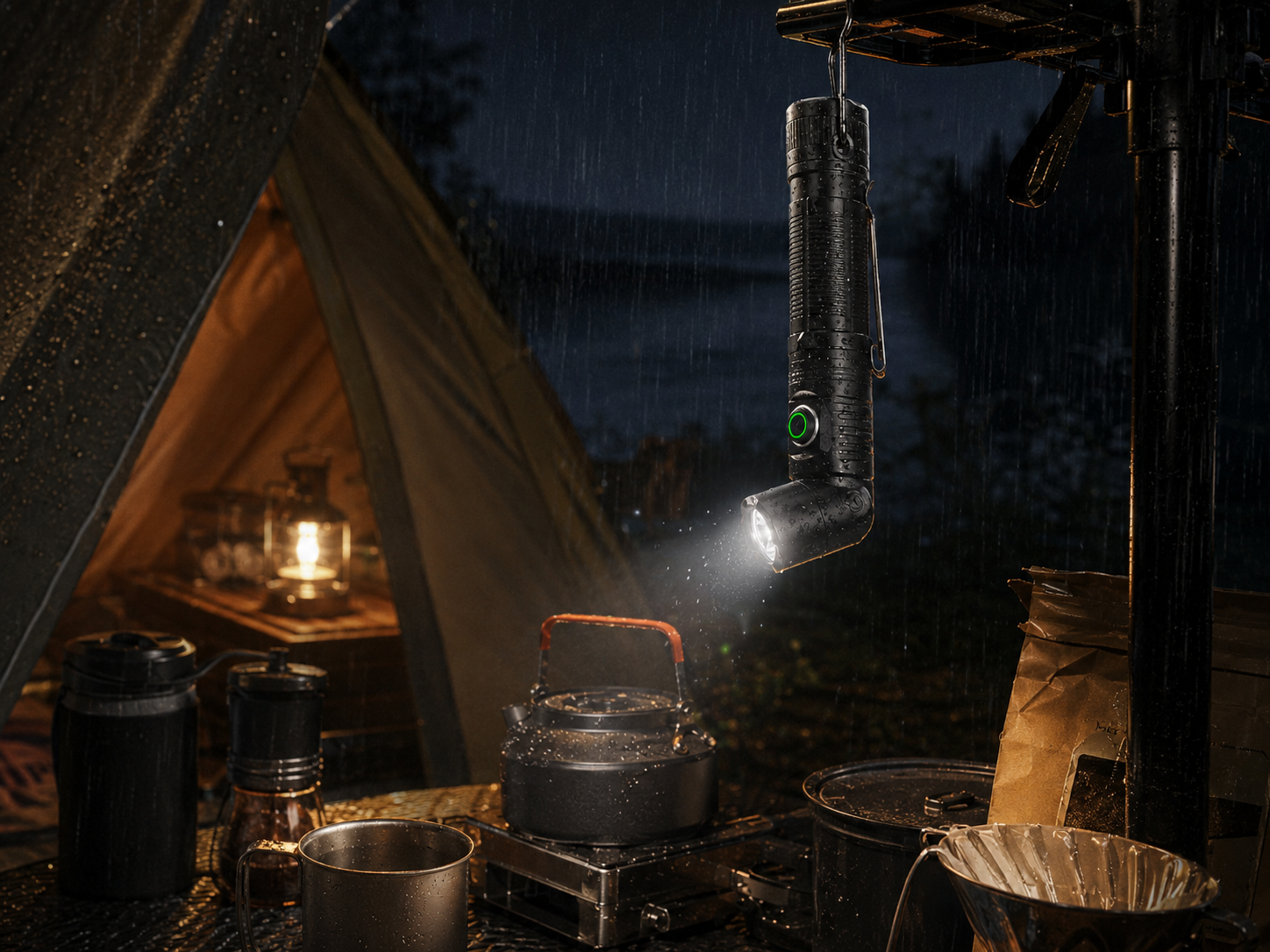
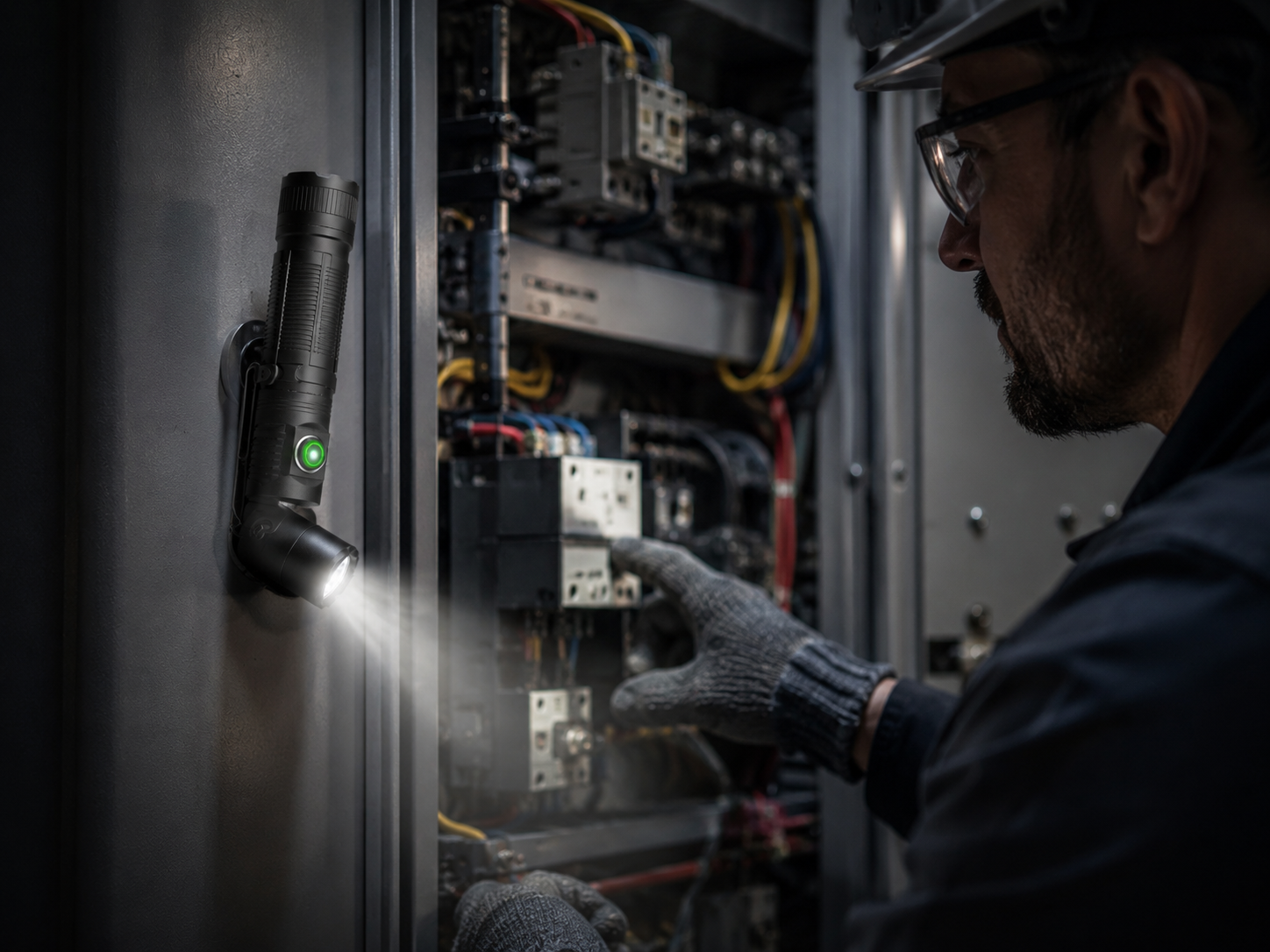
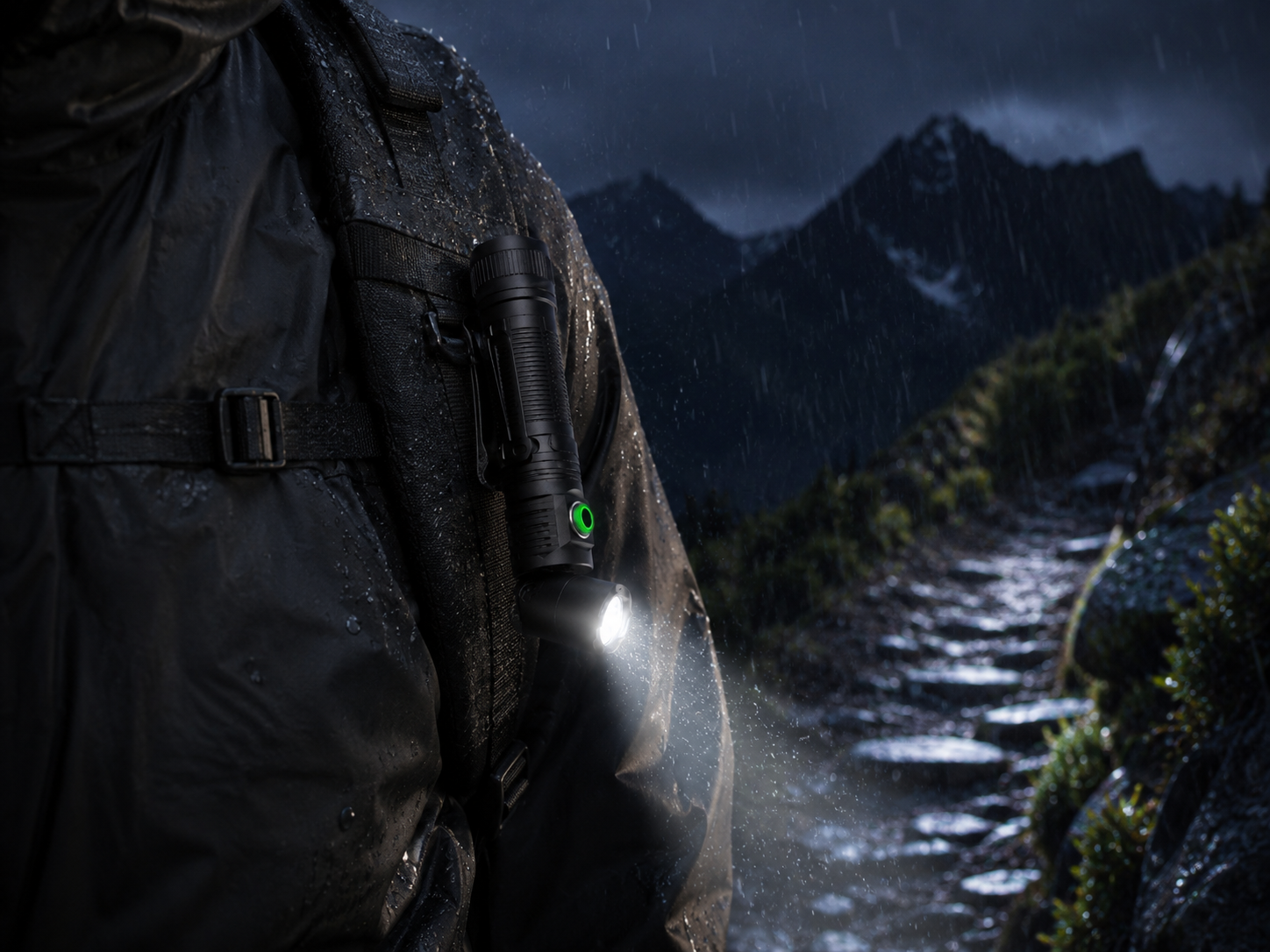
The source product shows a compact black work light with a cylindrical body, right-angle lamp head, and a top hanging or mounting feature. Its visible layout suggests a design intended to hang under an open vehicle hood and aim light downward into the engine bay. That direction is important because the user needs illumination on the work area, not glare across the face.
This is different from a general household flashlight. The shape, mount, and beam orientation are focused on mechanical inspection and repair. Buyers should evaluate it as a service tool: Does it stay where placed? Does it leave space for hands and hoses? Is the switch easy to find? Similar product categories can be reviewed through Brightenlux’s product range when comparing work light formats.

Key Points to Compare Before Ordering Samples
A short comparison framework helps buyers avoid judging samples only by appearance. The most important details are usually the ones that affect daily use. The visible green ring around the side control button suggests an electronic indicator, but its exact function should not be assumed. It may relate to power, charging, or mode status, and that detail should be confirmed directly with the supplier.
| Item to Check | Why It Matters |
|---|---|
| Mounting method | Hook, clamp, magnetic, or hybrid designs affect hands-free use. |
| Beam direction | Downward light is useful under a hood and helps reduce glare. |
| Body size | A compact body is easier to position in crowded engine bays. |
| Switch design | It should be accessible without accidental activation. |
| Power system | Charging method and battery details must be verified, not guessed. |
| Branding flexibility | Private label and OEM programs may need packaging or logo changes. |
Workshop Design Features That Matter Most
The most valuable feature is hands-free mounting. A technician rarely wants to hold a light while reaching deep into an engine bay. A hook or clamp keeps the light fixed and the beam stable. In purchasing terms, this is not a minor convenience; it is part of the product’s core function.
The right-angle head also deserves attention. It lets the beam point downward rather than outward, which can make the difference between useful work lighting and distracting glare. A sample should be tested in a real vehicle compartment, not only viewed on a desk or in a catalog image.
The slim cylindrical body is another practical choice. It can reduce interference with belts, hoses, open panels, and stored tools. The slightly wider lower section may support grip or internal space, but exact construction should be confirmed through supplier documentation and sample inspection.
How OEM and Custom Programs Fit B2B Sourcing
Many buyers begin with a standard work light and later need some form of customization. A custom flashlight manufacturer or OEM flashlight manufacturer may support logo placement, packaging changes, housing color adjustments, accessory combinations, or a modified mounting approach. The light platform may remain similar while the channel presentation changes for retail, dealer, or industrial distribution.
The key is not whether customization is mentioned in general terms. Buyers need to know what can be changed without weakening product consistency. Once branding, carton design, and accessories vary, documentation and quality control become more important. A manufacturer should be able to explain which changes are practical and which ones may require deeper redesign. Teams considering a project can start a direct discussion through the Brightenlux contact page.
Supplier Questions That Reduce Sourcing Risk
Before approving a sample, ask for details that affect daily use. Confirm the mounting mechanism, body and lens materials, charging method, battery configuration, and the purpose of any illuminated indicator. The image alone does not confirm battery type, runtime, charging interface, or whether the unit is rechargeable, corded, or dual-mode. Those points must come from the supplier, not assumptions.
Durability should be discussed in practical terms. Work lights may be handled with greasy hands, placed on shop surfaces, moved repeatedly, and exposed to knocks during service tasks. Ask how the mount behaves after repeated installation and removal. A light that slips out of position can frustrate users even if the beam is acceptable.
If private labeling is required, confirm how logo placement affects the housing finish, button visibility, and packaging. For project-specific questions, buyers can submit requirements through the Brightenlux inquiry page.
Common Buyer Mistakes and a Better Next Step
One common mistake is treating all portable work lights as interchangeable. They are not. A compact under-hood inspection light may be excellent for engine bay service but less suitable for another environment. Another mistake is focusing too much on headline brightness while ignoring beam control, mounting stability, and glare. In confined spaces, controlled illumination can matter more than a broad, messy beam.
Buyers also need to match the product to the working environment. A dealership service department, fleet maintenance team, independent repair shop, and field mechanic may each need different accessories or packaging. The best next step is to test a physical sample in a real engine bay. Check how it mounts, how the switch feels, how the body handles, and whether the beam lands where the technician needs it. Those observations reveal more than generic product language.
FAQ
Is this type of light only useful for automotive repair?
No. The visible design is especially suitable for automotive service because it can be positioned under a hood and direct light downward. However, the same form factor may also be useful for mechanical maintenance, equipment inspection, and other technical tasks where hands-free lighting is needed in low-light spaces.
Does the product image prove the light is rechargeable?
No. The image shows an electronic work light with an illuminated control ring, but it does not confirm the charging method, battery type, runtime, or power configuration. Buyers should ask the supplier for exact power-system details and verify them during sample review before making sourcing decisions.
Why is mounting style so important for work lights?
Mounting style matters because the main value of this tool is hands-free illumination. If the hook, clamp, or other mounting system is unstable, the light may shift or fall out of position. That can slow technicians down and reduce the practical benefit of the product.
What should buyers do when specifications are missing?
Buyers should avoid assumptions and confirm every missing detail with the supplier. From the source image, it is reasonable only to identify a compact under-hood inspection light with a downward beam and mounting feature. Battery details, materials, charging behavior, and indicator functions require direct verification.