

Rechargeable Camping Light Manufacturer: What Buyers Should Check
Choosing a rechargeable camping light manufacturer is not only about finding a lantern that looks attractive in a catalog. For B2B buyers, the real question is whether the product solves practical outdoor lighting problems: portable use, stable placement, comfortable light, easy recharging, and reliable handling in campsite conditions. The category also overlaps with emergency lanterns and solar camping lights, so feature claims should be checked carefully. This guide explains what buyers should review before placing an order, requesting a sample, or building a private-label outdoor lighting line.
What Buyers Really Mean by a Rechargeable Camping Light Manufacturer
When buyers search for a rechargeable camping light manufacturer, they are usually looking for more than a decorative lamp. The goal is dependable campsite lighting without disposable batteries, tangled cords, or weak illumination that fades before the evening is over. This matters for retailers, outdoor gear brands, private-label programs, and product managers developing a camping or emergency-preparedness range.
The search often includes related terms such as emergency lantern with power bank or solar camping lantern with power bank. That shows clear buyer intent: users want portable light with recharging convenience, and sometimes a secondary function. A suitable manufacturer should understand lighting quality, battery-powered operation, mechanical stability, and outdoor-friendly design rather than treating the product as a simple bulb in a shell.
Understand the Product Format Before Sourcing
Based on the visible product structure, this type of item is best understood as a portable outdoor camping lantern or hanging light with an integrated base unit. It does not appear to be a fixed fixture or a household lamp repurposed for outdoor use. The format is compact and modular, with a cylindrical lantern body, a top handle or hanger, a vertical support pole, a horizontal boom arm, and a lower base section that may contain power or control components.
The internal electronics cannot be confirmed from appearance alone, so buyers should avoid assumptions. Treat it as a battery-powered camp light or hybrid outdoor lighting product until specifications are verified. The support system is part of the product value: a lantern suspended above a table can often create a better lighting experience than a stronger lamp placed too low.
Quick Buyer Checklist Before Requesting a Quote
A clear product sheet should answer the basic questions that affect positioning, customer satisfaction, and after-sales risk. Buyers should compare the practical use case before focusing on appearance alone. A weekend camping product, a broader emergency light, and a private-label outdoor SKU may require different structures and functions.
| Check Point | Why It Matters |
|---|---|
| Power and recharging method | Confirms whether the product fits the intended user routine. |
| Lighting purpose | Shows whether it is for ambient lighting, task lighting, or both. |
| Mounting options | Determines whether it can hang, stand, or work with a pole. |
| Secondary functions | Clarifies whether power bank or solar features are actually included. |
| Housing and finish | Indicates whether the design feels suitable for outdoor handling. |
For a wider view of outdoor lighting categories, buyers can review the product range at Brightenlux products before preparing a sourcing brief.
Why Rechargeable Design Is Now Expected
Disposable-battery lanterns still exist, but rechargeable systems have become the default expectation in much of the camping light market. Campers do not want to carry spare cells for every device, and retail buyers do not want a product line that feels outdated. Rechargeable platforms also give manufacturers room to develop useful variations, such as dimming, color-temperature options, multiple beam modes, USB output, or optional solar charging in some product families.
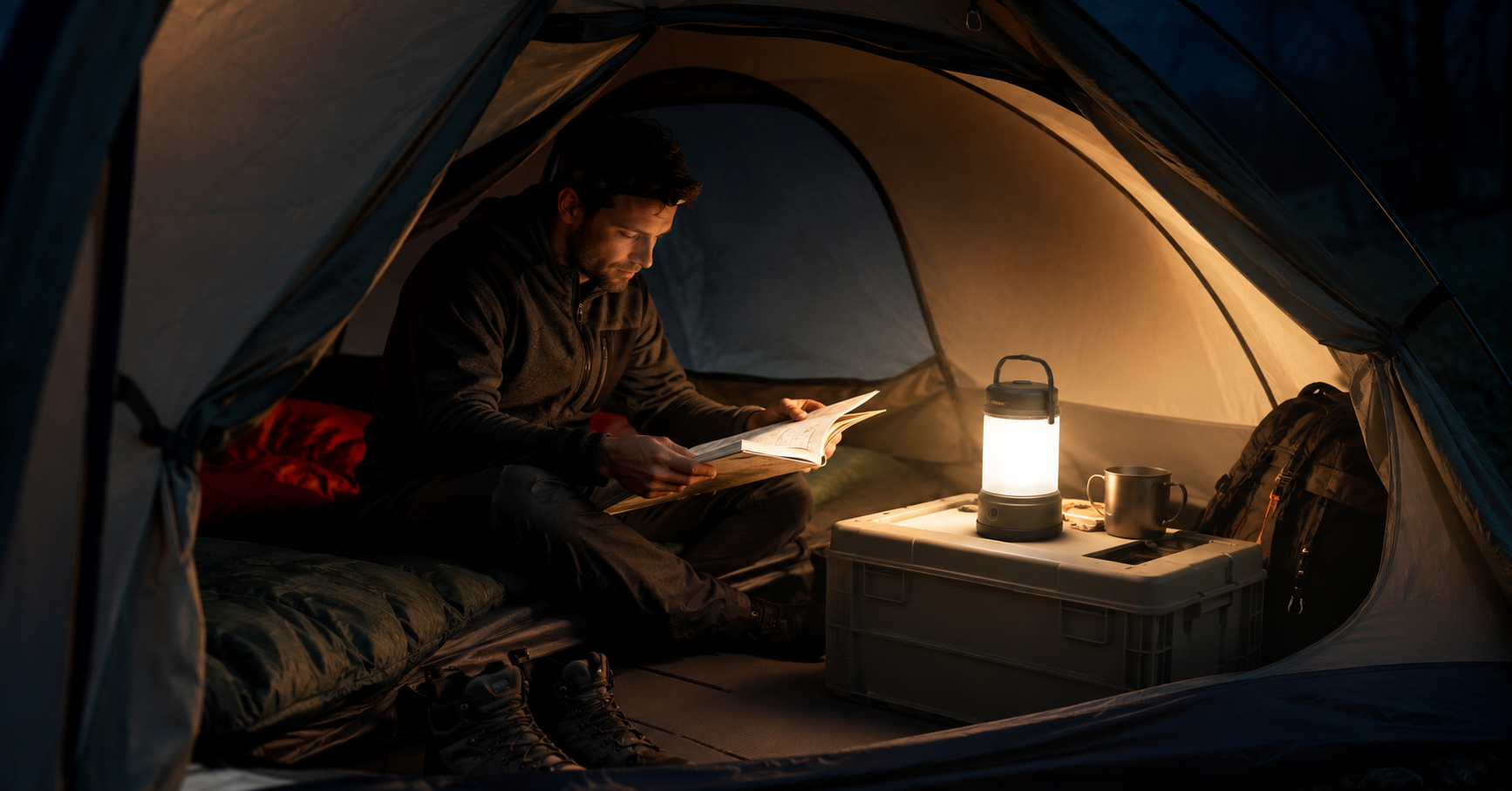
The appeal is practical rather than fashionable. Many users move between tent-side lighting, car camping, picnic tables, and off-grid recreation. They want a compact light that can be charged at home, carried easily, and used after sunset. Warm output can be especially relevant for campsites because it feels less harsh during long evenings outdoors.
Field Features That Influence Real Use
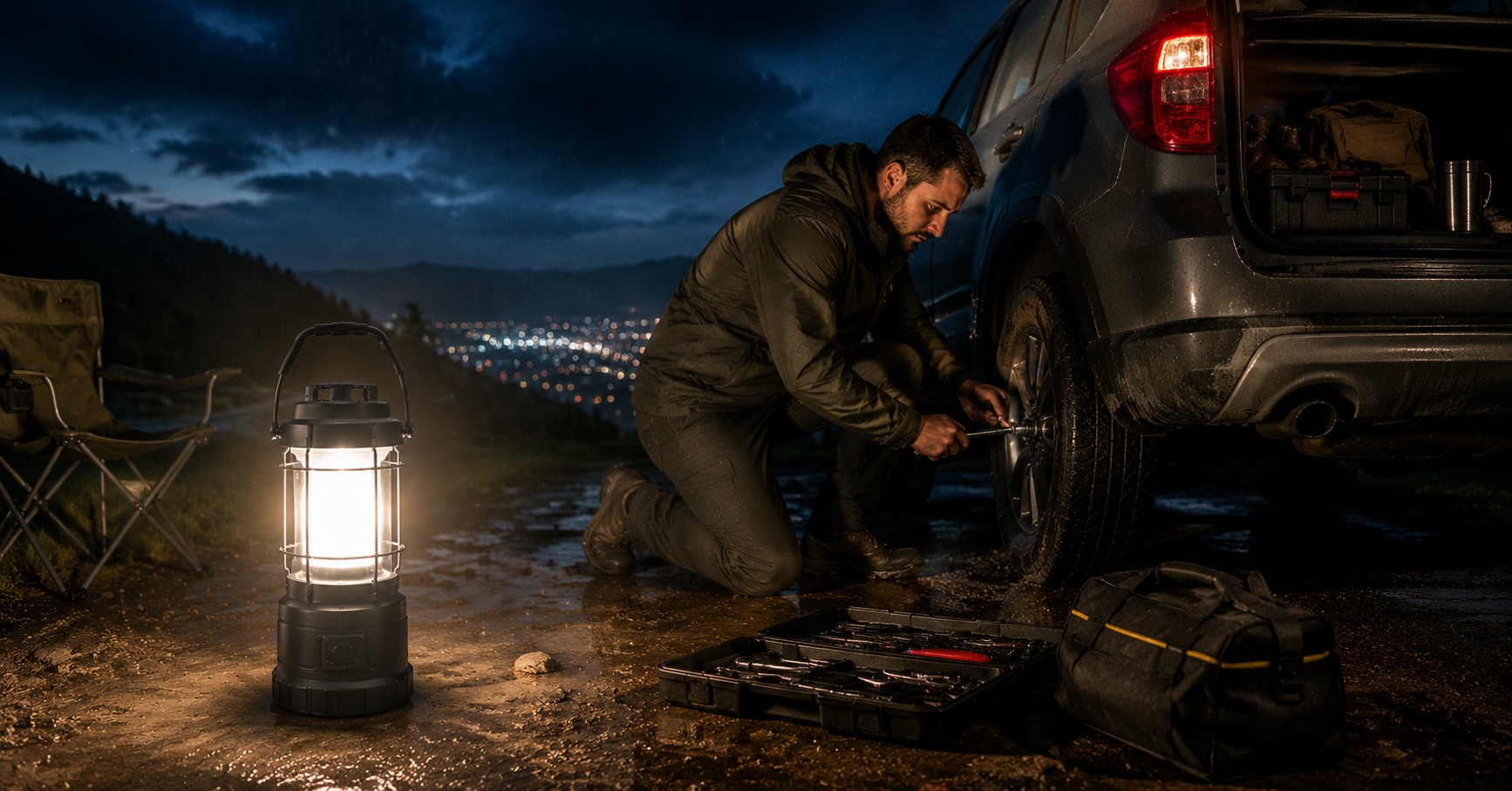
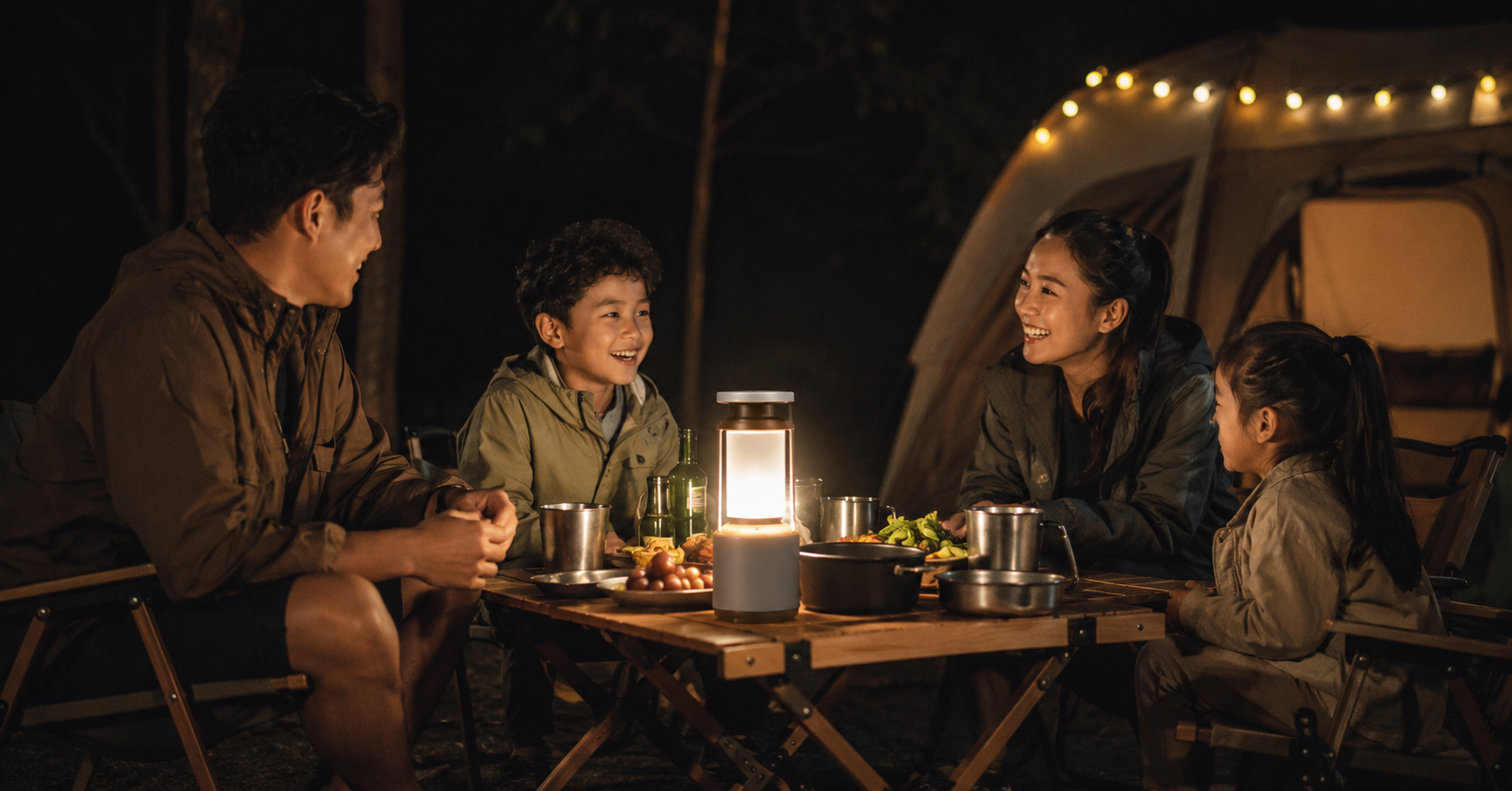
Several visible design cues deserve attention during sample review. Elevated light placement is one of the most important. A lantern suspended above a camp table can reduce glare, soften shadows, and improve visibility for cooking, dining, or shared activities. Headlamps help individuals, but they are not a substitute for area lighting in a group setting.
The cylindrical lantern body appears to include a protective outer frame or cage around the diffuser. That kind of structure can be useful when gear is packed, moved, or bumped during normal outdoor use, although appearance alone is not proof of durability. The compact footprint is also valuable because campsite space is limited. A modular pole and base arrangement should feel stable, not awkward. The visible warm glow supports a leisure-camping position, especially for family camping or evening social use.
Where the Manufacturer Adds Real Value
In this category, manufacturing value is not limited to assembly. The product must work as a system. Pole joints should feel secure, the hanger should avoid excessive wobble, and the lantern housing should sit squarely on its mount. Small alignment problems are easy to notice because crooked poles, uneven lamp heads, and loose joints immediately affect the user’s confidence.
Material choice and finish also influence how the product is perceived. The visible dark metal or painted-metal look suggests an outdoor-oriented design language, which is appropriate for this category. A muted housing often feels more functional than a glossy finish, although finish alone cannot prove performance. For sourcing managers, the key question is whether the supplier can repeat fit, finish, and assembly quality across production runs. Consistency makes the product easier to sell, support, and position.
Emergency, Solar, and Power Bank Claims Need Verification
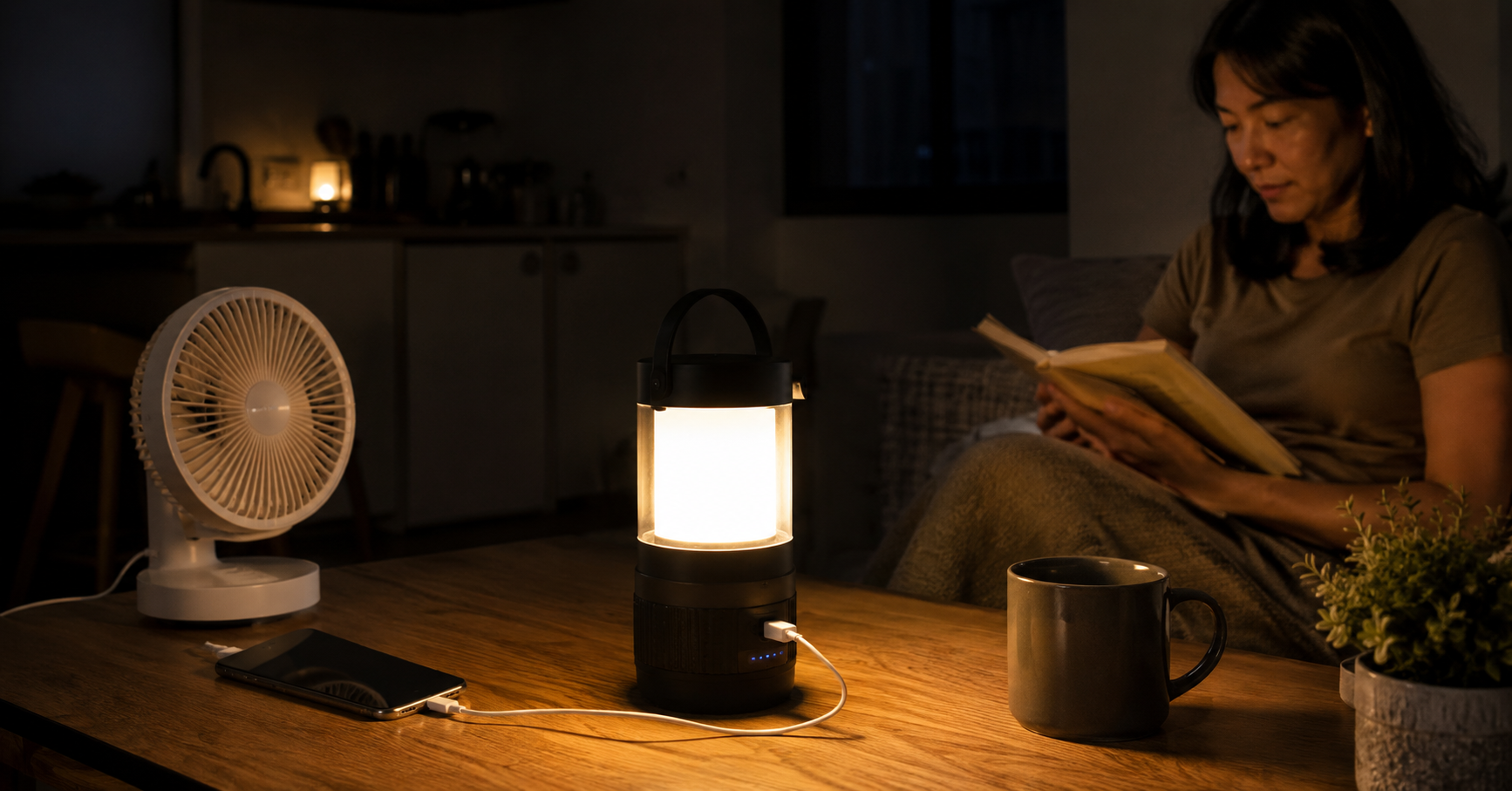
Emergency lantern with power bank and solar camping lantern with power bank are relevant search terms, but they should not be attached to every camping light without evidence. Some products are straightforward rechargeable lanterns. Others may include USB output, solar charging, or a lower base module with additional functions. These details must be confirmed in the specification, sample, and buyer brief.
A power bank function does not automatically make a product better. It should have a clear use case and understandable limitations. Solar charging, if included, may be useful as a supplementary option, but buyers should not assume it replaces reliable wired charging. The better commercial decision is to match the feature set to the intended market. If you need clarification on available configurations, contact Brightenlux through contact us or send a sourcing request via inquiry.
Choosing the Right Manufacturing Partner
A good buyer brief should define the job the light needs to do before asking for a quote. Include the intended use, preferred form factor, mounting style, target sales channel, and whether secondary functions such as power output or solar charging are required. If the main application is campsite table lighting, say so. If it must also serve emergency backup use, that should be clear from the beginning.
Buyers should also ask for photos or samples that show the assembled product from several angles. A camping light can look simple in one image but feel unbalanced in hand. Inspect the pole, hanger, base, lamp body, and overall ergonomics together. The right rechargeable camping light manufacturer should discuss the product as an outdoor tool, not just a lighting shell.
FAQ
Is this type of lantern only for camping?
No. The visible format strongly suggests camping, tent-side lighting, outdoor cooking, and picnic use, but it may also fit backyard activities or emergency-preparedness channels. The best sales position depends on verified functions, mounting style, portability, and how the product is described in the buyer’s catalog or private-label range.
Should buyers always choose a solar camping lantern?
Not always. Solar charging can be attractive when the target market values backup charging, but it should be treated as a feature to verify, not a default advantage. For many users, dependable rechargeable operation and clear wired charging may matter more than adding a solar claim that does not match real usage.
Does the lower housing confirm a power bank function?
No. The lower housing may be a control base, battery compartment, or another integrated module, but the image does not confirm a power bank function. Buyers should verify ports, output capability, charging behavior, and user instructions before marketing the item as an emergency lantern with power bank.
What should buyers inspect first on a sample?
Start with the structure: pole stability, hanging hardware, joint feel, base balance, and whether the lantern sits squarely when assembled. Then check the comfort and evenness of the light during handling. These practical details reveal whether the product is suitable for outdoor use better than appearance alone.