

What Is a Private Label Flashlight Manufacturer?
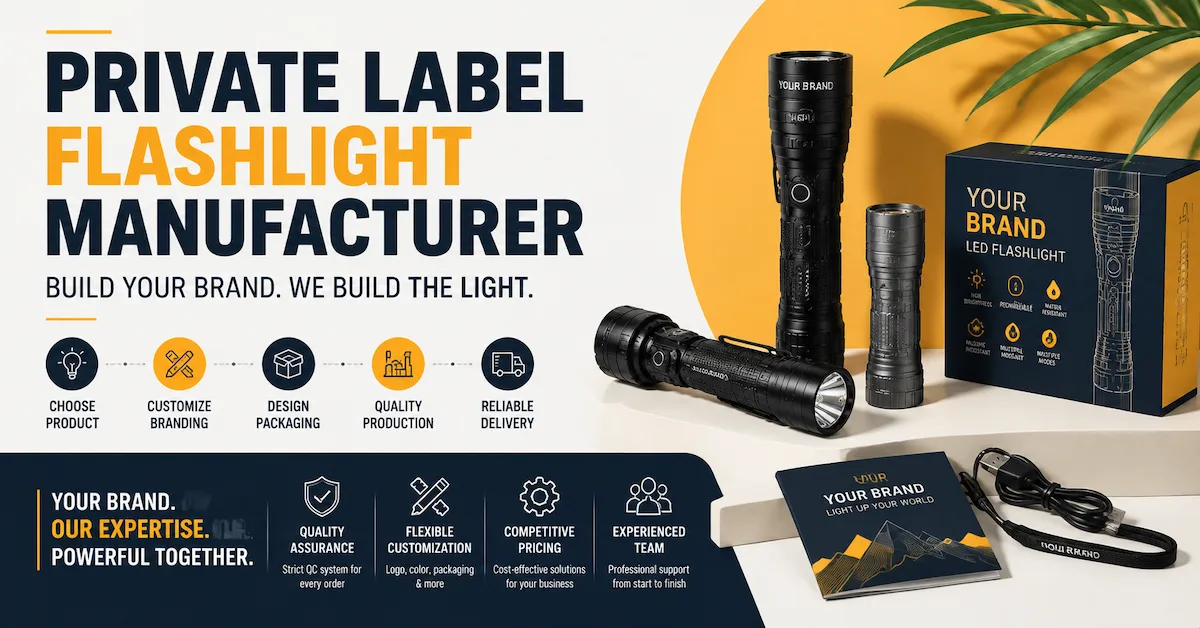
A private label flashlight manufacturer helps brands create and sell flashlight products under their own brand identity.
Unlike standard wholesale purchasing, private label manufacturing allows companies to customize the customer-facing aspects of a flashlight product while using the manufacturer's production capability.
A private label flashlight project usually includes:
- Brand logo customization
- Product packaging design
- Product model selection
- Accessory selection
- Product documentation
- Quality standards
- Market-specific requirements
For many businesses, private label is an efficient way to enter the flashlight market without developing every product component from the beginning.
Instead of investing heavily in factory equipment and engineering teams, brands can cooperate with an experienced manufacturer that already has:
- Product platforms
- Manufacturing experience
- Supply chain resources
- Quality control processes
A professional private label partner helps transform an existing flashlight solution into a market-ready branded product.
Brightenlux provides LED flashlights, rechargeable flashlights, headlamps, work lights, and customized portable lighting solutions for global brands and distributors.
Buyers can explore the Brightenlux product range to identify suitable flashlight platforms for private label projects.
Private Label Flashlight vs OEM vs ODM: What Is the Difference?
Many buyers use these terms interchangeably, but they represent different levels of cooperation.
| Model | Main Purpose | Customization Level |
|---|---|---|
| Wholesale | Purchase existing products | Low |
| Private Label | Add your own brand to existing or modified products | Medium |
| OEM | Customize products based on buyer requirements | High |
| ODM | Develop new product designs | Very High |
Wholesale Flashlights
Wholesale is suitable for companies that need:
- Fast delivery
- Standard products
- Low development requirements
However, product differentiation is limited.
Private Label Flashlights
Private label is suitable for brands that want:
- Their own logo
- Custom packaging
- Brand recognition
- Faster market entry
OEM Flashlights
OEM allows deeper customization:
- Product specifications
- Components
- Functions
- Structure
ODM Flashlights
ODM involves new product development:
- New designs
- Engineering development
- Prototype creation
Choosing the right cooperation model depends on:
- Budget
- Market strategy
- Product requirements
- Development timeline
Why Brands Choose Private Label Flashlights
The flashlight market contains many similar products. Private label helps brands create stronger market differentiation.
Faster Market Entry
Developing a completely new flashlight requires:
- Engineering investment
- Prototype development
- Testing
- Production preparation
Private label allows brands to start from proven product platforms and focus on:
- Branding
- Marketing
- Distribution
- Customer relationships
This reduces development time and allows businesses to test market opportunities faster.
Build Brand Recognition
A branded flashlight creates stronger customer connections than generic products.
Private label customization may include:
- Brand logo
- Product colors
- Packaging design
- User manuals
- Product presentation
These elements help customers recognize the brand and improve repeat purchasing potential.
Lower Development Risk
Compared with completely new product development, private label projects usually have lower risks.
Brands can benefit from:
- Existing product experience
- Proven manufacturing processes
- Established supply chains
- Reduced engineering requirements
Selecting the Right Flashlight Product for Private Label
A successful private label project starts with choosing the right product category.
The product should match:
- Target customers
- Sales channel
- Price positioning
- Application environment
Everyday Carry Flashlights
Suitable for:
- Retail stores
- Online marketplaces
- Daily users
Key features:
- Compact size
- Simple operation
- Portable design
- Rechargeable options
Outdoor Camping Flashlights
Suitable for:
- Outdoor brands
- Camping equipment companies
- Adventure markets
Important factors:
- Long runtime
- Weather resistance
- Lightweight design
- Battery flexibility
Rechargeable Flashlights
Rechargeable models are increasingly popular because they provide:
- Convenient charging
- Lower battery replacement cost
- Better user experience
Important customization points:
- Battery capacity
- Charging interface
- Charging indicator
- Runtime performance
Professional Work Lights
Designed for:
- Maintenance workers
- Automotive repair
- Industrial applications
Common features:
- Magnetic base
- Hands-free operation
- Durable housing
- Multiple lighting modes
How to Customize With a Private Label Flashlight Manufacturer
Private label customization usually covers several areas.
| Custom Area | Options |
|---|---|
| Branding | Logo engraving, printing, labels |
| Appearance | Color, finish, housing style |
| Packaging | Retail boxes, manuals, inserts |
| Accessories | Clips, chargers, holders |
| Product options | Battery, switches, functions |
| Documentation | User guides, product information |
Logo and Branding Customization
Brand identity is one of the most important parts of private label products.
Common methods include:
- Laser engraving
- Screen printing
- Labels
- Customized packaging
The selected method depends on:
- Material
- Quantity
- Appearance requirements
- Budget
Packaging Development
Packaging affects customer perception before the product is used.
Private label packaging may include:
- Brand colors
- Product images
- Feature descriptions
- Instructions
- Barcode information
A professional manufacturer should help ensure packaging matches the actual product specifications.
Product Configuration Options
Depending on the product platform, brands may customize:
- LED selection
- Battery system
- Charging method
- Switch design
- Accessories
However, every change should be evaluated because it may affect:
- Cost
- Testing requirements
- Production schedule
- Minimum order quantity
Private Label Flashlight Manufacturing Process
A typical private label project follows these steps.
Step 1: Product Selection
The brand selects:
- Product category
- Target market
- Product position
- Required features
Step 2: Branding Confirmation
The buyer confirms:
- Logo placement
- Product colors
- Packaging style
- Documentation requirements
Step 3: Sample Approval
The manufacturer prepares samples for review.
Evaluation includes:
- Appearance
- Function
- Packaging
- User experience
Step 4: Production
After approval:
- Materials are prepared
- Products are assembled
- Quality checks are performed
Step 5: Final Inspection and Shipment
Before delivery:
- Product quantity is checked
- Packaging is verified
- Product quality is inspected
How to Choose a Reliable Private Label Flashlight Manufacturer
The right manufacturer should provide more than production capability.
Product Experience
Evaluate:
- Product categories
- Industry experience
- Previous projects
A manufacturer familiar with flashlight applications can provide better recommendations.
Manufacturing Capability
Check:
- Production capacity
- Assembly processes
- Quality systems
- Supply chain management
Customization Ability
A good private label partner should support:
- Branding
- Packaging
- Product adjustments
- Documentation
Communication Efficiency
Private label projects require continuous communication.
The supplier should clearly explain:
- Product options
- Cost changes
- Production schedule
- Technical limitations
MOQ and Cost Factors for Private Label Flashlights
MOQ depends on the level of customization.
Main factors include:
| Factor | Impact |
|---|---|
| Product model | Existing models usually require lower MOQ |
| Logo method | Special printing may increase quantity |
| Packaging | Custom boxes require production volume |
| Accessories | Additional components affect cost |
| Product changes | New specifications may require more investment |
Cost is influenced by:
- Materials
- Battery type
- Electronics
- Functions
- Packaging
- Testing
Quality Control for Private Label Flashlights
Brand reputation depends heavily on product consistency.
A reliable manufacturer should control:
Material Inspection
Check:
- LED components
- Batteries
- Housing parts
- Electronic components
Production Inspection
Monitor:
- Assembly accuracy
- Component installation
- Product function
Final Product Testing
Verify:
- Lighting performance
- Charging function
- Runtime
- Appearance
- Packaging
Common Mistakes in Private Label Flashlight Projects
Focusing Only on Logo Customization
A successful private label product requires more than branding.
Brands should consider:
- Product-market fit
- Customer needs
- Product quality
Choosing Only Based on Price
The lowest price may create risks:
- Lower components
- Poor consistency
- Limited support
Ignoring Packaging Strategy
Packaging affects:
- Customer perception
- Retail performance
- Brand recognition
Not Planning Product Expansion
A successful brand often needs:
- Multiple product levels
- New models
- Product upgrades
Frequently Asked Questions About Private Label Flashlight Manufacturers
What is a private label flashlight?
A private label flashlight is a product manufactured by a supplier and sold under another company's brand name with customized branding and packaging.
Can I customize flashlights with my own logo?
Yes. Private label flashlight manufacturers usually support logo engraving, printing, labels, and customized packaging.
What is the difference between private label and OEM flashlight?
Private label usually focuses on branding existing or slightly modified products, while OEM involves deeper product customization based on buyer requirements.
How much MOQ is required for private label flashlights?
MOQ depends on product type, customization level, packaging requirements, and production setup.
Can private label flashlights use custom packaging?
Yes. Brands can customize retail boxes, manuals, labels, and other product presentation materials.
How long does private label flashlight production take?
Production time depends on product selection, customization requirements, order quantity, and factory schedule.
Are rechargeable flashlights suitable for private label brands?
Yes. Rechargeable flashlights are popular private label products because they provide strong customer value and repeat market opportunities.
Conclusion
A private label flashlight manufacturer helps brands enter the lighting market with customized products while reducing development complexity.
The right manufacturing partner provides:
- Product selection support
- Branding customization
- Packaging solutions
- Quality control
- Stable production
Private label success depends on choosing products that match customer needs and building a consistent brand experience.
For companies looking to create their own flashlight product line, working with an experienced manufacturer can provide a faster and more reliable path from concept to market.
Brightenlux supports global customers with private label, OEM, and ODM lighting solutions.
Explore the Brightenlux company information, review the portable lighting products, or contact the team through the Brightenlux contact page to discuss private label flashlight projects.