

Why Private Label Flashlight Manufacturing Is Growing
The global flashlight market is becoming increasingly competitive. For brands, distributors, and e-commerce companies, selling standard flashlight products is no longer enough to create long-term market advantages.
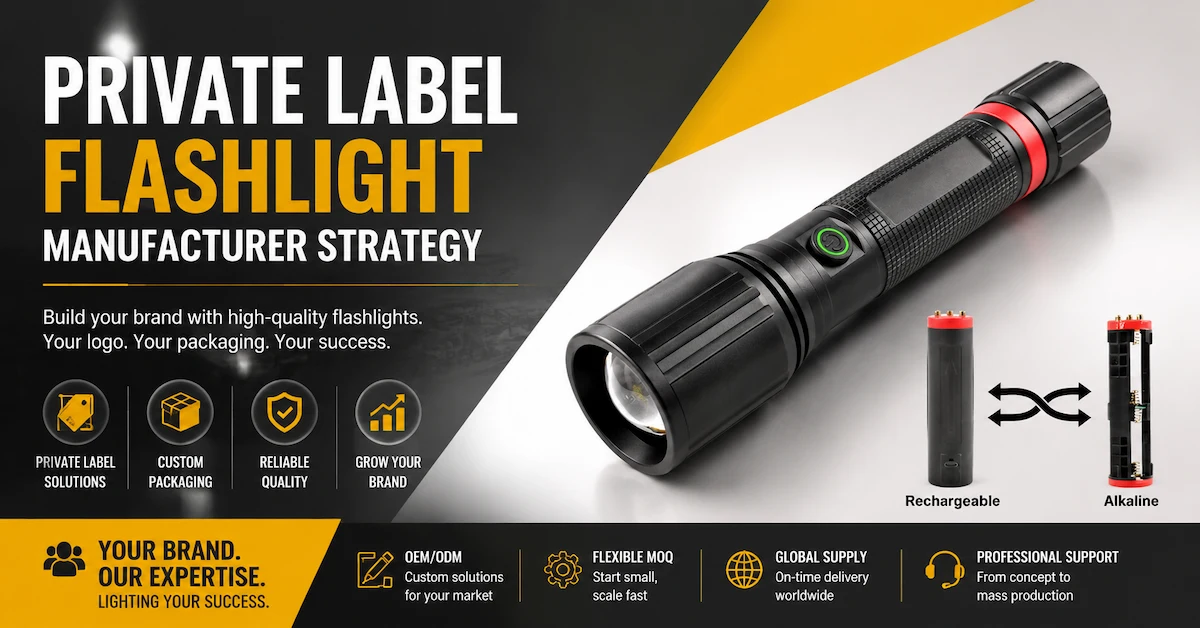
Many companies are now working with a private label flashlight manufacturer to develop products that match their own brand positioning, customer expectations, and sales channels.
Private label manufacturing provides businesses with the opportunity to:
- Build their own product identity
- Create differentiated product lines
- Control packaging and presentation
- Improve customer recognition
- Develop long-term product strategies
Instead of competing only through price, brands can create value through:
- Better product selection
- Stronger branding
- Improved customer experience
- Consistent product quality
Brightenlux provides LED flashlights, rechargeable flashlights, headlamps, work lights, and customized lighting solutions for global brands and distributors.
Companies can explore the Brightenlux product portfolio to evaluate suitable flashlight categories for private label projects.
Private Label Flashlight Manufacturer: Beyond Logo Customization
Many businesses misunderstand private label manufacturing as simply adding a company logo to an existing flashlight.
However, successful private label products require a complete brand strategy.
A professional private label flashlight manufacturer can support:
- Product selection
- SKU planning
- Branding customization
- Packaging development
- Quality standards
- Production management
- Market preparation
The goal is not only to create a branded flashlight, but to build a product that fits the target market.
For example:
An outdoor equipment brand may need:
- Lightweight products
- Long battery life
- Durable materials
- Weather-resistant designs
A retail brand may focus on:
- Attractive packaging
- Competitive pricing
- Easy customer understanding
An industrial supplier may require:
- Reliable performance
- Professional features
- Long service life
The product strategy should always start with customer needs.
How Brands Build a Private Label Flashlight Product Line
A successful flashlight brand usually needs more than one product.
Building a structured product line helps brands serve different customers and price segments.
Entry-Level Flashlight Products
Entry-level models are often used to attract new customers.
Typical characteristics:
- Affordable pricing
- Simple operation
- Compact design
- Basic lighting functions
These products are suitable for:
- Retail stores
- Online marketplaces
- Promotional campaigns
The goal is usually market entry and customer acquisition.
Mid-Range Flashlight Products
Mid-range products provide better performance and stronger customer value.
Common features:
- Higher brightness
- Rechargeable functions
- Improved materials
- Better durability
These products are suitable for customers who need better performance without premium pricing.
They often become the main sales products for many brands.
Premium Flashlight Products
Premium models help strengthen brand positioning.
Typical features include:
- Advanced LED systems
- Higher durability
- Professional applications
- Better materials
- More customization options
These products are often targeted at:
- Outdoor professionals
- Industrial users
- Technical customers
Choosing the Right Flashlight Models for Your Brand
The product selection process directly affects market performance.
A private label flashlight manufacturer can help brands choose suitable models based on:
- Target customers
- Sales channels
- Price positioning
- Application requirements
Rechargeable Flashlights
Rechargeable flashlights are becoming increasingly popular because they provide:
- Convenient charging
- Reduced battery replacement
- Better user experience
- Modern product positioning
Common customization options include:
- Battery capacity
- Charging interface
- Charging indicator
- Runtime optimization
They are suitable for:
- Outdoor users
- Everyday carry markets
- Professional applications
LED Flashlights
LED flashlights remain one of the most widely used lighting products.
Advantages include:
- Energy efficiency
- Long lifespan
- Wide application range
- Reliable performance
They are suitable for:
- Retail products
- Industrial tools
- Emergency lighting
Work Lights
Work lights target professional users who need hands-free or task-specific lighting.
Applications include:
- Automotive repair
- Maintenance
- Construction
- Workshop environments
Important features include:
- Magnetic bases
- Flexible mounting
- Durable structures
- Multiple lighting modes
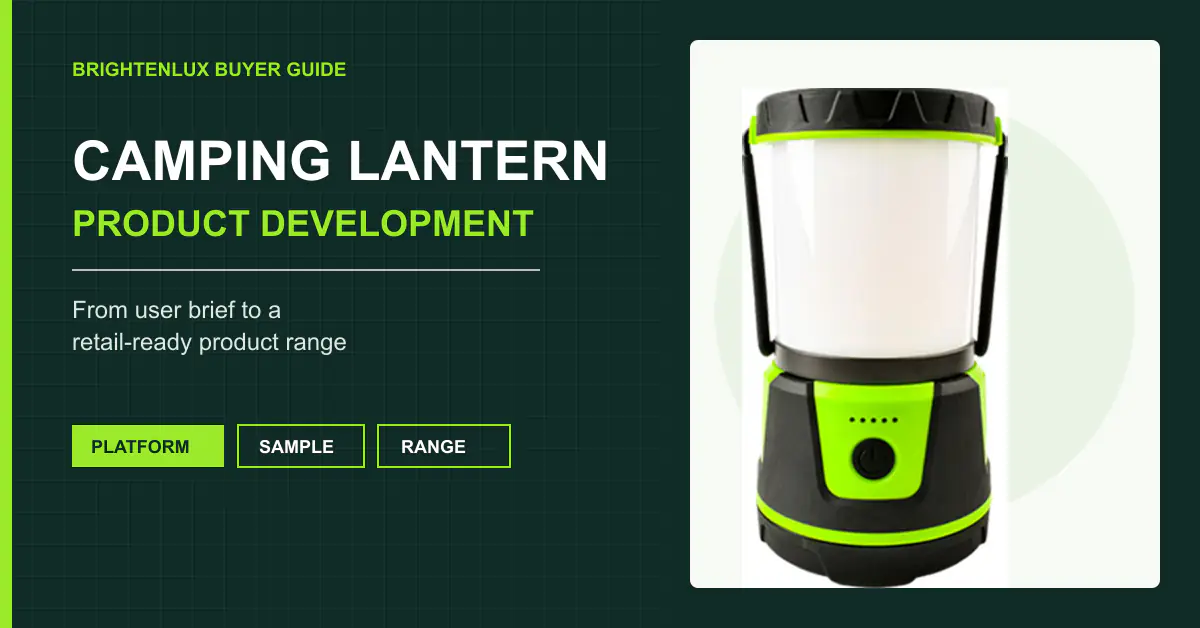
Camping Flashlights
Camping flashlights are designed for outdoor environments.
Important requirements include:
- Long runtime
- Portable design
- Weather resistance
- Easy operation
Outdoor brands often use private label manufacturing to create products matching their own market style.
Packaging and Branding Strategy for Private Label Flashlights
A successful private label product is not only about the flashlight itself.
Packaging plays an important role in customer purchasing decisions.
Logo and Brand Identity
Customization options include:
- Laser engraving
- Printing
- Product labels
- Brand marks
Consistent branding helps customers recognize products across different channels.
Retail Packaging Design
Packaging can include:
- Product images
- Feature highlights
- Usage instructions
- Brand story
- Technical information
Good packaging helps customers quickly understand product value.
Product Documentation
Professional documentation supports:
- Customer education
- Distributor sales
- After-sales service
Materials may include:
- User manuals
- Specification sheets
- Warranty information
Quality Control for Private Label Flashlight Brands
For brands, quality consistency is essential.
A private label flashlight manufacturer should maintain stable quality from the first order to repeat production.
Incoming Material Control
Materials should be checked before production.
Important items include:
- LED components
- Batteries
- Electronic parts
- Housing materials
- Accessories
Production Inspection
During manufacturing, quality checks should monitor:
- Assembly accuracy
- Component installation
- Product functions
- Appearance quality
Final Product Testing
Before shipment, products should be verified for:
- Brightness performance
- Charging functions
- Runtime
- Switch operation
- Packaging accuracy
How Private Label Manufacturers Help Reduce Business Risks
Creating products independently can require significant investment.
Working with an experienced manufacturer helps reduce risks through:
Existing Product Platforms
Brands can start from proven flashlight designs instead of developing everything from zero.
Benefits:
- Faster launch
- Lower development cost
- Reduced technical risks
Manufacturing Experience
Experienced manufacturers understand:
- Component selection
- Production challenges
- Quality requirements
- Market expectations
Flexible Customization
Brands can gradually increase customization levels.
For example:
Stage 1:
- Logo and packaging customization
Stage 2:
- Product configuration adjustments
Stage 3:
- New product development
Private Label Flashlight Launch Process
A typical private label project includes several stages.
Step 1: Market Research
Define:
- Target customers
- Sales channels
- Competitive products
- Price range
Step 2: Product Selection
Choose:
- Product categories
- Key features
- Product positioning
Step 3: Branding Development
Prepare:
- Logo
- Packaging
- Product information
- Marketing materials
Step 4: Sample Approval
Review:
- Product quality
- Appearance
- Functions
- Packaging
Step 5: Production and Quality Inspection
The manufacturer manages:
- Production
- Testing
- Packing
- Shipment
Common Mistakes When Building a Flashlight Brand
Choosing Products Without Market Research
A product should match customer demand.
Ignoring market needs may result in:
- Slow sales
- Excess inventory
- Weak differentiation
Launching Too Many SKUs Initially
Too many products increase:
- Inventory pressure
- Management complexity
- Marketing difficulty
Many brands benefit from starting with a focused product range.
Ignoring Packaging Strategy
Packaging influences:
- Customer perception
- Retail performance
- Brand recognition
Focusing Only on Price
Low-cost products may create problems with:
- Quality consistency
- Customer satisfaction
- Brand reputation
Frequently Asked Questions About Private Label Flashlight Manufacturers
What does a private label flashlight manufacturer provide?
A private label flashlight manufacturer provides product solutions including flashlight selection, branding customization, packaging, quality control, and production support.
Can I build my own flashlight brand?
Yes. Many brands create their own flashlight product lines through private label manufacturing without owning their own factory.
How many flashlight models should a new brand launch?
Most new brands should begin with a focused product range based on target customers and market positioning before expanding.
Can private label flashlights use custom packaging?
Yes. Manufacturers can support customized retail boxes, manuals, labels, and product presentation materials.
What is the difference between OEM and private label?
Private label mainly focuses on branding and product customization, while OEM usually involves deeper product modifications based on buyer specifications.
How do I choose a private label flashlight manufacturer?
Evaluate product experience, customization ability, manufacturing capability, quality control systems, communication efficiency, and long-term cooperation potential.
Conclusion
A private label flashlight manufacturer is more than a product supplier. It can become a strategic partner helping brands create competitive lighting products and build long-term market value.
Successful private label flashlight businesses require:
- Clear product positioning
- Smart SKU planning
- Strong branding
- Reliable quality control
- Stable manufacturing cooperation
By working with the right manufacturing partner, companies can move from selling generic flashlights to building recognizable lighting brands.
Brightenlux supports global customers with private label, OEM, and customized lighting solutions.
Learn more about Brightenlux company capabilities, explore the flashlight product range, or contact the team through the Brightenlux contact page to discuss private label flashlight projects.