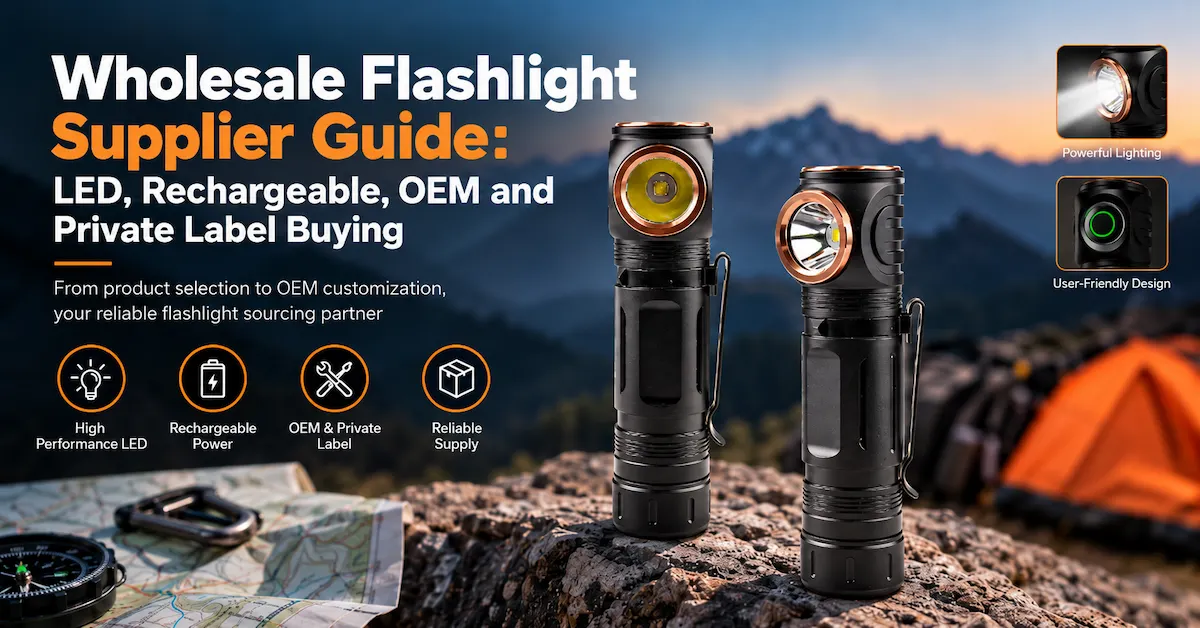


What Should an OEM LED Work Light Manufacturer Deliver?
An OEM LED work light manufacturer should help turn a product concept into an approved configuration that can be tested, packaged and repeatedly manufactured. Buyers should expect a clear product brief, defined customization scope, documented components, samples with stated purposes, relevant test records and a process for approving changes before production. A presentation communicates the idea; the specification and approval records determine what the factory should actually produce.
For distributors, importers, brand owners, retailers and service companies, the objective is not to keep adding features until a prototype looks impressive. It is to develop a work light that fits a specific task, supports the intended market position and remains consistent after launch. Start by reviewing the Brightenlux portable lighting product range, then discuss which product configurations could suit the project. Specifications, test evidence, customization options, minimum order quantity, lead time and warranty terms should be confirmed for the selected model and order.
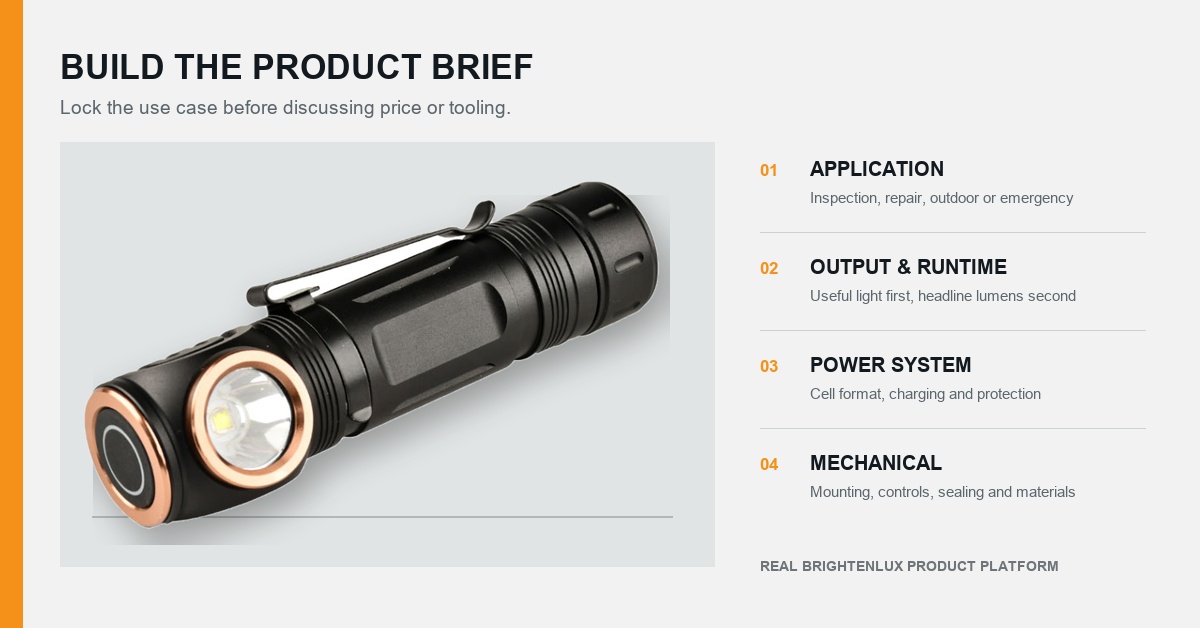
15 Steps from Product Presentation to Product Launch
Use the following framework to organize decisions, not merely to collect documents. At each stage, record what is approved, what remains open, who is responsible and which assumptions depend on components, testing or customization. An estimate should remain an estimate until the relevant evidence supports approval.
1. Turn the Presentation into a Buildable Product Brief
Begin with the user, task and sales channel. Explain whether the light is intended for a vehicle-repair toolkit, construction toolbox, emergency kit, field-service vehicle or household hardware range. Add the preferred dimensions, weight, beam direction, charging method, mounting arrangement, controls and packaging limitations. Separate essential requirements from ideas that are still open to discussion. A reference image can communicate appearance, but it cannot define battery access, operating behavior or acceptance criteria. Buyers can use the Brightenlux work, repair and field-service lighting page to begin an application-focused discussion before narrowing the product brief.
2. Choose Between an Existing Platform and a New Design
An existing platform may be appropriate when its housing, optical arrangement, battery system and mounting geometry already fit the brief. A new design becomes worth evaluating when the required shape, lighting arrangement or ergonomics cannot be achieved through suitable platform changes. Ask the OEM LED work light manufacturer which components are shared, which require modification and which changes would affect tooling or validation. Compare the engineering benefit against development cost, sample stages and production-volume expectations rather than assuming that greater customization always creates greater customer value.
| Development Approach | When to Consider It | What Buyers Should Confirm |
|---|---|---|
| Existing platform with branding changes | The core product already fits the application | Logo, color, packaging, instructions, accessories and model-specific minimums |
| Modified existing platform | The basic architecture fits, but selected functions or components need adjustment | Engineering scope, component compatibility, sample requirements and additional testing |
| New product design | The required structure, optics or mounting cannot be achieved through a suitable existing platform | Design responsibilities, tooling, development stages, validation requirements and commercial feasibility |
These are project-scoping categories, not fixed service packages. The actual boundary between a branding change and an engineering change should be agreed for the selected product.
3. Define the Lighting Experience, Not Just the Lumen Target
Describe what users need to see and how they will position the light. Include the intended balance between flood and spot illumination, beam width, color appearance, glare control, low-mode usefulness and switching sequence. For a dual-source design, state whether both sources must operate together and what task that combination supports. Also consider comfort around the handle during operation. Ask for an optical proposal, diagram or sample that can be evaluated against the intended work area. The aim is to approve a useful lighting experience, not simply a brightness number detached from working distance and positioning.
4. Design the Battery System Around Actual Use
Define the expected operating pattern, charging access, storage periods, destination market and service expectations before selecting the battery configuration. The brief should address battery capacity, protection functions, indicator behavior, charging interface, cable, charging-time target and whether operation during charging is required. For lithium-battery products, request identification of the proposed production battery and records of any approved alternatives. A rechargeable work light manufacturer should explain how the battery, electronics, housing and heat-dissipation arrangement work together. Battery capacity alone should not be treated as proof of runtime or safety, and proposed performance should remain conditional until the relevant configuration has been evaluated.
5. Use Design Reviews with Written Decision Logs
Separate concept, architecture, appearance, engineering and production-intent reviews. At each review, record the approved items, unresolved questions, responsible person and next decision date. Identify whether a proposed change affects tooling, samples, packaging or the schedule. This is particularly important when different teams comment on different versions of a drawing. An appearance update should not quietly alter an approved handle, charging cover or battery-access arrangement. Keep the decision log linked to the relevant model revision so purchasing, engineering and the factory can identify which instructions are current without interpreting a chain of screenshots or verbal approvals.
6. Review Mechanical Parts Before They Become Expensive to Change
Work lights may depend on folding joints, magnets, hooks, rubber cushions, lenses, switches, charging covers and battery doors that users operate repeatedly. Define the required load or durability expectations for the relevant components and distinguish functional surfaces from decorative ones. Check standing stability, center of gravity, grip, mounting angles, access for servicing and snagging risks. Review how these parts interact: a hinge should not obstruct the useful beam, and a mounting feature should not make battery access impractical. Record the agreed mechanical criteria before approving a structure whose limitations would otherwise appear during pilot production.
7. Specify Electronics and Control Behavior
A feature list is not enough to define how a rechargeable work light should behave. Document current regulation, thermal response, low-voltage behavior, charging protection, indicator timing and mode memory where applicable. Describe the button sequence and what happens after power is interrupted or restored. When a product includes independent light sources, emergency flashing or power-bank output, define the relevant operating priorities and protection rules. Request a functional block diagram or a test checklist that can be used during sample approval. The factory and buyer should be checking the same behavior, rather than interpreting a marketing description differently.
8. Build a Controlled Bill of Materials
The bill of materials, or BOM, identifies the components belonging to the approved product revision. Depending on the design, it should cover the housing, lens, LED, driver, battery, protection board, switch, cable, magnet, fasteners, labels, packaging and accessories. Separate performance-critical components from appearance options, and identify alternatives only after the required review. The BOM connects the buyer’s brief to factory purchasing and assembly. Ask how substitutions are proposed, who approves them and how the implementation date is recorded. An unchanged model name should not be taken as evidence that the internal configuration is unchanged.
9. Use Samples to Answer Different Questions
An appearance sample, an engineering sample and a production-intent sample serve different approval purposes. Identify the sample’s role before requesting or evaluating it, and record any temporary components or unfinished features. This prevents the team from treating a visually convincing prototype as proof of production readiness.
| Sample Stage | Main Approval Question | What the Sample Should Not Automatically Prove |
|---|---|---|
| Appearance sample | Are the shape, color and branding direction acceptable? | Final charging behavior, runtime or production-component consistency |
| Engineering sample | Do the assembly, functions, thermal behavior, charging and mounting meet the development requirements? | That all components and processes are already production-intent |
| Production-intent sample | Does the proposed production configuration meet the agreed requirements? | That the complete manufacturing process has been validated without pilot-production evidence |
Keep sample feedback tied to the model revision and sample purpose. Where a component remains temporary, leave the affected specification open rather than recording an unconditional approval.
10. Test Before Freezing Artwork and Product Claims
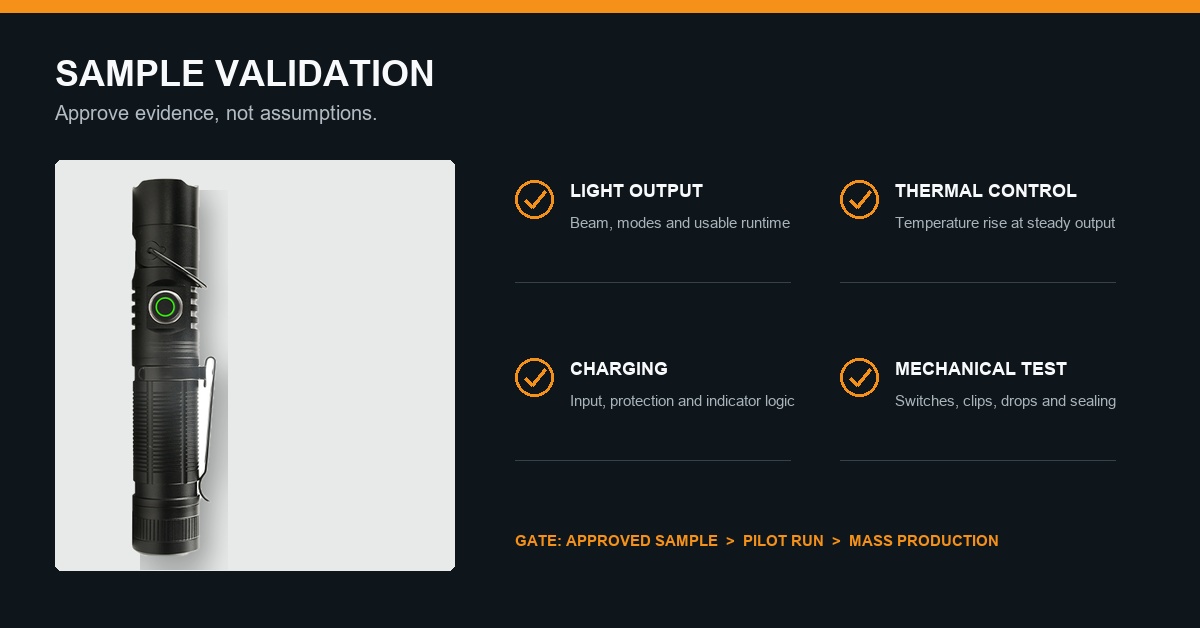
Packaging, manuals and online listings should describe the product that will actually ship. Before approving final claims, evaluate the relevant modes, runtime, charging, thermal behavior, stability, joints, impact resistance and intended environmental performance. Record the tested configuration and any limitations. When a test result changes the specification, update the images, instructions and sales copy before they become production files. The Brightenlux work light testing and factory quality guide provides related purchasing questions for connecting application requirements with inspection and testing. Use those questions to define the evidence needed for the exact project, not to assume that every model has identical test coverage.
11. Develop Packaging Alongside the Product
Decide how the work light will be displayed, protected, shipped and unpacked. Retail blister packaging, display boxes, printed cartons, service kits and bulk project packaging involve different presentation and protection requirements. Define the inserts, charger, cable, instructions, barcode, language versions, warning text, master carton and any pallet requirements. Check that the product and accessories remain restrained and that internal movement will not damage the lens or housing. Packaging should be part of the launch decision, not a last-minute decorative task after the product configuration has already been approved.
12. Clarify Tooling Scope and Ownership
When development requires new housings, lenses, reflectors, brackets or fixtures, document the tooling scope and the agreed arrangements for ownership, storage, maintenance, modification and future use. Maintain a tooling register linked to the relevant product and drawing revisions. Ask how changes following prototype review will be handled and which modifications are included in the quoted scope. Do not leave future production dependent on an undocumented tool or an outdated drawing. These arrangements should be confirmed in the project documentation rather than inferred from the fact that a tooling payment has been discussed.
13. Prepare a Pilot Order to Evaluate Production
A pilot order should evaluate the production process, not merely provide a small quantity of finished goods. Before it begins, identify the production-intent BOM, process setup, inspection points, acceptable deviations, packaging revision and retained-sample requirements. Agree on the pilot quantity and how defects will be classified. Review the initial output before scaling up where the project arrangement allows. Look for evidence of assembly consistency, functional settings, appearance and pack-out performance. Any unresolved issue should have a recorded disposition so it does not disappear when the project moves from development discussions into a larger purchase order.
14. Control Changes After Approval
Approval does not remove the possibility of later component or process changes. Establish a process requiring written notification, an explanation of the impact, any necessary sample review and an implementation date. A proposed “equivalent” LED, battery or charger should be reviewed for its effect on output, runtime, thermal behavior, relevant documentation and the customer experience. Update the BOM, specifications, test records and packaging information where affected. This discipline allows an OEM LED work light manufacturer and the buyer to maintain a usable product history across repeat orders instead of relying on recollection when a difference appears.
15. Evaluate the Working Relationship Beyond the First Quote
Price matters, but also examine response quality, engineering support, sample identification, evidence, corrective actions and repeat-order communication. A useful supplier explains conflicts between requirements rather than accepting every request and revealing the problem during production. Compare quotations only after aligning the battery, accessories, packaging, testing expectations, quantity and product revision. For the broader qualification process, consult the guide to choosing an LED work light manufacturer for wholesale programs. The practical question is whether the supplier can keep open issues, approvals and the next milestone visible throughout the project.
Required Practical Documents for a Controlled Product Launch
Create One Approved Project Package
Keep the signed brief, drawings or annotated photographs, BOM, control-behavior sheet, applicable firmware identification, test records, packaging artwork, manuals, inspection criteria, tooling register, sample photographs and open-issue log together. Mark each document with its revision and approval date. The package should let purchasing, engineering, quality, marketing and customer service identify the same product without reconstructing decisions from separate conversations. A photograph is useful as a reference, but it should not replace the documents needed to identify internal components or operating behavior.
Separate Development Costs from Recurring Unit Costs
Build the budget around the complete development scope. Separate concept work, tooling, prototypes, engineering samples, testing, artwork and packaging setup from the recurring cost of finished products. Identify the possible cost of revising a battery, lens or housing after approval. This comparison helps buyers decide where customization creates customer value and where an existing platform remains sufficient. It also makes quotation discussions clearer because a one-time development expense is not confused with a permanent increase in the unit price.
Keep Marketing and Engineering Aligned
Product copy should describe approved benefits and the actual configuration. When development changes a dual-power concept to a single-power product, or a replaceable battery to a built-in rechargeable system, update the title, manual, comparison table and product images accordingly. Ask for the basis of each important performance claim before publication. Marketing approval should follow the approved product definition rather than preserve an early promise that engineering no longer supports. This alignment is especially important when different teams prepare packaging and online listings.
Use Launch Feedback to Improve the Next Order
After the first shipment, collect returns information, customer questions, retailer feedback, observations about battery use and mounting, and packaging-damage reports. Distinguish isolated handling issues from recurring product concerns before deciding on a change. Feed useful findings into the same review and revision process used during development. The next order should benefit from what the first launch revealed, while keeping changes controlled and visible. A new revision is more useful when the team can explain what changed, why it changed and which production batch introduced it.
Buyer Notes: Keep Decisions and the Launch Schedule Under Control
Ask the Factory to Explain Trade-Offs
For a meaningful proposal involving wall thickness, lens texture, battery capacity, magnet size or charging interface, request a short explanation of the benefit, risk, cost and schedule impact. This gives the buyer a decision to make rather than an unexplained feature substitution. Evaluate the proposal against the product brief, not against the appeal of the additional feature alone.
Use Consistent Terms Across Teams
Agree on the names used for the model, revision, battery, operating mode, accessory and packaging component. Purchasing, engineering, quality and marketing may view the project differently, but they should not identify the same item differently. Include these definitions in the project package so quotations, sample approvals and listings remain aligned.
Protect the Launch Window
Set dates for brief approval, design review, sample feedback, purchase orders, inspection and shipping documents. Allow time for buyer decisions and identified component constraints. When an approval is delayed, revise the schedule openly rather than quietly shortening testing or inspection. The launch plan should reflect the work still required, not only the desired sales date.
Keep Only Defined Details Flexible
Not every detail needs to be finalized at the first meeting. Secondary colors, optional straps, packaging quantities or minor accessories can remain open where they do not disrupt the approved design. Identify those items and assign decision dates. Do not let an apparently small late request quietly reopen the battery system, optics, controls or mounting geometry.
How to Prepare an OEM LED Work Light Inquiry
Send a written brief covering the target market, sales channel, application, product direction, lighting requirements, battery and charging preferences, mounting method, estimated quantity, customization scope, packaging, expected testing and target schedule. Include reference images where helpful, but explain which features are requirements and which are only inspiration. Request a response identifying the recommended platform, development scope, sample stages, required buyer decisions and quotation assumptions. For a Brightenlux project, submit your OEM work light inquiry with these details so the discussion can focus on the selected configuration rather than a general catalog description.
Frequently Asked Questions
What should I send to an OEM LED work light manufacturer first?
Send a product brief describing the application, target market, sales channel, lighting requirements, power preferences, mounting method, quantity, customization, packaging and timeline. Reference images help communicate direction, but written requirements should define what the product must achieve and which decisions remain open.
Can an existing work light be customized without a completely new design?
That depends on the platform and the requested changes. Branding, color, packaging, instructions and accessories may be possible without changing the central architecture. New optics, electronics, housing geometry or mounting arrangements require a separate engineering review. Confirm the available options and commercial conditions for the exact model.
What is the difference between an engineering sample and a production-intent sample?
An engineering sample is used to evaluate the developing design, including assembly, function, charging, thermal behavior and mounting. A production-intent sample should represent the components and processes proposed for production. Any temporary parts or unfinished features should be identified so the approval does not extend beyond what the sample demonstrates.
How should buyers compare quotations from two manufacturers?
Align the configuration before comparing prices. Check the battery, charger, accessories, packaging, testing expectations, quantity, trade terms and product revision. Separate tooling and setup costs from recurring unit costs, and list unresolved assumptions. A lower quotation for a different delivery scope is not a like-for-like saving.
What determines the development timeline and minimum order quantity?
The project scope needs to establish this. Existing-platform changes, new tooling, component selection, sample revisions, testing and packaging can create different requirements. Ask for a schedule and minimum quantities tied to the proposed configuration, with buyer approval dates and dependencies shown, rather than relying on a general factory estimate.
What should be checked before placing a repeat order?
Confirm the approved sample, BOM, component revisions, artwork, packaging, inspection requirements and retained-sample reference. Ask whether any component, supplier or process has changed since the previous shipment. Review proposed changes before production and update the project records even when the commercial model name remains the same.
Conclusion
Choosing an OEM LED work light manufacturer is a decision about how a product will move from an idea to repeatable production. The strongest development process connects the user’s task with a buildable brief, controlled design decisions, clearly identified samples, relevant testing, packaging approval and pilot-production evidence. Product launch should follow those approvals, not substitute for them.
To discuss a Brightenlux project, send the team your product brief, including the application, target market, estimated quantity, customization requirements and launch schedule. Confirm the selected configuration and commercial terms, then keep the approved documents aligned as the project progresses from presentation to production and repeat orders.