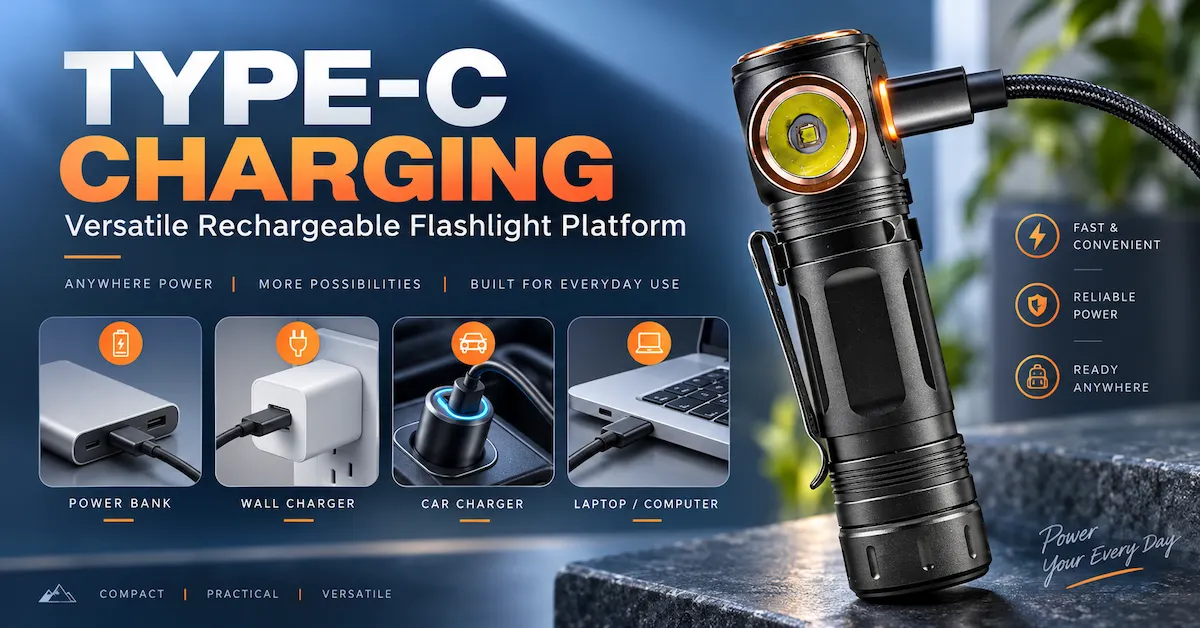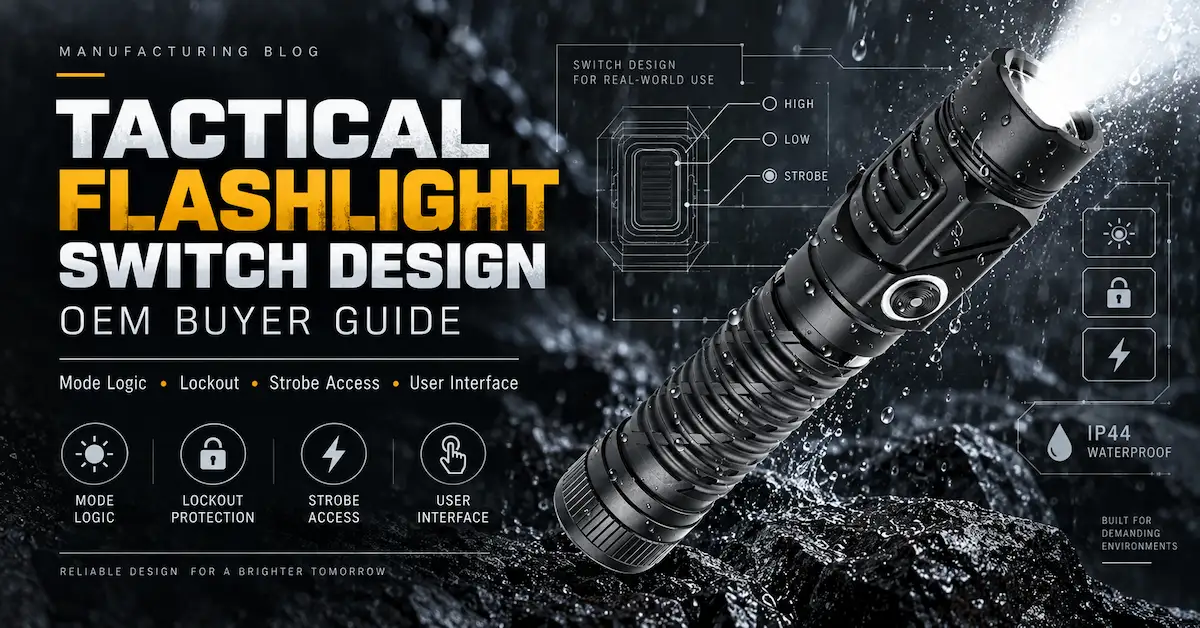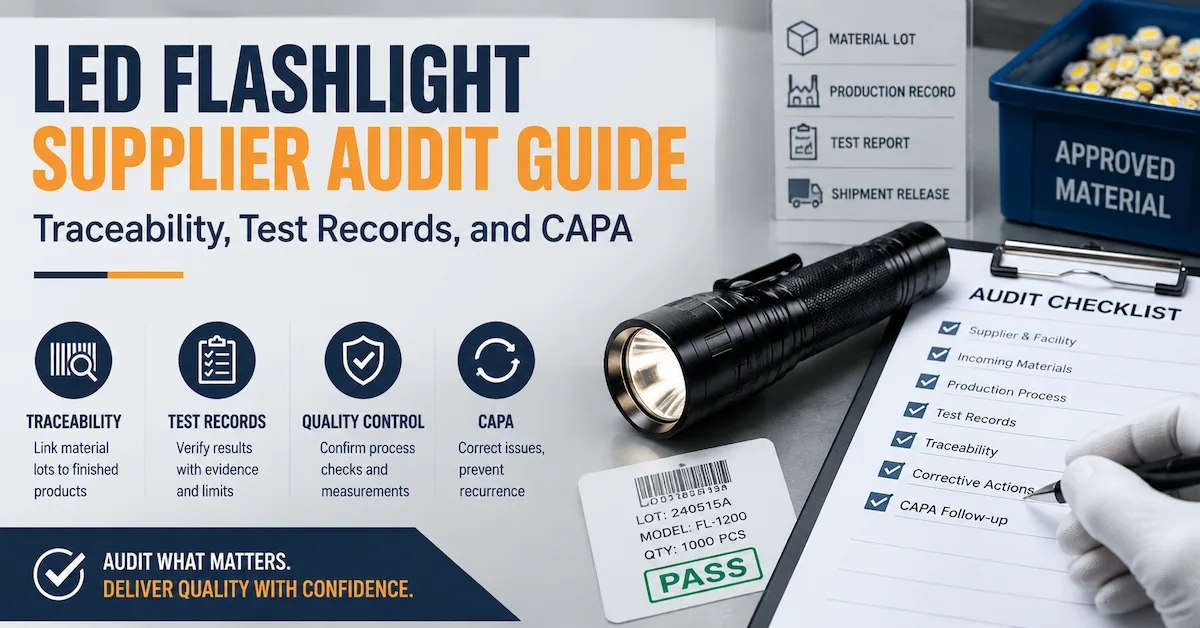


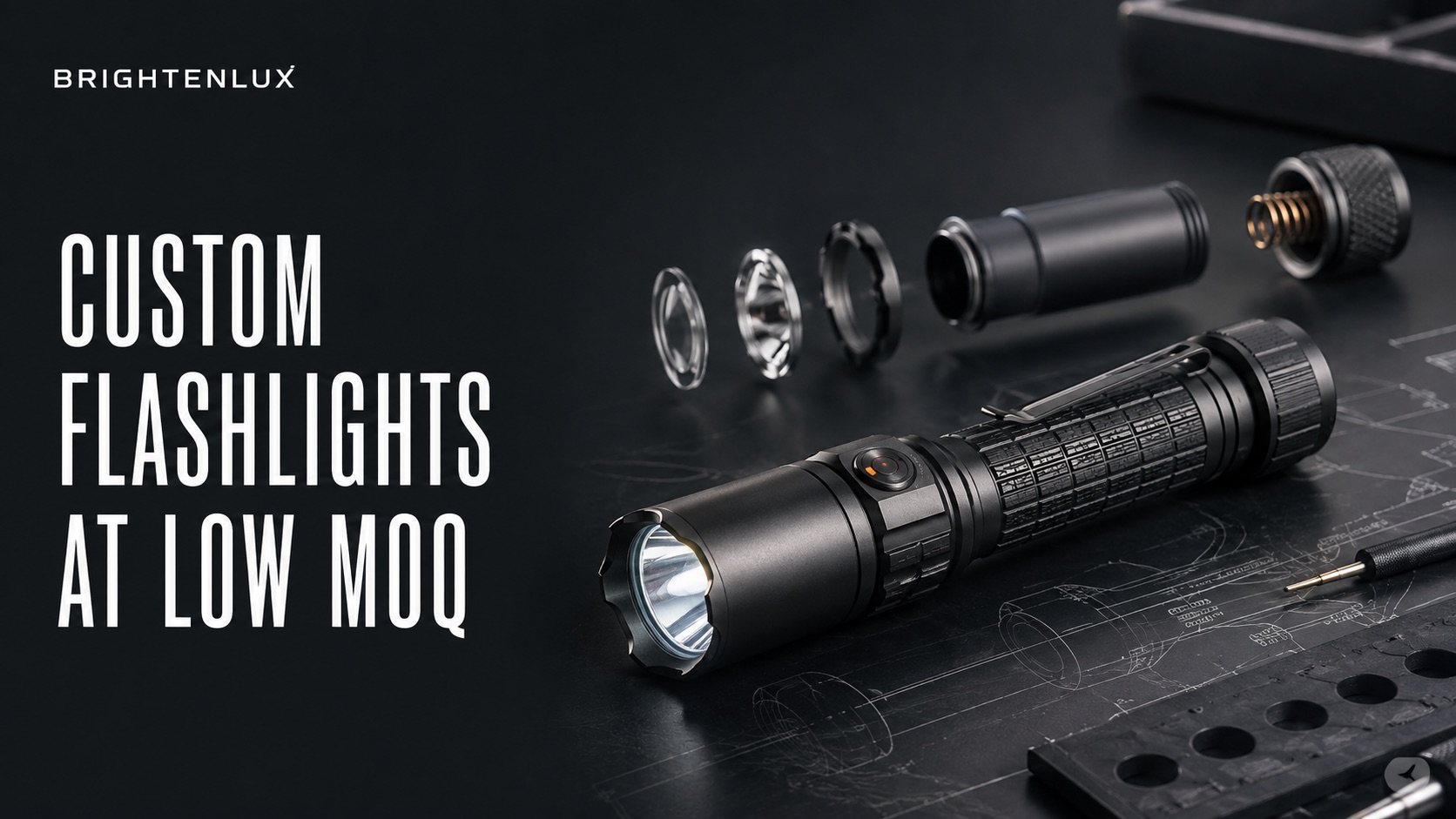
Illustrative design concept. Final appearance, construction and performance depend on the selected model and approved specification.
The short answer
A custom flashlight manufacturer can usually support a lower starting quantity when a buyer keeps the proven product platform and changes only branding, instructions, barcode, accessories or packaging. Changes to color, optics, battery, charging, firmware, housing or tooling normally add supplier constraints, validation work, cost and time. The useful question is not “What is your lowest MOQ?” It is “What can be changed on this model, for this quantity, without creating an unverified product?”
That distinction matters. A small order may be commercially possible yet technically wrong for the market. A large order may still fail if the buyer approves a logo but never freezes the LED, cell, driver, charging port, mode sequence, sealing parts and packaging claims. Low MOQ is valuable only when it reduces market-entry risk without moving risk into quality, compliance or delivery.
Brightenlux develops and supplies portable lighting products for international brands, importers, distributors and retailers. The portfolio covers flashlights, headlamps, camping lanterns, work lights, bicycle lights, portable solar lights and portable emergency lights.Our working method is to match a product platform to the application, confirm the customization boundary, separate commercial variables in the quotation and lock the approved version before mass production. Model-specific performance, compliance, MOQ and lead time are confirmed before quotation rather than published as universal promises.
This guide gives a buyer a practical way to decide what to customize, what to leave alone for a first order and what information a serious supplier needs before offering a defensible quote.
Start with the market job not the flashlight shell
Buyers often begin a sourcing conversation with a photo and a target price. That is understandable, but the photo hides most of the decisions that control performance and risk. Two flashlights can share the same silhouette while using different emitters, optics, drivers, cells, thermal paths, seals, charging circuits and firmware. The visible shell is only one part of the product definition.
Begin with the job the user must complete. A compact light carried every day needs a different balance of size, beam, user interface and standby behavior from a tool light kept in a service van. An outdoor retailer may care about wet handling, low-temperature behavior and packaging claims.A promotional buyer may prioritize artwork, presentation and a simple user experience. An industrial distributor may need traceable component control, repeatable inspection and documentation for a defined market.
Write one primary application before asking for models. Then add the operating environment, typical duty cycle and failure consequence. “Occasional household backup” is a usable starting point. “A good flashlight” is not. “Technicians need a pocket light for repeated short inspections in oily indoor areas” is even better because it guides grip, switch location, beam pattern, clip, cleanability and charging decisions.
The sales channel also changes the specification. Retail packaging needs space for claims, warnings, responsible-party information and local language. E-commerce needs a clear image set, accurate dimensions and a returns-resistant description. A distributor may need master-carton data, spare parts and a stable model code. A private-label brand needs ownership and approval rules for artwork, manuals and future revisions.
Use this first-page brief:
| Decision field | Buyer input | Why it changes the quote |
|---|---|---|
| Destination market | Country or region | Compliance, labeling, plug and transport requirements |
| Sales channel | Retail, e-commerce, distributor, promotion or industrial | Packaging, claims, documentation and durability priorities |
| Main application | The user task and environment | Beam, runtime, structure, controls and protection |
| Estimated quantity | Trial quantity and expected annual volume | Component, decoration, packaging and production economics |
| Launch date | Sample approval and delivery target | Platform choice, validation scope and capacity planning |
| Customization | Logo, color, packaging, accessories, function or new structure | MOQ, tooling, test and schedule impact |
| Target performance | Beam, output, runtime, battery and charging | LED, optic, driver, cell, thermal and enclosure choices |
| Required evidence | Tests, reports, labels and shipping documents | Sample plan, laboratory work and document package |
If a supplier responds to that brief with only a unit price, the offer is incomplete. A useful response should identify the model platform, what can be changed, what remains standard, what must be validated and which inputs are still missing.
The four customization levels that determine MOQ
The phrase low MOQ becomes useful when the requested changes are separated by engineering depth. Brightenlux uses four practical levels for early discussion. They are not universal quantity bands. They are a way to expose why one request may fit a trial order while another requires a production commitment.
Level 1 branding and documentation on an existing platform
The first level keeps the product architecture unchanged. Typical requests include a logo, model name, barcode, rating label, instruction sheet, accessory selection and an existing packaging format with new artwork. This is usually the best place for a new brand to start because the largest technical decisions remain on a known platform.
Even here, “just add a logo” is not a complete instruction. The buyer and supplier still need to agree on artwork format, color reference, print or marking method, position, maximum area, contrast, durability expectation and approval sample. Laser marking behaves differently from pad printing. A small cylindrical surface can distort artwork that looked correct on a flat screen. A switch, clip or knurling pattern may limit the available area. A retail label can create new obligations if it changes the represented model, importer or claims.
Packaging can become the real MOQ driver. A standard neutral box with a printed label may support a smaller launch than a fully printed color box.Custom molded trays, manuals with many language versions, special finishes or retailer-specific display structures may be constrained by a packaging supplier rather than the flashlight assembly line. Ask for each packaging component to be listed separately.
Level 2 cosmetic and assortment changes
The second level may include body color, anodizing or coating, bezel style, clip, lanyard, holster, cable, gift set or a selected combination of existing components. These changes can create material batch, finish consistency and accessory purchasing constraints.
A buyer should ask whether a color is selected from an existing production palette or requires a custom master sample. “Black” is not a complete color standard. Finish, gloss, texture and material change how it appears. A dark polymer part and an anodized aluminum part may not match under different lighting. The approved color sample should identify the substrate and process, not only a digital color value.
An assortment can sometimes lower commercial risk without lowering the supplier’s total component purchase. For example, a buyer may split packaging languages or logo variants while keeping the flashlight platform identical. The feasibility depends on shared components, artwork changeover and inspection control. The quotation should distinguish total order quantity, quantity per variant and any fixed setup charge.
Level 3 controlled component or functional changes
The third level changes performance-related parts while retaining most of the housing.Examples include a different LED, optic, driver setting, mode order, battery configuration, charging interface, switch behavior or firmware. These requests may look small on a specification sheet, but they can alter output, runtime, heat, charging safety, electromagnetic behavior, sealing and transport documentation.
Do not approve this level from a supplier email alone. Require a revised specification, controlled bill of materials, engineering sample and defined test plan. If a higher-output emitter is proposed, ask what happens after the first minutes of operation, not only at switch-on. If a cell changes, check capacity, discharge capability, protection arrangement, fit, supplier traceability and the applicable battery documents. If firmware changes, approve the complete user-interface sequence, including lockout, memory, low-voltage warning and charging indications.
Level 4 new structure tooling or platform development
The fourth level includes a new housing, mold, extrusion, optical system, PCB architecture, battery pack, mechanical interface or proprietary feature. This is product development rather than simple private labeling. It requires engineering scope, ownership terms, tooling records, design reviews, prototypes, validation, change control and a realistic ramp plan.
This level is rarely compatible with the lowest trial-order quantity because the buyer is funding dedicated work and components. A small initial production run may still be negotiated, but tooling and validation costs do not disappear. The correct comparison is total launch investment and risk, not unit price alone.
| Customization level | Examples | Common MOQ trigger | Evidence before approval |
|---|---|---|---|
| 1 Branding and documents | Logo, label, barcode, manual, existing box artwork | Printing setup, packaging component minimum | Artwork proof, marked sample, packaging proof |
| 2 Cosmetic and assortment | Color, finish, clip, cable, holster, gift set | Material batch, finish run, accessory purchase | Color master, appearance limit sample, packing list |
| 3 Component or function | LED, optic, driver, UI, cell, charging | Component reel or batch, engineering and test work | Revised specification, BOM control, functional test report |
| 4 New platform | Housing, tooling, PCB, battery pack, mechanical system | Tooling economics, dedicated components, validation | DFM review, tooling agreement, prototype and validation plan |
This ladder is the core of a productive conversation with a low moq flashlight manufacturer. It replaces one vague number with a model-specific decision.
OEM ODM and private label are different commercial scopes
Suppliers and buyers do not always use OEM, ODM and private label in the same way. Define the work instead of relying on the acronym.
Private label normally means that an existing product is sold under the buyer’s brand with agreed artwork, documentation, packaging and perhaps a limited accessory or finish choice.OEM may mean production to the buyer’s specification, but in many sourcing conversations it also describes moderate customization of an existing supplier platform. ODM usually suggests that the supplier owns or develops more of the design platform and adapts it for the buyer. Those meanings overlap across companies.
Put the scope into a responsibility table. Who owns the industrial design? Who approves the product claims? Who selects the battery cell? Who maintains the drawings and firmware revision? Who pays for tooling maintenance? Can the supplier sell the same housing to another customer? Can either party substitute a component without written approval? Which files will be released if the relationship ends?
For a trial launch, an existing platform with controlled private-label changes is often the fastest route. For a mature brand with a validated market gap, a deeper OEM or ODM program can create stronger differentiation. The wrong move is to ask for proprietary engineering while pricing the project as a logo change.
Brightenlux confirms branding, packaging and engineering scope by model. That sentence is deliberately narrower than a promise that every product can accept every change. A buyer should expect a feasibility answer tied to the chosen platform.
Translate the application into an engineering specification
A quote-ready flashlight specification does not need to dictate every component. It does need to state the outcomes and constraints that matter. This allows the supplier to propose a platform without hiding tradeoffs.
Beam requirement
Describe where the light must go.A broad near-field beam supports inspection, walking and general tasks. A narrower, higher-intensity beam supports longer-distance identification. A mixed beam can combine useful spill with a defined center, but reflector and lens geometry, emitter size and optical losses all affect the result.
This is why the question of lumens vs candela flashlight performance matters. Lumens describe total emitted light under a defined measurement method. Candela describes luminous intensity in a direction and relates more directly to how concentrated the beam is. Two products with similar lumen output can produce very different beam distances and user experiences. State the task first, then agree which measurements will verify it.
Output and runtime requirement
Do not specify only the highest mode. State the required useful output, how long it must be sustained, acceptable step-down behavior and the duty cycle. A brief turbo mode can be useful, but it is not the same as sustained output. The buyer should see a runtime curve or time-stamped readings under documented conditions when the claim is commercially important.
Temperature, cell state, airflow and control logic affect the curve. Define the sample, battery, starting state, ambient conditions and measurement method. If a packaging claim will use the result, confirm the applicable marking rule and rounding method before artwork approval.
Size weight and handling
Give a target envelope and weight only after considering the battery and thermal needs. A thin body may look attractive but reduce grip comfort, heat-spreading area or cell options.A large head can support a different optic but may become awkward in a pocket. A tail switch, side switch and dual-switch interface each suit different handling patterns.
Add glove use, wet use, mounting, clip orientation, anti-roll features and lockout requirements where relevant. Small handling details can cause returns even when the light output meets the specification.
Power and charging
State whether the battery is integrated, removable or supplied separately. Define permitted cell types, nominal energy, replacement policy, protection, charging interface, indicator behavior and target charge time. For a removable-cell product, decide whether the user can insert an incompatible cell and how the product manages that risk.
The familiar 18650 vs 21700 flashlight choice is not simply small versus large. Cell capacity, discharge behavior, physical fit, availability, protection length and thermal design all matter. A 21700 platform may offer more energy, but it can increase body diameter and weight. An 18650 platform can be compact and widely understood, but the actual cell and duty cycle still determine performance. Compare complete product configurations, not battery labels.
Environmental and mechanical requirements
Describe water, dust, drop, vibration, temperature and chemical exposure based on realistic use. Avoid selecting an IP code because a competitor prints it. A waterproof flashlight IP rating is a classification tied to defined enclosure tests and conditions; it is not a promise that covers every liquid, depth, duration, temperature or damaged seal.The IEC identifies IEC 60529 as the standard for degrees of protection provided by enclosures. Your test plan should name the intended classification, sample condition, port-cover position and post-test acceptance criteria.
What good optical validation looks like
Portable-lighting claims are easy to copy and difficult for a buyer to compare when the conditions are missing. The revised ANSI/PLATO FL 1 standard is intended to create clearer and more consistent performance information for portable lights. PLATO announced the revised 2025 standard in February 2026, including clearer treatment of elevated brightness modes. A buyer does not need to reproduce the standard in an RFQ, but should ask the supplier which edition and methods support any claim placed on packaging.
For ANSI PLATO FL1 testing, define the exact product revision and battery. Record the laboratory or internal facility, equipment identification, environmental conditions, method, samples and date. Keep raw readings or curves where possible. A logo or icon on packaging is not a substitute for traceable evidence.
At minimum, discuss:
- Light output and the measurement time used for the claim.
- Peak beam intensity and beam-distance derivation where applicable.
- Runtime definition, output threshold and test mode.
- Water-resistance or submersion classification and sample condition.
- Impact-resistance method and post-test functionality.
- Treatment of turbo or boost modes that cannot be sustained.
The revised standard may be purchased or accessed through the relevant standards channels.Buyers can review the current overview from PLATO and the ANSI listing for ANSI PLATO FL 1. Confirm the edition named in your contract or packaging specification.
Measurement discipline also protects conversion. A credible listing may show a lower number than a competitor’s unsupported claim, yet generate fewer returns and stronger distributor trust. The goal is not to publish the largest number. It is to publish a number that the approved production configuration can repeat under stated conditions.
USB C design is more than changing the connector
A buyer asking for usb c rechargeable flashlight design may expect one familiar cable across a product range. The request affects the port, connector retention, board layout, input negotiation, charging current, protection, indicator logic, heat, sealing, cable clearance and user instructions.
Specify the intended input behavior. Do not assume that a product accepting a USB-C plug supports every charger or every USB power-delivery mode. Test the agreed charger and cable classes. Confirm behavior with low battery voltage, normal charge, full charge, interrupted power and abnormal temperature. Check whether the flashlight can operate while charging and whether that behavior is allowed in the instructions.
The port cover is part of the enclosure. Its hinge, retention, compression and user closure can affect the product’s water-resistance classification. A flush cover may look clean but be difficult to open with gloves.A loose cover may be easy to use but fail to seal consistently. Inspect it after repeated cycles, not only on a new sample.
For retail and support teams, agree on indicator meanings in plain language. A blinking red light can mean charging, low voltage, fault or poor connection on different products. The manual, listing and device must use the same sequence. If firmware changes the indication, the revision should be controlled.
Thermal management decides what the user actually receives
Every high-output portable light converts part of its electrical power into heat. Flashlight thermal management is the path from LED junction and board through the housing, plus the control logic that keeps operation within defined limits. A small flashlight can look impressive at switch-on and then reduce output quickly because its surface area and mass cannot sustain the initial power.
Ask the manufacturer for the intended output profile rather than a single maximum value. The engineering discussion should cover LED board contact, interface material, heat path, housing material, sensor location, control thresholds and the effect of ambient temperature. For polymer housings, the internal heat path may matter more than the exterior appearance. For metal housings, surface temperature and user contact matter.
A good sample review compares several points in time. Record output, surface temperature, battery voltage and mode status. Repeat with the agreed cell and a realistic ambient condition. If the product is sold for cold environments, evaluate cold behavior separately.If it may be used in a confined space or while charging, define that scenario instead of assuming open-air performance.
Thermal step-down is not automatically a defect. Unexplained or inconsistent step-down is the problem. A buyer can accept a brief high mode followed by a stable level if the packaging, listing and user expectation are aligned. The approved runtime curve becomes part of the product definition.
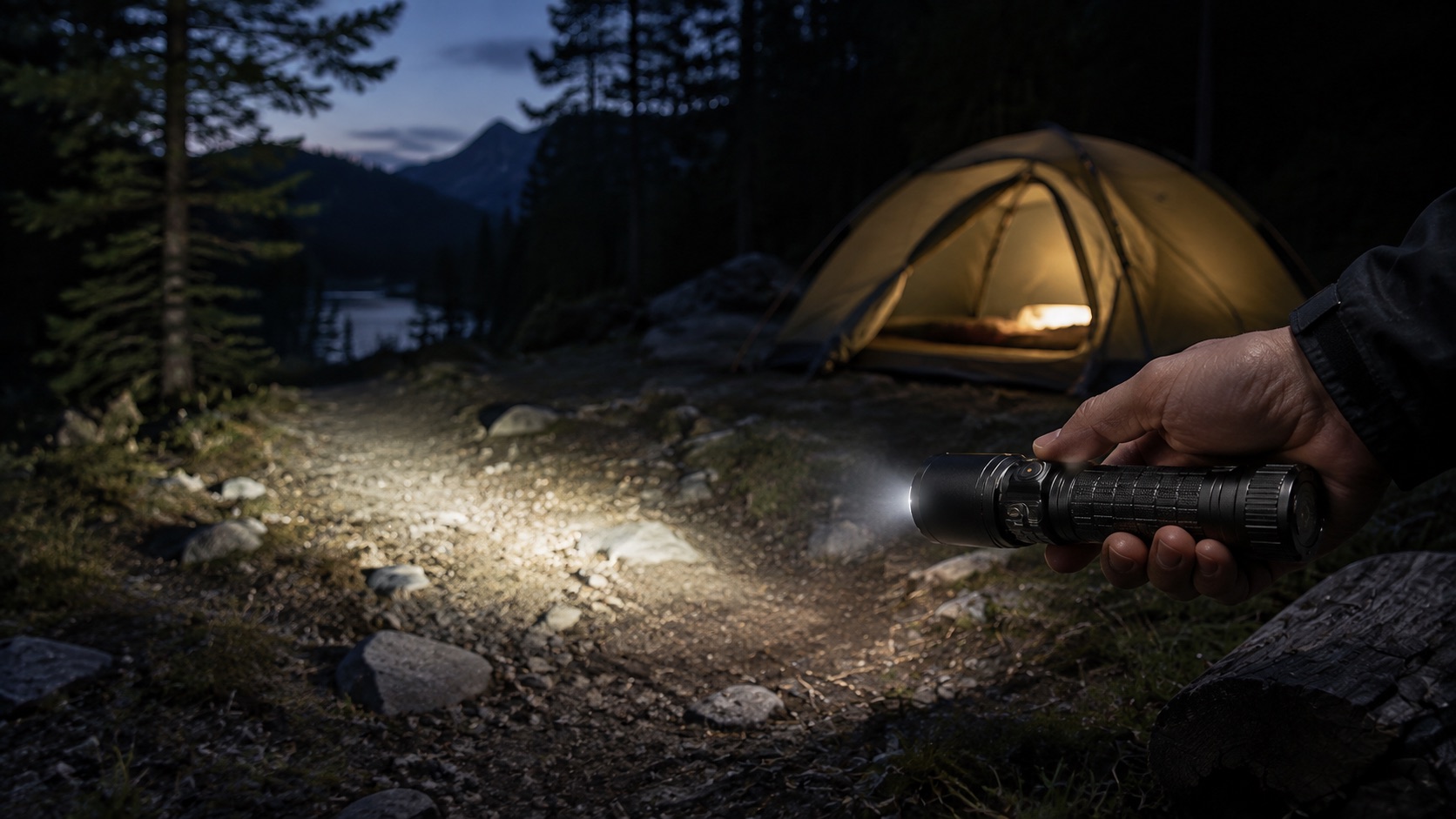
Illustrative application scene. Beam pattern and output are not performance claims.
Quality control must follow the approved revision
Flashlight quality control is not one final inspection. It is a chain that connects components, processes, samples and the shipped batch to the approved specification. The chain breaks when the buyer approves a beautiful sample but the purchase order does not identify the sample revision, controlled components or acceptance criteria.
Brightenlux’s working flow separates the main gates: capture the RFQ, match the product platform, prepare an itemized quotation, control sample revisions, freeze the specification, connect the batch to incoming and in-process checks, and release packaging and shipping documents with the order. The exact inspection plan remains product- and project-specific.
Incoming controls
Incoming checks should focus on parts that can change performance or safety: LED, optic, cell, driver, PCB, connector, switch, seals, adhesive, housing finish and packaging components.Not every part requires the same method. Some need supplier documentation and identity checks. Others need dimensions, appearance, electrical testing or sampling.
For rechargeable products, component traceability deserves special attention. Record the cell maker and type, nominal data, protection arrangement and related documents. A cell substitution can alter runtime, heat, charge time and shipping status. A change that seems commercially convenient should not occur without review.
In-process controls
In-process checks catch assembly errors before they become a finished batch. Depending on the design, this may include polarity, soldering, wire routing, board fastening, thermal-interface placement, seal installation, torque, adhesive application, charging behavior, switch response and initial function.
The work instruction should show the current revision. If a seal can be installed backward or omitted, the process should include a prevention or verification step. If torque affects sealing or threads, define the tool and control. If a charging board has several firmware versions, the line should know which one belongs to the order.
Final and pre-shipment controls
Final inspection should compare the complete product and pack against the approved standard. Appearance, function, modes, charging, indicators, accessories, labels, manual, barcode and packaging all matter. Performance verification may use defined sampling and methods rather than testing every unit for the full runtime.
Pre-shipment review also checks quantity, carton marks, carton data and the shipping document package.A working flashlight in the wrong box or with the wrong manual is still a nonconforming shipment.
Change control and CAPA
The buyer should require written notification for controlled changes. The notification needs the reason, affected part or process, old and new revision, risk review, validation and effective batch. Corrective and preventive action should identify the root cause and evidence of effectiveness rather than simply stating that workers were retrained.
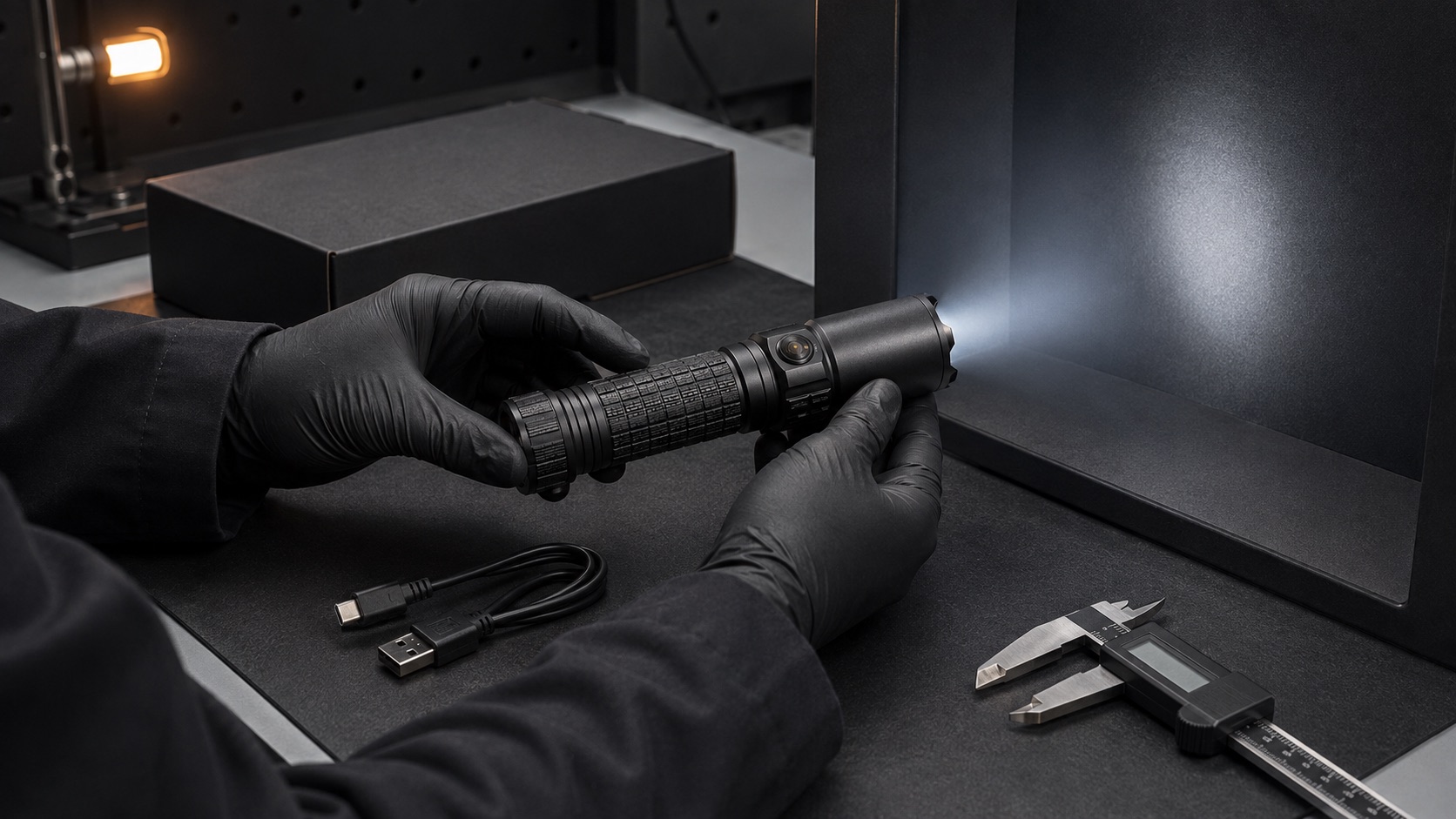
Illustrative quality scene. It does not represent a test result or certification.
Build a sample plan that answers decisions
Samples become expensive when every round asks the same vague question: “Do you like it?” Give each round a purpose.
An appearance sample can approve logo position, color, finish and packaging artwork without claiming final performance. An engineering sample can verify optical, electrical, thermal, mechanical and user-interface decisions. A pre-production sample should represent the frozen production configuration and packaging. A shipment sample can support retention and claims handling.
Use a sample record with model, revision, date, component exceptions, firmware version, artwork version and test status. If the supplier builds a sample with a temporary cell or hand-modified board, record the exception. Do not allow that sample to become the mass-production standard by accident.
During review, write comments as measurable decisions.Replace “beam is weak” with the task, distance and comparison. Replace “button feels bad” with the required force, travel, glove use or accidental-activation concern. Replace “make black darker” with an approved physical master and allowable variation.
Before mass production, freeze at least:
- Model and mechanical revision.
- LED, optic, driver and mode sequence.
- Battery or battery pack and charging behavior.
- Materials, finish, color and appearance limits.
- Logo method, position and artwork file.
- Label, manual, barcode and packaging versions.
- Accessories and replacement parts.
- Performance claims and supporting test conditions.
- Inspection plan and acceptance criteria.
- Carton marks, pack-out and shipping document requirements.
The freeze is not bureaucracy. It is the bridge between one approved sample and a repeatable batch.
Calculate cost as a system not a unit-price guess
The oem flashlight cost discussion should separate recurring unit cost from one-time and order-level cost. A supplier cannot quote accurately without quantity, destination, Incoterm, packaging, accessory, customization and evidence requirements.
Use this structure:
Total sourcing cost = product unit cost × quantity + packaging and accessory cost + customization setup + tooling or engineering + testing and documentation + samples and courier + inspection + freight, duty and local handling + expected warranty and service cost.
That formula is not a quotation.It is a comparison framework. Two offers with the same unit price may carry different batteries, packaging, testing, warranty support or trade terms. A low headline price can become expensive after relabeling, late air freight or returns.
Ask for these lines separately:
| Cost line | Questions to ask |
|---|---|
| Base product | Which model, revision, battery and standard accessories are included? |
| Branding | Which method, positions, colors and setup charges are included? |
| Packaging | Standard or custom structure, print quantity, manual languages and labels? |
| Engineering | Is the request a configuration, component change or new development? |
| Tooling | Who owns it, what is included, how is maintenance handled? |
| Testing | Which sample, method, laboratory, report and retest condition? |
| Samples | Sample type, quantity, fee, revision and courier term? |
| Inspection | Supplier inspection, buyer inspection or third party; what plan? |
| Logistics | Incoterm, carton data, battery configuration and route assumptions? |
| Warranty | Period, exclusions, claim evidence, parts or credit process? |
MOQ should be broken down the same way. The flashlight assembly quantity, custom-color batch, printed-box quantity, accessory purchase and component batch may have different minimums.Ask which line creates the constraint and whether an existing component or neutral package can reduce it.
Avoid pushing a supplier to publish one permanent minimum. The feasible quantity can change by model, capacity, material, artwork, packaging and component availability. A defensible low-MOQ proposal names the model, variant count, included changes, price basis and validity period.
Decide what to postpone in a first order
A first order does not need to contain every future feature. The most effective low-MOQ launches protect the brand promise and postpone differentiation that cannot yet earn back its complexity.
Keep changes that the customer can see and value, provided they are controllable: clear branding, accurate packaging, appropriate accessories, a coherent manual and a product platform that fits the main application. Postpone a new housing if the market has not validated the form factor. Postpone a custom battery pack if a documented standard configuration meets the need. Postpone extra modes if they complicate operation without solving a defined task.
Do not postpone safety, truthful claims, traceability or required market documentation. These are not premium features. They are conditions of a responsible launch.
Use a simple decision rule for every requested change:
- Does the change solve a named user problem?
- Can the buyer describe how acceptance will be tested?
- Does it create a new component, process, tool or document?
- Does it alter performance, safety, transport or compliance?
- Will the expected volume recover the fixed cost and added failure risk?
- Can it be introduced in a later revision without confusing the market?
If the first two answers are weak and the next three are strong, remove the change from the trial order.
Audit the supplier and the project not the showroom
A flashlight factory audit should verify the processes needed for the selected product, not collect generic photographs. Start with legal identity and the relationship among seller, factory and brand. Then trace one product family through engineering records, incoming parts, assembly, test, inspection, packaging and shipment.
Ask who controls the bill of materials and who can authorize substitution. Review how drawings, firmware and work instructions are revised. Look for calibrated equipment appropriate to the claims. Select a test record and trace it back to the model, sample and method. Select a finished batch and trace key components and inspection results. Review one nonconformance and its corrective action.
Production capacity claims should be tied to equipment, staffing, shifts, product mix and a period. A single maximum number is not enough. Lead time should separate material preparation, customization, sample approval, production and shipping.Peak season and new tooling can change the answer.
For remote due diligence, request time-stamped evidence and a live walk-through focused on the actual line and test area. For higher-risk projects, use a qualified third party or in-person audit. Verify bank-detail changes through an independent contact path before payment.
A supplier audit cannot guarantee every shipment. It tells the buyer whether the control system is plausible. The purchase specification, approved sample, batch records and inspection plan still govern the order.
Plan compliance and lithium-battery logistics before packaging
Portable lighting requirements depend on the product configuration, destination and sales channel. Do not ask for “all certificates.” Ask which laws, standards, test reports, labels, instructions, economic-operator information and transport documents apply to the specific model.
For the European Union, the General Product Safety Regulation, Regulation (EU) 2023/988, applies a general requirement that products made available on the market are safe and includes duties for economic operators and product information. The exact package for a rechargeable flashlight may also involve other applicable legislation. Buyers should obtain market-specific legal and conformity advice rather than treating one report as universal coverage. See the official EU regulation text.
For enclosure protection, IEC 60529 classifies degrees of protection provided by enclosures.Agree on the claimed level, test condition and sample configuration. A port cover left open, a damaged seal or a different housing revision can change the outcome.
For lithium battery shipping flashlight projects, identify whether cells or batteries are contained in equipment, packed with equipment or shipped separately. Record the cell or battery type, nominal voltage, watt-hours, configuration and package. The UN Manual of Tests and Criteria includes subsection 38.3 for lithium cells and batteries; the UNECE page for Revision 8 and Amendment 1 provides current official files. The IATA 2026 Battery Guidance Document supports interpretation for air transport, while carrier variations and the current dangerous-goods rules still need to be checked for the actual shipment.
Do not wait until cartons are printed to discover that the battery description, marks, labels, state-of-charge controls or documentation need revision. Put transport review before packaging approval and freight booking.
What a quote-ready RFQ looks like
A serious inquiry helps the supplier answer quickly and exposes whether the proposal is real. Send enough information to narrow the platform, but allow the manufacturer to recommend alternatives.
Use the following RFQ fields:
Market and buyer
- Destination country or region.
- Sales channel and target user.
- Main application and operating environment.
- Competing product or benchmark, with the feature you want to match rather than an instruction to copy protected design.
Performance
- Beam purpose and typical distance.
- Required useful output and duty cycle.
- Runtime goal and acceptable step-down behavior.
- Battery preference and whether it must be replaceable.
- Charging interface, input and indicator expectations.
- Size, weight, grip, switch and mounting constraints.
- Required water, dust, impact or temperature conditions.
Customization
- Logo file, method preference and positions.
- Color and finish with a physical or recognized reference.
- Packaging type, language, barcode, labels and manual.
- Accessories and spare parts.
- Any component, function, firmware or structure change.
- Artwork ownership, NDA, tooling and exclusivity expectations.
Commercial and timing
- Trial quantity, quantity per variant and expected annual volume.
- Target price only if the included configuration and Incoterm are clear.
- Sample quantity and approval deadline.
- Launch or delivery date.
- Incoterm and destination port or address.
- Inspection, warranty and after-sales expectations.
Evidence
- Required standards, reports and destination-market documentation.
- Battery documents and shipping configuration.
- Product images, dimensions and packaging files needed for launch.
- Traceability, change-notification and retention-sample expectations.
An RFQ with these fields does not slow the project. It prevents several rounds of incomplete prices and unsuitable samples.
How to compare quotations without losing the specification
Normalize the offers before selecting a supplier. Put each offer into the same comparison sheet. Record the exact model and revision, battery, included accessories, packaging, customization method, tests, MOQ, price tier, trade term, sample plan and lead time. Mark every missing item as missing rather than assuming it is included.
Then review exceptions. A supplier may propose a different cell, exclude a retail box, quote a neutral sample, use a different logo method or omit third-party testing. Those differences can be reasonable, but they must be visible.
Separate “complies,” “supplier alternative,” “to be confirmed” and “not included.” Do not accept a single “yes” against a long specification. For high-impact requirements, ask for the evidence reference or sample-verification step.
Price validity matters when electronic components, cells, packaging or freight conditions move.The quote should state validity and the assumptions behind it. Lead time should begin from a defined event, such as deposit and final approval of specifications and artwork, rather than from an undefined order date.
Finally, compare the cost of delay and rework. A slightly lower unit price may not offset a missed retail window, a packaging reprint, an unusable battery report or inconsistent production samples. Commercial evaluation belongs next to technical and execution evaluation.
An illustrative low MOQ launch decision
Consider a hypothetical outdoor e-commerce brand launching its first rechargeable flashlight. This is an example of the decision method, not a Brightenlux customer case and not a promise of available quantities.
The brand initially asks for a new aluminum housing, custom optic, 21700 cell, USB-C charging, five modes, a colored finish, molded tray and printed retail box. The trial volume is uncertain. The launch date is close.
The team separates the request. The main user problem is a dependable handheld light for campsite setup and walking. The new housing does not solve a validated problem. The custom optic needs engineering and measurement. Five modes complicate use. The molded tray and custom color introduce new purchasing constraints.
The first-order proposal uses an existing rechargeable platform with an appropriate mixed beam, a controlled standard battery configuration, agreed mode sequence, logo marking, standard accessory set, printed label and a simpler custom artwork package. The sample plan verifies beam suitability, runtime behavior, charging, handling, artwork and pack-out.The product claim is limited to supported test results.
The postponed roadmap includes a differentiated grip, custom finish and optical change after the brand collects return reasons, reviews and repeat-order demand. This approach does not guarantee success. It connects investment to evidence and keeps the first launch auditable.
The important lesson is not that every brand should choose fewer features. It is that each feature should have a market reason, acceptance method and commercial owner.
Frequently asked questions
What is a realistic MOQ for a custom flashlight?
There is no responsible universal number. MOQ depends on the base model, quantity per variant, logo method, color, packaging, accessories, component changes, capacity and timing. Ask for a model-specific MOQ matrix that identifies the constraint behind each option. A standard platform with controlled branding may support a smaller trial than a project requiring custom color, dedicated components or new tooling.
Can I put my logo on a flashlight without changing the product?
Often yes, if the selected surface and marking method are suitable. Confirm artwork format, dimensions, position, color, durability and sample approval. Also control the model name, rating label, manual and packaging so the branded product remains consistent across every customer touchpoint.
Is private label the same as OEM?
Not always. Private label usually retains an existing platform and changes brand-facing elements. OEM can mean manufacturing to a buyer specification or customizing a supplier platform.Define the actual deliverables, design ownership, controlled documents and approval process rather than relying on the label.
Which customization has the lowest risk for a first order?
Branding, labels, documentation, selected existing accessories and an established packaging format usually create less technical risk than changes to optics, electronics, batteries, firmware, housing or tooling. Commercial constraints still apply, and every branded item needs an approved proof or sample.
Why does custom color increase MOQ?
The finish supplier may require a material, coating or anodizing batch. The factory must control substrate, process, gloss, texture and variation. Different materials may not match perfectly. Ask whether an existing color can be used and approve a physical master on the actual substrate.
How should I compare 18650 and 21700 flashlight platforms?
Compare the complete configuration: cell identity and capacity, discharge requirement, protection, body size, weight, runtime profile, thermal behavior, availability, replacement policy and shipping documents. The larger format may support more energy, but it does not automatically make the finished product better for a compact-use case.
Does USB-C mean the flashlight supports fast charging?
No. USB-C describes the connector family, not every power or charging behavior. Specify compatible inputs, cable and charger classes, charging current, protection, indicators, temperature behavior and whether operation while charging is permitted. Verify the agreed combinations on the engineering sample.
How do I verify lumen and runtime claims?
Agree on the applicable ANSI/PLATO FL 1 edition and test method, exact product revision, battery, mode, environment, equipment and reporting. Review traceable results and runtime curves where the claim matters. Confirm how turbo modes and step-down are represented on packaging.
Is an IP rating enough to prove a flashlight is waterproof?
An IP code is tied to defined tests and an enclosure configuration. It does not cover every liquid, depth, duration, temperature, chemical or damaged seal. Verify the port-cover position, sample condition, test method and post-test criteria for the claimed model.
What documents should accompany a rechargeable flashlight shipment?
The exact package depends on the battery configuration, mode of transport, carrier, route and destination. It may include the cell or battery specification, UN 38.3 test summary and other dangerous-goods, packaging, marking and transport information. Review the current UN, IATA or other modal rules and carrier variations with a qualified logistics provider.
Can a supplier substitute a battery cell after sample approval?
Not without controlled review if the cell is part of the approved specification. A substitution can change runtime, heat, charging, safety and transport documentation. Require written change notification, risk assessment, updated evidence and approval before implementation.
What should be frozen before mass production?
Freeze the model and revision, key components, firmware, appearance, logo, labels, manual, barcode, packaging, accessories, performance claims, inspection criteria and shipping configuration. Reference the approved samples and documents in the purchase order.
How can a small brand protect tooling and design IP?
Use an NDA where appropriate, define ownership of drawings, molds, firmware and derivative work, identify who can use the tooling, record tool location and maintenance, and define what files or assets are released at project end. Legal terms should be reviewed for the relevant jurisdictions.
What makes a flashlight inquiry likely to receive a useful quote?
Provide destination, channel, application, target performance, estimated quantity, customization list, evidence needs, sample timing, launch date and Incoterm. Ask the supplier to state the exact platform, included configuration, exceptions, MOQ drivers and validation plan.
Related portable lighting sourcing resources
The main subject here is a low-MOQ flashlight trial order. Buyers who are assembling a wider portable-lighting range may also need a practical route into adjacent product and engineering discussions. The links below are navigation choices, not blanket claims about every model or market.
Building the flashlight assortment
If you are still comparing supplier types, begin with the complete range under led flashlight manufacturer. Buyers specifically mapping Chinese supply can use flashlight manufacturer china, while a battery-led range is easier to review from the rechargeable flashlight manufacturer selection. A security or duty-use brief belongs with the tactical flashlight manufacturer options; pocket size, clip position and daily handling make the edc flashlight manufacturer route more relevant for an everyday-carry program.
The commercial relationship matters too. A reseller choosing stock models may start as a wholesale flashlight supplier buyer. A project with controlled product changes is better framed for an oem flashlight manufacturer. When the product stays substantially standard but carries a new brand, compare the private label flashlight manufacturer path. More involved product work belongs under custom flashlight manufacturer. If a trial quantity is the gating issue, send the actual configuration to the low moq flashlight manufacturer discussion rather than asking for a universal number.
Price is useful only when its assumptions are visible. An oem flashlight cost request should name the model, battery, artwork, package, quantity and trade term. Buyers documenting how a product moves from sample to shipment can review the flashlight manufacturing process; those already preparing acceptance criteria should open a flashlight quality control conversation. For supplier qualification, a flashlight factory audit brief should identify the evidence, facility scope and follow-up expected.
Performance questions deserve their own track. Use ANSI PLATO FL1 testing when a model-specific output, runtime or beam claim needs evidence. The lumens vs candela flashlight comparison helps buyers describe beam needs without relying on one headline number. Power-platform decisions can start with 18650 vs 21700 flashlight, while connector and charge behavior belong in the usb c rechargeable flashlight design review. Sustained output depends on flashlight thermal management, and any waterproof flashlight IP rating request should state the test condition and acceptance criteria.
Adding headlamps to the range
Hands-free products introduce fit, strap, weight and control questions that a handheld-light brief does not cover. The broad headlamp manufacturer range is the starting point. Buyers requiring built-in charging can narrow it through rechargeable headlamp manufacturer. A controlled component or function brief fits an oem headlamp manufacturer, whereas artwork and packaging on an established model suit a private label headlamp manufacturer.
For quotations, send quantity, battery, strap, packaging and destination with the oem headlamp cost request. Test planning belongs under headlamp quality testing, especially when runtime, impact, ingress or switch behavior is a sales claim. If the power source is not already frozen, use headlamp battery pack design to discuss placement, cable routing, protection and serviceability. A wearer-first brief may point to lightweight headlamp design; hands-free switching is covered by motion sensor headlamp manufacturer. Procurement teams can also define the evidence required for a headlamp supplier audit.
Planning lantern programs
A general retail or outdoor assortment can begin with the camping lantern manufacturer range. Component and function changes move the project toward an oem camping lantern manufacturer; logo, artwork and pack changes on an existing platform are usually closer to private label camping lantern. For a usable camping lantern manufacturing cost comparison, include the battery, charging method, accessories, package and evidence requirements.
Power choice affects the customer promise. The rechargeable vs battery camping lantern decision should consider storage, replacement access, charging availability and shipping. A camping lantern runtime and lumens brief is stronger when it describes the useful brightness level and duty cycle. Buyers preparing inspection gates can discuss camping lantern quality control. Emergency-oriented assortments belong with an emergency lantern supplier, and off-grid charging requirements can be reviewed with a solar camping lantern manufacturer. Retailers should treat camping lantern packaging design as part of the specification because claims, warnings, inserts and display structure can change both cost and MOQ.
Work lights and adjacent portable lighting
For service, repair and jobsite channels, start with the led work light manufacturer portfolio. A cordless line can be filtered through rechargeable work light manufacturer; metal mounting and hands-free positioning make magnetic work light manufacturer a more precise route. Distributors comparing stockable models can review portable work light wholesale. A buyer requesting changes should send an oem work light specification that covers beam area, stand or magnet, impact exposure, battery, charging, heat and packaging.
The same RFQ discipline applies beyond the core four ranges. Use bike light manufacturer for bicycle-specific mounting and visibility products, solar light manufacturer for portable solar-powered concepts, and emergency light manufacturer for portable backup-lighting programs. If the order includes cells or batteries, raise lithium battery shipping flashlight questions early enough for the supplier and logistics provider to confirm the current route, documents, packaging and carrier conditions.
The next step
Send Brightenlux the destination market, sales channel, application, estimated quantity, target beam and runtime, battery and charging preference, customization list, required documents and launch date. We will use those inputs to discuss suitable portable-lighting platforms and confirm model-specific customization, sample, MOQ, quotation and lead-time details.
Do not send only a target price and a competitor photo. A complete brief gives both teams something they can verify.It also makes the final quotation more useful: the model is named, included changes are visible, exceptions are recorded and the path to an approved production version is clear.
Sources and verification notes
- Portable Lights American Trade Organization, overview and announcement of the revised ANSI/PLATO FL 1 standard, accessed September 7, 2026: PLATO.
- American National Standards Institute, current ANSI/PLATO FL 1 listing, accessed September 7, 2026: ANSI Webstore.
- International Electrotechnical Commission, IEC 60529 Degrees of protection provided by enclosures, accessed September 7, 2026: IEC.
- United Nations Economic Commission for Europe, UN Manual of Tests and Criteria Revision 8 and Amendment 1, including subsection 38.3 changes, accessed September 7, 2026: UNECE.
- International Air Transport Association, Battery Guidance Document 2026, accessed September 7, 2026: IATA.
- European Union, Regulation (EU) 2023/988 on general product safety, current consolidated text accessed September 7, 2026: EUR-Lex.