

LED Headlamp Manufacturer Guide: Design, Applications, and OEM Buying Tips
An LED headlamp manufacturer designs and produces hands-free lighting products that combine LED technology, battery systems, and ergonomic structures. For B2B buyers, the manufacturer is not only a production partner but also a product development resource. The right supplier should understand optical performance, rechargeable power design, wearing comfort, durability, and customization requirements for different sales channels and application scenarios.
Unlike traditional flashlights, LED headlamps provide direct illumination while keeping both hands available. This makes them practical for outdoor activities, industrial maintenance, mining operations, construction work, emergency response, and professional equipment markets. Buyers evaluating headlamp programs should focus on product usability as much as appearance, because headlamps are worn on the body and used in active environments.
Brightenlux provides LED lighting products, rechargeable flashlights, headlamps, and customized lighting solutions for global customers. Buyers can explore the Brightenlux product portfolio to review portable lighting solutions for different applications.
1. Define the Role of an LED Headlamp Manufacturer
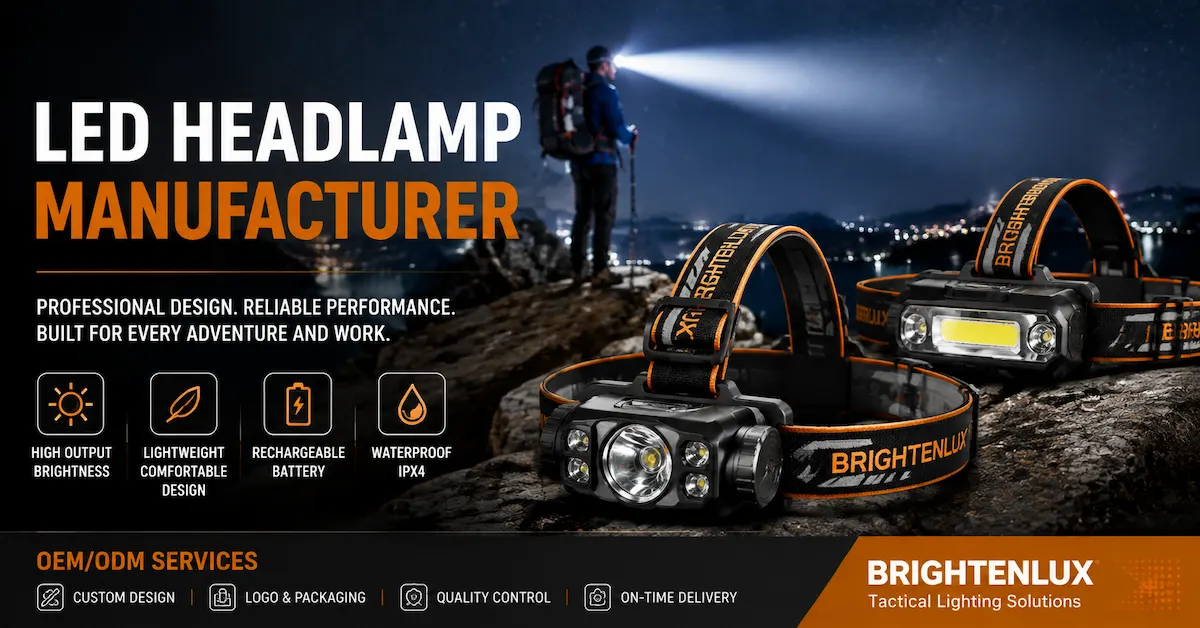
A professional LED headlamp manufacturer focuses on several core areas: LED optical performance, battery solutions, lightweight structures, comfortable wearing design, product durability, and customized solutions. Each area affects the final user experience. For example, lighting performance influences visibility, while headband structure and balance affect comfort during longer use.
For brands, distributors, and professional buyers, choosing the right manufacturer helps create lighting products that meet different market requirements. A headlamp designed for camping may emphasize portability and convenient charging, while one intended for industrial use may need stable brightness, durable construction, and reliable battery performance. A capable manufacturer should help connect these market expectations with practical product design.
2. Understand Why LED Headlamps Are Growing in Global Markets
LED headlamps are becoming increasingly popular because they provide hands-free lighting and improved convenience. Users can move, repair, inspect, hike, or respond to emergencies without holding a separate light. This is especially valuable in dark environments where mobility and safety are important.
Hands-free lighting demand is a major driver. Benefits include improved working efficiency, better mobility, safer operation in dark environments, and more convenient outdoor experiences. These advantages make headlamps suitable for outdoor enthusiasts, technicians, emergency workers, and industrial operators.
Rechargeable technology also supports market growth. Rechargeable headlamps can provide lower replacement costs, convenient charging, longer product lifespan, and a better user experience. Modern rechargeable headlamps often include lithium battery systems, USB-C charging, battery indicators, and charging protection. These features are important for buyers who want portable lighting products that are easy to use and suitable for regular operation.
3. Review Core Lighting Performance Requirements
Lighting performance directly affects how users perceive a headlamp. Important specifications include lumens, beam distance, beam angle, and lighting modes. These factors should be considered according to the intended application rather than selected in isolation.
Different users need different lighting designs. Outdoor users may need long-distance illumination and multiple lighting modes for camping, hiking, travel, or adventure activities. Industrial users may prefer wide-area lighting and stable brightness for inspection, workshop maintenance, factory operations, or construction work. Emergency applications require reliable lighting that supports quick movement and operation in low-light conditions.
When evaluating a supplier, buyers should ask how the manufacturer balances brightness, beam design, battery placement, and comfort. A headlamp with strong lighting performance must still remain practical to wear. Product development should consider the full user experience, not only a single specification.
4. Evaluate Battery and Charging Systems
Battery design is an important factor for rechargeable LED headlamps. Rechargeable battery solutions offer convenient charging, lower operating cost, and a longer usage cycle. Common battery considerations include capacity, runtime, charging speed, and safety protection. Buyers should confirm that these points are discussed during product planning and prototype evaluation.
USB-C charging has become a popular option for modern portable lighting products because it provides better compatibility, a faster charging experience, and easier daily use. For B2B programs, charging convenience can influence customer satisfaction, especially when headlamps are used frequently in work or outdoor settings.
Battery protection should also be part of the product design. Quality headlamps should include protection systems such as overcharge protection, over-discharge protection, and temperature protection. These protections support safer and more reliable use. Buyers should avoid assuming that all rechargeable products are designed the same way and should discuss the charging system with the manufacturer before confirming a project.
5. Check Comfort, Weight, and Wearing Design
Comfort is critical because users often wear headlamps for extended periods. Important design factors include product weight, headband structure, balance, and an adjustable wearing system. A well-designed LED headlamp should provide secure wearing, reduced pressure, and comfortable long-term use.
For outdoor users, lightweight design is usually important because headlamps may be packed with other gear and worn during active movement. For industrial users, comfort must be balanced with durability and reliable performance. In mining, construction, and other professional environments, users may require impact resistance, long working hours, reliable illumination, and durable materials.
Manufacturers should consider how battery placement affects balance. They should also evaluate whether the headband structure keeps the product stable during movement. These details can make a major difference in real-world use, even when two products appear similar in photos.
6. Follow a Structured Product Development Process
A professional development process supports product reliability. During product design, manufacturers consider application scenarios, lighting requirements, battery placement, product weight, and user comfort. The goal is to balance performance, reliability, comfort, and cost.
Before mass production, prototypes should be tested for brightness performance, runtime, charging function, wearing comfort, and structural durability. This stage helps identify issues before larger production begins. It is also useful for buyers who need product adjustments for a specific market or channel.
Mass production and inspection include component assembly, function testing, appearance inspection, and final quality verification. Buyers should ask how these steps are handled and how product consistency is maintained. Clear communication at this stage helps reduce misunderstandings between the buyer and manufacturer.
7. Plan OEM and Custom LED Headlamp Solutions
Many brands need headlamps that match their market positioning. An experienced LED headlamp manufacturer can support customization including logo customization, packaging design, product colors, feature adjustments, and product specifications. These OEM options are suitable for outdoor brands, safety equipment companies, retail brands, and industrial suppliers.
Customization should start with the target user. For example, a retail outdoor headlamp may focus on lightweight design, portable charging, and convenient lighting modes. A professional-use headlamp may prioritize durability, stable brightness, and reliable battery performance. By defining the market first, buyers can avoid unnecessary features and focus on the details that matter most to customers.
For customized projects, buyers can contact Brightenlux through the contact page or submit project requirements through the inquiry page.
8. Match LED Headlamps to Application Scenarios
Different industries require different product features. In camping and outdoor activities, users usually require lightweight design, long runtime, weather resistance, and portable charging. Applications include camping, hiking, travel, and adventure activities.
In industrial maintenance, workers need dependable hands-free lighting. Important features include durable construction, stable brightness, comfortable wearing, and reliable battery performance. Applications include equipment inspection, workshop maintenance, and factory operations.
Mining and construction environments require stronger performance. Key requirements include impact resistance, long working hours, reliable illumination, and durable materials. Emergency response applications also require reliable hands-free lighting that supports operation in dark or difficult environments.
| Buying Step | What to Review | Why It Matters |
|---|---|---|
| 1 | Target application | Defines lighting, comfort, and durability needs. |
| 2 | LED performance | Confirms beam distance, beam angle, modes, and brightness requirements. |
| 3 | Battery system | Supports rechargeable use, runtime planning, and charging convenience. |
| 4 | Charging design | USB-C charging can improve compatibility and daily usability. |
| 5 | Protection design | Overcharge, over-discharge, and temperature protection support reliability. |
| 6 | Wearing comfort | Weight, balance, and headband structure affect long-term use. |
| 7 | Prototype testing | Checks brightness, runtime, charging function, comfort, and durability. |
| 8 | OEM options | Logo, packaging, colors, features, and specifications support brand positioning. |
| 9 | Production inspection | Function testing, appearance inspection, and final verification support consistency. |
9. Choose a Manufacturer for Long-Term B2B Cooperation
Selecting an LED headlamp manufacturer is not only about finding a product. It is about building a cooperation process that covers design, customization, production, inspection, and communication. Buyers should look for a supplier that understands portable lighting applications and can discuss practical requirements without relying on unsupported claims.
A strong evaluation process should include product purpose, application scenario, lighting requirements, battery design, wearing comfort, prototype checks, and OEM needs. This approach helps buyers compare options more clearly and develop products that fit their customers. For brands and distributors, the best headlamp program is one that aligns product features with real user needs.
FAQ
What does an LED headlamp manufacturer do?
An LED headlamp manufacturer designs and produces hands-free lighting products that combine LED technology, battery systems, and ergonomic structures. The manufacturer may also support customization such as logo, packaging, colors, feature adjustments, and product specifications.
What applications are LED headlamps used for?
LED headlamps are widely used in camping, outdoor activities, industrial maintenance, mining operations, construction work, emergency response, and professional equipment markets.
Why are rechargeable LED headlamps popular?
Rechargeable headlamps are popular because they provide convenient charging, lower replacement costs, longer product lifespan, and a better user experience. Modern designs often include lithium battery systems, USB-C charging, battery indicators, and charging protection.
What should B2B buyers check before ordering custom headlamps?
Buyers should review the target application, lighting performance, battery and charging system, wearing comfort, prototype testing process, customization options, and inspection procedures before confirming a project.
Can Brightenlux support customized lighting solutions?
Brightenlux provides LED lighting products, rechargeable flashlights, headlamps, and customized lighting solutions for global customers. Buyers can review products or send project requirements through the Brightenlux website.