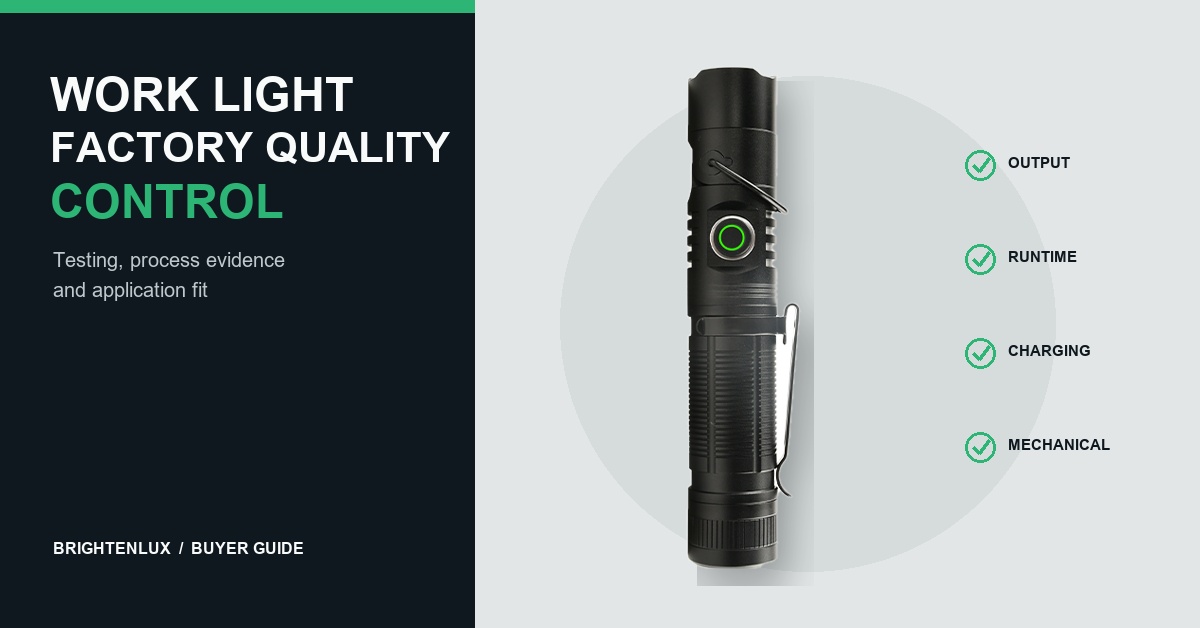


The first price comparison often fails before anyone enters a number. One offer includes a rechargeable battery and retail box. Another covers the flashlight body. A third includes a battery, but its capacity differs from the requested build. Put those unit prices in a spreadsheet and the cheapest column wins for reasons that have little to do with supplier quality.
A wholesale flashlight supplier scorecard starts by repairing that comparison. Its job is to connect the offered product, the evidence and the commercial commitment. This guide provides a 20-point worksheet, a weighted calculation and a practical RFQ pack. The two Brightenlux product references come from current manufacturer pages. The buying situations and numerical supplier examples are illustrative, not customer cases or factory-test results.
There are two separate decisions throughout: whether an offer meets the requirements for its next purchasing stage, and how well it compares with other eligible offers. Keeping them separate prevents a good price from concealing an unresolved battery document or an unacceptable sample change.
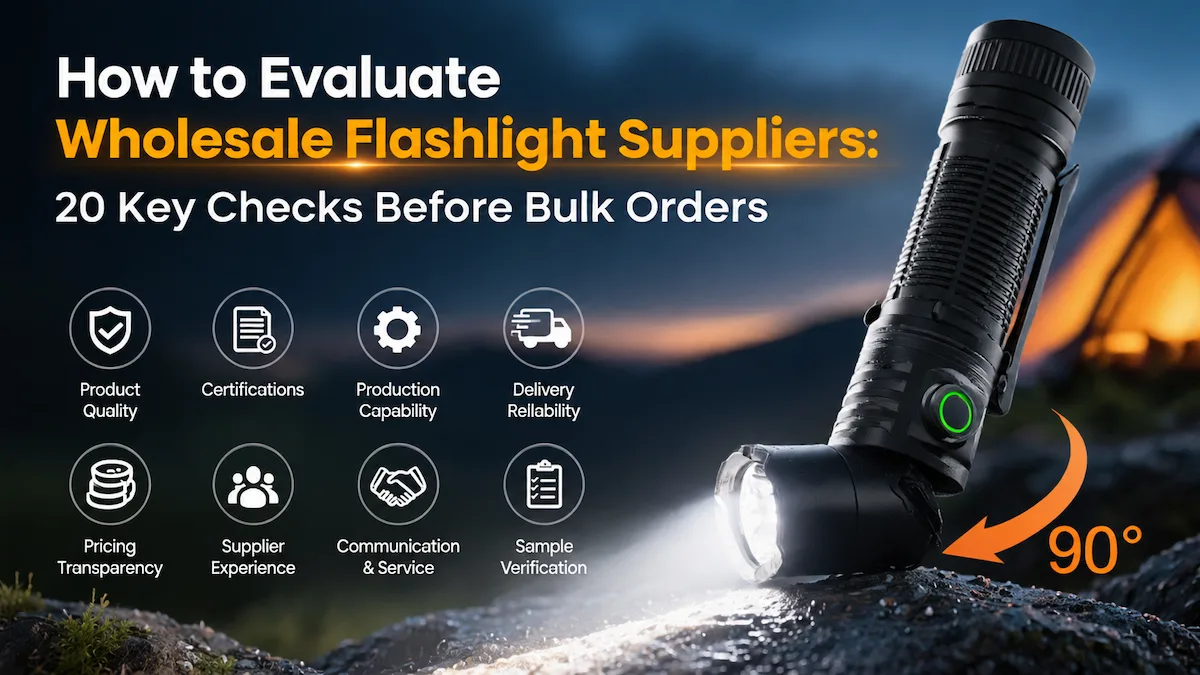
Before the spreadsheet, name the order being compared
Consider a distributor preparing a rechargeable inspection light for hardware stores. It needs a shelf-ready kit, a clear charging instruction and a replacement order that matches the first delivery. A private-label equipment brand might select a similar housing but ask for a different switch program and a branded accessory. These are different jobs, even if both buyers start with the same photograph.
The distributor's first page can be quite short: intended user, task, destination market, sales channel, opening quantity and requested delivery milestone. The configuration page goes behind it. That separation keeps a forecast from becoming an accidental order commitment and a launch date from being mistaken for a factory dispatch date.
For the inspection-light example, “outdoor flashlight” leaves too much to guess. “Rechargeable inspection light carried in a tool pouch, handled with service gloves and sold as a complete retail kit” gives the supplier an assignment. The reply now has to address controls, charging, accessories and packing. A proposed alternative can be judged against that job instead of against a vague list of impressive features.
Write the fixed requirements and the open choices in different columns
Some items are settled: the destination, opening quantity or required battery arrangement. Others may still be choices, such as finish color or a clip. Mark the latter as options. When everything appears mandatory, the supplier cannot tell which change would rescue a workable offer. When everything appears optional, the buyer loses the original purpose.
A useful brief records the reason behind a fixed requirement. “Cable included” could mean that the retail customer must be able to begin charging without buying another accessory. That reason helps the supplier propose a suitable pack. It also prevents the cable from quietly disappearing during a later price reduction.
Ask whether the offer is a standard platform, a modification of an existing platform or a new development. A logo does not create the same workload as a different cell or driver. A new control sequence adds a behavior that the sample and operation sheet must capture. A new housing introduces drawings and tooling decisions. One broad OEM/ODM answer hides those differences.
Give the brief a version number. In a hypothetical three-supplier inquiry, suppose the buyer adds a headband after the first round. Every supplier receives version two and quotes again. Otherwise the second round contains prices for two different kits, and the team spends its review meeting trying to reconstruct separate email conversations.
Set the stage before setting a score threshold
The next decision might be permission to send samples, permission to make a pilot or permission to release production. Each stage needs its own gates. Confirming the quoted model and the sample plan may be enough to start one review; shipment documentation and closed sample findings belong to a later decision.
Write a pending gate as an action: what is missing, who will supply it and which decision is blocked. “Documentation under review” is difficult to manage. “Obtain the report that covers the proposed battery configuration before approving the related claim” tells the project team what happens next.
The point is not to reject every incomplete early reply. A supplier can stay on the shortlist while filling a named gap. The distinction is between an incomplete information file and an approved production order. The date and stage on a wholesale flashlight supplier scorecard keep that distinction visible when the file is passed from sourcing to quality or accounts.
A model number is the beginning of the specification
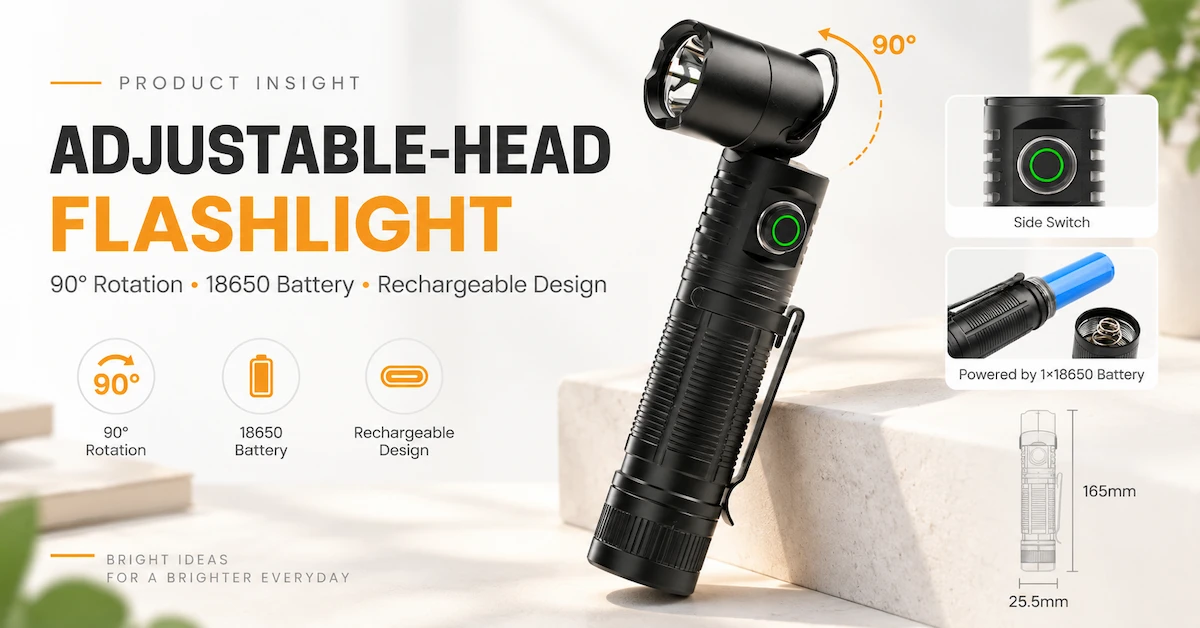
Flashlight vendor evaluation becomes more useful when it follows an actual platform. The official Brightenlux examples below share an SST40 LED designation, yet their listed battery configurations and working formats differ. The table records manufacturer-listed features checked for this article; it does not rank measured performance.
| Public platform | Manufacturer-listed configuration | Material/format | Quotation followup |
|---|---|---|---|
| 1000-lumen SST40 adjustable-head light | 2200mAh 18650 rechargeable battery included; Type-C charging and USB cable listed | Aluminum body and reflector; adjustable head; magnetic tail | Confirm the ordered cell, head adjustment, pack contents and performance basis |
| 1500-lumen SST40 21700 light | 4000mAh included rechargeable battery; Type-C charging; high/medium/low with double-press strobe | Hard-anodized aluminum plus ABS; magnetic tail; holder and headband listed | Confirm ordered build, pack contents, mode-specific runtime and current operation sheet |
A buyer looking at the 1000-lumen adjustable-head platform has a particular question: will the light point toward the work surface when positioned as intended? The listed head adjustment and magnetic tail make that worth discussing. They do not settle the actual mounting surface, head retention or the user's glove interaction. Those are sample questions.
For the 1500-lumen platform, the holder and headband are part of the comparison. If the quotation omits them, it is a different kit. Its public description also lists high, medium and low settings with a double press for strobe. The ordered operation sheet needs to correspond to the supplied sample, especially if a custom control program is proposed.
The battery description deserves its own line in the RFQ. The first reference lists an included 2200mAh 18650 battery; the second lists an included 4000mAh rechargeable battery in the 21700 platform. Neither capacity alone tells the purchasing team how the chosen mode behaves over time. A quoted build and its supporting performance record are needed to connect those claims.
Materials require the same care. The first page lists an aluminum body and aluminum reflector. The second lists hard-anodized aluminum plus ABS. A purchase drawing can go further, identifying the relevant finish, interfaces and acceptance characteristics. A general material description is useful catalog information, but it leaves many order details open.
Control the alternatives before they become substitutions
A supplier may offer another cell or accessory because the requested version creates a sourcing constraint. That can be a sensible recommendation. Put it in a separate variant with its own configuration identifier and price. The original request remains visible until the buyer accepts a change.
In a hypothetical negotiation, a lower-price revision replaces the battery and removes the holder. Calling it “the same model at a better price” loses the comparison. A change log catches both differences. The team can then decide whether the new kit still serves the application and which supporting records need review.
The controlled specification does not have to expose every confidential design detail. It does have to identify the parts that affect the order: LED, driver, cell, controls, housing, accessories and packaging. Approved alternatives need an approval rule. A blanket permission to use an “equivalent” component leaves the buyer without a stable reference for the next shipment.
Twenty evidence points in a wholesale flashlight supplier scorecard
The worksheet is organized around records a purchasing team can retrieve. Fill in the record number or dated reply, enter the rating and identify the owner of an unresolved item. A file named “supplier brochure” is hard to use six months later. A report number, drawing revision or dated configuration reply gives the next reviewer somewhere to start.
| Evidence point | What belongs in the comparison file | Record ID / revision | Rating 0–5 | Status / owner |
|---|---|---|---|---|
| 1. Application and channel | Acknowledged use case, destination market and intended sales channel | _____ | _____ | _____ |
| 2. Platform identity | Quoted model or configuration identifier, current description and sample identity | _____ | _____ | _____ |
| 3. Build definition | Agreed LED, driver, battery, housing, controls and included accessories | _____ | _____ | _____ |
| 4. Output evidence | Applicable mode, measurement basis, sample configuration and report | _____ | _____ | _____ |
| 5. Runtime behavior | Battery and mode conditions, output profile and stated endpoint | _____ | _____ | _____ |
| 6. Charging behavior | Input requirements, cable compatibility, indicators and charging checks | _____ | _____ | _____ |
| 7. Production responsibilities | Process route, outsourced steps where relevant and responsibility for acceptance | _____ | _____ | _____ |
| 8. Inspection plan | Defined characteristics, defects, methods and batch acceptance decisions | _____ | _____ | _____ |
| 9. Lot traceability | Link between component/build records, batch identity and inspection results | _____ | _____ | _____ |
| 10. Order entity | Confirmed seller, manufacturing relationship where relevant and document identities | _____ | _____ | _____ |
| 11. Market documentation | Documents required for the exact product, claims and destination | _____ | _____ | _____ |
| 12. Battery shipment records | Battery configuration and applicable shipment information for the proposed route | _____ | _____ | _____ |
| 13. Customization scope | Approved artwork, finish, packaging or tooling changes and associated responsibilities | _____ | _____ | _____ |
| 14. Change control | Procedure for approving LED, cell, driver, firmware, material and accessory substitutions | _____ | _____ | _____ |
| 15. Quote completeness | Comparable inclusions, unit tiers, currency, validity and one-time charges | _____ | _____ | _____ |
| 16. Order minimums and terms | Minimums by configuration, payment milestones and cancellation/change assumptions | _____ | _____ | _____ |
| 17. Delivery plan | Sample, approval, component, production and dispatch milestones | _____ | _____ | _____ |
| 18. Packaging and transport | Pack contents, carton data, delivery basis and relevant package-test evidence | _____ | _____ | _____ |
| 19. Corrective action | Defect reporting, containment, investigation and agreed warranty/service terms | _____ | _____ | _____ |
| 20.Reorder continuity | Approved-version records, replacement-part availability and repeat-order procedure | _____ | _____ | _____ |
The rows are not twenty equal reasons to approve an order. They are a way to stop evidence from being assigned to the wrong question. A photograph helps identify a physical arrangement. A charging check addresses a selected power setup. A quality-system certificate addresses its stated organizational scope. None is a substitute for all the others.
Use a status beside the rating, especially early in the inquiry. The record might be received, awaiting clarification, missing or superseded. The owner field names the person who closes the gap. It can be the buyer for an undecided pack requirement, not always the supplier. Otherwise an incomplete buying brief gets scored as poor supplier performance.
A zero marks an evidence gap. It does not prove that the company lacks the capability. Keep that distinction in the review notes. For example, an absent carton specification may be a missing attachment; a reply stating that the requested packaging cannot be supplied is a different finding. Both call for action, but they lead to different conversations.
A document's usefulness also changes with the stage. An early configuration reply can justify requesting a sample. A later batch-release decision needs the records agreed for that lot. Retain the earlier review instead of overwriting it, so the purchasing history shows what was known when each commitment was made.
There is room to add project-specific rows, but the addition should have a decision attached to it. A question that nobody will use to choose a sample, accept a claim or release the order is unlikely to improve the file. The twenty points provide a starting structure, not a universal compliance checklist.
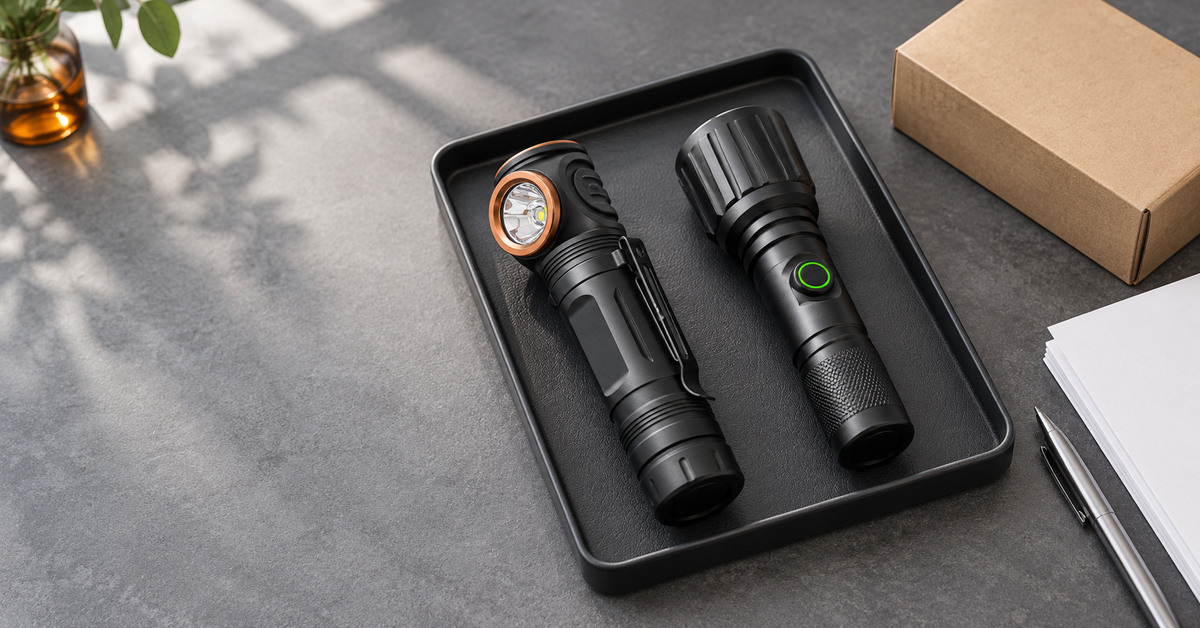
Turn the evidence into a wholesale flashlight supplier scorecard
The scale below rates support for the requirement at the current stage. Zero is missing or irrelevant evidence. A general claim earns one. A partial reply with an unresolved scope or configuration earns two. Three represents an identifiable order-specific answer; four adds relevant verification or a reproducible approval process. Five means the agreed stage requirement is fully supported, including the necessary responsibilities and followup.
Before scoring, discuss what those words mean for the project. If a claimed feature requires a report, a convincing sales explanation is still only an explanation. If the next stage is sample preparation, the evidence needed for a five may differ from the evidence needed to release a production lot. Using stage-specific anchors avoids awarding a permanent “excellent supplier” label.
Calculate the category rating from its evidence points
Rate the twenty rows, then calculate the arithmetic mean for each group. Points one through three form the application/configuration category; points four through six form performance evidence, and so on as shown below. Decimal category ratings are valid. Missing evidence remains zero rather than being removed from the denominator.
| Criterion | Weight | Points covered | Rating, 0–5 | Weighted points |
|---|---|---|---|---|
| Application and configuration fit | 20 | 1–3 | _____ | _____ |
| Performance evidence | 15 | 4–6 | _____ | _____ |
| Production and QC control | 15 | 7–9 | _____ | _____ |
| Required documentation | 15 | 10–12 | _____ | _____ |
| Customization and change control | 10 | 13–14 | _____ | _____ |
| Commercial completeness | 10 | 15–16 | _____ | _____ |
| Delivery planning | 10 | 17–18 | _____ | _____ |
| Service and corrective action | 5 | 19–20 | _____ | _____ |
Weighted points = category weight × category rating ÷ 5. Add the eight results to obtain the total out of 100. These weights are a proposed purchasing method, not a supplier certification or the editorial scoring rubric used to assess an article.
Consider a hypothetical performance group with row ratings of four, three and zero. Its mean is seven divided by three, about 2.33. At a weight of fifteen, its contribution is seven points. Removing the zero would produce a mean of 3.5 and a contribution of 10.5. That extra 3.5 points would come from missing information, which is exactly the wrong incentive.
If a criterion truly does not apply, settle that before comparing offers. A standard-stock program may assign less importance to custom tooling than a newly developed private-label product. Redistribute any unused weight consistently and record the reason. Quietly changing the denominator after one supplier's reply makes the ranking difficult to explain.
Check a complete calculation
The following A and B are fictional suppliers, introduced only to show the arithmetic. Their category ratings are invented inputs, not the results of a real point-level assessment. No Brightenlux factory or competitor has been scored here.
| Criterion | Weight | A: rating → points | B: rating → points |
|---|---|---|---|
| Application/configuration | 20 | 4 → 16 | 3 → 12 |
| Performance evidence | 15 | 3 → 9 | 4 → 12 |
| Production/QC | 15 | 4 → 12 | 3 → 9 |
| Documentation | 15 | 4 → 12 | 2 → 6 |
| Customization/change control | 10 | 3 → 6 | 4 → 8 |
| Commercial completeness | 10 | 3 → 6 | 5 → 10 |
| Delivery planning | 10 | 3 → 6 | 4 → 8 |
| Service/corrective action | 5 | 4 → 4 | 3 → 3 |
| Total | 100 | 71 | 68 |
A's first contribution is 20 × 4 ÷ 5 = 16. Its total is 16 + 9 + 12 + 12 + 6 + 6 + 6 + 4 = 71. B totals 12 + 12 + 9 + 6 + 8 + 10 + 8 + 3 = 68. A buyer can reproduce both results without relying on a spreadsheet formula hidden from view.
For this fictional project, suppose the team chose seventy points as the threshold for a pilot. A reaches that number. It still proceeds only when the pilot-stage gates are satisfied. B falls below the selected threshold, and its lower documentation rating gives the buyer a focused followup task. Seventy is an example choice, not a recommended industry cutoff.
The three-point difference does not establish lasting superiority. If A's rating rests on a superseded drawing, the review changes. If B supplies the missing configuration scope, its documentation rating changes. The record behind the number matters more than the color used to display it.
Test whether a change in priorities changes the decision
A replenishment buyer might move five weight points from customization to delivery.
With these particular ratings, A loses three points from customization and gains three from delivery; B loses four and gains four. Both totals stay the same because each fictional supplier has matching ratings in those two categories.
Another reweighting could change the order. Calculate it, explain the purchasing reason and apply it to every offer. Changing weights after choosing a favorite turns the worksheet into a justification exercise. A useful final recommendation states the total, the outstanding conditions and the next action.
Reports belong to a configuration and a claim
The question on receipt of a report is not merely whether it looks official. It is whether its subject matches the offered product and the claim the buyer wants to make. Look for the sample identifier, mode, battery, method, conditions and result. An output value and a longest-runtime value may describe different settings.
PLATO's guidance for ANSI/PLATO FL 1-2025 testing addresses procedures, calibration and differences between ordinary modes and short-duration elevated-brightness testing. It gives a buyer a basis for asking which method supports the quoted claim. It is not evidence that either public Brightenlux reference has completed that testing.
Imagine an unchanged housing offered with a revised driver and cell. A report for the earlier build arrives with the quotation. The photograph may still match, yet the purchasing file contains two configurations. The followup asks the supplier to identify the tested build and explain what supports the revised claim. An identical exterior does not resolve the internal change.
Keep the actual claim next to its evidence. “Runtime” without a mode invites the sales, packaging and quality teams to read the number differently. A report that identifies the mode and endpoint gives artwork approval a firmer basis. It also makes a later customer question easier to investigate.
Confirm the company relationships in the order file
The public Brightenlux company page identifies Ningbo Brightenlux Electric Appliance Co., Ltd. and its lighting business. For an order, confirm the seller, relevant manufacturing relationship, document applicant and payment beneficiary. A brand name alone does not describe all those roles.
A report naming another applicant needs an explanation of how it covers the ordered product. The review is about scope and relationship, not simply whether the document carries the preferred trading name. This article keeps the website entity separate from differently named Alibaba storefront entities and does not merge their manufacturing figures.
ISO's certification guidance explains that external certification bodies conduct certification; ISO itself does not. Obtain the relevant certificate and check the issuer, status and scope through an appropriate verification route. A management-system certificate and a product report answer different purchasing questions.
For market and shipment documents, begin with the actual destination, product configuration, proposed route and intended claims. An indiscriminate request for every available certificate creates a large folder but may leave the important question unanswered. Put the required records in the RFQ and identify who is responsible for determining any unresolved requirement.
Follow the approved sample onto the assembly bench
The official photograph gives the buyer something concrete to discuss: personnel at benches, flashlight bodies and components. It does not show a work-instruction revision, an inspection result or the release decision for a lot. Those are separate records. Ask which operation is pictured, then connect the answer to the proposed process for the ordered build.
A process discussion becomes useful when it reaches handoffs. Who accepts incoming cells? Which instruction governs the switch function? Who checks the manual when packaging is printed elsewhere? The answer can include an outsourced step, provided the responsibility for acceptance is clear. Ownership of the handoff matters more than whether every operation appears in a single facility photograph.
Specify what a batch check is trying to find
A flashlight inspection list starts with the order. Battery identity, pack contents, charging function, mode sequence, finish, threads, markings and packing are possible characteristics. The classification of a defect depends on the application and the agreed acceptance criteria. A generic list from another product needs review before it becomes this order's inspection plan.
Consider a hypothetical kit whose light operates correctly but whose box contains the wrong cable. That finding sits at the boundary between assembly and packing. If nobody owns the kit definition, the unit can pass a functional check and still arrive as an incomplete retail product. The inspection plan needs to follow the complete offered kit.
The current ISO 2859-1:2026 publication concerns acceptance sampling by attributes for lot-by-lot inspection. Applying such a method requires an agreed lot, defect categories, inspection level, relevant AQL choices and acceptance decisions. The standard reference does not establish that a Brightenlux batch passed, and this article does not reproduce its paid sampling tables or prescribe one universal sample size.
Where the parties use sampling, retain the plan and the actual result together. A bare “inspection passed” message does not say what was checked. Nor does a satisfactory sample prove that every unit in a shipment is free of defects. The file needs the scope of the decision, not a larger promise inferred from it.
Make traceability useful before a problem occurs
A lot identifier earns its place when it connects the received goods to the relevant build and inspection records. Printing a number on a carton is only the visible end of that relationship. The buying team needs to know how the number leads back to the configuration and what happens if more than one component lot was used.
The practical exercise is simple: choose a proposed carton record and ask which documents it would retrieve. That question often exposes an unclear revision or missing handoff before an actual complaint makes the search urgent. The exercise is a proposed purchasing check, not a report of testing performed for this article.
Use the same specificity for corrective action. A useful response identifies the affected lot or configuration, the immediate containment, the investigation and the disposition. Replacement, rework or rejection are decisions to record.
“We will pay more attention” leaves the purchasing team without a closed action.

Compare the quote your accounts team will actually receive
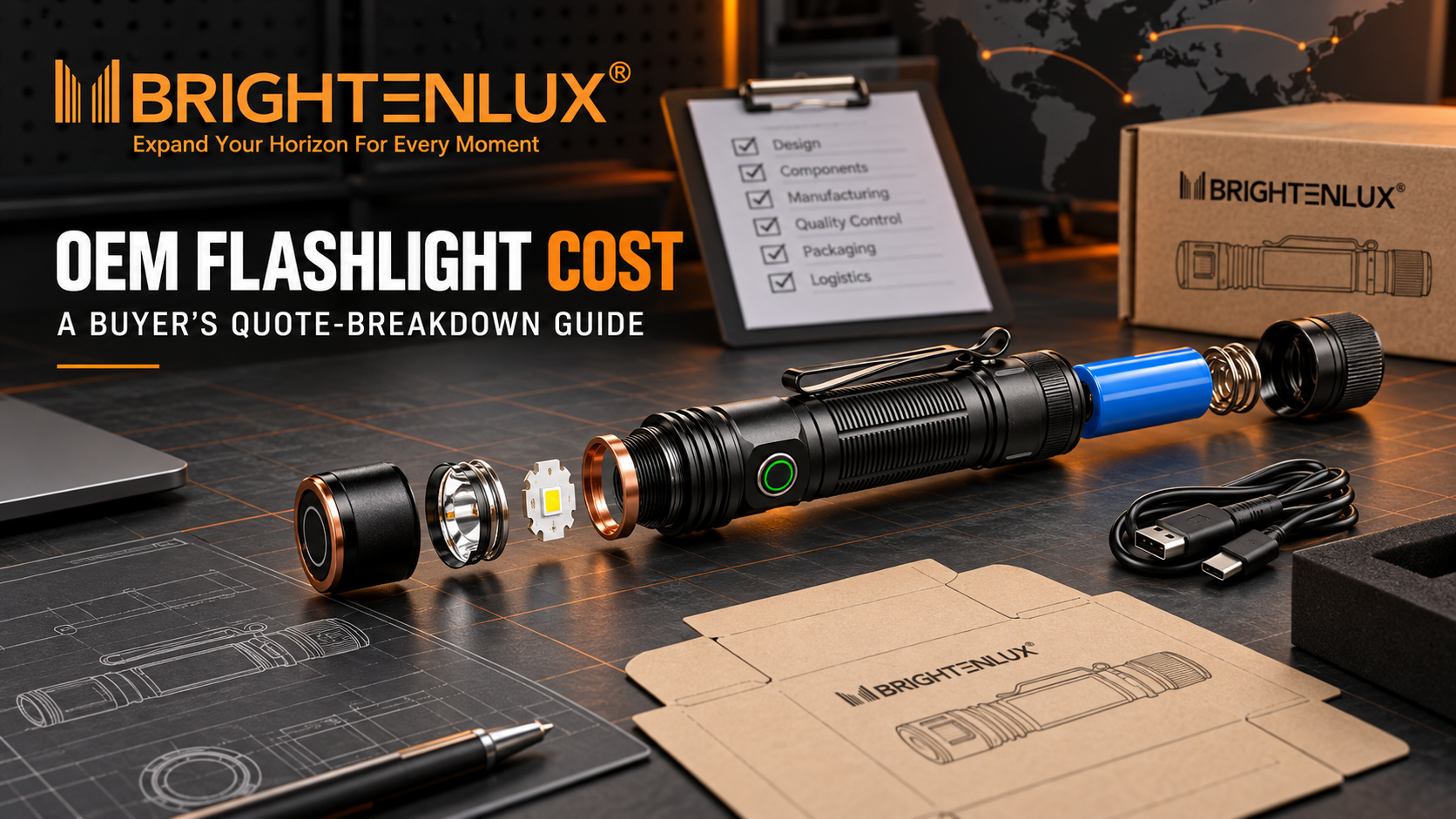
The normalized price belongs to a fixed build and pack. List the battery, cable, mounting accessories, manual and retail box as inclusions or exclusions. Keep alternate configurations in separate columns. Otherwise a unit-price negotiation can gradually turn into a different product without a clear approval.
MOQ is often a question about the configuration, not one factory-wide number. A standard body, custom finish, printed packaging and unusual accessory can have different constraints. The supplier's reply needs to identify the item driving the opening quantity and the alternatives available. No current order-specific minimum is assumed here.
Request meaningful tiers: the intended opening quantity, a plausible repeat quantity and a larger volume for planning. A lower tier price that also changes the cell is a different offer. Record both changes rather than labelling the entire difference a volume discount.
Separate recurring cost from the opening-order cost
This cost example is fictional. Two thousand units at $6.20 produce $12,400 of product cost. Add $300 for stated artwork/setup and $200 for an agreed inspection: the subtotal is $12,900, or $6.45 per ordered unit. Freight, destination charges and every other unstated cost remain outside that subtotal.
The arithmetic is deliberately ordinary. Its value is in keeping the one-time charges visible. A competing quotation with a lower unit price but a different setup charge needs the same treatment. For a reorder, the team also needs to know which opening charges recur. This is not a Brightenlux price or landed-cost estimate.
Currency, validity, payment milestones and delivery basis belong alongside those figures. ICC's Incoterms rules address delivery tasks, costs and risk allocation. Use the agreed rule with its named location. A three-letter abbreviation without context is a poor basis for comparing the total commitment.
Read the calendar as a sequence of approvals and work
Ask the supplier to distinguish sample preparation, artwork approval, tooling where applicable, component sourcing, assembly, inspection and dispatch. A buyer's launch date is the end of a longer chain. Calling every stage “lead time” makes it hard to locate the dependency that threatens the schedule.
In a hypothetical private-label order, the factory can prepare the sample while retail artwork remains undecided. The project then stalls at packaging approval, not necessarily in assembly. Record the missing decision and its owner. An apparently short production duration does not compensate for an unapproved pack.
The delivery rating should reflect that usable plan. The best answer is not always the shortest number; it is the one that names assumptions and allows the buyer to manage them. Confirm the proposed milestones in the quotation rather than carrying a general website statement into the order.
Build the RFQ as a small set of useful attachments
A quote-ready inquiry gives the supplier a clear starting point and a clear way to return deviations. The opening message does not need to contain the entire scorecard. Attach the information that defines the job and request the records needed for this purchasing stage.
One workable pack has four parts. The buying brief describes application, market, quantity and milestones. The configuration sheet identifies the light, power system, controls and accessories. The pack sheet covers contents, artwork and carton information. The evidence list names the reports, sample approvals and inspection information required now, distinguishing them from later-stage items.
Number those attachments and give each a revision. A supplier replying to attachment two, revision B is easier to compare than one replying to an unnamed photograph. If the team changes a requirement, the replacement attachment makes the change traceable without asking everyone to reread the entire email history.
Ask for a reply that exposes differences
Use four response fields: requested item, offered item, deviation and approval status. An alternative battery appears against the requested battery, with the reason and supporting information. A package that is still awaiting buyer artwork is identified as pending. “Noted” is an acknowledgement, not an approval.
A short opening message can look like this. The bracketed fields are for the buyer to complete.
We are sourcing a flashlight for [application and user] in [target market and sales channel]. Please quote [opening quantity] of [platform or attached configuration], including [battery, charging, controls and accessories]. Requested customization is [logo, finish, packaging or other changes]. The attached evidence list covers [required documents]. Our milestones are [sample approval, production readiness and delivery dates]. Please return the offered build, deviations, quantity constraints, quotation tiers, one-time costs, sample plan, inspection approach and delivery basis. Identify each requested item as standard, modified, new or unavailable.
That message gives a bulk flashlight supplier room to recommend a better route without disguising the change. A standard pack might save development work; a different platform might suit the application better. The proposal remains an alternative until the buying team accepts it and updates the brief.
Request a comparable flashlight quotation from Brightenlux ↗ Include the application, target market, preferred configuration, quantity, customization, packaging, required documents and timeline. Those inputs let the discussion address an order instead of an unexplained request for the lowest price.
Use the first reply to choose the next question
The initial scorecard is a map of the gaps.
When the performance group is weak, ask for the missing configuration or mode record. When packaging is unclear, ask for the pack definition and carton data. Resending the entire questionnaire does little to close either issue.
Update a rating when the evidence improves, retaining the earlier date and reason. If the buying requirement changes, revise the brief first and apply the revised basis to every shortlisted offer. This keeps followup from becoming a series of private negotiations that no longer describe the same product.
Before the sample commitment, bring the configuration sheet and response log together. A brief review can settle whether the quoted price includes the cell, whether a runtime claim belongs to the intended mode and which accessory is actually in the pack. Those are modest questions, but unanswered they become expensive surprises.
The pilot and the reorder answer different questions
A sample is the reference for a defined build. Identify it, date its operation sheet and record its contents and acceptance findings. The photograph helps the team recognize it; the physical reference preserves details such as switch feel and accessory fit that the photograph cannot convey.
Checks follow the intended job. Review the control sequence the customer will use, the selected charging arrangement, the accessory configuration and the pack. Where a measured claim needs evidence, agree the method and scope separately. A successful basic functional check is not a substitute for every performance or documentation requirement.
The pilot asks whether the approved build can be reproduced with useful batch records and correct packing. Its quantity and acceptance plan are project decisions. A pilot does not become convincing merely because it is larger than a sample order. The evidence is in the configuration received, the recorded checks and the way any unacceptable finding is resolved.
Keep the product-and-package combination together
Define the retail contents, inserts, restraint of accessories, manual, barcode, carton quantity, dimensions and weight basis. A shelf-ready box can face a different route when orders are fulfilled as parcels. The transport plan therefore belongs in the sourcing discussion, not only in the shipping department's last email.
ISTA's test-procedure guidance distinguishes screening methods from simulations of transport environments. Select the method for the proposed route and product-and-package combination. A report for another insert or carton arrangement needs its scope checked before being applied to this one.
Package evidence does not establish flashlight output or an enclosure rating. It answers a different question: how the defined combination was assessed for the stated procedure. No Brightenlux package-test result is claimed in this guide.
Translate “same as last time” into a revision
A reorder needs the approved configuration, not just the previous model name. LED, driver, cell, finish, clip, manual and pack can change independently. The supplier's proposed substitution goes through the agreed approval process before it becomes the repeat order.
Retain the purchasing records from delivery: received build, documents, milestones, findings and service response. Those records update the relevant ratings. They may strengthen the case for continuity or expose a condition that needs attention before replenishment. A complaint still needs its actual lot and use context investigated; it is not automatically a manufacturing defect.
The wholesale flashlight supplier scorecard earns its long-term value here. A new buyer can find why the offer was selected, what was changed and how the supplier handled a problem. That is more useful than inheriting a high score with no history behind it.
FAQ: decisions that arise during supplier comparison
1. Does the highest total decide the order?
It ranks eligible offers against one brief. A required gate stays open even if the total is attractive. Read the conditions beside the score before deciding on a sample, pilot or production commitment.
2. How is a trading company compared with a manufacturer?
Follow responsibility for the proposed build: who arranges production, accepts the goods, supplies the records and handles changes or service? A clear buying route is more useful than an assumed advantage attached to the company label.
3. What happens to a missing record?
Give the point the agreed missing-evidence rating, name its owner and state the blocked decision. If it is a required gate, the offer stays on hold for that stage. Do not remove its weight.
4. Is a large certificate folder a strong evidence file?
Only relevant records help. Match each document to its applicant, scope, configuration and purchasing question. An unrelated certificate cannot resolve the absent report for the proposed product.
5. Where does a recommended alternative go?
Give it a separate configuration identifier and list its differences. Accepting it updates the brief and may change the evidence required. Its price should not silently replace the original offer.
6. Can the opening MOQ be negotiated intelligently?
Ask which component, finish, accessory or pack drives it. A standard alternative may change the constraint, but the supplier needs to quote that alternative explicitly. No single quantity applies to every proposed build.
7. What makes a sample approval useful later?
An identifier, controlled configuration, contents, operation sheet and recorded acceptance findings. Those connect the physical sample to the production reference and make a later substitution visible.
8. What belongs in the service proposal?
The written scope, period, exclusions, reporting evidence, contact route and agreed remedy. Obtain those terms for the order; another listing's warranty wording is not the purchasing agreement.
9. When are revised weights legitimate?
When the buying purpose changes and the revised basis is applied to every offer. Retain the reason and calculation. Choosing weights to reward a preferred supplier reverses the evaluation.
10. What is checked again for replenishment?
The approved revision, any substitutions, current records and the relevant delivery or service history. A reorder review uses what actually happened while retaining the earlier comparison for context.
Conclusion
A wholesale flashlight supplier scorecard links the product to its evidence and the quotation to its actual contents. Start with one version of the buying brief, keep approval gates separate and make every rating traceable. The resulting RFQ gives both parties a clearer job.
Send Brightenlux your flashlight sourcing brief ↗
Share the application, target market, configuration, quantity, customization, packaging, required documents and timeline so the proposed build and its evidence can be discussed together.